Oura Adds Cardio Effort and Automatic VO₂ Max: What the New Ring Metrics Can Really Tell You
Oura’s October update pushes the smart ring further into workout analysis. Cardio Effort and automatic VO₂ max are useful for spotting trends, but neither turns a subscription wearable into a laboratory test or a medical device.

Oura’s latest software update changes the role of the smart ring. The company has begun rolling out Cardio Effort and automatic VO₂ max sensing, two features intended to show not only whether you exercised, but how demanding that exercise was for your cardiovascular system.
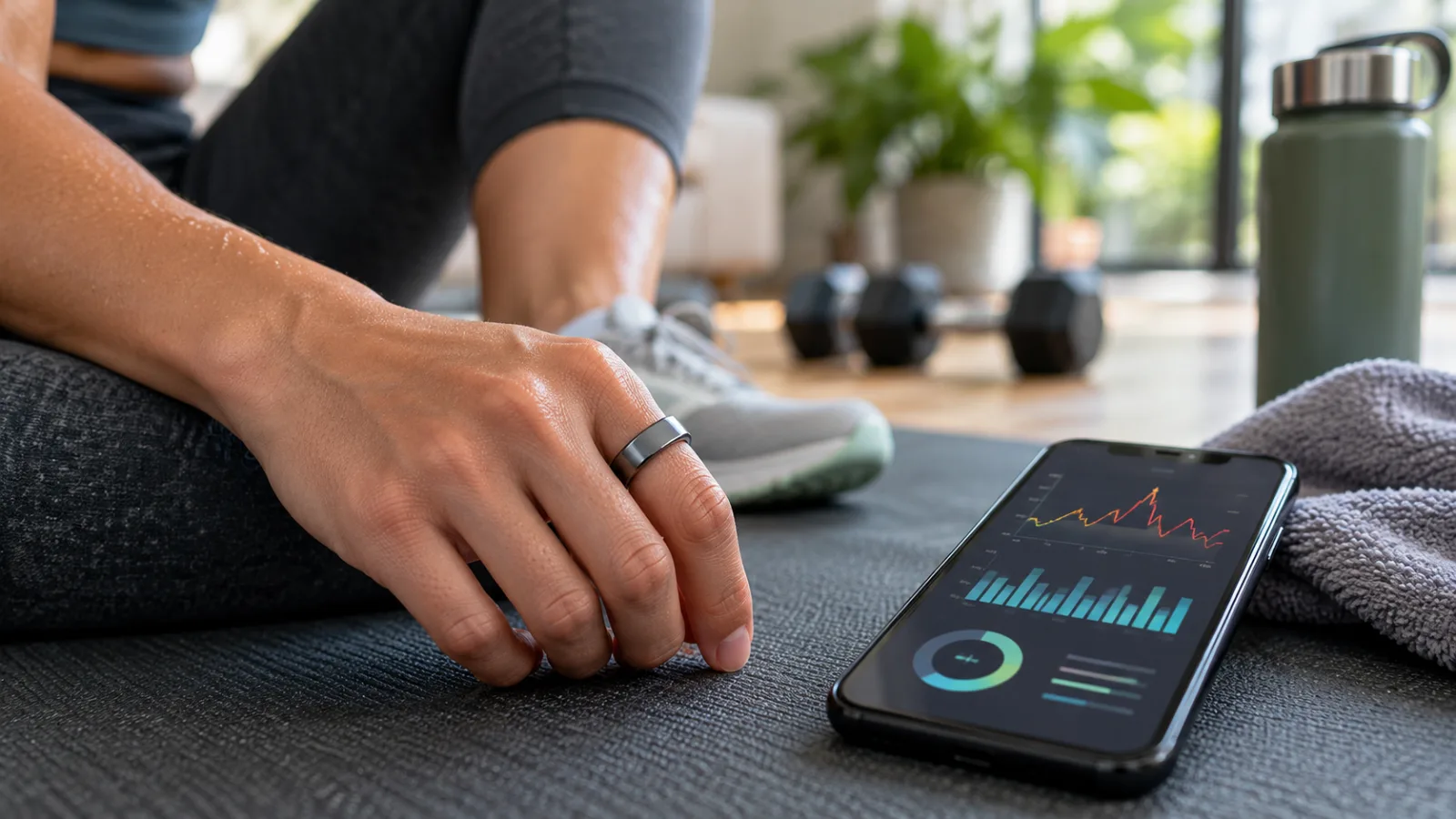
That is a meaningful shift for a product category that became popular mainly through sleep, recovery and passive health tracking. It also creates a familiar problem: a new metric can look more precise than the evidence behind it. Oura’s update may help members understand training load over time, but it does not make a finger-worn ring equivalent to a sports watch, chest strap or clinical exercise test.
The practical advice is simple. Existing Oura members should treat the new readings as trend signals and use them to compare similar activities across weeks. People considering a ring primarily for running, cycling or structured training should first check whether the device’s automatic estimates match the kind of workouts they actually do. The update improves Oura’s fitness story, but it does not erase the reasons dedicated training hardware still exists.
What Oura is adding
The October 20 update introduces two related measurements. Cardio Effort is designed to estimate how much a workout taxes the cardiovascular system. Automatic VO₂ max sensing is intended to estimate cardiorespiratory fitness from suitable activity data without requiring the user to start a separate test each time.
Oura says Cardio Effort looks at the relationship between exercise and the body’s response rather than relying only on distance, duration or calories. A long, easy walk and a short, intense interval session can produce a similar overall demand even though the external work is very different. That is the useful idea behind the feature: effort is personal, and the same pace does not represent the same stress for every person.
The company describes Cardio Effort as a weekly, baseline-relative view. In other words, the score is meant to be interpreted against the member’s own history rather than as a universal ranking. That makes it more useful for questions such as whether this week was unusually demanding, whether recovery is keeping pace with training, or whether a supposedly easy routine is producing a higher heart-rate response than usual.
Automatic VO₂ max is a more ambitious addition. VO₂ max is a standard term for the maximum rate at which the body can use oxygen during intense exercise. In consumer devices, however, the number is estimated. A ring does not directly measure oxygen consumption through a mask and metabolic cart. It models the value from sensor readings, activity information, personal details and an algorithm.
Oura’s support documentation says automatic VO₂ max is being introduced gradually as an experimental feature. That wording matters. It signals that the system is still being evaluated and that availability, behavior and results may change during the rollout. Members should not assume that seeing a number in the app means the feature has the same validation status as a clinical measurement.
Why the update is useful for some owners
The strongest case for the update is consistency. A ring is easy to wear overnight and throughout the day, so it can build a longer record of sleep, resting heart rate, temperature trends, activity and recovery. That context can make a directional training metric more useful than an isolated workout number from a device that is worn only occasionally.
For a recreational walker, casual runner or someone returning to exercise, Cardio Effort could make the app’s advice easier to understand. Exercise duration alone does not distinguish a relaxed 30-minute walk from a hilly route taken during heat or fatigue. Heart-rate zones alone can also be difficult to interpret when the user has no established baseline. A personal effort trend gives the member another way to notice that a routine is becoming easier, more taxing or inconsistent.
The update may also help people who do not want a large watch on their wrist. Smart rings are discreet, light and generally less intrusive during sleep. If the new metrics work well for a person’s activities, the ring could serve as a background health and training journal while a phone or another device handles live workout feedback.
Automatic VO₂ max can be valuable in a similar way when it is used for direction rather than judgment. If the estimate gradually rises after several weeks of regular aerobic training, that is potentially useful feedback. If it falls while the user’s routine, sleep or health changes, it may prompt a closer look at the underlying pattern. The key is that repeated readings under broadly comparable conditions are more informative than a single number.
This is also where Oura’s existing strengths matter. The ring’s software is built around trends, readiness and recovery rather than a dashboard of raw workout statistics. Cardio Effort fits that philosophy. It is less about telling a runner exactly what pace to hold in the next kilometre and more about showing how a week of activity fits into the person’s broader state.
What the metrics do not measure directly
The most important caveat is that neither feature directly measures the physiological quantity its name may suggest.
Cardio Effort is an algorithmic estimate of strain. It may use heart-rate behavior, activity classification, duration and other inputs, but the user does not receive a direct measurement of how much oxygen the muscles consumed or how much work the heart performed. The output is a model of effort, not a laboratory instrument.
VO₂ max has the same distinction. In a laboratory, a person exercises while breathing through equipment that measures oxygen intake and carbon-dioxide output. The test is supervised, and the result depends on the protocol, the participant’s effort and the quality of the equipment. A consumer wearable generally estimates VO₂ max from exercise-related signals, often combining heart rate with speed, movement or other measures.
That does not make the estimate useless. It does mean that the number should be read as an informed approximation. A change from 38 to 39 is not automatically a real physiological improvement, and a sudden drop is not automatically evidence of a health problem. Sensor fit, skin contact, temperature, motion, medication, fatigue, illness, terrain and the type of exercise can all affect the input data.
Oura itself says its health features are not intended to diagnose, treat, cure or prevent medical conditions. The app can surface patterns worth discussing with a clinician, but it cannot explain every pattern. A wearable score should never override symptoms, professional advice or a medically indicated test.
The evidence behind wearable VO₂ max estimates
Research on consumer wearables supports a cautious middle position. Wearables can estimate VO₂ max well enough to be useful for population-level monitoring and personal trend analysis, but individual readings can still carry substantial error.
A systematic review and expert statement from the INTERLIVE network found that exercise-based wearable estimates were generally closer to laboratory values than estimates based only on resting information. Even so, the researchers reported wide limits of agreement at the individual level. That means a device can show a sensible average relationship across a group while still being noticeably wrong for a particular person on a particular day.
This distinction is easy to miss because the app presents one clean number. Clean presentation is not the same as measurement certainty. A value can be stable enough to track a broad direction without being accurate enough for medical decisions, race qualification or detailed training prescription.
The type of activity matters too. Many validation studies have focused on running because speed and heart rate can be paired relatively easily. A ring may have less reliable inputs during strength training, rowing, cycling without a connected sensor, interval work with frequent stops, dancing, indoor exercise or activities where the hand remains relatively still. Automatic detection can also misclassify movement, especially when the exercise resembles ordinary daily activity.
For those reasons, Oura’s automatic estimate should be treated as strongest when the workout produces clear, sustained data and weakest when the activity is irregular, highly technical or poorly represented by the algorithm.
A ring is still not a running watch
The update may reduce one of the smart ring’s biggest fitness gaps, but it does not turn the ring into a complete training computer.
A dedicated running watch can show pace, distance, heart rate, lap data, elevation, navigation, intervals and workout targets while the activity is happening. Some watches support external chest straps, cycling power meters and structured training plans. A ring with an app-based model is better suited to reviewing a session after the fact and understanding how it fits with sleep and recovery.
That difference affects buying decisions. Someone who wants to follow interval prompts without carrying a phone still needs a screen-based device. Someone training by power, pace or heart-rate zones may need sensors and controls that Oura does not provide. A triathlete, serious cyclist or trail runner should not choose the ring as the only training device simply because it now displays VO₂ max.
The ring makes more sense as the quiet layer in a broader setup. A user could record a run with a watch or chest strap, let health data sync through Apple Health, Health Connect or another supported integration, and use Oura for overnight recovery and longer-term trends. That arrangement may duplicate some data, but it gives each device a clearer job.
There is also a practical issue with wearing a ring during exercise. Weight training can expose it to scratches and pressure, and some activities make a ring uncomfortable or unsafe. Users should check Oura’s care guidance and consider whether a protective cover or removal is appropriate. A metric is not useful if the hardware is damaged or the person stops wearing it consistently.
Subscription and compatibility still matter
The new metrics do not change the ownership model. Oura’s deeper insights are tied to its membership service, so buyers need to include the recurring cost when comparing the ring with a smartwatch or another tracker. The hardware price is only part of the decision if the features that make the product valuable require an ongoing subscription.
Compatibility is another practical checkpoint. Oura’s workout and health features depend on the ring generation, the current app, the phone operating system and the integrations used to import activity. Automatic VO₂ max is being rolled out gradually, so two members may not see identical options at the same time. Before buying, check the company’s current support pages rather than relying on a launch article or a retailer’s feature list.
The data model also creates a form of platform dependence. The ring is not just a sensor; it is a service that stores, interprets and presents a long-term personal record. Anyone who dislikes subscriptions, wants direct access to raw data or expects a device to remain fully useful after an account plan ends should investigate export options and the limits of the non-member experience.
Privacy deserves the same attention as price. Health trends, sleep information, workout history and inferred recovery patterns are sensitive data. Read the current privacy documentation, understand what is shared with connected services and review permissions for Apple Health, Health Connect, Strava or other integrations. A fitness feature can be useful while still deserving strict account and data settings.
How to read Cardio Effort without overreacting
The best way to use Cardio Effort is to compare like with like. Look at similar activities performed under similar conditions, then watch how the metric changes over several weeks.
A higher score after a hot day, poor sleep or an illness may reflect the body’s increased response rather than a sudden change in the exercise itself. A lower score may mean the workout was easier, but it could also reflect incomplete heart-rate data or an activity that the algorithm recognized poorly. The number needs context.
Use the metric to ask practical questions:
- Is the same route producing less cardiovascular strain after a month of regular training?
- Are hard sessions clustered too closely together?
- Does a normal workout feel unusually difficult when sleep or recovery is poor?
- Is the weekly load rising faster than your ability to recover?
- Are the readings consistent across the activities you actually care about?
Those questions are more reliable than treating the score as a grade. The goal is not to maximize effort every day. A useful training pattern includes easier periods, rest and gradual progression.
The same approach applies to automatic VO₂ max. Track the direction over time, avoid comparing your number directly with another person’s, and do not treat a small daily movement as meaningful. If a sustained decline accompanies breathlessness, chest pain, fainting, unusual fatigue or another symptom, stop treating the app as a fitness experiment and seek medical advice.
Who should consider the update
Existing Oura members who already value sleep and recovery data are the clearest beneficiaries. They receive more information about exercise without changing the way they wear the product. The update is particularly relevant to people who want a low-profile tracker for general fitness, walking, steady running or broad weekly load awareness.
It is less compelling as a reason to buy the ring by itself. A new buyer who wants live training guidance, advanced GPS, external sensors or a screen should start with a sports watch and consider a ring only if the overnight data adds something important. Someone who wants a medical answer about aerobic capacity should ask a clinician about an appropriate test instead of purchasing a consumer wearable for that purpose.
The update may also appeal to people choosing between a smart ring and a screenless band. Oura’s advantage is the depth of its app and the way it combines activity with sleep, readiness and recovery. Its trade-offs are the subscription, the dependence on the app and the uncertainty that comes with proprietary estimates. Those trade-offs remain after Cardio Effort and VO₂ max arrive.
The buying decision in plain terms
Oura’s new fitness metrics are a useful expansion, not a category reset. Cardio Effort gives the ring a better way to describe personal workout strain, while automatic VO₂ max adds a familiar fitness indicator to the long-term health timeline. Both features could make the product more useful for people who want trend information without wearing a watch all day.
The limits are equally clear. The readings are estimates, the rollout is experimental, activity coverage will vary, and individual accuracy is not guaranteed. The ring cannot replace a live training display, specialist sensors or clinical testing. It also remains a subscription-backed platform, so total ownership cost and data policy belong in the comparison.
Buy the ring if its main job is continuous, low-friction context: sleep, recovery, everyday activity and a broad view of how exercise fits into the week. Do not buy it expecting one new number to settle whether you are fit, healthy or training correctly. The useful question is not whether Oura can now show VO₂ max. It is whether its long-term trends will help you make better decisions than the devices and habits you already have.
Related articles

Should you buy a smart ring in 2026, or wait for the patent dust to settle?
Smart rings are useful quiet sleep trackers, but Oura’s subscription, Samsung’s ecosystem, RingConn’s licence and Ultrahuman’s U.S. ban make the real buying decision about cost and support.
Стоит ли покупать smart ring в 2026 году или ждать, пока улягутся патентные споры?
Smart ring полезен как тихий ночной трекер, но подписка Oura, экосистема Samsung, лицензия RingConn и запрет Ultrahuman в США меняют реальную цену риска.

आप वही लेख अपनी भाषा में पढ़ रहे हैं
Publicasta पर एक लेख के सौ भाषा संस्करण हो सकते हैं। लिंक वही रहता है और पाठक अपने लिए सही संस्करण खोलता है।


🌈✨ अपना LGBTQ+ वर्चुअल रियलिटी वेलनेस क्लब बनाएँ!
कल्पना कीजिए कि आप रंग-बिरंगी ऐसी दुनिया में उड़ रहे हैं, जो रचनात्मकता, प्रोत्साहन, संगीत और आशा से भरी हुई है! 🌎💖

Comments
Sign in to comment.
No comments yet.