Guns Are Worth $50.95 billion to $55.51 billion annually. What If A New Market Opened?
The Future Need of Mechatronic Weapons For Families, Police and Military Personnel.

"We have guns to protect ourselves from animals and people, but what about robots and robot dogs?"
It's an unusual question, but perhaps one we should start asking.
The global firearms market is estimated to have grown from $50.95 billion in 2025 to $55.51 billion in 2026. That's an enormous industry built around the idea of protection, defense, and security. But technology is changing what we may eventually need protection from.
Mechatronics—the integration of mechanical engineering, electronics, computer systems, and intelligent control—is opening the door to increasingly sophisticated robots, autonomous machines, and robotic dogs. These machines can be designed to assist humans, patrol properties, transport supplies, conduct searches, and perform dangerous tasks.
But there is another side to consider.
What happens when bad actors begin using these machines?
Imagine criminals using robotic systems to steal valuable property, facilitate kidnappings, intimidate communities, or assist in violent criminal operations. Imagine hostile military organizations deploying robotic personnel alongside human soldiers, creating new challenges for conventional defense systems. Robot dogs and other machines could become instruments of intimidation or violence if their capabilities are exploited.
This isn't an argument that robots are inherently dangerous. Quite the opposite. Robots could become some of humanity's most useful inventions. They could help rescue people, protect infrastructure, assist emergency responders, and perform work that would otherwise put human lives at risk.
The problem isn't the existence of robots. It's the possibility that their capabilities could be abused.
A New Industry of Protection
We have spent generations developing protective equipment for threats posed by people and animals. It makes sense that a new generation of security technology will eventually emerge to address threats involving advanced machines.
This could create an entirely new market around robotic detection, monitoring, defensive mechatronics, cybersecurity, machine identification, protective robotics, and systems designed to safely disable or contain malfunctioning machines.
There is an important distinction between building more weapons and building better protection. I believe the latter deserves considerably more attention.
The Economic Opportunity: Could We Double the Industry?
Consider the financial implications.
If a new market for robotic security and protection eventually generated annual sales comparable to the firearms market, we could be looking at another $55.51 billion in annual economic activity, using the 2026 firearms figure as our benchmark.
That would mean:
Existing firearms market: $55.51 billion annually.
Hypothetical robotic protection market: $55.51 billion annually.
Combined annual market: $111.02 billion.
That's potentially twice the current firearms-market benchmark.
For a ten-year projection, consider an ambitious scenario in which the new robotic protection industry develops from a relatively small emerging sector into a $55.51 billion annual market by 2036.
That would require approximately 39.5% annual growth from a hypothetical $2 billion starting market in 2026. This is an ambitious growth scenario, not an established industry forecast or a prediction that the market will necessarily materialize.
And the opportunity extends beyond weapons. Manufacturers, software developers, engineers, cybersecurity specialists, emergency-response organizations, and robotics companies could all participate.
We Have Time to Prepare
I don't believe we should fear the coming change. Fear alone doesn't prepare societies; research, education, responsible innovation, and public policy do.
We should begin discussing appropriate regulations, human oversight, accountability, and safeguards before these technologies become widespread. Particularly where machines could apply force against people, human judgment and responsibility must remain central.
The International Committee of the Red Cross has already raised serious concerns about autonomous weapons, including the dangers of machines selecting and engaging targets without human intervention.
Robots aren't our enemies. They are tools, and like every powerful tool, their consequences depend substantially on how we develop and use them.
We have an opportunity to build an industry that doesn't simply manufacture more machines, but makes our societies safer as machines become more capable.
Perhaps the next major security industry won't be about protecting ourselves from one another. Perhaps it will be about learning how to live safely alongside the technologies we are creating.
We have time to prepare. We should use it.

Related articles
⚠️ WARNING: The Robot Age Is Here. Is Our Security Ready?
This is not a message to spread fear; it's a message of preparation. Hope comes with preparation. Fear comes without.

Atlas’s New Hand Makes Humanoid Robotics a Factory Product Problem
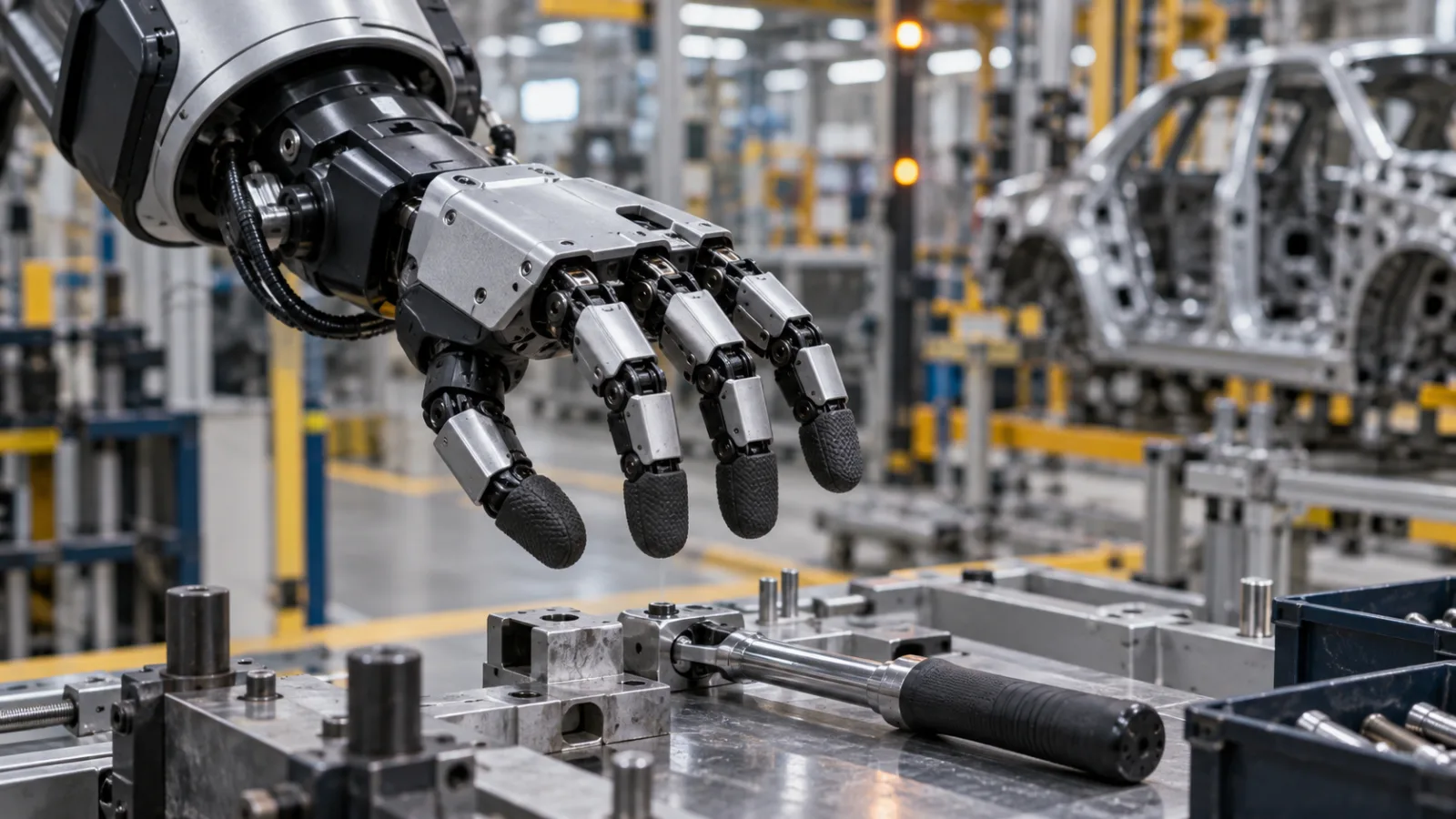
Boston Dynamics’ four-finger Atlas hand is less about looking human and more about surviving tools, shifts, repairs and safety audits. That makes it a useful signal for where humanoid robots are actually headed.
Comments
Sign in to comment.
No comments yet.