AliExpress AI Gadgets in the 11.11 Sale: How to Check the Feature Before Paying for the Label
AI-powered electronics are a growing part of AliExpress’s 11.11 promotion, but “AI” can describe anything from useful local processing to a vague app promise. Here is a practical way to verify the feature, seller, software support and return risk before ordering.

Why AI gadgets are suddenly prominent in the 11.11 listings
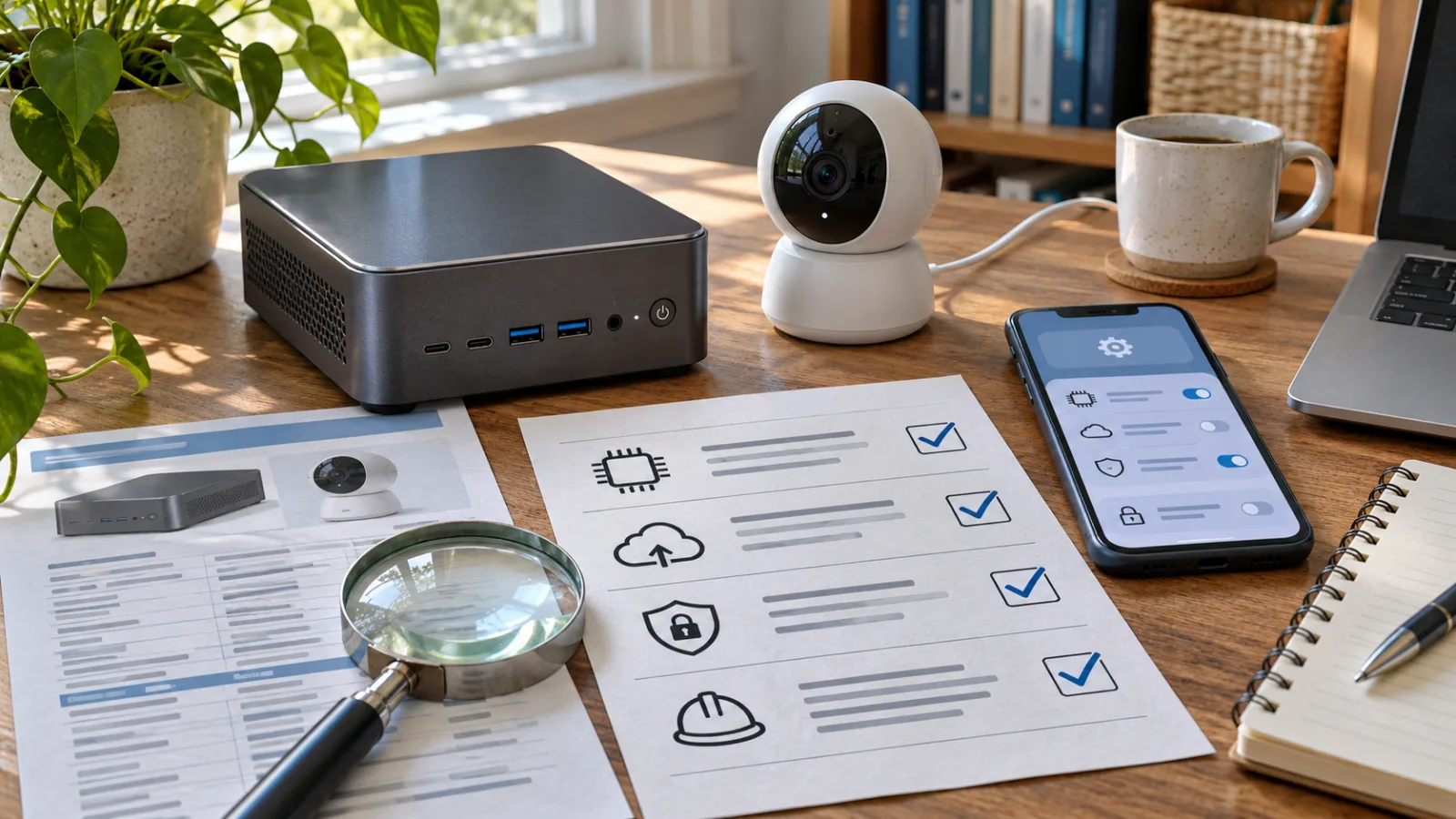
AliExpress’s 11.11 promotion runs from November 1 through November 18, putting an unusually large amount of attention on discounted electronics and connected devices. The platform’s announcement presents the event as a broad global shopping festival, while coverage of the UK campaign highlights a focus on quality technology and what it calls smart value. That combination helps explain why listings for AI-capable mini-PCs, smart-home products and other electronics are likely to appear prominently during the sale. It does not, by itself, establish that a particular device performs useful AI tasks or that its advertised feature will work as expected after delivery.
The important distinction is between a shopping event and a technical specification. A marketplace promotion can make a category more visible, but the label “AI” still needs to be checked against the hardware, software and service behind it. A product may use the term for local processing on the device, for a function handled through a companion app, or for a vague promise that is difficult to test from the listing alone. The same word can therefore describe very different buyer experiences: a mini-PC with hardware capable of running a specified workload is not equivalent to a smart-home accessory whose feature depends on an account, a remote service or an unclear application.
Retail Times reports that AliExpress says cross-border sales of products with AI capabilities—including mini-PCs and smart-home devices—doubled year on year during January through July 2026. That is useful context for the prominence of the category, but it remains a company-reported sales trend. It is not independent evidence that every product described as AI-enabled has a meaningful feature, adequate performance or continuing software support. A rise in sales can reflect stronger promotion, wider availability or growing interest as well as genuine product usefulness.
For a buyer, the practical consequence is to treat the sale language as a starting point rather than as proof. The discount may be real while the feature claim remains unverified. Before comparing prices, identify what the device is actually supposed to do and what part of the system performs that task. If the listing cannot explain the function in terms of a named processor, sensor, microphone, camera or supported application, the AI wording has little decision-making value. A translated specification table, a generic stock video or a title that repeats “AI” without tying it to the exact model should be considered an unverified marketing claim.
This matters especially when the product’s non-AI function is ordinary but the label creates the impression of a premium capability. A mini-PC may still be worth assessing as a computer, and a smart-home device may still have a useful basic function, but the buyer should not pay extra on the assumption that an undefined AI feature will later become practical. The safest comparison is between the concrete functions that can be checked before purchase and the conditions required to unlock the advertised intelligence after purchase.
The 11.11 setting also encourages fast decisions: a limited promotion, a changing price and a crowded results page can make a polished listing feel more authoritative than it is. That is precisely when the evidence should be separated into two questions. First, is the underlying product suitable for the intended job? Second, is the AI capability specific, supported and available in the buyer’s region? The first question can often be answered from model details and independent-looking buyer photographs. The second requires closer attention to the manufacturer, app, account requirements and software path. Those checks become the basis for deciding whether a sale price represents value or merely reduces the cost of taking an avoidable risk.
A four-part check for the actual AI feature
The word “AI” should be treated as a feature claim that needs checking, not as a specification by itself. Before comparing discounts, identify what the device is supposed to do and what part of the hardware performs that task. A mini-PC may advertise AI capability because of its processor, while a camera, microphone or smart-home device may depend on a particular sensor, chip or audio input. The listing should make that connection clear. Look for an exact processor designation, sensor name, microphone arrangement or other component tied to the advertised function. If the page only repeats “AI-powered” in the title and leaves the underlying hardware vague, the claim remains unverified.
This distinction matters because a translated specification table can make a broad marketing phrase look more precise than it is. A label such as “AI recognition,” “smart assistant” or “intelligent control” does not establish what is recognised, how accurately it works or whether the function is available after purchase. Treat stock video, generic product renders and demonstrations that do not clearly show the same model in the same configuration as promotional material rather than proof. The strongest pre-purchase evidence links the feature to a model number and shows the relevant task being performed on that product.
Use the following four-part check before paying:
-
Find the hardware doing the work. Check whether the listing identifies the processor, sensor or microphone responsible for the feature. For a device that claims to process images, sound or commands, the specification should provide more than a general reference to AI. Compare the model number in the title, specification table and product images. If those details conflict, or if the AI function is not connected to an identifiable component, ask the seller for the exact hardware configuration and keep the response with the order records.
-
Separate local processing from cloud dependence. Ask whether the feature works on the device itself or requires an internet connection, a cloud account or a subscription. A cloud-dependent function may also depend on the seller’s chosen app and service, so the purchase is not just hardware. Check whether a paid plan is required for the advertised capability, whether the device can perform its basic task without that plan, and whether account creation is mandatory. A listing that hides these conditions behind a short “AI” label should not be evaluated as if all functions were included in the sale price.
-
Verify the software path. Find the manufacturer’s app, download location and firmware information before ordering. The app name should correspond to the stated brand and model, and its supported languages and regional availability should be visible rather than assumed. Look for a firmware history or other indication that the software is maintained, then check whether the advertised feature appears in the app’s documentation or interface. If the only software reference is a vague promise from the seller, the hardware may arrive without a usable way to activate the claimed function.
-
Match demonstrations to the exact product. Search the listing for screenshots, interface views or videos that show the same model number and the same feature. Buyer photographs can help confirm whether the delivered item carries the expected label, but a generic image is not enough. Pay attention to whether the demonstration uses an additional device, a separate service or a different version of the product. A convincing clip becomes useful evidence only when the model, configuration and required software match the item in the order.
The result of this check does not need to be a technical verdict. It should produce a simple record: what the feature does, which component enables it, whether it is local or cloud-based, which app supports it and what evidence connects those claims to the exact model. If one of those answers is missing, price the item as an ordinary gadget whose AI function is uncertain. That keeps the discount comparison grounded in what can be verified before payment, rather than in the most prominent word on the listing.
Seller, safety and after-sale evidence that matters
A high star rating is a weak test for an AI gadget. It may describe delivery speed, packaging or whether the product powers on, rather than whether its advertised recognition, automation or assistant function works reliably. Before paying, inspect the written reviews and buyer photographs for evidence tied to the exact model. Useful details include a visible model number, the product label, the ports and buttons, the supplied power adapter, and screenshots of the companion application. Several reviews showing the same hardware and the same software screens are more informative than a large review count with generic comments.
Check the store as carefully as the item page. The seller name should make sense alongside the claimed manufacturer, and the store history should not look like a general catalogue that has suddenly adopted a branded AI product. A listing that uses a brand name but offers no manufacturer page, manual, firmware information or identifiable model deserves a higher risk assessment. Search the manufacturer’s own site for the model number and compare the photographs, specifications and app name. If the only software-download path is an unfamiliar file link in the listing, a temporary cloud drive or an instruction to contact the seller privately, treat that as a material warning. A clear route to the official app and support documentation matters because the hardware may be useless if the service disappears or the application cannot be installed in the buyer’s region.
For cameras, microphones and other smart-home devices, the question is not only whether the AI feature works. Ask what the device can hear or see, where recordings or images are processed, whether a cloud account is required, and what permissions the application requests. The listing should make it possible to identify the account or service involved; vague promises about privacy do not replace a concrete explanation of the operating model. A cloud-dependent feature also creates an after-sale risk: the buyer may receive the physical product but lose its main function if the account, server or subscription arrangement is unavailable. That risk is especially important when the product’s ordinary, non-AI function is limited.
Mains-powered and battery products need a separate check. Look for credible safety markings, a sensible voltage and plug specification for the buyer’s location, and a charger or power supply that is clearly identified. For battery devices, the listing and buyer images should not contradict one another about the battery arrangement or charging method. Do not treat a decorative logo, a translated specification table or a seller’s assurance as proof of compliance. If the electrical details are incomplete, inconsistent or difficult to verify, the discount is not compensation for having to guess whether the product is suitable to connect or charge.
Marketplace scale does not remove these checks. The Associated Press reported that the European Commission imposed a record €550 million fine on AliExpress over unsafe and counterfeit goods. That report is context for the buyer’s risk calculation, not proof that a particular AI gadget is unsafe or counterfeit. It does show why platform-level visibility and promotional claims should not be confused with independent verification. The practical response is to preserve the listing, specifications, seller messages and order details before purchase, then document the delivered model and any fault with clear photographs or screen recordings. If the item differs from the listing, that evidence is more useful than a general statement that the product “does not feel like AI.”
Finally, evaluate the likely dispute before ordering. A low-cost gadget may be worth testing when the seller provides a verifiable model, the software path is clear and the non-AI function remains useful. A more expensive device needs stronger evidence because a difficult return, a missing app or a disputed description can erase the saving. Reviews are signals, not guarantees, so the decision should rest on several consistent forms of evidence: the exact hardware, an identifiable manufacturer, working software support, reasonable safety information and a seller whose after-sale route is understandable.
Who should buy during 11.11—and who should skip the deal
An AI gadget is worth considering during 11.11 only when the product remains useful without the AI label. Start with the ordinary function: a mini-PC should meet the buyer’s computing needs, a camera should provide acceptable video and reliable recording, and a smart-home device should perform its basic control or monitoring task. The claimed intelligence should then be treated as an added capability to verify, not as the reason to overlook weak hardware, incomplete specifications or uncertain software support. If the non-AI function would not justify the price, the discount does not repair the decision; it only makes an uncertain purchase look cheaper.
The next question is whether the feature is usable in the buyer’s actual setup. Check that the manufacturer’s app can be downloaded in the relevant region, that the listed languages include the one the buyer needs, and that the device is supported by a clear firmware or software path. A listing that says “AI voice control,” “smart recognition” or “AI assistant” without identifying the application, account requirements or supported functions leaves too much of the value outside the product itself. Cloud processing can also change the practical cost and reliability of the feature. If the function depends on an account, a remote service or a subscription, the buyer should know that before paying rather than discovering it during setup.
A local retailer offers a meaningful advantage when the price difference buys clearer support, easier returns, a documented regional app or a lower chance of being left with hardware that cannot perform its advertised task. That does not make every local offer better, and the AliExpress discount may still be reasonable when the product’s core use is straightforward and the AI function is genuinely optional. The important comparison is not simply the sale price against the foreign listing price. It is the total value after considering software access, electrical compatibility, support, evidence quality and the consequences of a disputed order.
Skip the deal when the AI feature is cloud-dependent but the seller cannot explain the service, when a subscription is required but its terms are absent, or when the manufacturer provides no credible app or firmware information for the exact model. The same applies when the listing relies mainly on a translated specification table, generic stock video or broad claims that cannot be matched to the processor, sensors, microphones or other hardware named in the listing. A feature that cannot be independently connected to the device should be priced as an unverified claim, not as a guaranteed capability.
Risk should also determine the spending limit. For a low-cost accessory, a buyer may decide that the ordinary function is useful enough to justify a controlled experiment, provided the product does not create a safety or privacy concern. A more expensive camera, computer or mains-powered device requires stronger evidence because a failed feature, incompatible app or disputed order can erase the saving. Keep the listing, specifications, seller messages and order details, and record what arrives if the product differs from the description. Reviews and community discussions about wrong, counterfeit or disputed orders show why documentation matters when the buyer has to explain what was promised and what was delivered.
For cameras, microphones and connected home devices, the decision should include account and privacy exposure. Do not treat an attractive AI function as compensation for unclear data handling or an app that gives the buyer little control. For battery and mains-powered products, uncertain electrical specifications or weak safety information are reasons to stop, regardless of the advertised discount. Marketplace promotion can make a product visible and inexpensive, but it cannot substitute for evidence that the exact unit is suitable, supported and safe to use.
The sensible 11.11 choice is therefore selective. Buy when the core product already earns its price, the AI feature has identifiable hardware and software behind it, the app works where the buyer lives, and the financial risk is small enough to accept. Skip when the label carries most of the value, the service is opaque, the seller cannot document the model, or the purchase would be costly to challenge. A sale can reduce the price of a known, well-supported device; it cannot turn an unsupported promise into a dependable feature.
Related articles
Phone thermal cameras from marketplaces: what a $300 plug-in imager can actually diagnose
USB-C thermal cameras are becoming a tempting marketplace buy for electronics, HVAC and home checks. Here is what the category can reveal, where temperature readings mislead, and which buyers should skip the gadget.

Camera AI glasses on AliExpress: how to separate a usable Bluetooth camera from an “AI” feature list
Low-cost camera glasses promise translation, assistants and hands-free video. Before buying, verify the exact hardware, app, privacy light, battery workload and what still works when the phone or cloud service is unavailable.
Cheap earbuds with a case display: useful AliExpress find or shiny TWS gimmick?
A practical buyer check for low-cost TWS earbuds that advertise a bright battery screen, ANC labels and long playtime.
AliExpress Choice Day in October 2026: How to Audit the Final Cart Price Before a Coupon Becomes a Bad Deal
Choice Day coupons are easy to notice and harder to value. This guide shows how to compare the real checkout total, test thresholds, account for shipping and tax, and decide when a sale price is worth the risk.

Comments
Sign in to comment.
No comments yet.