Azelaic Acid Is Trending Again: How to Choose a Budget Formula Without Buying the Hype
Azelaic acid is having another moment in skincare searches. Here is what the ingredient can realistically do, how to compare budget formulas, when to patch-test, and why percentage alone is a poor buying guide.

Azelaic acid has become one of the quieter skincare ingredients to break into the current trend cycle. Search interest has risen sharply in October, while beauty coverage increasingly presents it as a flexible answer to spots, post-breakout marks and uneven-looking tone. That combination makes sense for a budget-focused routine: azelaic acid is familiar, available in different strengths and useful across more than one cosmetic concern.
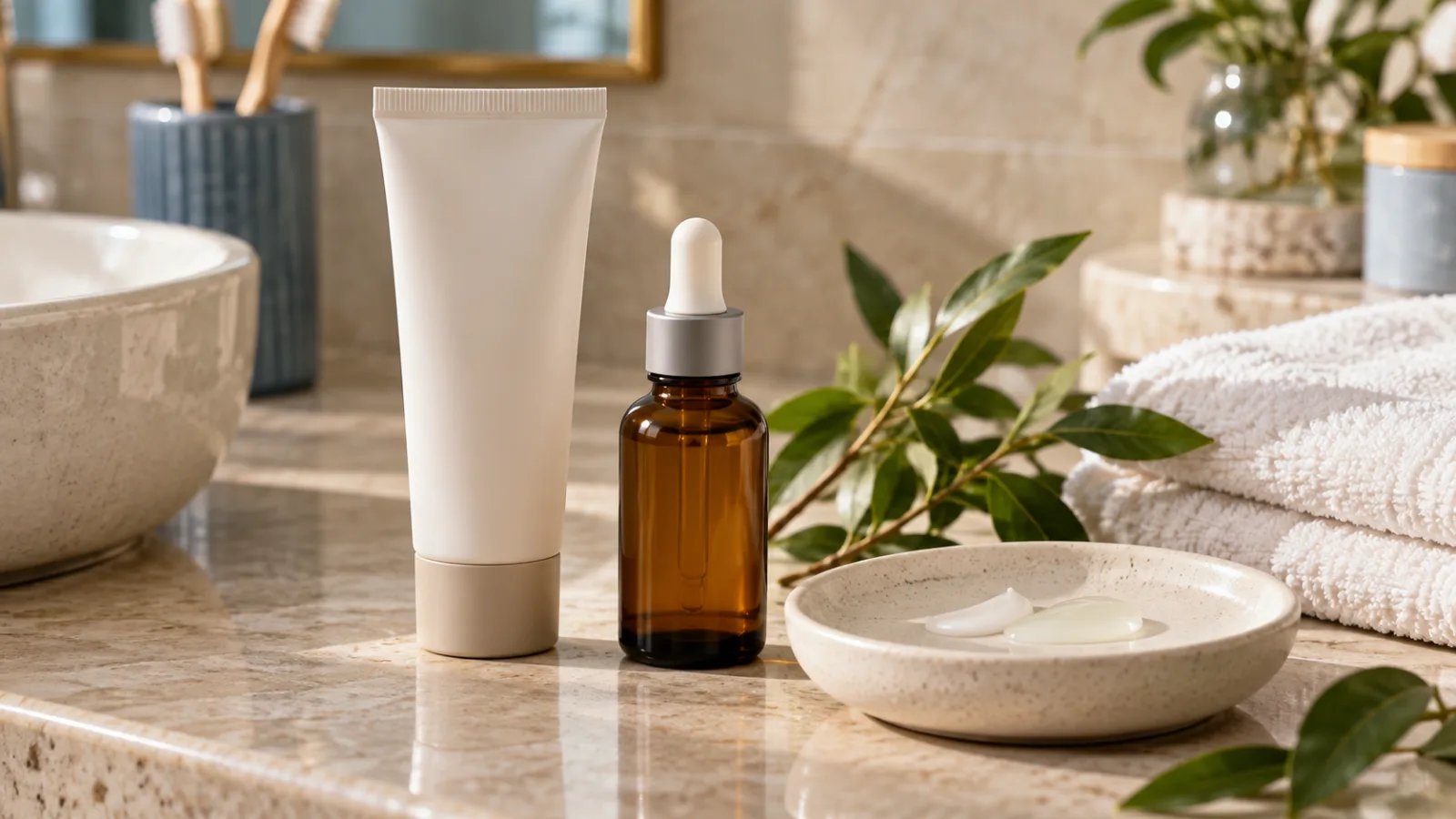
It is also easy to oversell. A serum labelled “brightening,” “calming” or “pore refining” is not automatically equivalent to a tested treatment product. The percentage may be unclear, the finished formula may be unstable or irritating, and a cosmetic product may borrow the language of clinical skincare without having comparable evidence behind it.
The sensible question is not whether azelaic acid is a miracle ingredient. It is whether a particular product gives you a reasonable amount of the ingredient, in a tolerable formula, at a price that makes sense for the job you want it to do.
Why azelaic acid is suddenly back in the conversation
A current skincare trend index lists azelaic acid among the ingredients with rising search interest in October 2026. That is a useful signal of consumer attention, not proof that every new product works. Trend data can tell us what people are investigating; it cannot establish whether a formula delivers a meaningful result.
The renewed interest also fits a wider shift in skincare. Consumers are showing less patience for long routines built around one dramatic claim per bottle. Barrier support, fragrance-free products and ingredients with several modest uses are receiving more attention than elaborate routines with many overlapping actives. Azelaic acid fits that mood because it sits between a conventional exfoliating active and a more general soothing ingredient. It can influence several visible concerns, but usually gradually rather than dramatically.
The ingredient itself is a naturally occurring dicarboxylic acid. Dermatology references describe it as having anti-inflammatory, antimicrobial, keratolytic and comedolytic properties. In plain language, it can help loosen dead skin buildup, reduce some of the processes associated with clogged pores and calm certain forms of visible inflammation. It also has a role in reducing the appearance of some discoloration left after inflammation.
That is a more grounded description than saying it “resets” the skin, “detoxes” pores or permanently balances oil. Those phrases are marketing shorthand, not useful instructions for choosing a product.
What the evidence supports
The American Academy of Dermatology includes topical azelaic acid among the conditional treatment recommendations in its updated acne guidelines. Its explanation focuses on three relevant effects: helping unclog pores, reducing acne-associated bacteria and fading the dark marks that can remain after a spot clears. The recommendation is conditional, which matters. It means the ingredient can be appropriate for many people, but the right choice depends on the individual situation and the alternatives being considered.
The AAD also lists azelaic acid as an option that can help with post-breakout dark spots. This does not mean it erases every kind of pigmentation. Discoloration can have different causes, and irritation itself can make uneven tone more noticeable. A product that repeatedly stings or causes peeling is not a clever brightening strategy, even if its label promises fast results.
DermNet describes azelaic acid as useful for mild to moderate acne and for some forms of rosacea, while noting that the effect is variable and often slow. It reports that improvement may begin after about a month, with more complete results taking considerably longer. That timescale is important because many viral skincare demonstrations show a finish, not a treatment course. A smoother appearance immediately after applying a cream may come from hydration, silicones or light-reflecting ingredients rather than a change in the underlying concern.
There is also a practical distinction between a cosmetic azelaic-acid product and a regulated medicine. In the United States, the Food and Drug Administration explains that a product marketed as treating or preventing disease, or changing the structure or function of the body, falls under drug rules rather than ordinary cosmetic rules. A product sold as a cosmetic may still contain a useful ingredient, but its claims and testing should not automatically be treated as equivalent to those of a regulated therapeutic product.
The percentage is not the whole story
Budget shoppers often compare products by percentage first. That is understandable, but it can lead to a false sense of precision.
A formula listing 10% azelaic acid tells you more than a product that only says “azelaic complex,” but it does not tell you everything that determines performance. You also need to consider the base, pH, texture, packaging, supporting ingredients and whether the product was tested as a finished formula. Two products with the same headline percentage can feel completely different and may not be equally tolerable.
Products around 10% are common in cosmetic skincare. Higher strengths, including 15% and 20%, are also used in regulated or professional contexts in some countries. A higher number is not automatically a better bargain. If a strong formula makes you stop using it after three days, its effective value is close to zero.
Be cautious with labels that use vague language such as “azelaic derivative,” “azelaic booster” or “azelaic-inspired complex” without clearly stating whether actual azelaic acid is present. Derivatives can have their own reasons for inclusion, but they should not be assumed to behave exactly like azelaic acid. If you are trying the ingredient specifically, look for “azelaic acid” in the ingredient list and a clearly stated concentration when the brand provides one.
The rest of the ingredient list matters too. A low-cost product can be perfectly reasonable if it combines azelaic acid with humectants, emollients and a simple preservative system. A more expensive formula may add fragrance, essential oils or several additional actives that increase the chance of irritation without adding a benefit you actually need.
How to read a budget formula
A useful shopping check can be done in a few minutes.
First, identify the purpose. If your priority is post-breakout discoloration, a leave-on formula is more relevant than a cleanser that is rinsed away quickly. If your skin is easily irritated, a cream or lotion base may be more comfortable than a thin, highly active serum. If you mainly want a cosmetic smoothing effect, a moisturiser with a small amount of azelaic acid may be enough, but expectations should remain modest.
Second, check whether the product names the concentration. Transparency is not a guarantee of effectiveness, but it makes comparison easier. A brand that provides a percentage, full ingredient list, batch or expiry information and clear directions gives you more to work with than one built around a proprietary “glow complex.”
Third, look for unnecessary sources of irritation. Fragrance is not automatically bad, but it is not needed for azelaic acid to work. Essential oils, high amounts of denatured alcohol and a crowded mix of exfoliating acids may make a formula less suitable for someone already dealing with stinging or dryness. This is especially relevant because azelaic acid can itself cause tingling, burning, itching, redness or scaling when introduced too quickly.
Fourth, examine the packaging. An opaque or well-designed tube can be more practical than a decorative jar that exposes the formula to repeated contact with air and fingers. The product does not need luxury packaging; it needs packaging that protects the formula and lets you dispense a small, consistent amount.
Finally, compare cost per usable month rather than price per bottle. A 30 ml product used sparingly over several months may cost less than a larger bottle that is applied too generously, pills under sunscreen and gets abandoned. The cheapest product is not the lowest shelf price. It is the one you can use consistently without creating a second problem.
A conservative way to introduce it
Patch-testing is sensible, particularly if your skin reacts to new products. The AAD advises applying a product to a small test area twice daily for seven to ten days, using it in the way you would normally use it. If redness, itching or swelling develops, wash it off and do not continue testing that product. A small-area test cannot guarantee that your face will tolerate a formula, but it can reduce the risk of committing immediately to full-face use.
Once the product passes that test, introduce it into a simple routine. Cleanse gently, allow the skin to dry if dampness increases stinging, apply a thin layer according to the product directions and follow with moisturiser if needed. Starting every other evening is a reasonable cautious approach for a leave-on product, even when the label suggests more frequent use. Increase only if your skin remains comfortable.
Do not introduce azelaic acid on the same night as several other new actives. This is not because the ingredients are automatically incompatible. It is because stacking products makes irritation harder to interpret. If your face becomes hot, tight, itchy or unusually flaky, you need to know which product is responsible.
A basic routine around it is often enough:
- Morning: gentle cleanser or water rinse, moisturiser if needed, and broad-spectrum sunscreen.
- Evening: gentle cleanser, azelaic-acid product on the schedule your skin tolerates, then moisturiser.
- On alternate nights: keep the routine plain until you know how the active behaves.
Sunscreen remains important when the goal is more even-looking tone. The AAD recommends broad-spectrum, water-resistant SPF 30 or higher for exposed skin. Azelaic acid is not a substitute for sun protection, and no brightening ingredient can make repeated ultraviolet exposure irrelevant.
What not to combine at the beginning
The most common budget mistake is buying several inexpensive actives at once. Each bottle seems affordable, but the routine becomes expensive through waste and irritation.
At the beginning, avoid pairing a new azelaic-acid product with a new retinoid, glycolic-acid exfoliant, salicylic-acid leave-on product or strong peeling mask. Someone who already uses one of these successfully may eventually combine products under professional or label guidance, but a first trial is not the time to test a full active stack.
Niacinamide is often included in azelaic-acid formulas and is generally used in the same broader category of gentle-support products. That does not mean every combination will suit every person. The finished formula and your own tolerance matter more than the internet’s list of supposedly perfect pairings.
Be particularly wary of “spot-fading” routines that contain several brightening ingredients plus a scrub. More irritation can mean more persistent discoloration, especially in skin that tends to leave brown or grey marks after inflammation. A slower routine with fewer variables is usually the more economical experiment.
Who may want to skip it or ask for help first
Azelaic acid is often described as gentle, but “gentle” is not the same as irritation-proof. People with very sensitive skin or eczema-prone skin may find it uncomfortable, and a damaged or actively irritated skin barrier can make almost any leave-on active sting.
Pause and seek professional advice if you develop severe or persistent redness, swelling, blistering, intense burning, worsening scaling or symptoms that do not settle after stopping the product. Do not assume that every reaction is a normal adjustment period.
This article is not a diagnosis guide. Persistent, painful, deep or scarring breakouts, widespread redness, sudden pigment changes and recurring rashes deserve assessment rather than an expanding collection of online products. The AAD specifically advises seeking dermatology care for large painful lesions, scarring or acne that does not improve with appropriate self-care.
Pregnancy is another reason to check the context rather than rely on a viral ingredient list. The AAD says azelaic acid is thought to be safe during pregnancy, while also advising people to discuss acne treatment with an obstetrician or dermatologist. That is a more responsible standard than treating a “pregnancy-safe” badge on a retail page as universal medical clearance. If you are pregnant, trying to conceive, breastfeeding, taking prescription medication or managing a diagnosed skin condition, ask a qualified professional before changing treatment.
A realistic budget decision
Azelaic acid makes sense as a budget purchase when you have a clearly defined goal, the formula is transparent and you are prepared to use it consistently for weeks rather than judging it after one application.
It is a weaker choice when the product is being bought because a short video promises instant glass skin, a total cure for breakouts or a dramatic transformation in seven days. The ingredient can support a routine, but it cannot compensate for an irritating cleanser, unprotected sun exposure, constant product switching or a concern that needs medical assessment.
A good buying hierarchy is simple:
- Choose a clearly labelled formula from a reliable seller.
- Prefer a tolerable base over the highest advertised percentage.
- Start with one active change.
- Patch-test and introduce it slowly.
- Give the routine enough time to judge, unless irritation tells you to stop sooner.
- Reconsider the product if the label makes stronger claims than the evidence supports.
The current trend is worth noticing because it points toward a more practical kind of skincare: one ingredient with several plausible uses, a short routine and fewer expensive stories. But the trend should not change the buying standard. Read the label, respect your skin’s signals and pay for the formula you can actually use—not for the most dramatic promise printed beside it.
Comments
Sign in to comment.
No comments yet.