Persimmon soap for body odor: what the tannin can do, what it cannot, and how to buy it on a budget
Persimmon soap is suddenly appearing in body-care feeds as a solution for musty body odor. The useful question is not whether the fruit is natural, but whether the formula contains meaningful persimmon tannin and suits your skin.

Persimmon soap has moved from a niche Japanese body-care ingredient into a fast-rising beauty trend. Search data published in September 2026 placed persimmon soap among the month’s fastest-growing skincare topics, while forum discussions show people comparing bars for odor control, fragrance, sensitivity and value. The trend is often explained with a blunt phrase: persimmon soap removes “old person smell.” That wording is catchy, but it is also a poor way to judge a product or talk about the people who use it.
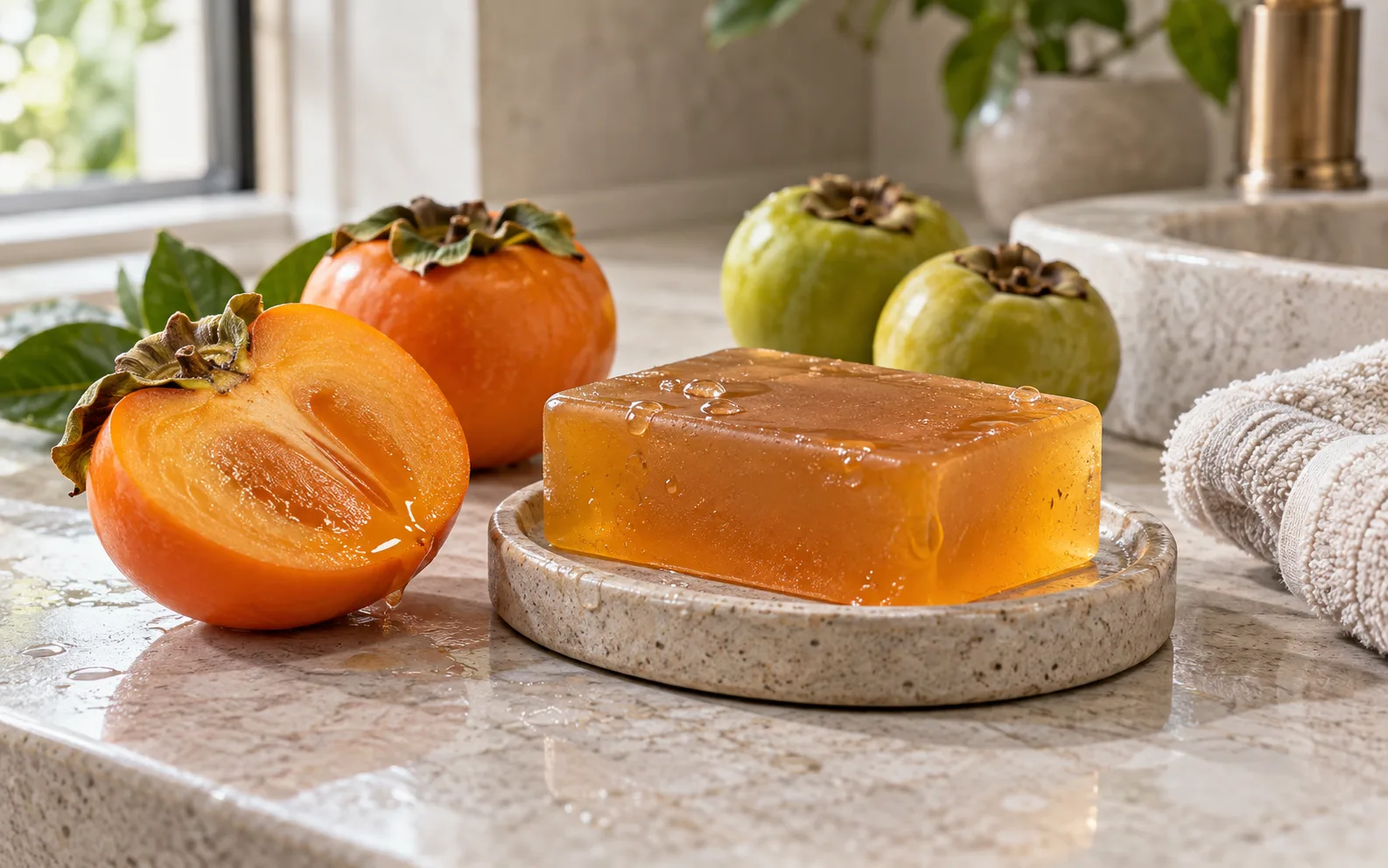
The more useful question is narrower: can a wash-off product containing persimmon tannin help reduce certain odor molecules, and can you identify a reasonably priced bar without mistaking a fragrant cleanser for a tested deodorant?
The answer is qualified. Persimmon-derived tannins have a plausible odor-binding role, and small studies and supplier testing support deodorizing activity. That does not mean every soap with a persimmon image on the label will work, that it will stop sweating, or that it replaces a deodorant or antiperspirant. The base formula matters just as much as the headline ingredient. So do contact time, skin tolerance and the particular odor you are trying to manage.
Why persimmon soap is trending now
The current spike is part of a broader shift in body care. Consumers are looking for ingredient-led products that promise a specific job: odor control, smoother texture, barrier support or longer-lasting fragrance. At the same time, many shoppers are tiring of large routines and expensive “clinical” launches. A single bar looks simple, portable and inexpensive compared with a collection of sprays, washes, exfoliants and scented lotions.
The trend also fits the language of social media. “Persimmon,” “Japanese bathing,” “nonenal” and “natural deodorizer” sound more distinctive than “another scented body wash.” Search-trend reporting has connected the recent rise to interest in persimmon soap and the phrase “old person smell,” but search growth measures attention, not effectiveness. It tells us that people are curious; it does not tell us that a product works for everyone.
Reddit discussions are a useful record of the questions shoppers actually have. People ask whether the soap works on underarms, whether it can replace deodorant, whether it dries the skin, and whether the persimmon extract appears high enough in the ingredient list to matter. The same threads contain both enthusiastic reports and complaints that a strongly scented bar merely covers odor. That disagreement is not surprising: the products are not standardized, and personal body odor is not one single chemical problem.
What persimmon tannin is doing in the formula
Persimmon tannin is a group of polyphenolic compounds associated with the fruit of Diospyros kaki, commonly called Japanese or kaki persimmon. Traditional persimmon tannin preparations can be made from unripe fruit and may be fermented or otherwise processed. Cosmetic suppliers use different extracts and concentrations, so “persimmon extract” on a label is not automatically equivalent to a defined amount of tannin.
Tannins are able to interact with proteins and other compounds through several kinds of chemical bonding. In deodorizing applications, the relevant idea is that a tannin-rich extract may bind or reduce the volatility of some odor compounds rather than simply covering them with perfume. This is different from an antiperspirant, which is designed to reduce the amount of sweat reaching the skin through a different mechanism. It is also different from an antimicrobial claim. A product can reduce perceived odor without eliminating the bacteria that normally live on skin, and a laboratory antibacterial result does not establish that a consumer soap will prevent odor for a whole day.
The compound most often mentioned in persimmon-soap marketing is 2-nonenal, usually called nonenal. Research has associated nonenal with a characteristic fatty or grassy odor that can become more noticeable as skin-lipid chemistry changes with age. That does not mean it is an “old person” substance, nor does it mean every odor in an older adult is nonenal. Sweat, sebum, clothing, detergent residue, the underarm microbiome, diet, hormones, medications and the environment can all affect how a person smells.
A practical translation is this: persimmon tannin may be more relevant to certain lingering, musty or fatty odor notes than to every form of sweat odor. If the main problem is heavy sweating, a tannin soap is addressing the wrong part of the problem. If the main problem is a perfumed product that clashes with body odor, adding another fragrance may make the result harder to judge.
What the evidence actually supports
The evidence is promising but narrower than the trend suggests. A Japanese study indexed through CiNii examined a soap containing a polyphenol mixture from sources including persimmon and tea. In a four-week human study involving 20 men aged 43 to 75, the researchers reported a deodorizing effect against the odor described as aging-related body odor. This is useful evidence that a soap format can be studied in people. It is not a large, modern, independently replicated trial of every persimmon product on the market.
A separate review in the International Journal of Cosmetic Science discusses topical body-odor agents, including metallic salts and botanical materials. It explains that odor comes from compounds formed through interactions among sweat, skin lipids and microorganisms, and that deodorants can work by reducing odor, limiting microbial activity or changing how odorants are perceived. The review also notes that tannins can interact with proteins. That gives persimmon tannin a reasonable cosmetic rationale, but a rationale is not the same as a guaranteed consumer outcome.
Commercial ingredient documentation adds another layer. Japanese supplier Rilis describes a standardized persimmon extract, PANCIL PS-M, and publishes laboratory deodorization and antibacterial testing. Those results are relevant to the ingredient, but they are supplier data, not independent proof that a finished bar bought online will deliver the same performance. The supplier also recommends a usage range for its own material; that figure cannot be transferred directly to a product whose formula and extraction process are unknown.
The strongest conclusion is modest: persimmon tannin is not an invented ingredient with no plausible function, but the market often jumps from “an extract can interact with odor compounds” to “this soap solves body odor.” The second statement is much larger than the evidence.
Persimmon extract is not the same as meaningful persimmon tannin
This is the most important budget-shopping distinction. A label may say “persimmon,” “persimmon fruit extract,” “persimmon ferment,” or “kakishibu,” but these terms do not tell you exactly how much deodorizing polyphenol is present. Ingredient lists for cosmetics generally do not disclose percentages, and botanical extracts can vary in strength.
Look for a full ingredient list rather than relying on the front of the package. Persimmon-related names near the beginning of the list may suggest that the ingredient is not merely a trace marketing addition, although ingredient order still cannot reveal the concentration precisely. If the product only says “natural persimmon scent,” it may contain fragrance rather than a meaningful deodorizing extract. If it lists a tiny amount of fruit extract after colorants and fragrance, do not pay a premium for the picture of the fruit.
The base also matters. Traditional soap made with alkaline salts can feel cleansing but drying, especially if used repeatedly on underarms, the groin, feet or already-irritated skin. A syndet bar or body wash may be milder for some people, but “syndet” is not a guarantee of gentleness either. Fragrance, essential oils, preservatives, dyes and the surfactant system can all affect tolerance.
A simple comparison can prevent a poor purchase:
- Ingredient purpose: Is the product presented as an odor-control wash, or is persimmon only part of a scent story?
- Formula: Does it contain a large fragrance load, harsh-feeling soap, exfoliating acids or several potential irritants?
- Transparency: Does the brand identify the persimmon material and provide a complete ingredient list?
- Cost per use: How many washes will the bar realistically provide, and will you need a second deodorant anyway?
- Return and quality controls: Is there a clear manufacturer, batch information and a way to contact the seller?
The cheapest bar is not necessarily the best value if it dries the skin, creates a rash or needs to be replaced quickly. Conversely, a premium bar is not automatically more effective. A plain, fragrance-free cleanser plus a separate deodorant may be a better budget choice for someone whose main need is gentle washing rather than nonenal-related odor control.
Persimmon soap will not stop sweat
A deodorant and an antiperspirant are not interchangeable. Deodorants reduce or mask odor. Antiperspirants are formulated to reduce wetness at the skin surface, commonly through aluminum salts. Persimmon soap is a rinse-off cleanser with a possible odor-binding ingredient. Even if it removes some odor compounds during washing, it is not designed to provide the same protection as an antiperspirant applied and left on the skin.
That distinction matters for people who are judging the product after exercise, hot weather or a long workday. A bar can leave skin smelling cleaner immediately after a shower and still have little effect on sweating several hours later. It may also work better on clothing or body areas where odor compounds linger than on an underarm that is producing a lot of fresh sweat.
A realistic routine might be to use the bar during a normal shower, rinse thoroughly, dry the skin, and then use a separate deodorant or antiperspirant if that is what the person normally needs. There is no requirement to use persimmon soap on every body area. Applying more often or scrubbing harder will not reliably improve the chemistry and can increase irritation.
How to test a persimmon soap without wasting money
Because a soap is washed off, testing it should be conservative. Dermatology guidance for new skin-care products recommends trying a small area first and watching for delayed redness, itching, swelling or burning. The American Academy of Dermatology describes a seven-to-10-day test for many products, while DermNet cautions that wash-off products should be tested as wash-off products rather than left sitting on the skin.
For a new bar, begin with a small area of intact skin on the arm. Lather it briefly as directed, rinse it completely and stop if there is immediate stinging or marked redness. Do not test a new scented bar directly after shaving, on broken skin, over an active rash or immediately after using an exfoliating acid. Those conditions make irritation more likely and make it difficult to tell what caused a reaction.
If the trial goes well, use it on one limited body area for several showers before applying it everywhere. Keep the rest of the routine stable. Changing soap, deodorant, laundry detergent and fragrance at the same time makes the result impossible to interpret. A bar that causes tightness or persistent dryness is not a good bargain, even if it reduces odor.
Stop using the product if you develop a rash, swelling, intense itching, blistering or pain. Rinse the area gently and seek professional advice when the reaction is severe, persistent or difficult to identify. People with a history of contact allergy, recurring dermatitis or a skin condition should ask a dermatologist about product selection rather than treating a new reaction as a normal “detox.” Cosmetic products do not detox the skin, and irritation is not evidence that an ingredient is working.
Fragrance can hide the result
Many persimmon soaps are sold as body-care experiences, not laboratory-clean odor-control products. They may contain citrus oils, floral fragrance, musk, herbs or a sweet scent designed to remain on the skin. That is a personal preference, but it complicates an odor test. You may perceive improvement because the fragrance is strong, or dislike the product because it mixes badly with your own scent.
Fragrance is also a common source of cosmetic contact reactions. DermNet notes that “unscented” does not always mean fragrance-free: a masking fragrance may be used to cover the smell of other ingredients. For people who are sensitive, “fragrance-free” is a more useful label than “unscented,” though labels still require careful reading. Plant-based essential oils can contain fragrance allergens, and natural origin does not guarantee tolerance.
If your goal is to find out whether persimmon tannin helps, choose the least perfumed formula you can find. If you enjoy fragrance and have no sensitivity, a scented bar may be perfectly acceptable, but judge it as a fragranced cleanser with persimmon—not as a clean experiment.
Who should be cautious
People with easily irritated skin should be especially cautious with strongly scented soap, high-alkaline bars, essential oils and products that also contain exfoliating acids. Underarms and the groin are sensitive areas, and freshly shaved skin is more vulnerable to stinging. Feet can tolerate frequent washing for many people, but cracked skin can burn when exposed to fragrance or botanical extracts.
Do not use a cosmetic soap to diagnose the cause of a new or unusual odor. A sudden change may have many explanations, and persistent odor accompanied by pain, discharge, sores, fever or other symptoms belongs with a qualified clinician. This article is about general cosmetic care, not treatment of a medical condition.
Pregnancy and breastfeeding do not automatically make a plain persimmon soap unsafe, but product formulas vary and a person may have individual sensitivities. If the bar contains additional actives, essential oils or a long list of functional ingredients, check with a clinician who knows your circumstances. The same conservative approach makes sense for children, people with a history of severe allergy and anyone using prescribed products on the same area.
A better budget decision tree
Start with the problem, not the trend. If you mainly want a gentle daily cleanser, buy the mildest fragrance-free product that meets that need. If you want less wetness, compare an established antiperspirant with a persimmon soap rather than treating the two as substitutes. If you want to reduce a lingering musty odor and are curious about tannin, a reasonably priced persimmon bar can be a fair experiment, provided the ingredient list is transparent and the product does not irritate you.
Before buying, ask five questions:
- Is the product’s primary promise odor reduction, or is the fruit mostly a marketing theme?
- Does the ingredient list identify persimmon or persimmon ferment clearly?
- Is there heavy fragrance that could mask the result or irritate your skin?
- Can you buy one bar instead of a multipack?
- What will you use if the bar cleans but does not control sweat?
A one-bar trial is more informative than a six-pack purchased because a video called it a miracle. Use it consistently for a week or two, keep notes on odor, dryness and irritation, and compare it with your normal routine. That is not a clinical trial, but it is a sensible way to avoid turning a small trend experiment into a costly shelf of unused products.
The verdict
Persimmon soap is worth treating as a real cosmetic ingredient with limited, specific evidence—not as a universal body-odor cure. Persimmon tannin has a plausible mechanism and some human and laboratory support for reducing certain odor compounds. The research is not strong enough to promise that every bar will work, and it does not show that persimmon soap stops sweat or replaces antiperspirant.
For a budget-conscious shopper, the winning formula is less glamorous: verify the ingredient list, avoid paying for a fruit-themed label with negligible extract, prefer a tolerable base, and test the product slowly. Fragrance-free is usually the safer starting point for reactive skin. If the problem is wetness, choose a product made for wetness. If odor changes suddenly or persists with other symptoms, seek professional advice.
The trend’s useful lesson is not that everyone needs a persimmon bar. It is that an ingredient can have a narrower job than its marketing language suggests. Once that distinction is clear, you can decide whether the soap earns a place in your shower—or whether a simpler, cheaper cleanser already does enough.
Comments
Sign in to comment.
No comments yet.