Bose S1 Pro Battery Recall: How to Check the Serial Number and Keep Using the Speaker Safely
Bose is recalling certain S1 Pro and S1 Pro+ lithium-ion battery packs after reports of melting, smoke and fire. Here is how to identify an affected pack, remove it, request a replacement and avoid unsafe disposal.

Bose has recalled certain battery packs used in its S1 Pro and S1 Pro+ portable PA speakers because the lithium-ion packs can overheat and ignite. The recall covers batteries sold inside speaker systems as well as replacement packs and standalone accessories. It is not a recall of every S1 Pro speaker, and it does not mean the speaker must be discarded.
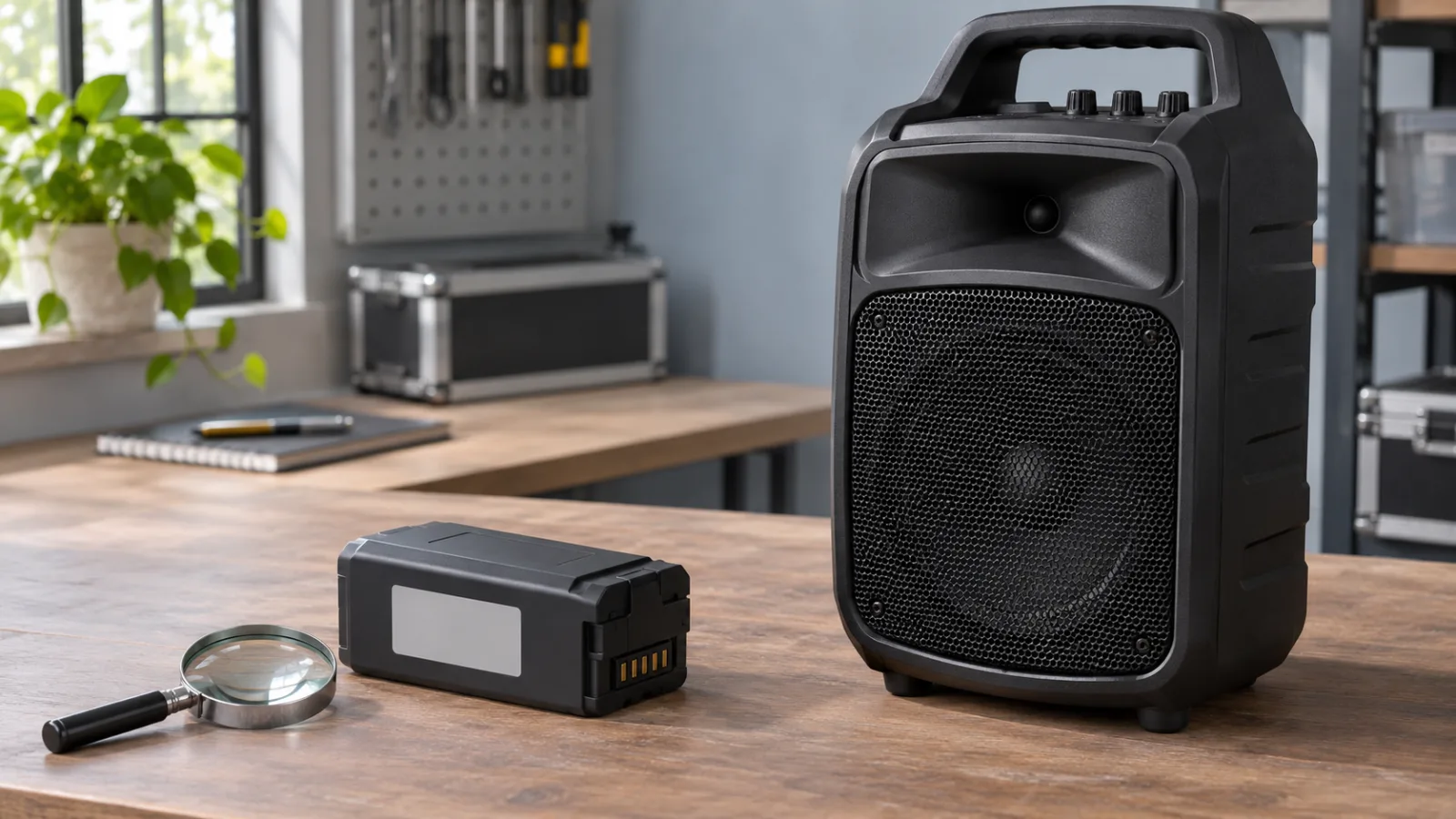
The practical distinction matters: the affected component is the removable battery pack. Once that pack has been removed, Bose says the speaker may continue to be used from AC power. Owners should not keep using a recalled battery simply because it still charges, appears undamaged or has never shown a warning sign.
The recall was announced in the United States on November 5, 2026, in cooperation with the U.S. Consumer Product Safety Commission. Health Canada published a corresponding notice for Canadian owners. The U.S. notice covers about 634,759 units, with another 35,400 sold in Canada. The agencies say the recalled packs were sold from December 2017 through July 2026 in the United States, while the Canadian notice gives different sales periods for the S1 Pro and S1 Pro+ packs.
What is being recalled
The affected products are rechargeable lithium-ion battery packs made for the Bose S1 Pro Portable Bluetooth Speaker System and the Bose S1 Pro+ Portable Bluetooth Speaker System. Some were included with a speaker; others were sold separately as accessories or replacement parts.
The recall does not apply to every battery used in those systems. Identification depends on the first six digits of the battery pack’s 17-digit serial number. The affected prefixes are:
083723078352084105078591078592084106086409
Those numbers belong to the battery, not the speaker. A speaker’s serial number is a separate identifier and cannot be substituted for the battery serial number when checking the recall.
The U.S. Consumer Product Safety Commission says the affected packs were sold with S1 Pro and S1 Pro+ systems for about $700, and as individual battery packs for between $100 and $160. Sales took place through Bose, Best Buy, Amazon, Walmart and other retailers. That means secondhand buyers, people who received a speaker as a gift and owners who bought a replacement pack should check just as carefully as first purchasers.
Why the recall was issued
Bose and the safety agencies describe a risk of overheating and ignition. The CPSC notice reports seven incidents involving recalled packs melting, producing smoke or catching fire, including six reports of property damage. No injuries had been reported in the U.S. notice. Health Canada said there had been no incidents or injuries reported in Canada as of October 5, while also referring to the seven global incident reports.
The notices do not say that every affected pack will fail or that a visible defect is required before it becomes dangerous. That is why the instruction is based on the serial number rather than on a symptom such as swelling, an unusual smell or excessive heat.
A battery that still works normally can still be part of the recall. Lithium-ion failures can develop during charging, storage or use, and the absence of a problem so far is not a safety clearance. Do not run an informal test by charging the battery overnight, playing the speaker at high volume or waiting to see whether it becomes hot.
How to check your S1 Pro battery
The battery is located behind a cover on the underside of the speaker. Bose’s instructions require the speaker to be powered off and disconnected from AC power before the battery is accessed.
The general procedure is:
- Turn the S1 Pro or S1 Pro+ off and unplug the AC power cord.
- Place the speaker so that you can safely reach the battery compartment on its underside.
- Remove the two screws securing the battery cover.
- Remove the cover and use the pull tabs to lift out the battery pack.
- Find the 17-digit serial number printed on the battery label below the barcode.
- Compare the first six digits with the seven recalled prefixes listed above.
If the label is damaged, unreadable or missing, do not assume that the pack is safe. Bose says owners should contact support when they cannot identify the battery. The serial number needed for the replacement request is the one printed on the battery pack, not the number printed on the speaker cabinet or packaging.
Owners should work on a stable surface and avoid puncturing, bending, crushing or disassembling the pack. The removal process is limited to opening the battery compartment and lifting the pack out. It is not an invitation to open the battery housing or repair the cells.
What to do if the battery is affected
Stop using the recalled pack immediately. If it is installed, remove it from the speaker according to Bose’s instructions. Do not put it back in the speaker to use the system wirelessly, and do not connect it to a charger while waiting for the replacement process.
Bose is offering a free replacement battery pack for affected units. The company’s recall page asks for the battery’s serial number and provides the replacement or repair request process. A purchase receipt is not required according to Bose’s support information, and the company says the remedy applies even if the product is outside its normal warranty period. Used and gifted products are covered as well, provided the battery is included in the recall.
If you own more than one affected battery, submit each battery’s serial number. A single speaker may have had more than one battery over its lifetime, and a replacement purchased separately can have a different serial number from the pack originally supplied with the speaker.
Keep a record of the request confirmation and the serial number until the replacement arrives. If you are dealing with a rental, event company or workplace inventory, identify every S1 Pro and S1 Pro+ battery rather than checking only the units currently in use.
Can you still use the speaker?
Yes, but only after the recalled battery has been removed. Bose says an S1 Pro or S1 Pro+ can continue to operate while connected to AC mains power without the battery installed.
That changes the product’s role. It remains usable as a powered PA, practice amplifier, monitor or Bluetooth speaker at an outlet, but it is no longer a portable, battery-powered system until the replacement pack is installed. If you use the speaker for outdoor performances, presentations, fitness classes or ceremonies, plan around the loss of wireless operation rather than treating the AC option as a full substitute.
Use the original AC power cord and place the speaker where the cord and connector will not be pulled, crushed or exposed to water. The S1 Pro is a portable product, but operation from mains power still requires normal electrical precautions. A replacement battery does not make a damaged cable, outlet or extension setup safe.
Do not install a third-party battery as a temporary workaround. The recall concerns a removable pack designed specifically for these systems, and an incompatible battery can create separate electrical, mechanical and charging risks. Wait for Bose’s approved replacement or obtain direct guidance from the company.
Disposal is the part owners should not improvise
A recalled lithium-ion battery must not go in household trash, general recycling or the used-battery collection boxes commonly found at retail and home-improvement stores. Bose and the CPSC specifically warn against those disposal routes because a damaged or recalled lithium-ion pack can start a fire during handling, transport or processing.
Contact your local household hazardous-waste facility or municipal waste authority before transporting the battery. Ask whether it accepts recalled lithium-ion batteries and follow its packaging and drop-off instructions. Not every battery-recycling location is equipped to handle a recalled pack.
Do not mail the battery back to Bose unless the company or the relevant local authority gives you a specific, approved process. Bose’s recall information says customers should dispose of affected packs according to local requirements rather than sending them to the company.
If the battery is hot, swollen, leaking, smoking or producing an unusual odor, move people away from it and contact local emergency services or the appropriate hazardous-materials authority for advice. Do not handle a visibly failing pack more than necessary, place it in water, puncture it or try to force it into a disposal box.
What this means for buyers of used S1 systems
The recall changes the checklist for anyone buying an S1 Pro or S1 Pro+ secondhand. A working speaker is not enough evidence that the package is safe. Ask the seller to show the battery serial number and check it against Bose’s recall page before completing the transaction.
If the battery is affected, the speaker may still have value as an AC-powered unit, but the cost, waiting time and availability of the replacement should be part of the negotiation. Do not buy an affected pack separately on a marketplace with the expectation that it is harmless because it is unused. The recall includes packs sold as accessories and replacement parts.
If the seller cannot provide a readable battery serial number, treat that as an unresolved safety question. Bose says owners with missing or unreadable identification should contact support. A photograph of the battery label, the purchase listing and the speaker model can help establish what you are dealing with, but none of those replaces the official serial-number check.
Canadian buyers should also note that Health Canada says recalled products cannot be redistributed, sold or given away in Canada. Local rules elsewhere may differ, but a recalled battery should not be passed to another person simply because it is still functional.
What existing owners should check next
Start with the battery, not the speaker’s software, app connection or audio performance. The S1 Pro’s ordinary operation can make a recalled pack look completely normal. A successful Bluetooth connection and a normal charge indicator do not answer the safety question.
If you use the speaker professionally, create a small inventory of battery serial numbers for every unit and spare. Mark affected packs as unavailable after removal, and keep them separate from working batteries while you arrange disposal. Do not leave a recalled pack inside a vehicle, equipment case or hot storage area while waiting for instructions.
If you have already noticed smoke, melting, a burning odor or abnormal heat, document the incident from a safe distance and report it to Bose and the relevant consumer-safety authority. Do not continue testing the battery to collect more evidence. The CPSC and Health Canada notices are the authoritative sources for the recall scope, while Bose’s recall page provides the identification and replacement steps.
The sensible buying conclusion is narrow. The S1 Pro and S1 Pro+ are not automatically unusable, and this is not a reason to throw away a speaker that can run safely from AC power after its battery is removed. It is a reason to inspect the removable battery before the next charge, stop using any pack with a recalled prefix and handle disposal as a hazardous-battery problem rather than ordinary electronics recycling.
Sources and owner links
Related articles

Should you buy Sennheiser MOMENTUM True Wireless 5 before the reviews?
Sennheiser’s new $299.95 earbuds make a rare promise: user-replaceable batteries in the buds and case. That could change the ownership math, but most buyers should wait for reviews and battery-part details before paying launch price.
¿Conviene comprar los Sennheiser MOMENTUM True Wireless 5 antes de las reseñas?
Los nuevos earbuds de Sennheiser de $299.95 prometen baterías reemplazables por el usuario en los auriculares y el estuche. Puede cambiar el coste de propiedad, pero conviene esperar reseñas y detalles de repuestos.
Das Smartphone wird zum App-Terminal, und das mobile Web zahlt den Preis
Erzwungene App-Hinweise sind mehr als Banner: Sie betreffen Speicher, Akku, Datenschutz, Gerätelebensdauer und Zugang zu Diensten.
Faut-il acheter les Sennheiser MOMENTUM True Wireless 5 avant les tests?
Les nouveaux écouteurs Sennheiser à $299.95 promettent des batteries remplaçables par l’utilisateur dans les buds et le boîtier. C’est important, mais mieux vaut attendre tests et prix des pièces.
Comments
Sign in to comment.
No comments yet.