The USB-C travel charging kit that actually makes sense in 2026
A practical guide to choosing one charger, the right cables, a safe power bank and a plug adapter without packing a drawer full of electronics.

Most people do not need a bigger tech pouch. They need a smaller one with fewer weak links. A good USB-C travel charging kit in 2026 is not a pile of adapters; it is a system: one wall charger, two known-good cables, a power bank that is allowed on planes, and a plug adapter for countries where the socket shape changes.
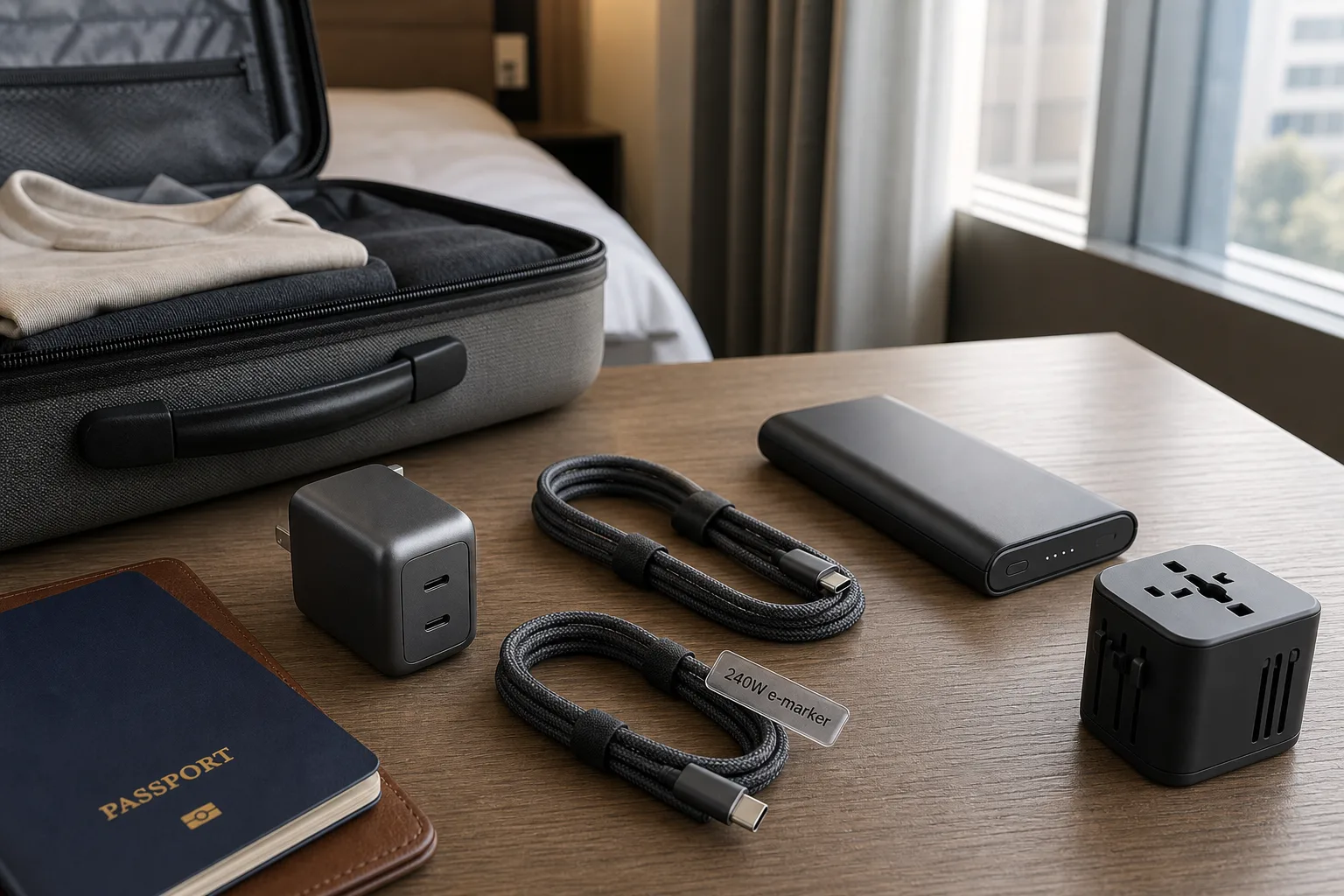
The useful question is not “how many watts can I buy?” It is “what must charge overnight, what must charge during a layover, and what cannot be allowed to fail?” Start there and the shopping list gets much shorter.
Start with the devices you really carry
Make a quick list before buying anything. A phone, earbuds and watch can live with a small charger. Add a tablet and you want more headroom. Add a laptop and the charger becomes the center of the kit.
For many travelers, a compact 65 W GaN charger is enough: it can charge most phones quickly and many thin laptops at a reasonable speed. If you carry a power-hungry laptop, a 100 W or 140 W charger may be worth the size. The number printed on the charger is only part of the story, though. Multi-port chargers split power between ports. A “100 W” charger might give the laptop 65 W when a phone is also plugged in. Read the port table, not just the headline.
The best charger is the one you can use in a bad hotel room without thinking. Two USB-C ports are usually more useful than four mixed ports. A single USB-A port is still handy for old headphones, cameras or rental-car cables, but it should not drive the whole purchase.
Cables decide whether the kit works
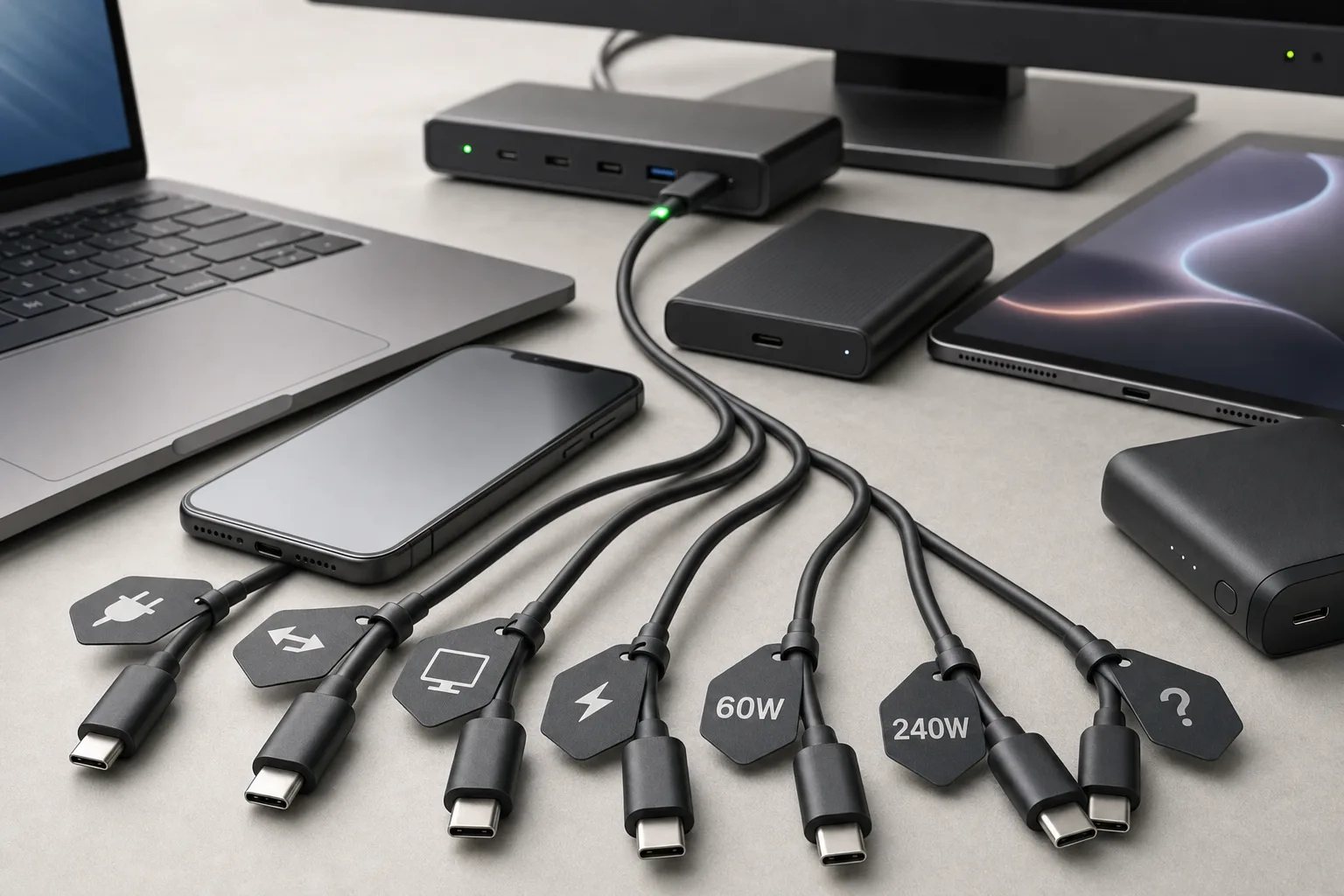
Cables are where many travel kits quietly fail. USB-C looks universal from the outside, but not every cable carries the same power or data. A cheap cable may charge a phone and still limit a laptop. For high-power charging, look for a cable rated for 100 W or 240 W and, when needed, an e-marker chip. You do not need to obsess over the term; you do need to know which cable is the “laptop cable” before you leave home.
Pack two USB-C to USB-C cables: one short cable for the nightstand or power bank, and one longer cable for airports, trains and awkward hotel sockets. If your phone, headphones or camera still use another connector, add exactly one matching cable. Do not pack five mystery cables. They take space and make troubleshooting harder.
A simple test catches most problems. One evening before the trip, charge the laptop, phone and power bank using only the kit you plan to pack. If the laptop complains about slow charging, the phone steals power from the laptop, or the cable falls out too easily, fix it at home.
The power bank has to be boring and legal
A travel power bank is for delays, long days and bad outlets. It is not a substitute for a wall charger. The sweet spot for most people is around 10,000 to 20,000 mAh: large enough for a phone and earbuds, small enough to carry every day.
Airline rules matter. Spare lithium batteries and power banks generally belong in carry-on baggage, not checked luggage. The commonly used limit is 100 Wh without special approval; larger packs may require airline approval or may be refused. Manufacturers usually print watt-hours on the case. If they only print milliamp-hours, check the specs before buying and before flying.
For USB-C travel, the power bank should charge by USB-C and output enough power for your actual devices. A 20 W or 30 W bank is fine for phones and tablets. Laptop backup needs much more output and a matching cable. Also check pass-through charging carefully. Some banks support it, some get hot, some disable fast charging while doing it. Test instead of trusting the box.
A plug adapter is not a voltage converter
A universal plug adapter solves the shape of the wall socket. It usually does not change voltage. That is fine for most modern USB-C chargers, because many support 100–240 V input. Still, check the small print on the charger before traveling. If it does not say 100–240 V, do not assume it is safe worldwide.
Avoid giant all-in-one cubes if they wobble in loose wall sockets. A compact adapter plus a short extension lead can be more stable in old hotels. If you often travel to one region, a simple regional adapter may be better than a universal block with sliding parts.
What I would pack
A sensible kit for most trips looks like this: a 65 W or 100 W GaN charger with two USB-C ports, one short 100 W USB-C cable, one longer 100 W or 240 W USB-C cable, a 10,000–20,000 mAh USB-C power bank, and the smallest plug adapter that fits the destination. Add one legacy cable only if a device actually needs it.
For laptop-heavy travel, upgrade the charger and power bank rather than adding more random pieces. For weekend trips without a laptop, go the other direction: one small charger, one cable, one power bank. The kit should match the trip.
Before you leave
Do a ten-minute check. Plug everything in at once. Confirm the laptop charges at an acceptable rate. Confirm the power bank charges and then charges the phone. Confirm the long cable reaches from a wall socket to the bed or desk. Put the “good” cables back into the pouch and do not borrow them for the house.
That boring test is the difference between a clean travel kit and a bag full of almost-right accessories. USB-C has made charging simpler, but it has not made every charger, cable and battery equal. Buy fewer parts, know what each part does, and test the set before the trip.
Related articles
The travel gadget worth buying in 2026 is a better USB-C charging kit
A practical buyer guide to chargers, cables, power banks and adapters that keep the rest of your devices alive.
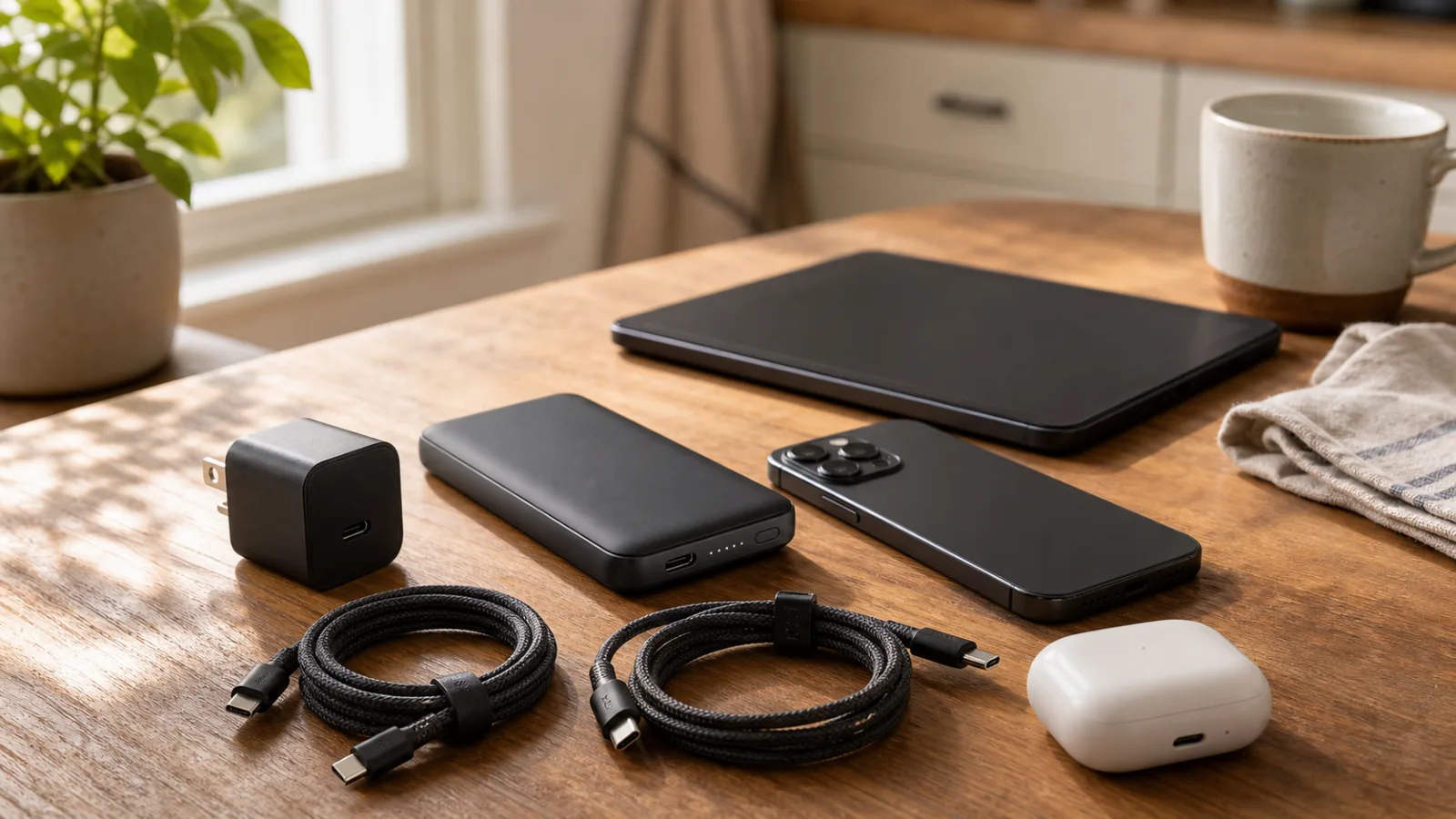
Power banks are useful, but recent recalls show why you should check the battery in your bag
Repeated recalls involving Casely, Anker and lithium-ion travel batteries turn the humble power bank into a practical safety check for 2026.
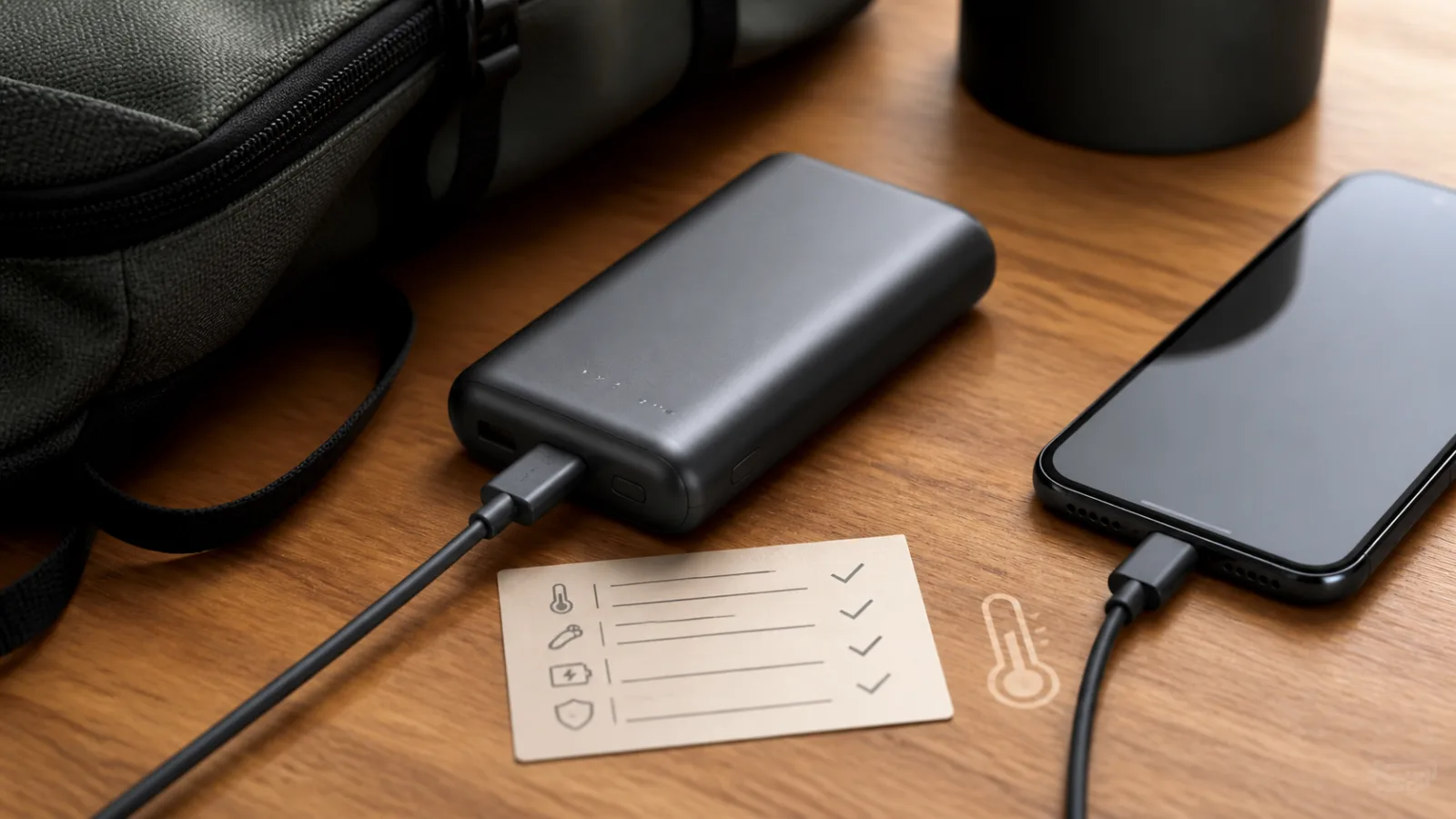
Summer gadgets are getting smaller, but the buying rule is getting stricter
The best portable tech this season is not flashy. It is repairable enough, chargeable enough, and useful away from Wi-Fi.
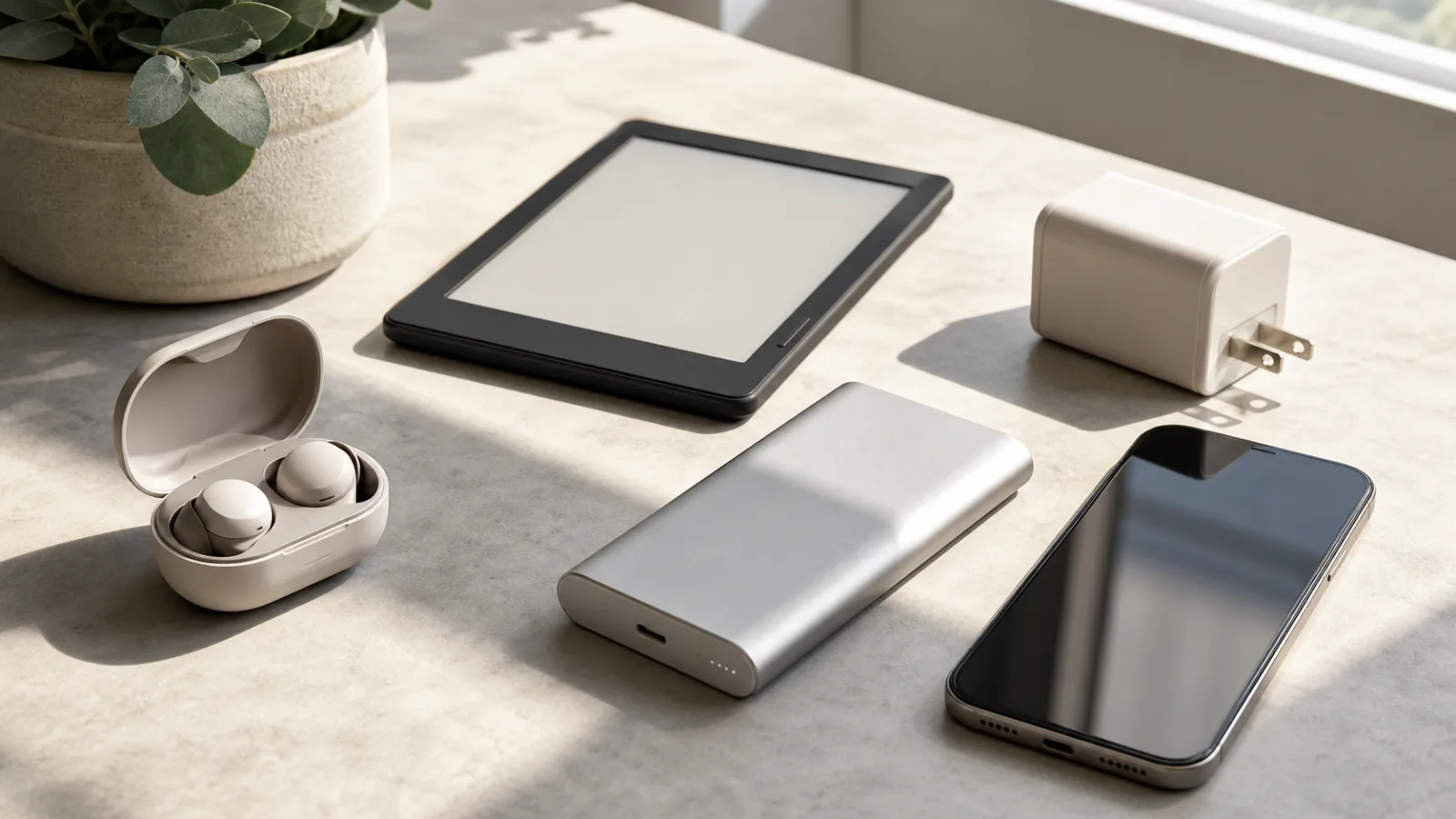
USB-C is standardized, so why do identical-looking cables still fail?
The plug is universal, but the capabilities are not. Charging, data, video, USB4, Thunderbolt and e-marker support can all differ behind the same USB-C shape.
Comments
Sign in to comment.
No comments yet.