Xiaomi 18 Pro Goes Global with a Rear Display—and a Smaller Battery
Xiaomi’s 18 Pro series brings its unusual rear screen and Leica-branded camera system to global markets, but the international models give up battery capacity and carry premium pricing. These are the checks that matter before buying.

The global Xiaomi 18 Pro is defined by two screens and two camera compromises
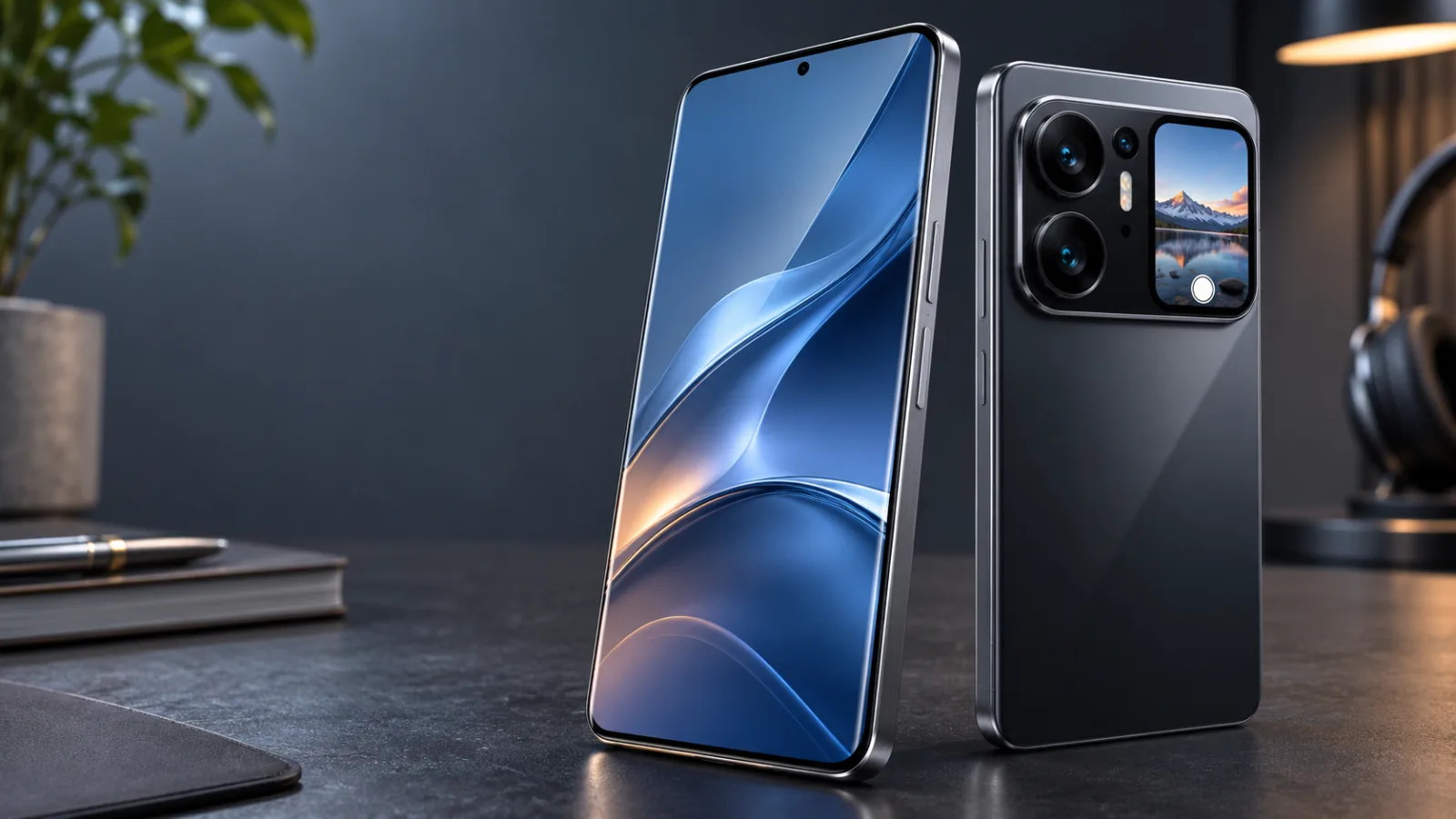
Xiaomi launched the 18 Pro and 18 Pro Max globally on November 17 with a proposition that is easier to understand in hardware than in marketing language: these are large flagship phones built around a conventional front display, an unusual rear screen, and a Leica co-engineered camera system. European starting prices put the Xiaomi 18 Pro at €1,399 and the Xiaomi 18 Pro Max at €1,599, placing both models firmly in the premium flagship category before storage, accessories, warranty conditions, or regional differences are considered. The rear display is not a small notification strip or a decorative panel. It is a 2.9-inch AMOLED screen positioned on the back of the phone, beside the camera system, and it is intended to make the main cameras more useful for self-portraits, video framing, and other situations in which the front-facing camera would normally be the default.
The two phones also differ in scale on the front. The Xiaomi 18 Pro uses a 6.4-inch display, while the Xiaomi 18 Pro Max expands that to 6.9 inches. That distinction matters because the Max is not merely a more expensive version with an extra camera feature; it is the larger device in a range that already emphasizes screen area and imaging hardware. The rear panel adds another screen to the buying decision, but it does not erase the normal questions about size, handling, battery endurance, camera behavior, and software support. It is best treated as a functional viewfinder and control surface whose usefulness depends on how often the owner actually uses the main cameras for people, pets, travel scenes, or short-form video.
The Leica connection is another central part of the global story. Xiaomi presents the camera system as co-engineered with Leica, which gives the 18 Pro series a clear photography-focused identity rather than positioning the rear display as a standalone novelty. At the same time, the camera design has boundaries that buyers should recognize from the start. The rear-screen experience is built around the phone’s main camera workflow, and the global model’s imaging capabilities should not be reduced to the presence of a large headline sensor or a Leica name. The practical question is whether the combination of the main camera, the secondary cameras, the rear display, and Xiaomi’s software produces the results and control that a buyer expects at this price.
The most consequential difference for international buyers may be less visible than the second screen. Xiaomi’s global specifications and reporting on the regional versions indicate that the international models use smaller batteries than their China-market counterparts. The global phones remain in the 6,000mAh-class range, but the reduction changes the comparison with the China versions and weakens one of the advantages that can make a large flagship attractive: having enough capacity to offset a large, bright display and sustained camera use. Battery capacity is not the same as real-world battery life, so this difference does not by itself prove that the global 18 Pro or 18 Pro Max will run out sooner in every usage pattern. It does, however, mean that buyers should not assume the international hardware is a direct battery-for-battery equivalent of the Chinese models.
That distinction makes the global launch more complicated than a simple availability announcement. International customers are being offered the rear AMOLED display, the Leica co-engineered camera system, and large front screens, but they are also being asked to pay €1,399 or €1,599 while accepting a regional battery reduction. The rear display may justify that trade for someone who regularly wants to frame a portrait with the main cameras or monitor a recording from behind the phone. For everyone else, it risks becoming an expensive feature that is noticed often but used rarely. The 18 Pro series therefore needs to be judged as a package: two screens and a distinctive camera workflow on one side, and premium pricing plus smaller international battery capacity on the other.
What the rear display actually helps you do
The rear display makes the most sense when it is treated as a viewfinder rather than as a second phone screen. Its clearest use is taking selfies with the main rear camera: you can turn the phone around, frame yourself on the rear panel, and use the stronger primary camera system instead of relying on the front-facing camera. The same idea applies to video, where the person in front of the lens can see the composition before recording begins. This is a practical change for anyone who regularly takes self-portraits, group shots or short clips, because the rear screen gives a direct preview of what the main camera sees.
That benefit depends on how often the phone is used in this way. For a conventional photograph taken with the phone facing away from its owner, the rear panel is not automatically an advantage; the main screen remains the normal control surface. The extra display earns its space when the user is standing on the camera side of the phone and needs feedback without guessing at the framing. DPReview’s hands-on reporting presents this as one of the more credible reasons for the design, while TechRadar similarly found that the panel is more useful as a shooting aid than as a decorative novelty.
The rear screen also has functions outside the camera. It can show notifications and provide access to supported apps or rear-display controls, giving the user a quick way to check information without turning the phone over. That can be convenient when the handset is placed face down, or when the rear display is already being used while composing a shot. However, “supported apps” is the important qualification. The rear interface is not the same as having a fully independent second phone, and its usefulness depends on what Xiaomi’s software supports and how comfortably those functions work on the smaller panel.
There is also a camera limitation that matters more than the novelty of the hardware: the rear interface does not provide access to the dedicated telephoto camera. The rear display can help with framing when using the main rear camera, but it should not be understood as a universal monitor for every lens in the camera system. Buyers who want the rear panel specifically for portrait selfies or distant subjects therefore need to distinguish between using the primary camera and using the telephoto module. The former is part of the rear-screen concept; the latter is a boundary of the implementation.
Early hands-on impressions also suggest that the capture experience is not entirely frictionless. A rear-facing viewfinder is valuable only if the display gives clear feedback about composition, exposure and the moment of capture. Reports have discussed the usefulness of the framing view, but also point to the kind of practical details that determine whether the feature becomes a habit: what appears on the panel, which controls are available, and how confidently the user can start and stop recording while looking at it. Those details matter more than the mere presence of a second screen in the specifications.
The owner discussion around third-party rear-screen customization is another sign that users see room for the feature to do more. Conversations about apps such as Magic Rear indicate demand for additional controls and personalization, but they should be read as evidence of user interest, not as proof that Xiaomi officially supports every proposed function. Software behavior may also vary as updates and regional versions change. Before treating the rear panel as a replacement for a dedicated monitor or a fully featured second display, buyers should check which functions are officially available on their specific global model.
In practical terms, the rear display is easiest to justify for people who frequently take rear-camera selfies, record themselves, or want a visible framing aid while the phone is facing away from them. For everyone else, notifications and supported secondary functions may be pleasant additions, but they are unlikely to transform everyday use. The central buying question is therefore not whether the display looks distinctive. It is whether the user will repeatedly hold the phone in situations where a rear viewfinder solves a real framing problem, while accepting that the feature is centered on the main camera and constrained by Xiaomi’s supported software.
The buyer risks are price, battery capacity and unfinished camera behavior
The Xiaomi 18 Pro and 18 Pro Max are unusual phones, but their international appeal comes with a very conventional flagship bill. The global models start at €1,399 and €1,599 in Europe, respectively, putting them firmly in premium territory before accessories, regional offers or storage upgrades are considered. That matters because the rear display is an experimental feature, while the compromises are attached to parts of the phone that affect every day of use: battery capacity, camera behavior and software polish.
The clearest specification risk is the battery difference between the global and China versions. Xiaomi’s international specifications and reporting on the launch indicate that buyers outside China receive batteries in the 6,000mAh class, while the China models use larger capacities. The global phones therefore retain the same basic concept and high-end positioning but do not carry over the maximum battery advantage of the domestic versions. A smaller battery does not automatically mean poor endurance; efficiency, display settings and charging behavior still matter. It does mean that buyers should not assume that an imported specification sheet, early China review or retailer listing describes the phone they will actually receive.
That distinction is especially important for the 18 Pro Max, whose large front display and rear AMOLED panel create more opportunities for the screen hardware to be useful—and more opportunities for brightness, camera activity or intensive use to consume power. The rear screen can reduce the need to keep the main display active during some framing and notification tasks, but that is not the same as adding battery life in a measurable, guaranteed way. Until longer independent testing covers the global models, battery claims should be treated as a question for real-world reviews rather than settled by the headline capacity alone.
The camera system also deserves a period of caution. Xiaomi and Leica present the cameras as a central part of the series, and the manufacturer’s specifications include strong claims about brightness, performance and imaging capability. Those are relevant specifications, but they remain manufacturer claims until independent testing examines consistency across lighting conditions, processing modes and firmware versions. Early hands-on reporting points to behavior that may need refinement, including exposure handling and night HDR. A phone can produce an impressive result in a controlled demonstration and still need software updates before its automatic processing is dependable in more difficult scenes.
The rear display introduces another practical caveat: its usefulness depends on what the camera interface allows it to do. It is valuable as a framing aid for selfies and video captured with the main cameras, but early reporting notes that the rear-screen interface does not provide access to the dedicated telephoto camera. That limits the feature precisely when a buyer might expect the rear panel to act as a complete remote viewfinder. If the intended use is a portrait or group shot, the main camera can make the rear display worthwhile; if the expectation is full control over every lens, the experience is narrower than the concept suggests.
The ultrawide camera is another point to check in independent samples. The reported 0.7x perspective is narrower than the very wide view some buyers expect from a flagship ultrawide camera. That does not make it unusable, but it changes the kinds of scenes it handles comfortably: interiors, architecture and large groups may require more physical distance, while the framing may feel closer to a moderate wide angle than to an expansive lens. Buyers who value the ultrawide camera should judge actual sample images rather than relying only on the presence of a Leica-branded camera system.
There is a similar gap between the rear screen’s novelty and its current feedback. Hands-on accounts describe rear-screen capture as useful, but also note that the framing and capture response do not always feel fully mature. That is a small detail until the phone is being used for a timed selfie, a moving subject or a video take, when delayed or unclear feedback can turn a promising viewfinder into a source of uncertainty. Owner discussion about third-party customization of the rear display suggests that people want more control over the feature, but that discussion is evidence of demand, not proof that Xiaomi officially supports every proposed modification or app.
The sensible buying position is therefore conditional. Xiaomi’s brightness, performance and imaging figures may describe an ambitious flagship, but the global battery reduction, premium pricing and early camera caveats make the rear display a feature that has to earn its place in the decision. Before ordering, compare global specifications with the exact regional model, look for independent battery and camera testing, and treat software support for rear-screen functions as something to verify rather than assume. The phone is most convincing when its two-screen design solves a specific problem; it is harder to justify when the rear panel is mainly being purchased as a launch novelty.
Who should buy it, and what to check before ordering
The Xiaomi 18 Pro makes the most sense for a buyer who already knows why a rear display belongs on a phone. Its strongest case is not that the second screen is unusual, but that it can change how the main camera is used. Photography-focused users can frame rear-camera selfies with the phone’s primary imaging hardware, while creators can treat the rear AMOLED panel as a practical viewfinder when recording themselves. That is a more meaningful benefit than simply having an extra display on the back, provided the feature fits into the way you actually shoot.
The same logic applies to buyers interested in a privacy-oriented front display. A rear screen can reduce the need to turn the main display toward other people when checking selected information or showing a preview, but its usefulness depends on which functions and apps are supported. The rear interface should therefore be treated as part of the buying decision, not as a feature whose full capabilities can be assumed from promotional material. Check the supported rear-screen apps and available controls in your market before ordering. Owner discussions about third-party customization suggest that there is demand for more flexibility, but they are evidence of user interest rather than proof of official support or long-term compatibility.
The first practical check is regional compatibility. Confirm the network bands for your carrier and country, especially if you are comparing an imported handset with the global model. Then verify the warranty terms and the location where service would be provided. A phone can be technically compatible yet still be a poor purchase if repairs, replacement parts or warranty claims require returning it to another market. The same caution applies to software language and regional software behavior: make sure the version being sold offers the languages, services and update support you expect.
Storage configuration also deserves a direct check. Do not rely only on the product family name or a retailer’s shortened listing. Match the exact storage option to the price, confirm whether the advertised configuration is the global version, and check what is included in the box. Charging accessories may vary by market, so establish whether the required charger is supplied and whether the seller’s package matches the official regional offering. These details are easy to overlook when the rear display and Leica-branded camera system dominate the listing, but they affect daily use more reliably than a launch feature demo.
Return terms are particularly important for this model. The rear screen is the kind of feature that can look compelling in a hands-on video and feel less useful after several days of normal use. Buy from a seller with a clear return policy, and test the functions that matter to you early: rear-camera selfie framing, video preview, notifications, supported apps and the responsiveness of the rear interface. Also pay attention to whether the telephoto camera is available for the rear-screen workflows you care about, since the rear display does not provide access to that dedicated camera. That limitation may be minor for some users, but decisive for anyone expecting the back panel to control every camera option.
There is also a straightforward value question. Global buyers are paying flagship-level prices while accepting the international battery reduction described in the launch coverage. If the rear display will be used regularly for self-portraits, filming or privacy-oriented interactions, that trade-off may be reasonable. If it will mainly be shown to friends and then ignored, the smaller global battery becomes harder to justify because the unusual hardware is not delivering a daily benefit. In that case, a conventional flagship may offer a simpler ownership decision, while a last-generation Xiaomi model may be worth considering if it provides the camera or performance features you actually need at a lower cost.
The best recommendation is therefore conditional rather than universal. Buy the Xiaomi 18 Pro if the rear camera, rear-screen viewfinder and supported privacy functions solve a real problem in your routine, and verify regional compatibility, software, storage, accessories, warranty and returns before payment. Skip it if the rear display is only a novelty or if battery capacity and uncomplicated camera behavior matter more than experimentation. The global model is most defensible as a specialist tool for people who will use its second screen—not as a conventional flagship whose extra panel can be safely ignored.
Related articles

Should You Buy Xiaomi Clip Earbuds? Wait for the Global Price, Then Decide if Open-Ear Comfort Beats Isolation
Xiaomi’s Clip earbuds bring a light cuff-style fit, Apple Find My support, and long battery life to a new global market. The catch is that the price, regional availability, and real-world sound leakage still matter more than the headline specifications.


Xiaomi-Robotics-1 tests whether household robots can finally scale
A 100,000-hour robot foundation model points beyond flashy demos, but the hard test is reliability in messy real homes.

هل ينبغي شراء سماعات Xiaomi Clip؟ انتظر السعر العالمي، ثم قرر إن كانت راحة التصميم المفتوح تتفوق على العزل
تقدم سماعات Xiaomi Clip ثباتًا خفيفًا على شكل مشبك، ودعمًا لخدمة Apple Find My، وعمر بطارية طويلًا في أسواق عالمية جديدة. لكن السعر والتوافر الإقليمي وتسرب الصوت الفعلي أهم من المواصفات المعلنة.
Стоит ли покупать наушники Xiaomi Clip? Сначала дождитесь глобальной цены, а затем решите, важнее ли комфорт открытой конструкции, чем изоляция
Наушники Xiaomi Clip с лёгкой посадкой в виде зажима, поддержкой Apple Find My и долгой автономностью выходят на новый мировой рынок. Но решающими остаются цена, доступность в разных регионах и утечка звука в реальных условиях.
Comments
Sign in to comment.
No comments yet.