Fall Garlic Needs a Reserved Bed Before It Needs a Planting Day
Gardeners are buying seed garlic now, but the useful move is not always planting immediately. Match the bed, mulch and spacing to your first hard freeze so next summer’s bulbs are worth the space.

The late-September garlic question is back, and this year it is showing up exactly where practical garden problems usually surface first: not in glossy trend pieces, but in tired fall-garden conversations. Gardeners are clearing tomato beds, weighing whether one raised bed can be tied up until next summer, and asking if seed garlic that arrived in the mail should go into the ground now or wait. A recent Reddit thread in r/vegetablegardening captured the real pinch: fall garlic is easy to grow, but it occupies prime bed space for roughly nine months. Another current discussion had gardeners comparing first-frost timing, warm spells and late-season greens, with several people holding space for garlic while trying not to waste the last mild weeks of autumn.
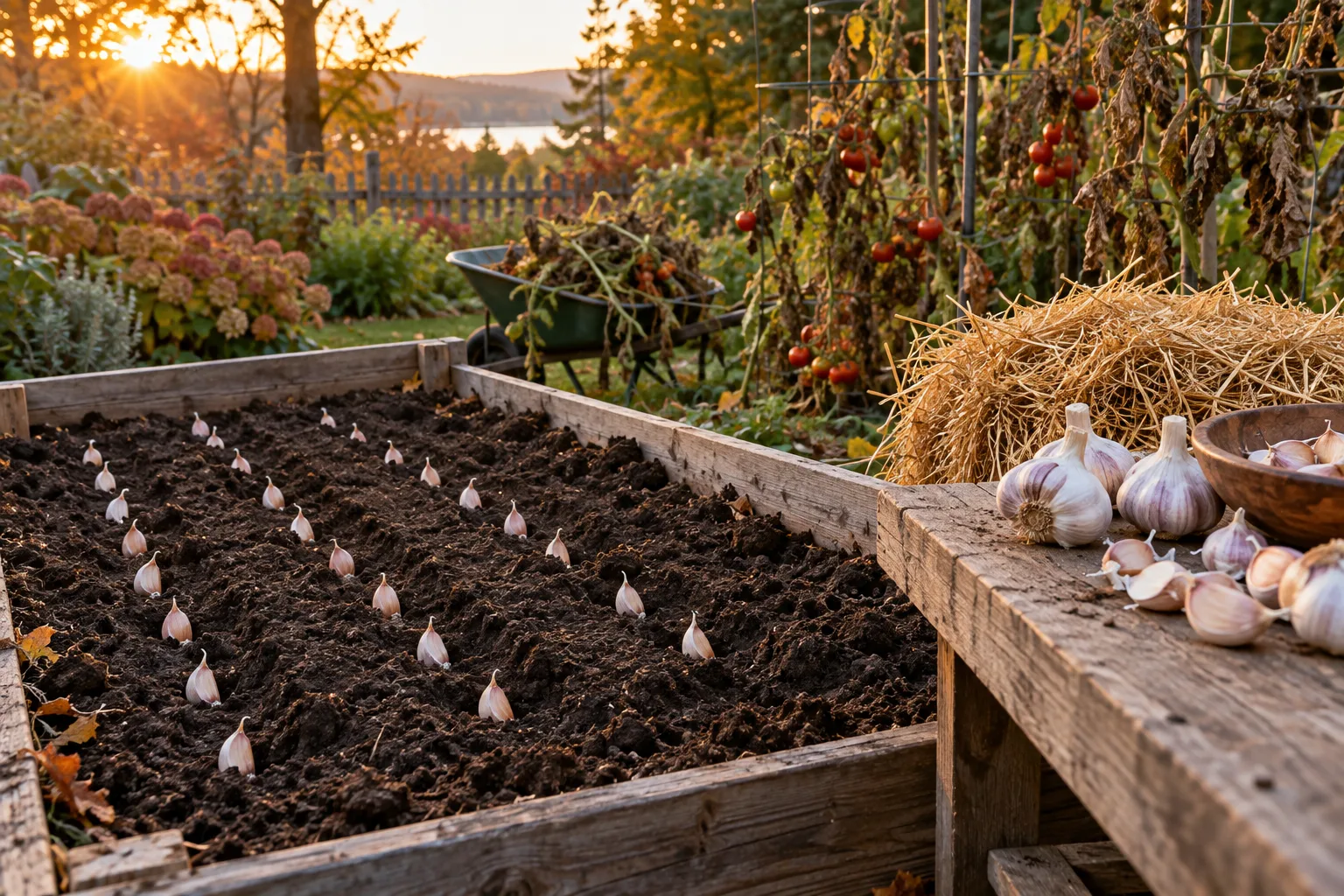
That makes garlic a good September subject precisely because it is not urgent in the way social feeds can make it feel. For many temperate gardens, late September is a buying, sorting and bed-prep window. Planting may be right now in colder locations, but in many Zone 5 to Zone 7 yards it is still early. The mistake is treating garlic like a calendar chore. It is better treated as a root-establishment crop: plant late enough that lush green top growth is not encouraged before winter, but early enough that roots can grow before the soil locks up. Penn State Extension describes that balance clearly: cloves should be planted early enough to establish roots before the ground freezes, but late enough to limit shoot emergence above the soil line. University of Minnesota Extension gives a colder-climate rule of thumb, usually one or two weeks after the first killing frost. Illinois Extension frames fall planting as roughly four to six weeks before the ground freezes. Those are not conflicting instructions so much as regional translations of the same idea.
The practical advice for the last week of September is this: buy seed garlic if you have not already, choose the bed, fix drainage, remove perennial weeds, gather clean mulch, and then let local frost and soil conditions decide the planting day. Garlic rewards boring preparation more than heroic timing.
Why this is not just another fall cleanup job
Garlic is not like throwing radish seed into a vacant strip for a quick crop. It is a long reservation. In most home gardens, cloves planted in autumn will not be harvested until early or mid-summer of the following year. During that time the bed cannot host spring peas, early lettuce blocks, potatoes, peppers or the first round of beans unless the gardener has planned around the garlic rows. That is why the current online chatter matters: people are not only asking how deep to plant cloves. They are asking whether garlic deserves the space.
It often does, but only if the bed is treated as a dedicated crop rather than a leftover corner. Garlic wants full sun, decent fertility, steady spring moisture and soil that drains after winter storms. A wet, compacted spot that looked harmless in September can turn into a bulb-rot problem by March. Penn State notes that garlic can be grown successfully in well-drained soil, while poorly drained soils create serious risk from Fusarium bulb rot and other bulb diseases. Oregon State University Extension similarly recommends full sun and well-drained soil, with raised beds in heavier soil.
The space calculation is simple. A small household does not need a whole field. A 4-by-4-foot raised bed planted on a 6-inch grid can hold about 64 cloves before paths and edge effects are considered. A 10-foot row can produce a useful harvest without swallowing the whole kitchen garden. But garlic is a poor crop for gardeners who need every bed free for early spring vegetables. If your garden has only two small beds, reserve garlic for one edge, a narrow dedicated strip, or containers at least 8 inches deep rather than giving it the best central bed by default.
This is also where companion-planting advice needs a cooler head. Garlic is sometimes sold online as an all-purpose companion, but the crop itself dislikes competition. It has shallow roots and does not appreciate weeds, crowded spring greens or aggressive herbs planted into its root zone. If you want flowers nearby for pollinators or a quick crop after harvest, plan those as neighboring or follow-on uses, not plants shoved between cloves. The honest companion plan is clean spacing, clean mulch and a second crop after garlic comes out.
The planting window is local, not viral
For U.S. gardeners, the next step is to separate three different dates that often get blurred together: first frost, first freeze and ground freeze. NOAA’s National Centers for Environmental Information explains that median first-freeze maps show when a freeze has happened on or before that date in five out of ten years. That is useful planning data, not a promise. A yard in a low pocket may frost before the nearby airport. A raised bed near a brick wall may stay warmer. A coastal garden may move on a different schedule from an inland garden with the same USDA hardiness zone.
Garlic does not need the gardener to guess perfectly. It needs a reasonable cool-soil window. In cold northern gardens, University of Minnesota Extension recommends planting cloves in fall, usually one or two weeks after the first killing frost. In Pennsylvania, Penn State’s home-garden guidance suggests mid- to late October for a sunny, well-drained location. Utah State University Extension gives a broader late-September-to-November range, with cloves planted 2 to 3 inches deep. Oregon State’s guidance for Oregon commonly points gardeners toward October to November, depending on local conditions.
So what does that mean on September 26, 2026? In colder upper-Midwest, mountain or northern New England locations, bed preparation should already be underway and planting may be close. In much of the Midwest, Mid-Atlantic and inland Pacific Northwest, many gardeners are better off waiting for October soil cooling rather than planting during a warm spell. In mild-winter regions, the question may not be frost at all but whether the chosen variety receives enough cold to bulb well.
A useful home rule is to aim for root growth without a flush of tall foliage. If you plant very early into warm soil, cloves may push leaves above the mulch and spend energy before winter. Some green tips are not automatically a disaster; Penn State notes that sprouts may emerge a few inches before truly cold weather and usually suffer little damage unless temperatures become extremely cold. Still, there is no prize for forcing garlic to behave like a September salad crop.
Buy seed garlic now, but do not split it too early
Seed garlic is not seed in the botanical sense. Gardeners plant individual cloves broken from bulbs. The source of those bulbs matters. Extension guides repeatedly warn against relying on grocery-store garlic. Oregon State notes that grocery cloves may have been treated so they do not sprout. University of Minnesota says grocery garlic is often softneck garlic and may not perform well under Minnesota conditions. Iowa State University Extension gives the same general warning for Iowa: supermarket garlic is usually from warmer regions and is not well adapted to colder gardens.
That does not mean every grocery clove will fail. Gardeners love exceptions, and some supermarket bulbs do sprout. But a fall bed is a long commitment. If the goal is a dependable harvest, buy seed garlic from a local grower, garden center or reputable seed supplier, ideally one selling varieties known to perform in your region. Local stock is valuable because garlic slowly becomes adapted through repeated selection. Illinois Extension notes that gardeners can save the biggest bulbs from the summer harvest and gradually develop garlic adapted to their local climate.
Once bulbs arrive, store them in a dry, airy place at room temperature until planting. Do not break bulbs into individual cloves weeks ahead of time. University of Minnesota recommends separating cloves only a day or two before planting. The papery wrapper helps protect the cloves, and unnecessary handling increases the chance of damage or drying.
At planting time, choose the largest healthy cloves. Large cloves usually grow larger bulbs, and damaged, soft, moldy or shriveled cloves should stay out of the bed. Keep the basal plate intact. That flat root end is where roots emerge. Planting a beautiful clove upside down is not fatal every time, but it wastes energy. Pointed tip up, root end down is the standard for a reason.
Hardneck, softneck and elephant garlic are not interchangeable
The label matters. Hardneck garlic is generally favored in cold-winter regions. It produces a stiff central stem and, in late spring or early summer, a scape that can be cut and eaten. Softneck garlic usually stores longer and is the type used for braiding. It is common in supermarkets and often better suited to warmer climates, though some softneck cultivars do fine in cooler places. Elephant garlic is not true garlic; it is closer to leek, with large mild cloves and different storage behavior.
For a northern gardener who wants reliable bulbs and scapes, hardneck varieties such as Music, German Red, Spanish Roja or other locally recommended types are usually a sensible start. In a warm-winter garden, softneck types may be the better default. The point is not that one is superior. The point is that buying whatever looks impressive in a catalog can mismatch the crop to the winter.
Vernalization is the word that causes the most late-season overthinking. Garlic needs a period of cold to bulb properly. In cold climates, winter supplies that. In warm climates, some growers chill cloves before planting to simulate the cold period. University of Georgia Extension explains that garlic cloves require six to eight weeks of cool weather below 40 degrees F after planting for vernalization. Arizona Extension gives a similar four-to-six-week chilling requirement. Illinois Extension says spring planting is possible, but cloves must first be refrigerated for about eight weeks to meet chilling requirements.
For a Zone 5 or Zone 6 gardener planting in fall, refrigerator vernalization is usually unnecessary. The ground will do the work. For a Zone 9 or warm Zone 8 gardener trying hardneck garlic, pre-chilling may be part of the plan, but it should be done deliberately and dry, not by tossing cloves into a damp produce drawer beside fruit for an indefinite stay. Cold plus moisture can trigger sprouting or rot. Cold-climate gardeners should resist copying warm-climate tricks just because they are being discussed online.
Prepare the bed before the weather turns wet
Garlic bed preparation is best done before cold rain makes soil sticky. Start by choosing a full-sun location that has not recently grown garlic, onions, leeks, shallots or chives. Rotation reduces disease pressure. Penn State recommends crop rotation and notes that garlic follows well after a heavy cover crop such as buckwheat or rye. In a small garden, a perfect rotation may be impossible, but do not knowingly put garlic back into the same troubled allium bed year after year.
Clear weeds carefully, especially perennial weeds. Garlic is a weak competitor. Once the bed is mulched, it is annoying to chase quackgrass, bindweed or creeping weeds without disturbing cloves. If you use herbicides anywhere in the garden, follow the label exactly and keep products away from edible crops unless the label permits that use. Many home garlic beds can be handled with hand weeding, a fork and patience.
Improve the soil with finished compost, not half-rotted debris. Utah State recommends incorporating organic matter and fertilizer before planting, ideally guided by a soil test. If compost is used, USU’s PDF guidance cautions not to overdo it: no more than 1 inch of well-composted organic matter per 100 square feet when fertilizing with compost. That is a useful reminder because garlic does not need a rich swamp. It needs fertile, loose, drained soil.
Avoid fresh manure at planting. Besides food-safety concerns for edible crops, fresh manure can be too strong, too salty or too weedy, depending on the source. If manure-based compost is part of the fertility plan, use properly composted material and local extension guidance. Garlic typically benefits from nitrogen in spring when top growth begins. Oregon State recommends early-spring nitrogen and another light feeding before bulbs swell. Minnesota notes garlic has a moderate to high nitrogen demand. That does not mean dumping a heavy fertilizer dose in fall. Fall is mainly about rooting. Spring is when the crop builds leaves that feed the bulb.
In heavy clay, raised beds are not cosmetic. They are drainage tools. Oregon State suggests raised beds 2 to 3 feet wide and at least 10 to 12 inches tall in heavier soil. Even a modest lift can help winter water move away from cloves. If your bed puddles after rain, fix that before planting garlic or choose a different site.
Spacing: give each clove its own bulb-sized future
There is no single spacing number because gardeners grow different varieties in different bed systems. But the range is narrow enough to be practical. Penn State’s production guide describes small-scale hand planting with rows 6 to 12 inches apart and cloves 4 to 6 inches apart, depending on desired bulb size. Penn State’s home-garden article suggests cloves 6 to 7 inches apart with 1 foot between rows. University of Minnesota describes double rows 6 inches apart, centered on beds 30 inches apart. Utah State recommends rows 6 to 10 inches apart and cloves 3 to 4 inches apart in the row. Oregon State’s quick garden tips say to space cloves 4 inches apart.
For a home raised bed, a 6-inch grid is a good starting point for hardneck garlic. It is easy to mark, easy to weed and not so tight that every bulb fights its neighbor. If you are growing very large elephant garlic, give it more room. Oregon State recommends about 6 inches between elephant garlic cloves.
Depth also varies a little by region and soil. Penn State lists 1 to 1.5 inches deep for most garlic cultivars in its production guide and 1 to 2 inches in its home-garden article. Utah State says 2 to 3 inches deep. Oregon State says 2 inches deep in one guide and 2 to 3 inches in another vegetable guide. Minnesota frames depth by the clove base, with the base 2 to 3 inches from the soil surface.
The safer home-garden interpretation is this: in loose, cold-winter soil, plant so the clove is well covered, usually with the top of the clove a couple inches below the surface or the base around 2 to 3 inches down. In very heavy soil, do not bury cloves so deeply that they sit in a cold wet layer. In very cold areas, mulch provides much of the winter buffering.
Set cloves point up. Firm soil gently around them. Water after planting if the soil is dry enough that roots would struggle to start. Do not turn the bed into mud.
Mulch is useful, but it is not a dumping ground
Clean straw, chopped leaves or other loose organic mulch can solve several garlic problems at once. It moderates soil temperature, reduces frost heaving, conserves moisture and suppresses weeds. University of Minnesota recommends covering garlic beds with 3 to 4 inches of leaf or straw mulch to reduce temperature swings and help control weeds. Penn State says 2 to 4 inches of straw mulch can help preserve moisture, discourage frost heaving and prevent most weeds.
The word clean matters. Weed-seedy hay can create a spring mess. Diseased tomato vines, mildewed cucurbit leaves or pest-ridden debris do not belong on a garlic bed. If leaves are abundant, shred or chop them enough that they do not mat into a water-shedding blanket. A matted layer can keep winter rain from reaching soil and can stay soggy in spring.
Timing depends on climate. In very cold areas, mulch often goes on at planting or shortly after to protect newly planted cloves. In milder or wet regions, gardeners sometimes plant first and mulch after colder weather settles in, so soil can cool and excess moisture can escape. If your extension office has a local recommendation, use that. The article-level rule is not to skip mulch in cold, heaving soil and not to bury garlic under a wet, airless mat.
Spring mulch management matters too. Minnesota recommends removing mulch in spring after the threat of hard freezes is over to help soil warm. Some gardeners pull mulch back from the rows, let the soil warm, then tuck a thinner layer back once growth is active and weeds begin. In wet climates, this can reduce disease pressure. In dry climates, mulch may stay more valuable for water conservation.
Watering: less drama in fall, more attention in spring
Garlic needs moisture, but it hates poor drainage. After fall planting, water once if soil is dry. Then let normal autumn weather do much of the work unless conditions remain unusually dry. The main irrigation season is spring into early summer, when leaves are building bulb size. Utah State says water needs are critical because garlic has shallow roots and recommends keeping soils moist. Minnesota advises soaking soil thoroughly to at least 1 inch each week during the growing season. Oregon State gives a deeper production-style target for dry conditions, irrigating to a depth of 2 feet every 8 to 10 days, then tapering off in mid-June.
For home gardeners, the translation is straightforward. Do not sprinkle the top crust every day. Check soil several inches down. Water deeply when the root zone is drying, especially in May and June if rain is scarce. Stop pushing water as the crop approaches maturity and lower leaves begin to yellow. Wet bulbs near harvest store poorly.
Drip irrigation is ideal in a dedicated garlic bed because it keeps foliage drier and can run beneath or beside mulch. Overhead watering is not forbidden, but water early in the day so leaves dry before night. University of Georgia Extension makes that disease-reduction point plainly: water early so garlic can dry by nightfall.
What to do with the rest of the bed calendar
The biggest hidden cost of garlic is not the seed. It is the spring bed space. A gardener who plants a whole raised bed in garlic this October should already know what happens after harvest next summer. Otherwise the bed will sit half-used during two prime planting windows.
One good plan is garlic followed by a warm-season or late-summer crop. In many regions, garlic comes out in June or July. That can leave time for bush beans, cucumbers in warm areas, fall brassica transplants, carrots for autumn harvest, or a cover crop. The exact choice depends on local climate and harvest timing. In a short-season northern garden, a fast cover crop or fall greens may be more realistic than a second heavy feeder.
Another plan is partial-bed garlic. Plant two rows along the north side of a bed so spring greens can use the sunnier front edge, keeping enough distance that the garlic is not shaded or crowded. This is not companion planting magic. It is bed logistics. If the garlic receives full sun, weed-free soil and enough room, the remaining bed can still work.
A third plan is container garlic. Oregon State says garlic can be grown in a container at least 8 inches deep with drainage holes. Containers are useful for renters, small patios and gardeners who want to trial a variety without committing a raised bed. The tradeoff is watering and temperature stability. Containers freeze and thaw more dramatically than in-ground beds, so cold-winter gardeners may need to cluster pots, insulate them or sink them into a protected spot.
Common mistakes that cost next summer’s bulbs
The first mistake is planting too early because the seed garlic arrived early. Shipping schedules are not planting instructions. If it is still warm and your usual first killing frost is weeks away, store the bulbs properly and wait.
The second mistake is treating garlic as a no-care crop after planting. Garlic is not fussy, but it is not wild. It needs weed control, spring nitrogen, moisture during active growth and timely harvest. Neglect often shows up as small bulbs, not complete failure.
The third mistake is crowding. Small cloves planted too close together can make lots of little bulbs. That may be fine for green garlic, but not for storage heads. If the goal is full-size bulbs, give them room.
The fourth mistake is using the wrong mulch. Clean straw and shredded leaves can be excellent. A thick slab of whole wet leaves can smother the bed. Hay full of weed seed can turn spring into a weeding project. Diseased garden debris can carry trouble into the next season.
The fifth mistake is skipping rotation. Garlic, onions, leeks and shallots share disease concerns. A small garden may not have a perfect three- or four-year rotation, but repeating alliums in the same bed after a poor crop is asking for more of the same.
The sixth mistake is harvesting by calendar alone. Garlic maturity is read in the plant. Many guides advise harvesting when tops yellow but before they are fully dry. Oregon State says to start checking in late June in its region and harvest when the head is divided into plump cloves and outer skin is thick, dry and papery. Waiting until every leaf is dead can leave bulbs split and wrappers damaged, which shortens storage life.
A region-by-region way to make the decision this week
Cold northern and mountain gardens: If killing frost has arrived or is imminent, finish bed prep now. Plant after that frost window if soil is workable, then mulch. Choose cold-adapted hardneck varieties unless your local extension or grower recommends specific softnecks. Do not worry about refrigerator vernalization for normal fall planting.
Upper Midwest, inland Northeast and similar Zone 5 to Zone 6 gardens: Buy seed now if you have not. Prepare the bed now. Planting may fall in October, often after first frost but before the ground begins to freeze. Watch your local forecast, not a national planting meme.
Mid-Atlantic, lower Midwest and many Zone 7 gardens: September planting is often early unless your local conditions are already cooling fast. Use the next week or two for soil preparation, rotation planning and variety selection. Plant when nights are cooler and your local extension window approaches.
Pacific Northwest: Fall is usually favorable for garlic, but drainage is the deciding issue. In heavier soil, build or refresh raised beds before the rains settle in. October to November planting is common in Oregon State guidance. Mulch lightly enough that the bed does not stay sodden.
Warm-winter South and coastal mild climates: Variety choice and vernalization matter more. Softneck types may be more forgiving. If growing hardneck garlic where winter cold is insufficient, consult local extension guidance on chilling cloves before planting. Do not assume advice from Minnesota or Pennsylvania applies unchanged.
A practical garlic-bed checklist
Choose the bed: full sun, good drainage, no recent allium problems, reachable for spring weeding and watering.
Buy the planting stock: locally adapted seed garlic if possible, not supermarket bulbs unless you are comfortable treating the crop as an experiment.
Hold the bulbs correctly: dry, airy, room temperature, intact until one or two days before planting.
Prepare the soil: remove weeds, loosen compaction, add finished compost if needed, and use a soil test or local guidance for fertilizer.
Mark the spacing: usually 4 to 6 inches between cloves, wider for large bulbs or elephant garlic, with rows arranged so you can weed.
Plant at the right time: after local cooling begins, early enough for roots before freeze, late enough to avoid a big flush of leaves.
Plant correctly: point up, root plate down, covered by roughly 1 to 3 inches of soil depending on regional guidance and soil type.
Mulch thoughtfully: 2 to 4 inches of clean straw or leaves in many cold-winter beds, adjusted for wet climates and spring warming.
Plan spring care: pull mulch back if needed, fertilize as growth begins, keep weeds out and water deeply during dry spells.
Plan the next crop: decide now whether the bed will become late beans, fall greens, carrots, a cover crop or simply a cured-garlic sorting station next summer.
The bottom line for late September
Garlic is timely because the ordering window and the planting window overlap but are not the same thing. If seed garlic is still available locally, buy it. If a sunny, well-drained bed is full of tired tomatoes, clear it and prepare it. If mulch is needed, gather clean straw or leaves before everyone else is doing the same. But do not plant just because someone in another climate planted this weekend.
The best garlic growers are not guessing from a social post. They are watching frost, soil, drainage and their own bed map. Planting garlic is easy. Giving it the right nine months is the part that makes next summer’s bulbs worth pulling.
Related articles
Fall Planting After a Hot Summer: How to Establish Trees and Shrubs Without Wasting Water
Early fall can be a better planting window than spring, but only if the soil, root ball and watering plan are ready. This practical checklist covers what to plant, what to postpone, how to water, and which common shortcuts quietly kill new plants.
Do not rake every leaf: a practical fall cleanup plan for lawns, beds and pollinators
The best autumn yard cleanup is not total removal or total neglect. Zone the yard so leaves feed soil where they help and move them where they cause damage.

Pasta e Fagioli for Soup Season: A 35-Minute Pantry Dinner That Holds Up as Leftovers
A practical fall soup plan for the week pasta e fagioli started showing up again: canned beans, a little pasta, greens, tomato and careful leftover handling.
The September Sheet-Pan Dinner: A Flexible Roast of Corn, Peppers, Chickpeas and Whatever Needs Using
A practical late-summer-to-early-fall dinner built around one hot tray: sweet corn, peppers, onions and chickpeas become a substantial meal with a crisp topping, a cool sauce and easy substitutions.

Comments
Sign in to comment.
No comments yet.