Your garden needs a water budget before the next heatwave
When drought rules limit outdoor watering, the safest garden plan is not watering everything. It is choosing what must survive first.

When a heatwave arrives at the same time as water restrictions, the question is no longer "should I water the garden?" The better question is: what deserves the water first?
That sounds harsh until the hosepipe ban, local water alert or drought notice lands. In early July, USA Today reported water restrictions across parts of the United States as drought and heat pushed communities to ask or order residents to conserve water. The article cited the U.S. Drought Monitor: as of July 2, nearly half of the continental U.S. was in at least moderate drought, and more than 30% was in severe drought or worse. In the UK, BBC Weather updated its hosepipe-ban guide on July 10, saying more than five million households were under bans during the country's third heatwave of 2026.
For gardeners, this is where a seasonal chore becomes triage. Tomatoes are dropping flowers, pots dry out before evening, raised beds bake, the lawn turns straw-colored, and the water company tells you not to use a hose. The answer is not heroic watering of everything. It is a garden water budget.
A water budget does not mean abandoning the garden. It means spending limited water where it prevents real damage: food crops, young trees, containers, greenhouse plants and anything recently planted. Established lawns and many mature ornamentals are lower priority. Some will look bad and recover. Some should simply be allowed to rest.
Check the rules before the soil
Start with the boring step: read the rule for your exact area. Restrictions vary by country, water company, municipality and drought stage. A "hosepipe ban" in one place may still allow watering cans, buckets, food crops, allotments, drip or trickle systems with pressure reducers and timers, or exemptions for disabled and priority-service users. Another town may restrict automatic sprinklers, ban certain hours, or fine repeat offenders.
BBC's UK guide explains that hosepipe bans, also called Temporary Use Bans, usually restrict hose use for gardens, vehicles, patios, pools and similar non-essential tasks. It also says violations can carry fines of up to £1,000, while watering cans, buckets and non-mains water such as rainwater or grey water can still be allowed. Gardeners' World gives similar practical advice: check your water company, because exact exemptions differ.
In the U.S., restrictions are even more local. USA Today described voluntary measures in parts of Virginia and mandatory rules elsewhere. Raleigh had recorded hundreds of Stage One water-restriction violations by late June, with warnings before fines. The safe rule is simple: do not let an automatic system assume it knows the law. You need to check the current notice.
Once you know what is legal, decide what is worth saving.
Spend water by priority
Priority one: newly planted trees, shrubs and perennials. Their roots are shallow and still settling. Losing a young tree wastes years, not days. Water slowly around the rootball, then mulch the surface. Do not spray the leaves and walk away.
Priority two: containers and hanging baskets. Pots have little soil volume, heat up fast and dry out far quicker than in-ground beds. In a real heatwave, some containers may need daily checks. Put a finger down into the compost. If it is dry below the surface, water until it reaches the roots, not just until the top looks damp.
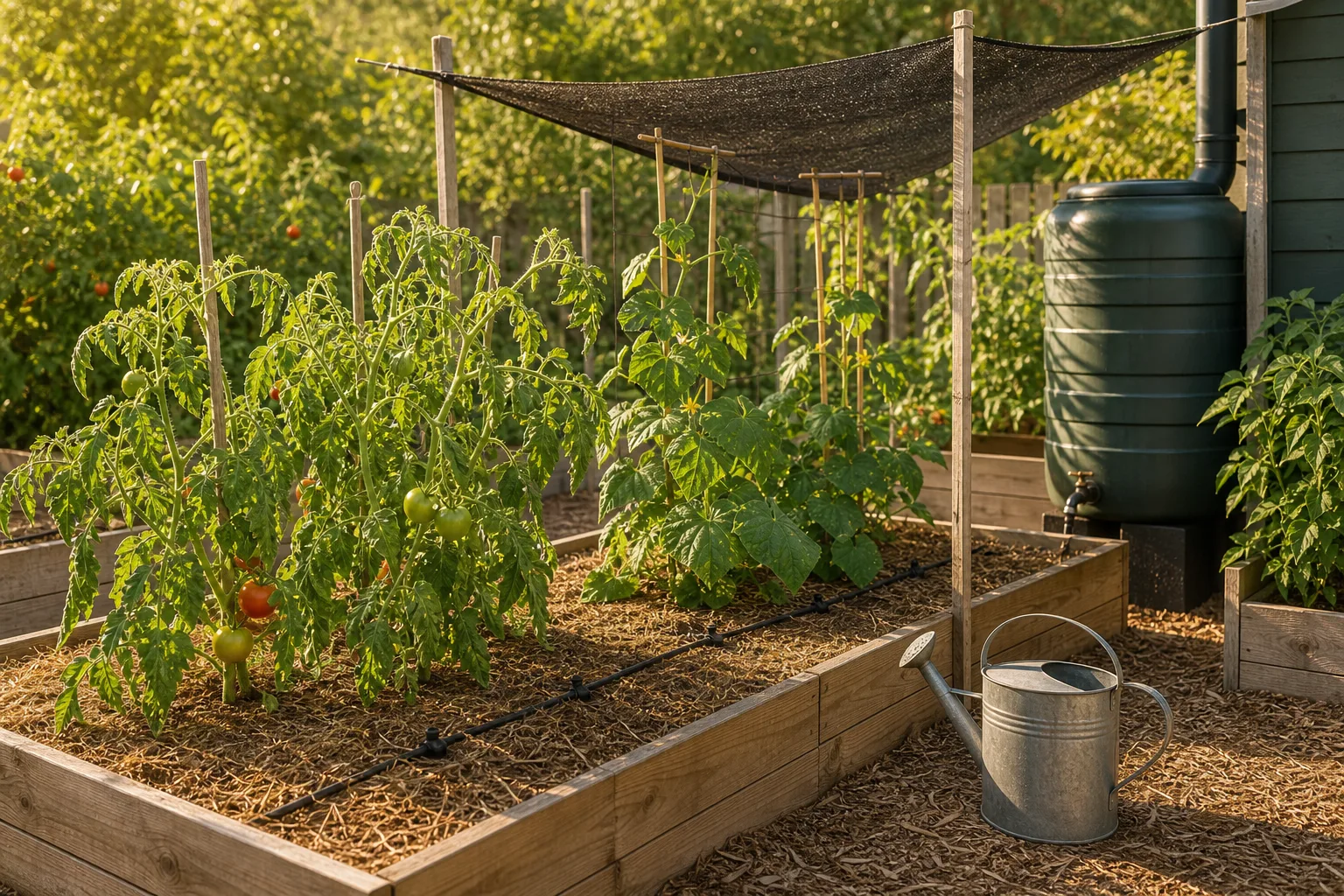
Priority three: vegetables and fruiting crops. Tomatoes, cucumbers, peppers, beans, squash and soft fruit can lose flowers, abort fruit or become stressed if watering swings between drought and flooding. Consistency matters more than panic. Water at the base, mulch, and add shade during the worst afternoons if the plants are collapsing.
Priority four: greenhouse and raised-bed crops. Raised beds drain well, which is useful in spring and brutal in a heatwave. Greenhouses amplify heat. Ventilation, shade cloth and careful watering are part of the same job.
Lower priority: established lawns. This is the hard part for many homeowners. A brown lawn is not automatically a dead lawn. Many cool-season grasses go dormant during dry heat and green up after rain. The Guardian's heatwave gardening guide put it plainly: lawns do not need watering. Raise the mower height, reduce traffic and stop feeding during stress. A green lawn is not worth losing a vegetable bed or breaking water rules.
Established shrubs and many perennials usually sit somewhere in the middle. If they were planted years ago and are in decent soil, they may tolerate a dry spell with mulch and occasional deep watering. If they are wilting in full sun every afternoon but recover at night, watch them. If they stay limp in the morning, they need help.
Water deeply, not constantly
The most common mistake in heat is watering little and often. A quick daily splash wets the surface, trains roots to stay shallow and can make you think you have watered when the root zone is still dry.
Water less frequently but more deeply. Aim the water at the soil around the plant, not the foliage. Build a small soil basin around young plants or trees so water soaks toward the rootball instead of running away. After watering, push a finger or trowel into the soil to see whether moisture reached below the surface.
Early morning is usually best because soil is cooler and plants can take up water before the hottest part of the day. Late evening can work too, especially for pots, but avoid leaving foliage wet overnight when disease pressure is already high. Midday watering is inefficient, not forbidden by physics. If a container plant is collapsing at 2 p.m., water it. Just do not make hot-afternoon sprinkling your routine.
Mulch after watering, not before dry soil has been helped. Compost, leaf mold, straw, bark, chipped prunings or other organic mulch reduce evaporation and buffer soil temperature. Keep mulch a little away from stems and trunks so you do not trap rot against them.
Use shade as part of watering
Shade is not cheating. It is often the fastest way to reduce water demand.
Shade cloth over vegetables can prevent leaf scorch, reduce blossom drop and keep fruiting crops productive through the hottest part of the week. Old net curtains, horticultural fleece, a temporary frame, a parasol or a light fabric screen can protect seedlings and containers in a pinch. Do not wrap plants tightly. You want shade and airflow, not a steamed greenhouse.
Move containers together into morning sun and afternoon shade if you can. Grouping pots reduces wind exposure and makes watering easier. Put saucers under smaller pots during heat, but do not let roots sit in stagnant water for days.
In greenhouses, open vents and doors early. Shade the glass or use shade netting. Water paths or staging only if it is allowed and useful for cooling; do not waste water pretending the whole structure is a pond.
Grey water helps, but use it carefully
Rainwater is the cleanest alternative to mains water. The RHS Mains 2 Rains campaign urges gardeners to switch from tap water to collected rain where possible: water butts, rain diverters, drip trays under pots, mulch, compost-rich soil, less lawn watering and plants matched to the site. It is good advice even outside a ban.
If a summer storm arrives, catch it. A rain barrel behind the shed is not glamorous, but in a dry week it can keep containers, new shrubs and a small vegetable bed alive.
Grey water is useful but not magic. Water from rinsing vegetables is usually the safest. Shower warm-up water collected in a bucket can be useful. Bathwater or dishwater may contain soap, detergent, salts, oils or bacteria. Use it quickly, ideally within 24 hours. Avoid using questionable grey water on edible leaves or root crops. Keep harsh detergents away from soil. If in doubt, use grey water on established ornamentals rather than salad crops.
Do not store grey water for days in hot weather. It can smell, grow bacteria and become worse than the shortage it is solving.
Drip irrigation is useful only if it obeys the rules
Drip irrigation is one of the best tools for a hot, dry garden because it puts water near roots instead of spraying paths, leaves and air. A simple drip line under mulch can outperform a sprinkler by a large margin. It also works well with zones: vegetables, new trees, containers and greenhouse beds can each get different amounts.
But automation is not automatically smart. A timer that waters the lawn every morning during a restriction is just an expensive way to get the wrong answer. Smart controllers, rain sensors and moisture sensors help only if they are set up for the actual garden and the current rules.
If drip or trickle irrigation is allowed in your area, check the conditions. Some UK guidance mentions pressure-reducing valves and timers. Some U.S. restrictions distinguish between sprinklers, hand watering and low-volume irrigation. Some do not. Write the rule into your system: allowed days, allowed hours, manual override, rain shutoff and zones you can disable quickly.
A good system should make it easier to use less water, not hide waste behind an app.
Tomatoes, cucumbers and panic watering
Vegetable gardeners often read every wilted leaf as a crisis. Sometimes it is. Sometimes it is a plant protecting itself in heat.
Tomatoes may drop blossoms when temperatures stay high, especially when nights are warm. Extra water will not force pollen to behave if the heat is the main problem. What helps is consistent moisture, mulch, airflow and shade during the harshest hours. When temperatures ease, fruit set often resumes.
Cucumbers, squash and peppers can wilt during hot afternoons even with moisture in the soil. Check in the morning. If they recover overnight and the soil below the surface is damp, do not drown them. If leaves are limp in the morning and the soil is dry, water deeply.
Overwatering can look confusingly like underwatering because damaged roots stop working. That is why Reddit gardening threads fill with questions like "heat, blight or overwatering?" The answer starts with the soil, not the leaf. Check moisture. Check drainage. Look for disease patterns. Then decide.
What not to do
Do not run a sprinkler over the whole garden because the lawn looks sad.
Do not reseed a lawn during a heatwave unless you have water and permission to keep seed consistently moist.
Do not fertilize heat-stressed plants heavily. Growth demands water. A weak feed for container crops may be useful, but forcing growth during stress often backfires.
Do not keep watering shallowly because the surface dries fast. The root zone is what matters.
Do not assume a hose, drip line, borehole, water butt or grey-water setup is legal everywhere. Local rules matter.
Do not chase every yellow leaf. Heatwaves are not beauty contests. Your goal is survival, harvest and recovery.
Design for the next hot week
The quick fixes are watering cans, mulch, shade cloth, saucers and turning off the lawn sprinkler. The long-term fix is a garden that needs less emergency water.
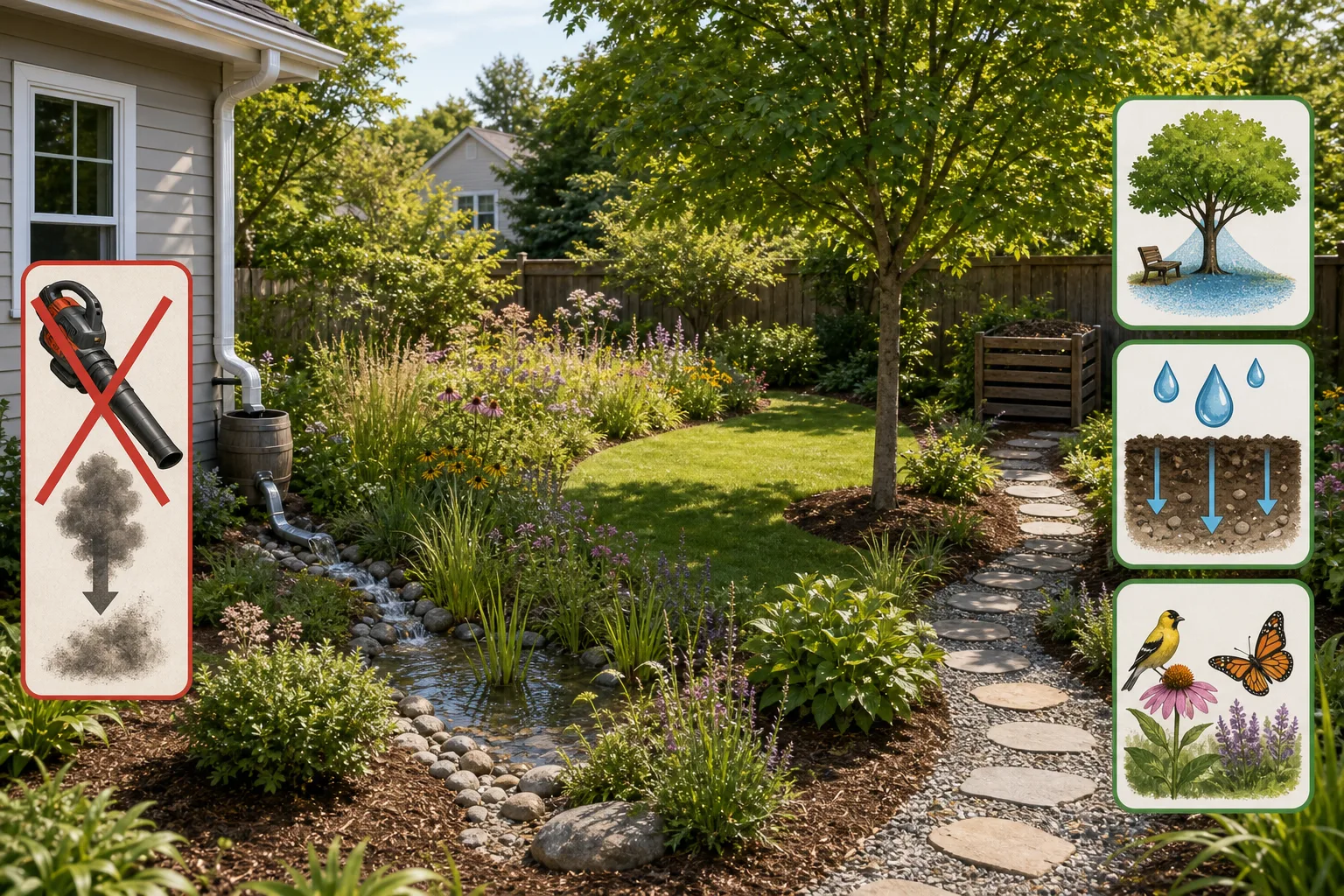
Build soil with compost so it holds moisture. Cover bare soil. Plant more shade where it makes sense. Choose drought-tolerant ornamentals for the driest beds. Reduce thirsty lawn area. Put water butts where roofs can feed them. Use drip lines under mulch for vegetables and new planting. Group containers by water need instead of scattering them decoratively across the hottest patio.
A resilient garden is not a dry gravel desert unless that is what you want. It is a garden where the most valuable plants get water efficiently and the least important areas are allowed to be seasonal.
Heatwaves make gardeners feel they must do everything at once. They do not. First read the rules. Then water the roots, protect the vulnerable plants, let the lawn wait, and start capturing the next rain before you need it.
Related articles
Fall Planting After a Hot Summer: How to Establish Trees and Shrubs Without Wasting Water
Early fall can be a better planting window than spring, but only if the soil, root ball and watering plan are ready. This practical checklist covers what to plant, what to postpone, how to water, and which common shortcuts quietly kill new plants.
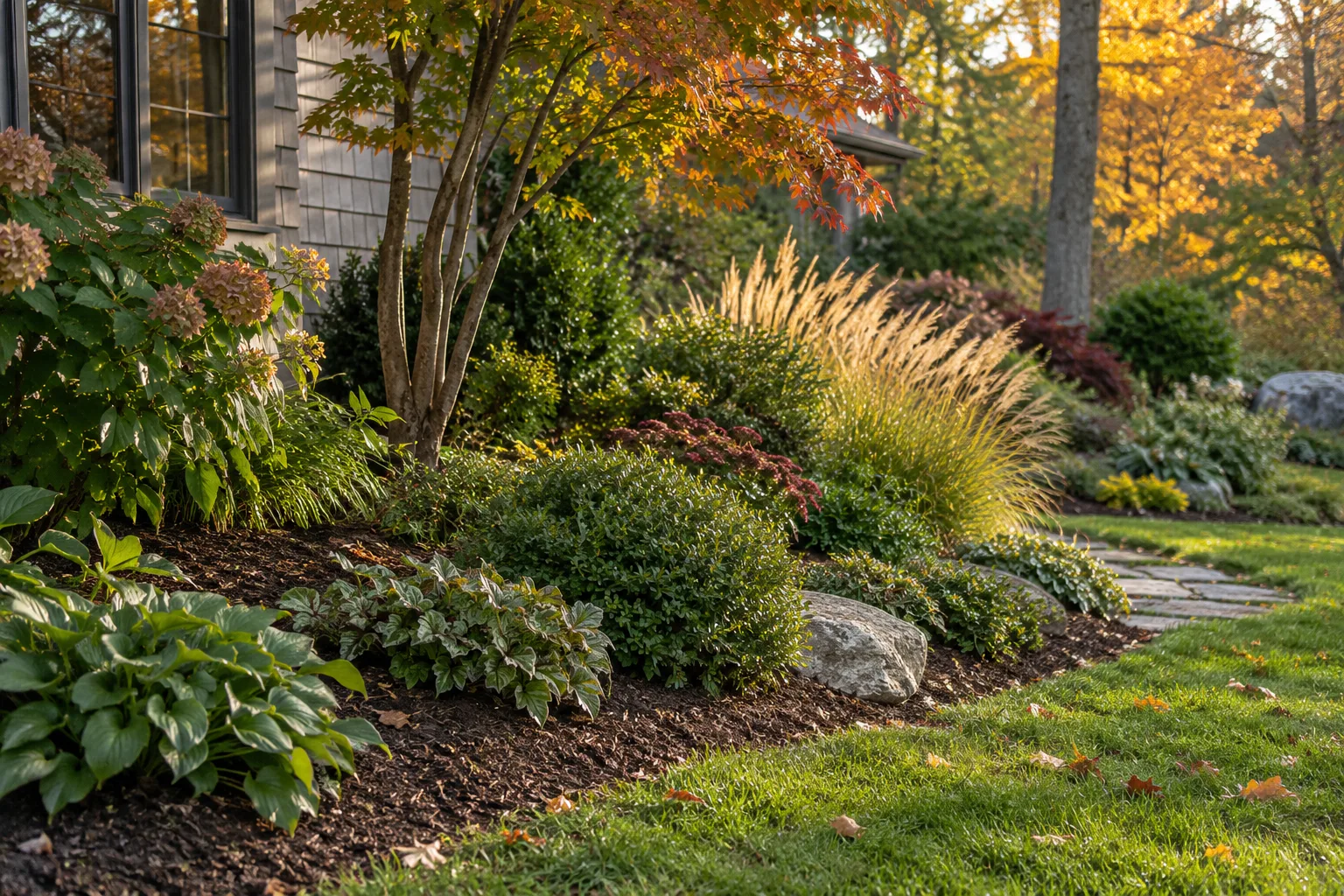
A Low-Maintenance Landscape Starts With the Site, Not the Plant Label
“Low maintenance” is not a promise that a plant can be ignored. It is a design result: match the plant to the light, soil, moisture, mature size and wildlife pressure already present in your yard.
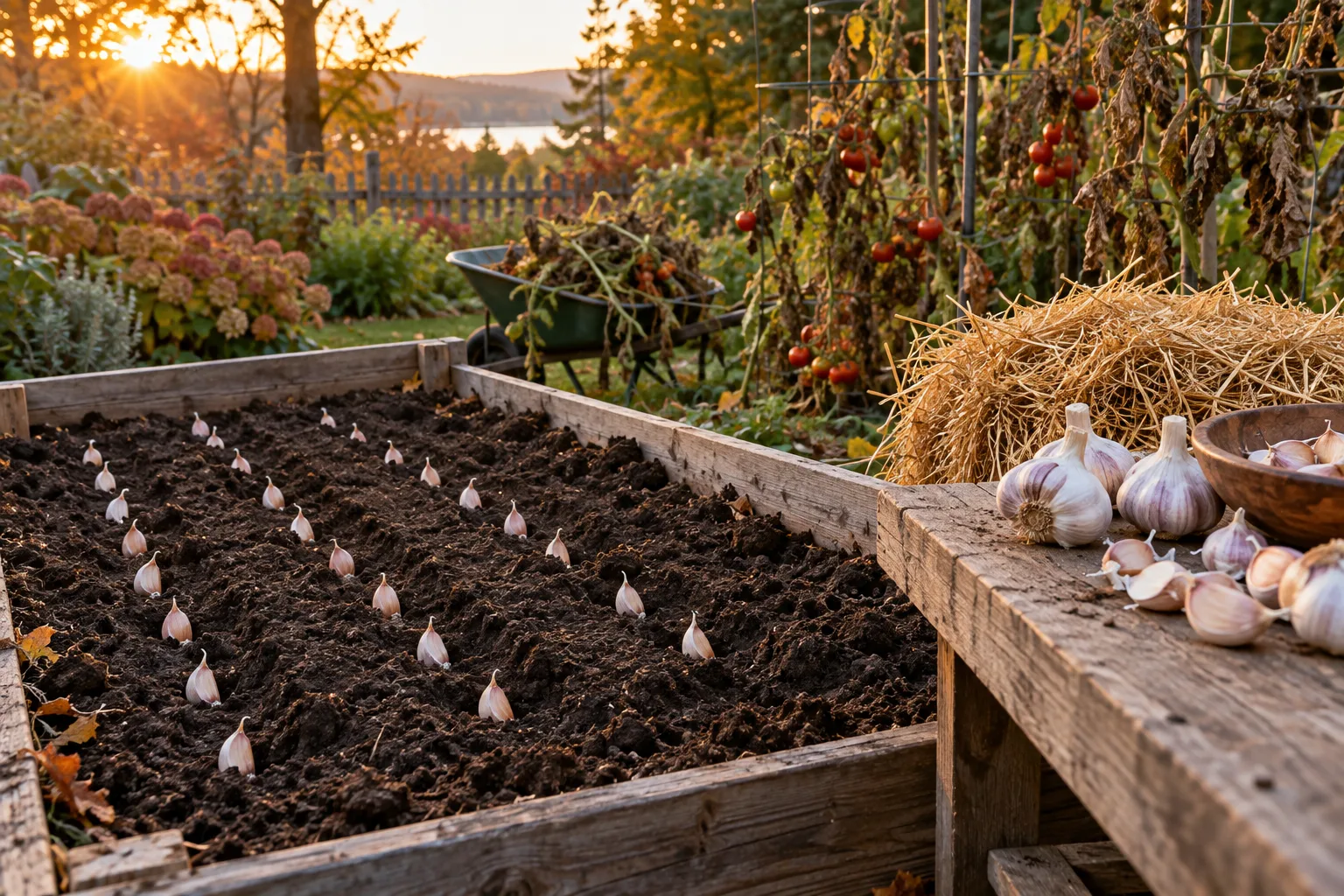
Fall Garlic Needs a Reserved Bed Before It Needs a Planting Day
Gardeners are buying seed garlic now, but the useful move is not always planting immediately. Match the bed, mulch and spacing to your first hard freeze so next summer’s bulbs are worth the space.
Your garden is not a carbon vacuum, but it can still fight heat, drought and wasted work
The useful climate yard is not sold as an offset. It is designed for shade, water, soil, habitat and less maintenance.
Comments
Sign in to comment.
No comments yet.