Tomato hornworms, UV flashlights and the garden pest you may not want to spray
A practical mid-summer guide to spotting hornworms, reading braconid wasp cocoons, and choosing between handpicking, relocation and targeted control.

The first sign of a tomato hornworm is often not the caterpillar. It is the missing leaves, the chewed green fruit, or the dark pellets of frass scattered under a tomato plant that looked fine two evenings ago. Then you start searching and see nothing. That is the trick: one of the largest caterpillars in the vegetable garden is also one of the best camouflaged.
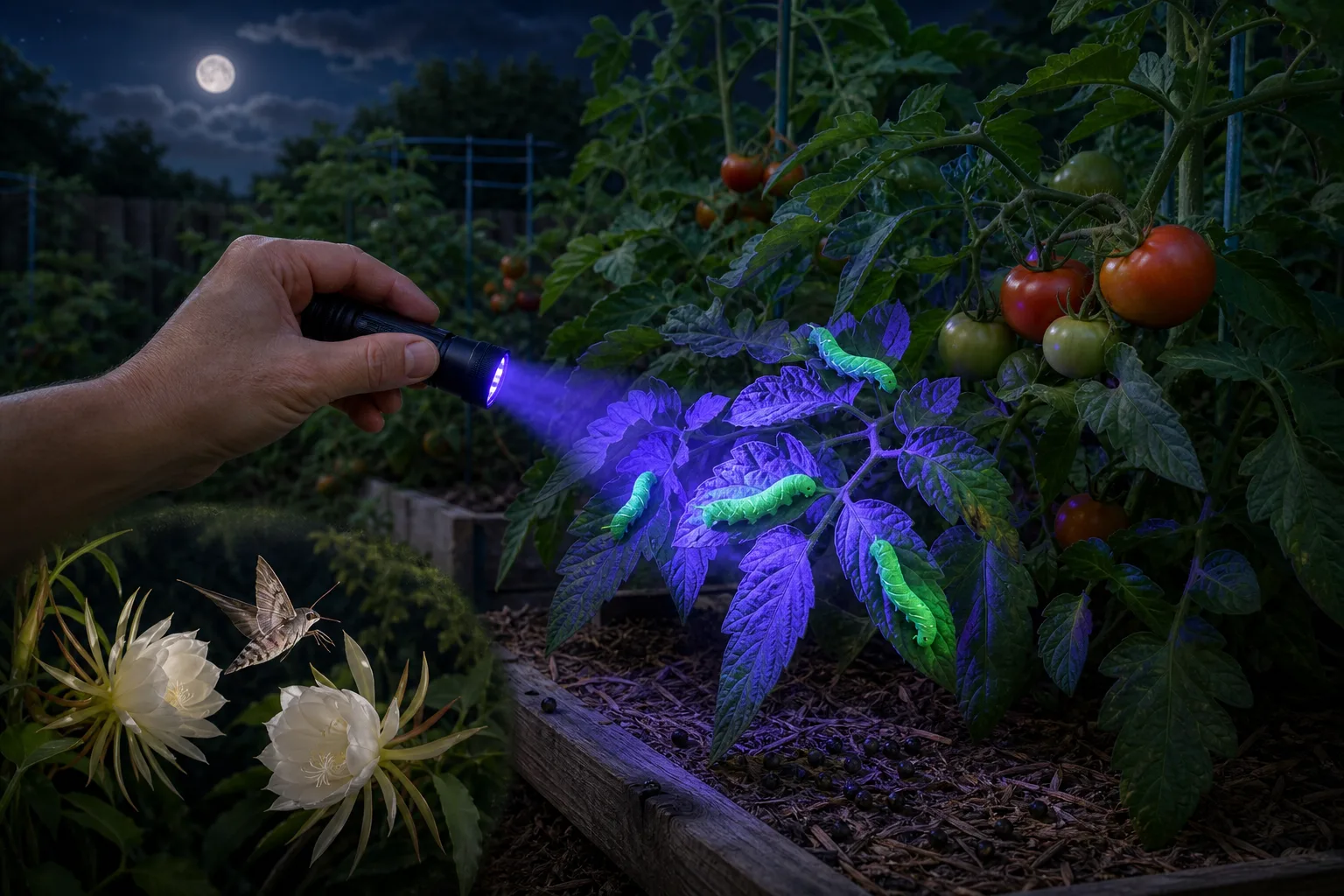
This summer's gardening argument is not only about how to kill it. A pair of widely shared Reddit discussions, picked up by The Cool Down in June and July, turned tomato hornworms into a small ethics test for backyard growers. One side sees a green eating machine that can strip a tomato, pepper or eggplant plant fast enough to cost real food. The other points out that these caterpillars become large sphinx or hawk moths, active night pollinators that many gardeners rarely notice because they work after dark. The newer practical twist is a UV flashlight: gardeners are going out at night, spotting hornworms more easily and removing or relocating them without spraying the whole tomato patch.
The useful answer is not sentimental and not ruthless. A hornworm is both a pest and part of the yard's food web. Your job is to decide how much damage your plants can take, whether natural enemies are already doing the work, and what level of intervention fits your garden.
Know what you are looking at
Tomato hornworms and tobacco hornworms are the caterpillar stages of large moths in the Manduca genus. Gardeners often call both of them tomato hornworms because they feed on the same family of plants and behave similarly in a backyard setting. They are big, green caterpillars with a hornlike tail at the rear. Mature larvae can reach about four inches long, and the adult moths can have a wingspan near four to five inches, according to university extension and IPM sources.
They feed on nightshade crops: tomatoes, peppers, eggplants, potatoes and tobacco. They are hard to see because their striping and color sit neatly against tomato stems and leaves. UC IPM notes that dark green or black droppings below the plant are often the best clue. The University of Minnesota Extension recommends checking plants at least twice a week in summer because larvae can do a lot of damage before a gardener finally notices them.
The damage is usually obvious once you know the pattern. Leaves disappear from the top or outer parts of the plant. Small stems are eaten clean. Green fruit may have large bites. A single small hornworm is not a crisis. Several large larvae on a small tomato planting can defoliate enough growth to reduce fruit quality and stress the plant badly, especially in containers or raised beds during heat.
Why gardeners argue about them
The Reddit debate has a reason. If the caterpillar survives, it becomes a large moth. Sphinx and hawk moths can pollinate night-blooming flowers and are part of the diet for birds, wasps and other wildlife. A wildlife-friendly gardener may hesitate before killing an insect simply because it is inconvenient for one crop.
But a vegetable garden is not a museum exhibit. If you have six tomato plants on a patio, two late-stage hornworms can matter. If you grow food for a household, losing foliage and fruit is not just cosmetic. The right framing is not "good insect" versus "bad insect." It is a decision about threshold. How many plants do you have? How fast is the damage moving? Are the caterpillars young or nearly finished feeding? Are parasitoids already present? Do you have another host plant where relocation would not create a neighbor's problem?
That last question matters. Ethical relocation sounds gentle, but moving a hornworm "down the road" can simply transfer the pest to another vegetable plot or to host plants you do not own. If you relocate, choose a suitable wild or non-crop host where local rules and ecology make sense, and do not make the problem somebody else's.
The UV flashlight method
The UV method is popular because it changes the inspection problem. Instead of trying to distinguish a green caterpillar from green tomato growth in daylight, gardeners use a UV or blacklight flashlight at night to make the caterpillars stand out more strongly. Social posts often describe them as glowing. In practice, the exact visual effect can vary by light, leaf surface, caterpillar size and the observer's eyes; the point is that a night UV check can make them much easier to find.
Use it as a scouting tool, not magic. Go out after dark with a small UV flashlight, gloves and a container. Start where you see missing leaves or frass. Check the undersides of leaves, stems near chewed areas and fruit clusters. Move slowly. Hornworms grip tightly, so some gardeners prefer gloves, pruners or tongs. If you remove a leaf or small branch with the caterpillar attached, cut as little healthy plant tissue as possible.
This approach has three advantages. It is targeted, so you are not spraying the whole plant. It is fast once you know what the damage looks like. And it lets you make a choice caterpillar by caterpillar: remove, relocate, leave for parasitoids, or use a biological control if young larvae are widespread.
The white cocoons are not hornworm eggs
One of the most important mistakes to avoid is removing a parasitized hornworm. If you find a hornworm with small white, rice-like cocoons attached to its back, those are commonly braconid wasp cocoons, not hornworm eggs. The wasp larvae have developed inside or on the caterpillar and then pupate in those visible white cases. The hornworm is already doomed, and the emerging wasps can help suppress other hornworms.
University of Minnesota Extension specifically recommends leaving hornworms with these white cocoons in the garden so the adult wasps can emerge. This is the closest thing to a free pest-management crew you will get. It also shows why broad insecticides can backfire. If you kill the beneficial wasps, lacewings, lady beetles, paper wasps and other natural enemies, you may remove the checks that would have reduced the next wave.
When handpicking is enough
For most home gardens, handpicking is the first and often only needed control. That is not folk wisdom; it is standard extension advice. Hornworms are large, exposed feeders once found, and a backyard tomato patch is usually small enough to inspect.
Handpicking works best when you combine clues. Look for fresh frass on soil, mulch or leaves. Follow the damaged stems upward. Search near newly missing leaves, not randomly across the whole plant. Check in the morning or evening if daytime heat makes the plant wilt, then try the UV method after dark if you still cannot find the culprit. Repeat every few days during peak season.
What you do with the caterpillar depends on your threshold. Some gardeners drop them into soapy water. Some cut them in half with pruners. Some move them to a non-crop host plant. Some feed them to chickens, though that should be done cautiously and only when you are sure the caterpillar has not been exposed to pesticides and when the animal keeper is comfortable with nightshade-feeding insects. If you are unsure, skip that route.
When to consider Bt or spinosad
If the infestation is mostly young caterpillars and handpicking is failing, Bacillus thuringiensis var. kurstaki, usually called Bt, can be a targeted option. It must be eaten by caterpillars, so coverage on actively fed leaves matters, and it works best on smaller larvae. University of Minnesota notes that Bt is not harmful to bees, but the label still matters: apply the right product, at the right rate, on edible crops, with the stated harvest interval.
Spinosad can also control chewing insects, but it is more complicated around pollinators. It can be toxic to bees while wet, so timing, drift control and label restrictions matter. Broad-spectrum pyrethroids are usually a poor first answer in a vegetable garden because they can kill beneficial insects along with the target pest.
The practical rule: if you can see and remove the hornworms, do that first. If you spray, spray for the actual pest stage you have, not for anxiety. Do not treat a whole garden because one tomato stem is missing leaves.
Prevention is mostly scouting and habitat balance
There is no perfect prevention. Adult moths fly in, lay eggs singly on leaves and leave you to find the larvae later. Some cleanup can help. Remove volunteer nightshades and weeds near the vegetable bed if they are serving as pest reservoirs. At the end of the season, crop cleanup and soil disturbance may expose overwintering pupae, though heavy tillage is not always desirable in a soil-health garden. The best prevention in a small garden is repeated inspection.
A balanced yard can also reduce panic. Flowers that support small parasitic wasps and other beneficial insects, mixed plantings, and avoiding broad insecticides all help natural control. That does not mean you sacrifice tomatoes to every caterpillar. It means you build a garden where the first response is observation, then a targeted action.
Some gardeners plant extra host plants as a compromise. That can work if you have space and know the local host ecology, but it can also raise pest numbers. Treat decoy planting as an experiment, not as guaranteed mercy with no cost.
A simple decision tree
Start with the plant. If damage is minor and the plant is large, inspect and wait a day. If leaves are disappearing quickly or fruit is being chewed, act.
Look for frass. If you find fresh dark droppings, inspect nearby stems and leaves. If daylight scouting fails, return after dark with a UV flashlight.
When you find the caterpillar, check its back. White cocoons mean leave it alone so the braconid wasps can emerge. No cocoons means choose based on damage and values: remove and kill if the crop is at risk, relocate only if you have a responsible destination, or leave it if the plant can tolerate the feeding and you want the moth.
If many small larvae are present, consider Bt according to the label. If you reach for spinosad or any stronger insecticide, pause and ask whether you are about to harm the very beneficial insects that could help you next week.
The balanced answer
A garden is not a sterile food factory. It is also not a wildlife sanctuary where the gardener has no claim to the crop. Tomato hornworms sit exactly in that uncomfortable middle. They are native or regionally established insects in many North American gardens, future moths, food for other animals and, at the same time, serious pests on nightshade crops.
The UV flashlight trick is useful because it lets you intervene with precision. It turns a vague urge to spray into a specific decision: this caterpillar, on this plant, with this level of damage. That is better gardening. You keep more tomatoes, waste less pesticide and leave more room for the living system around the vegetable bed.
Related articles
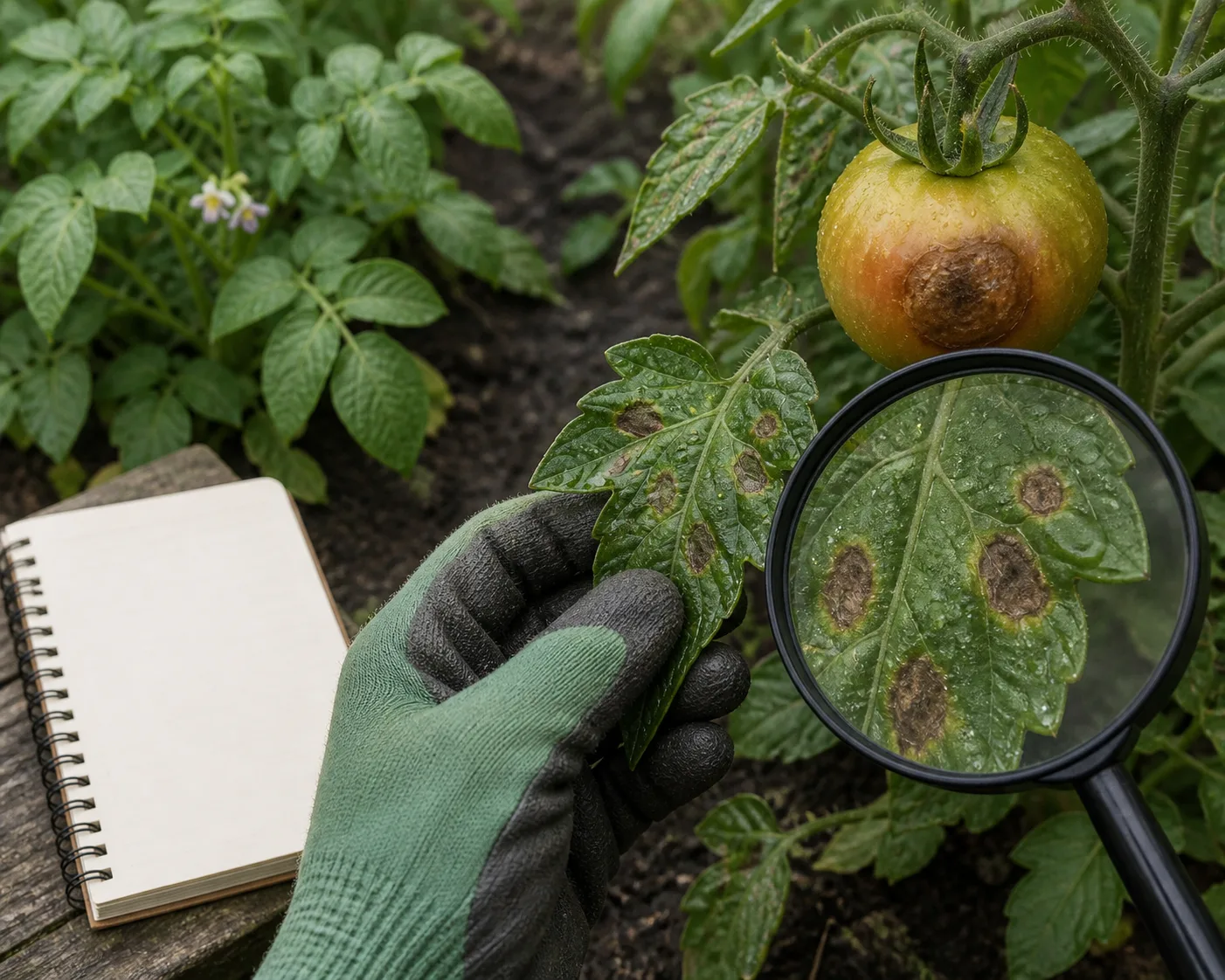
Late blight turns one tomato plant into a neighbourhood problem
Confirmed regional alerts change the home-garden response: diagnose carefully, check local disease reports, and remove truly infected tomatoes or potatoes before they spread spores.
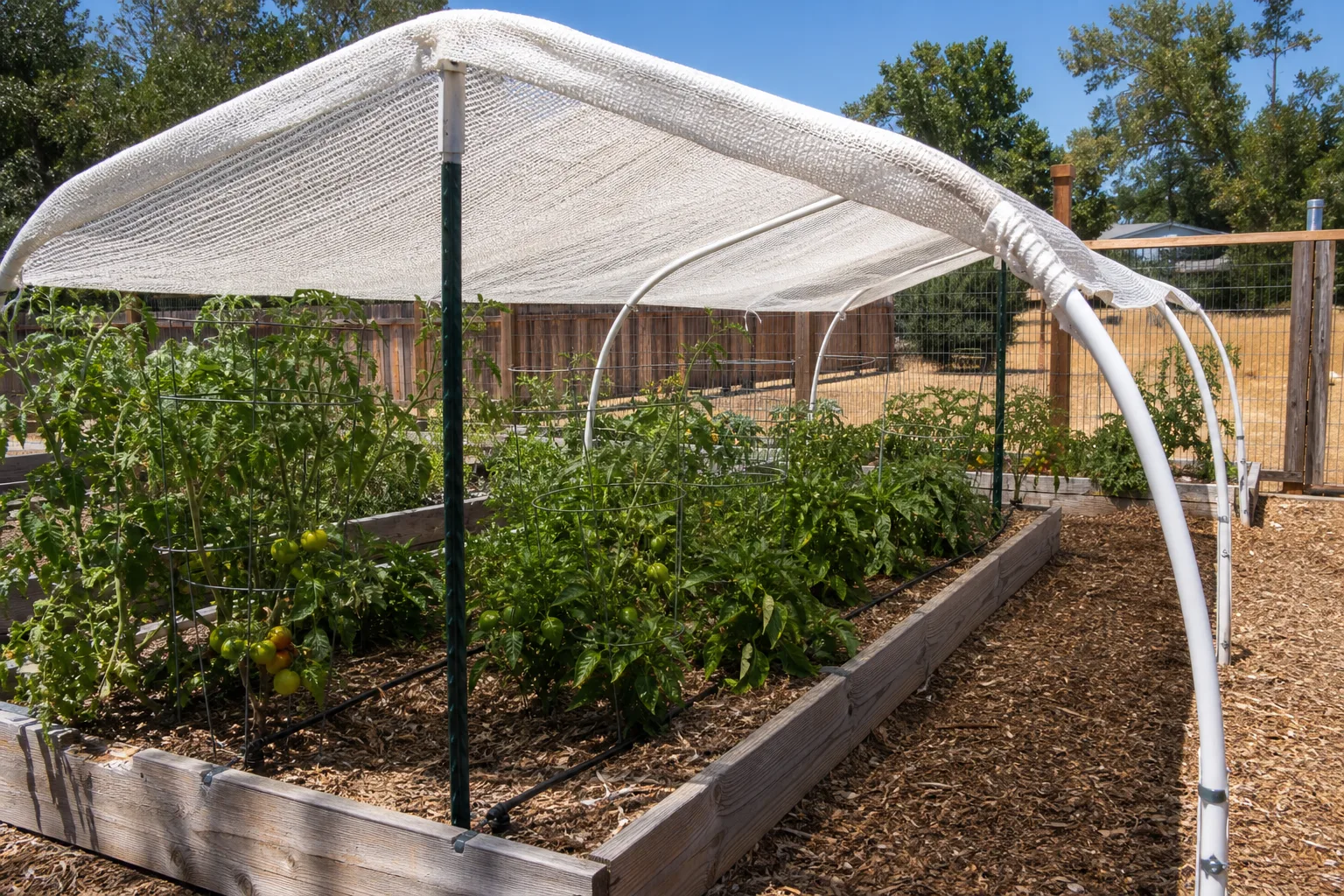
Shade cloth for tomatoes: how to cool a hot August garden without starving it of sun
A practical guide to choosing, mounting and removing shade cloth when heat stalls tomatoes, peppers and raised beds.
Fall Garlic Needs a Reserved Bed Before It Needs a Planting Day
Gardeners are buying seed garlic now, but the useful move is not always planting immediately. Match the bed, mulch and spacing to your first hard freeze so next summer’s bulbs are worth the space.

The September Equinox Garden Audit: Test, Drain and Cover Tired Beds Before Winter
After a dry, demanding season, the most useful fall garden job may be an audit rather than a cleanup marathon. Check what the soil is telling you, correct drainage problems safely, and cover only the beds that can still support a useful autumn crop.

Comments
Sign in to comment.
No comments yet.