San Mateo’s humanoid robot permit push tests the rules for physical AI
A Silicon Valley county is not banning humanoid robots; it is asking what permits, fire rules, supervision and labor disclosures must exist before commercial deployment.

San Mateo County has moved the humanoid robot debate out of demo videos and into the permit office. On August 11, the Board of Supervisors approved a resolution directing county staff to prepare an ordinance for the commercial deployment and operation of mobile humanoid robots. The important verb is “prepare.” This is not a final enacted ordinance, and companies should not treat it as settled law. But it is a serious local signal: one of the first practical attempts to ask what a business must prove before a human-shaped machine works around customers, workers, fire exits, batteries and public space.
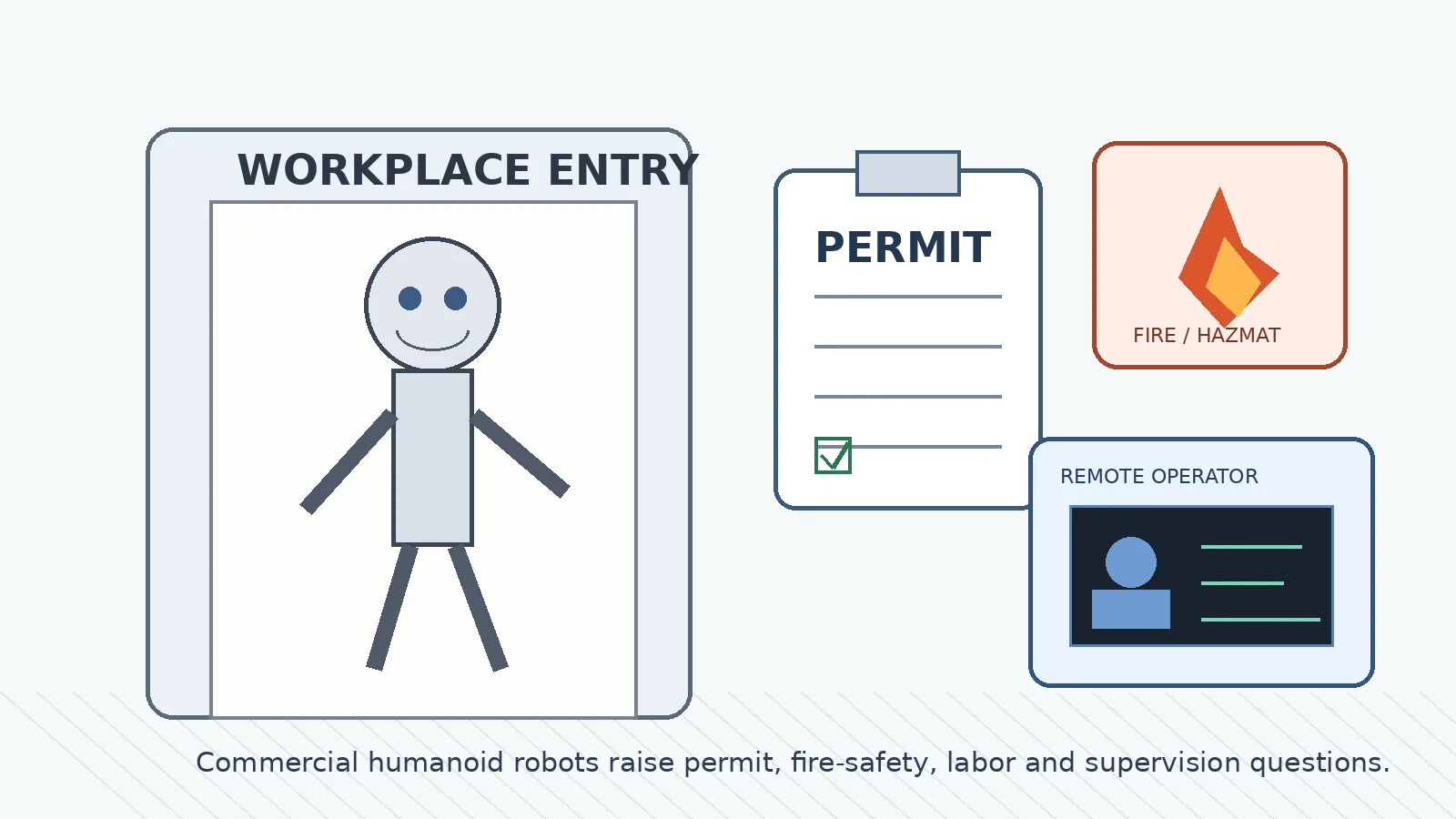
What happened
The official resolution points staff toward a comprehensive permitting process for untethered, autonomous or semi-autonomous humanoid robots in commercial environments. The examples in the text include restaurants and retail stores, but the logic reaches further: cleaning services, hotels, building operations, warehouses open to visitors, hospitals, event venues and any workplace where a mobile machine could share aisles and doorways with people. ABC7 reported that the supervisors approved the resolution unanimously and framed San Mateo as one of the early U.S. jurisdictions trying to regulate commercial humanoids before they become common.
That timing matters. Humanoid companies are no longer selling only research platforms or trade-show clips. Nearby San Francisco startup Tau Robotics publicly markets a one-hour humanoid cleaning service, invite-only, with a listed price of $30 for one robot and $60 for two robots. Its booking page says bathrooms and bedrooms are off-limits by default and that every clean is supervised by a remote human operator. At the same time, automakers and logistics companies are testing humanoids for factory tasks. A syndicated New York Times story in The Seattle Times described car-factory trials and the industry hope that humanoids can move into existing human-oriented workspaces without redesigning the whole floor.
San Mateo therefore sits at the border between two stories. One is the robotics-market story: better motors, better perception, lower robot costs, more remote operation and more venture funding. The other is the local-government story: fire departments, inspectors, labor groups and residents want rules before the machines appear in restaurants, shops and work sites. The resolution is interesting because it translates abstract worry into operational requirements.
Resolution, not enacted ordinance
The first guardrail for readers is legal precision. A resolution can direct staff, express policy and start drafting, but it is not the same thing as a complete permit code already in force. The future ordinance could become narrower, broader or more detailed after staff work, public hearings, legal review and industry feedback. It could also be challenged, revised or preempted in places where state or federal law occupies the field. Treating the measure as a finished ban would overstate what happened.
What is already clear is the template San Mateo wants staff to study. Permit applicants could be asked to show that robots comply with sanitation and ADA-accessibility expectations, do not block evacuation, include accessible emergency kill switches, come from manufacturers with acceptable safety records, and will be supervised at all times by a trained human on site. The resolution also asks staff to consider battery and fire hazards, including lithium-ion thermal runaway, toxic gases, specialized first-responder training, containment protocols and equipment.
This is a different category from the familiar question “is the robot smart enough?” A county does not need to solve robot intelligence to regulate a doorway, a public counter, a kitchen aisle or a battery incident. Local rules often start with the harms a fire marshal, building inspector or labor official can actually see.
The scope: commercial humanoids in shared space
The resolution focuses on humanoid robots that are mobile, untethered and autonomous or semi-autonomous. The “semi-autonomous” word is doing real work. Early service humanoids rarely operate as fully independent employees. They may use autonomy for navigation, manipulation and routine tasks, while remote operators step in when the system is uncertain, stuck, blocked by a human, or asked to perform a task that exceeds the model’s reliability.
Commercial environments are also different from private hobby use. A home robot demonstrated by its owner, a research lab prototype and a machine deployed by a business to clean, stock shelves, carry trays or patrol a property create different obligations. The business controls the site, invites customers or workers into it, and captures the economic benefit. A local government can argue that the business should also carry safety, disclosure and incident-reporting duties.
That makes San Mateo’s topic broader than humanoids alone. The county is really starting to define “physical AI” as an infrastructure category: software-driven machines with bodies, batteries and economic roles. The body matters because it can fall, burn, block, collide, contaminate or frighten people even when its model is not malicious.
The safety stack
The safety stack in the resolution is practical. ADA access means a robot should not narrow routes, trap wheelchair users, block ramps or make service counters unreachable. Emergency evacuation means the machine must not become a moving obstacle during a fire alarm or earthquake. Sanitation means a robot working in food, cleaning or health-adjacent environments needs rules for surfaces, spills and contamination. Physical interaction means the permit process may ask how the robot detects people, what force limits it uses, how it stops, and who investigates near misses.
The accessible kill-switch idea is especially important. A remote dashboard is not enough if the person facing the hazard is a store manager, firefighter, customer or worker standing next to the machine. The local question is: who can stop the robot, from where, under what authority, and what happens after the stop? A serious policy would also need to define restart permissions, incident logs and maintenance lockout procedures so that emergency stop is not just a red button in a brochure.
Fire and hazardous-material readiness may become the least glamorous but most decisive part of the debate. Humanoids need high-energy batteries. Battery chemistry, enclosure design, charging practices and fleet storage all influence risk. The resolution’s references to thermal runaway, rapid ignition or re-ignition, toxic gases, first-responder training and HazMat equipment show that the county is thinking like a fire service, not like a robotics pitch deck. A machine that looks friendly can still require a battery response plan.
The labor and economic stack
San Mateo’s draft direction goes beyond product safety. It asks staff to consider an Economic Impact Assessment that would detail projected job losses and mitigation through redeployment, severance or payment into a county Automation Impact Fee retraining fund. That is politically significant. Most robot regulations begin with sidewalks, speed, collisions, privacy, insurance or traffic. Here, the economic displacement question is placed near the permit decision itself.
Businesses will see this as a major expansion of compliance. A restaurant, retailer or facilities contractor may be willing to certify batteries and insurance but resist having to forecast job losses before testing one robot. Labor groups will argue that the economic effect is not a side issue; it is the stated reason many companies buy robots. If automation lowers payroll and shifts risk to workers and local services, the community may demand a share of the savings for retraining and support.
The practical challenge is measurement. A pilot robot may replace overtime, reduce a planned hire, change job descriptions, or simply fail after three weeks. A permit form will struggle to turn that into an exact number. The more useful early version may be disclosure: which tasks the robot will perform, which positions are affected, whether workers are retrained into supervision or maintenance, and how incidents and staffing changes are reported after deployment.
The on-site supervision conflict
The sharpest clause for robotics startups is the possible requirement that a trained human supervise the robot on site at all times. Humanoids Daily correctly identified this as the point that could threaten remote-teleoperation business models. Remote operation is not a small add-on for many early services; it is the bridge between limited autonomy and a paid customer experience. A robot can be marketed as autonomous while a remote operator watches, approves actions, rescues failures or performs delicate steps through telepresence.
Tau Robotics makes the conflict concrete. Its public booking flow describes a humanoid cleaning service supervised by a remote human operator. That does not mean Tau is violating San Mateo rules; the service is presented for San Francisco, and the San Mateo measure is still a direction to draft rules. But it shows the economic design now entering the market. If a county requires a trained person physically present next to every robot, a $30-an-hour robot cleaning service may become a robot plus an on-site attendant plus insurance plus travel plus compliance. The unit economics change immediately.
Supporters of on-site supervision will say this is the point. Remote operators may not see smoke, blocked exits, wet floors, children, pets, panic or social conflict as well as a person in the room. Critics will argue that requiring a human next to a robot defeats the purpose of remote-supervised automation and may freeze safe experimentation before evidence exists. The eventual ordinance will need to define whether on-site means line-of-sight, same building, same business, trained employee, emergency responder, or simply a responsible person able to intervene quickly.
Factory context: pilots are not mass deployment
The factory story adds pressure but should be described carefully. Automakers and suppliers are testing humanoids because factories are full of tasks designed around human reach, stairs, bins, carts and tools. A robot shaped roughly like a person could, in theory, work without redesigning every station. Reports on car-factory trials describe hopes for flexible labor that can move between tasks, work long shifts and use ordinary human spaces.
That does not mean humanoids have already become a mature factory workforce. Many trials remain pilots, demos or limited experiments. Robots can be slower than workers, require controlled environments, struggle with dexterity, and need teleoperation or safety cages for edge cases. The correct takeaway is not “humanoids are here at scale.” It is that enough companies are testing them seriously that local governments expect spillover into commercial spaces.
Factories may also be easier than public-facing venues. A plant can mark robot zones, train staff, restrict visitors, control charging, log incidents and negotiate with unions or safety committees. A restaurant or retail store has children, customers, narrow aisles, surprise objects and people who never signed a training document. That is why a county may move first around commercial deployments even while the most advanced testing happens behind factory doors.
Why local governments move first
National standards bodies and state lawmakers move slowly, and many existing autonomous-vehicle rules do not neatly cover a humanoid carrying a mop through a shop. Sidewalk delivery robots, scooters and robotaxis already taught cities that physical autonomy arrives in local space before policy categories are tidy. A county sees blocked ramps, fire-service costs, business licenses, labor complaints and public anxiety directly.
Local action also creates fragmentation. A startup might face one rule in San Mateo, another in San Francisco, another in Santa Clara County and another in a shopping mall’s private policy. That could slow deployment and raise legal costs. It could also force the industry to build the compliance layer it will eventually need: incident reporting, battery documentation, emergency stop interfaces, operator training, insurance certificates, data disclosures and labor-impact records.
The best outcome would not be a patchwork of symbolic bans. It would be a practical baseline that can scale: clear definitions, risk tiers, fast permits for low-risk pilots, stricter rules for public-facing deployments, transparent incident data, and room for remote supervision where evidence shows it is safe.
Public reaction and discussion signals
The reaction is split in predictable but useful ways. ABC7 reported support from labor and AI-safety advocates and mixed local responses. Hacker News discussion around the San Mateo item focused quickly on the idea of holding businesses financially accountable for automation. Slashdot’s discussion of humanoids in car factories showed a familiar technology-forum divide: some readers see flexible robots as inevitable, while others see hype, weak productivity and an attempt to bypass labor power.
Social and forum signals are not factual proof, but they show where the public argument will go. The safety side will ask about fires, collisions, children, disabled access and emergency control. The labor side will ask who benefits when a robot replaces a shift. The startup side will ask whether a county permit office can understand fast-moving robotics well enough not to ban by paperwork. The customer side will ask whether a remote operator can see inside a home or business, how privacy is disclosed, and who is liable when something goes wrong.
That debate is healthier when the categories are concrete. “Robots will take jobs” is too broad. “A permit applicant must disclose affected tasks, supervision model, kill-switch access, battery plan and incident reporting” is something a council, founder, insurer and worker can actually argue about.
Checklist for companies considering humanoids
A company that wants to deploy a humanoid in a public or semi-public workplace should prepare before the ordinance arrives. Start with a site map: entrances, ramps, aisles, emergency exits, charging areas, off-limits rooms, customer paths and worker-only zones. Add an ADA route analysis and an evacuation plan that assumes the robot fails in the worst possible location. Decide who can stop the robot locally and remotely, and how the restart is authorized.
Prepare battery and fire documentation: chemistry, certifications, charging procedures, storage, damaged-pack handling, smoke or thermal alarms, first-responder instructions and vendor emergency contacts. Prepare sanitation rules if the robot touches food areas, restrooms, medical surfaces or cleaning materials. Prepare insurance documents and contract terms that say who is responsible for software failures, operator mistakes, mechanical defects and customer injury.
Do not leave the supervision model vague. If the robot is remotely supervised, disclose what the remote operator can see, hear, record and control. If an on-site worker is responsible, define training, authority, staffing and backup. Keep logs of interventions, near misses, blocked routes, emergency stops and customer complaints. If the business case assumes reduced labor hours, document redeployment, retraining and severance plans before a regulator asks.
Founder and investor implications
For robotics founders, San Mateo is a warning that regulatory risk is not a late-stage issue. A beautiful autonomy demo may not survive a permit condition that requires on-site supervision, a fire-service fee or a labor-impact filing. A startup’s moat may include not only manipulation and perception, but also safety certification, operator tools, audit logs, municipal relations and the ability to prove that a robot can be stopped by the right person in the right place.
For investors, the question is unit economics after compliance. Remote operations can make early humanoid services viable by allowing one trained person to supervise several robots or intervene only when needed. Local rules could require more staffing, more insurance and more documentation. That does not kill the market, but it changes which companies are real businesses rather than demos. The winners may be the teams that treat permits, fire plans and workforce effects as product requirements from day one.
Conclusion
San Mateo has not settled the future of humanoid robots. It has done something more modest and more important: it has named the questions that arrive when physical AI leaves the lab. Who can stop the robot? Who is on site? What happens during a fire? Which jobs change? Who pays for training and emergency readiness? What does a customer know about remote operation?
The first real test for commercial humanoids may not be whether they can walk across a stage. It may be whether a business can explain, in a permit application, who is legally, financially and physically responsible when that robot walks into a workplace.
Related articles
Une carte de robotaxi n’est pas un service
La géozone Tesla à Miami et le rappel Waymo lié à l’eau stagnante montrent que la vraie course porte sur le domaine opérationnel, pas sur les cartes.

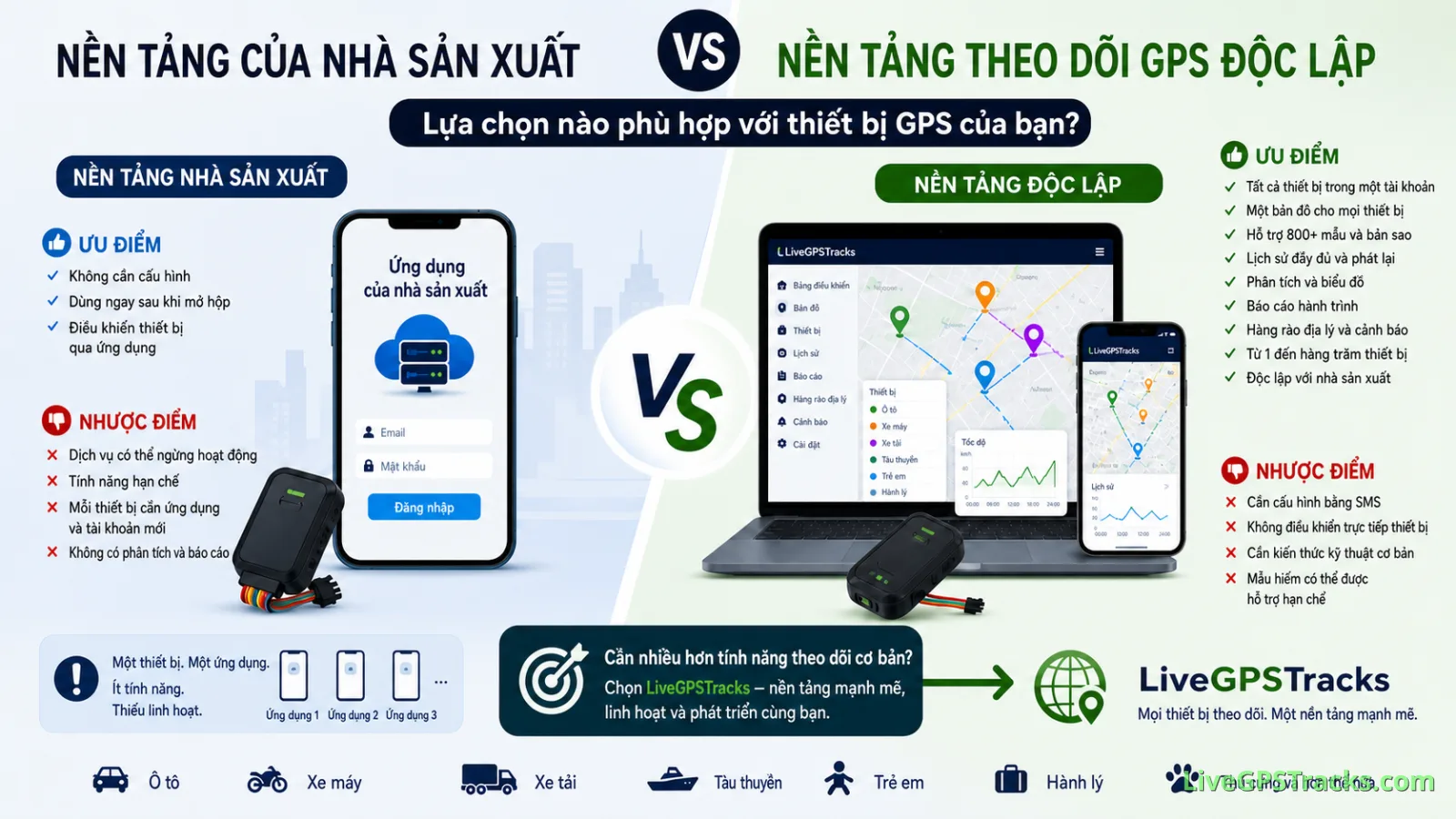
Nền tảng của nhà sản xuất hay nền tảng theo dõi GPS độc lập?
Ứng dụng của nhà sản xuất giúp bắt đầu nhanh với một thiết bị. Khi số lượng thiết bị tăng, nền tảng độc lập có thể dễ quản lý hơn. Hãy so sánh cấu hình, tính năng, phân tích và khả năng mở rộng.
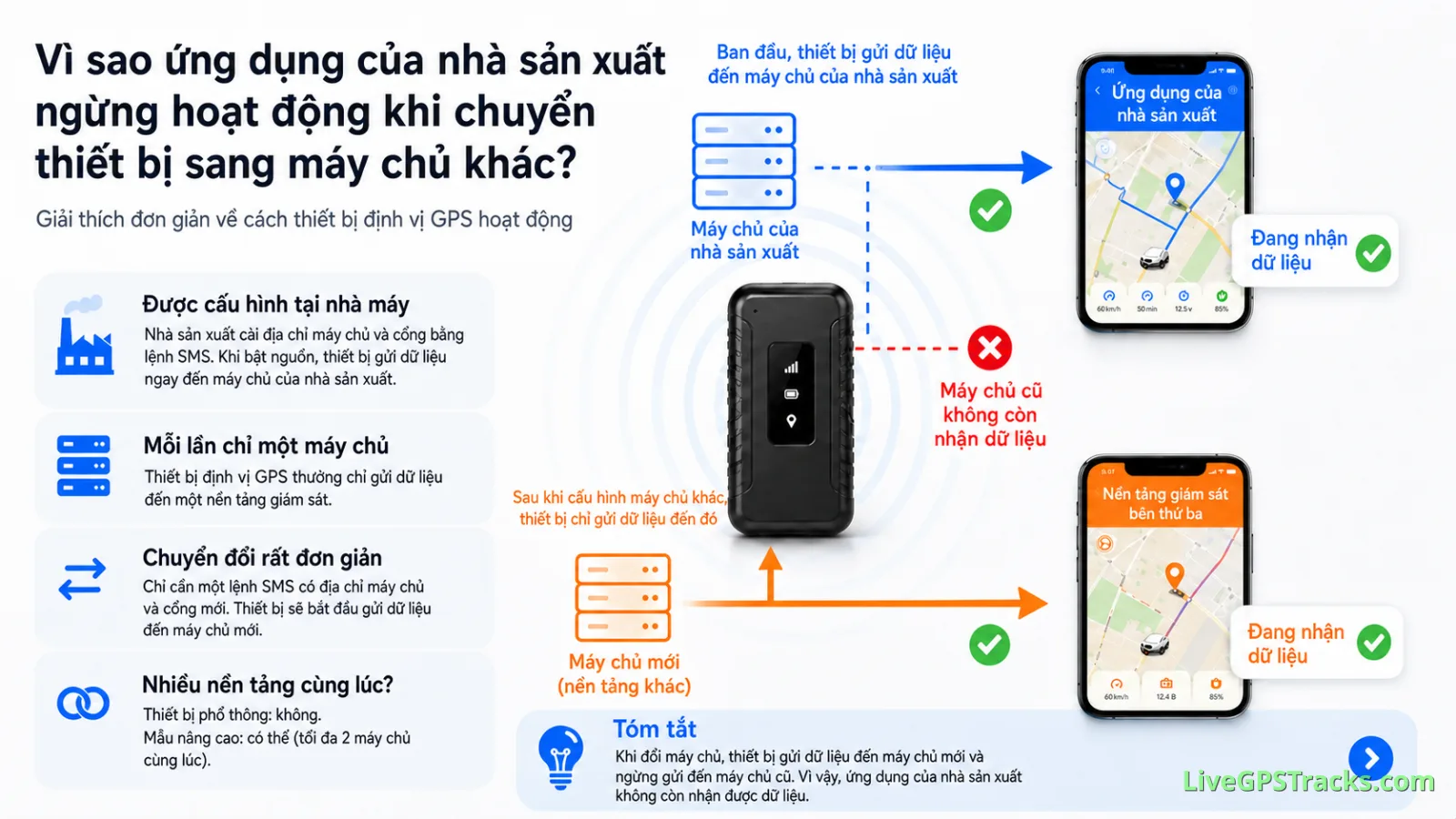
Vì sao ứng dụng của nhà sản xuất ngừng hoạt động khi chuyển thiết bị GPS sang máy chủ khác
Sau khi đổi máy chủ, thiết bị GPS có thể biến mất khỏi ứng dụng của nhà sản xuất—và thường không phải do hỏng. Tìm hiểu dữ liệu được gửi đi đâu, vì sao đa số thiết bị chỉ dùng một nền tảng và cách quay lại cấu hình cũ.
Cài đặt thiết bị định vị GPS bằng phần mềm của nhà sản xuất
Hướng dẫn cài đặt thiết bị định vị GPS bằng phần mềm của nhà sản xuất: kết nối máy tính, APN, chu kỳ gửi dữ liệu, chế độ tiết kiệm pin, máy chủ và cổng.

Comments
Sign in to comment.
No comments yet.