Should you buy Meta AI glasses now that useful features can hit a subscription meter?
Ray-Ban Meta-style AI glasses are useful for hands-free capture, but the new Conversation Focus cap and privacy-light backlash change the buying calculation.

Meta's AI glasses are no longer just a gadget question. They are a trust question.
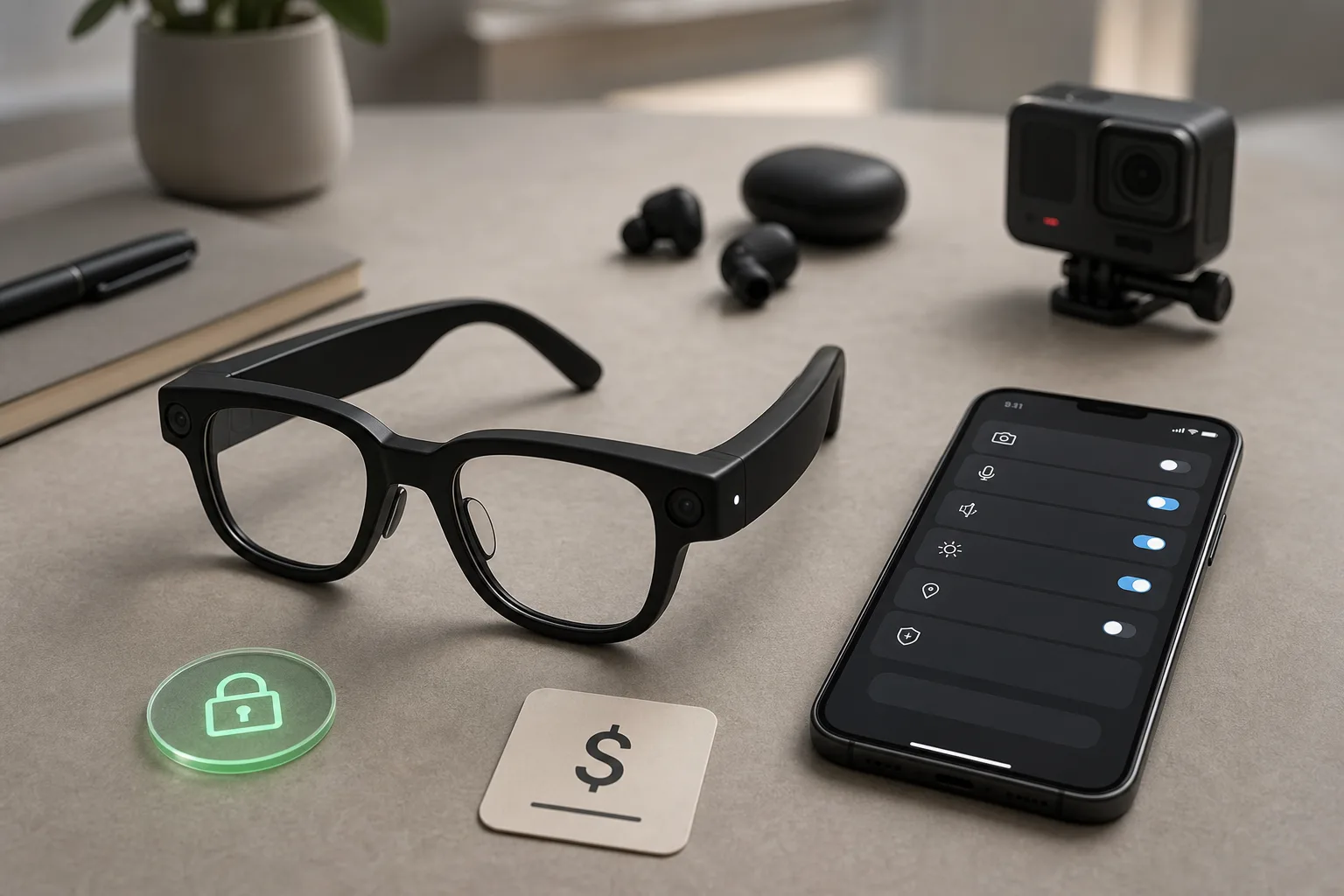
On paper, Ray-Ban Meta and the wider Meta AI glasses line are easy to like. They put a hands-free camera, open-ear audio, calls, messages, AI queries, translation and voice features into something that looks close to ordinary eyewear. For a traveller, cyclist, parent at a school event, creator or frequent caller, that can be genuinely useful.
But the buying decision changed in early July. Meta's help page now says Conversation Focus, a feature that amplifies the voice of the person you are speaking with, is free for three hours a month on eligible AI glasses. Meta One Premium raises that to 15 hours a month. Unused hours do not roll over, and the help page says usage balance is not currently available. The Verge and Android Authority both reported the cap, with The Verge noting that Conversation Focus kept working when internet access was turned off, which makes the limit feel less like server protection and more like a feature toll.
At the same time, privacy returned to the centre of the story. The Financial Times reported that Meta has been testing "super sensing" glasses that could capture more of the world around the wearer. The Verge also reported that Meta's glasses will disable the camera if the privacy light is tampered with. That privacy-light update is sensible in one way: people around the wearer need a visible recording signal. It also reminds buyers what they are putting on their face.
So should you buy them now? The short answer: only if hands-free capture is the main reason. If you are buying mostly for AI novelty, Conversation Focus, or the idea of a stable future platform, wait.
What you are actually buying
The current Meta glasses pitch is not a single product. It is a family: Ray-Ban Meta, Oakley Meta, Meta Glasses and display-oriented models, depending on market and availability. Meta's own smart glasses page shows starting prices in the roughly $224 to $499 range depending on model and promotion, with some models higher once lenses, finishes and prescription options enter the cart.
The useful features are practical, not magical. You can take quick first-person photos and videos without pulling out a phone. You can answer calls while walking. You can listen to audio without sealing your ears. You can ask Meta AI questions, use translation where available, and use features such as Conversation Focus on supported devices and in supported countries.
That matters. Many gadgets fail because they add a screen where you do not need one. Smart glasses have a cleaner pitch: they make a few phone tasks faster when your hands are busy.
The problem is that you are not just buying glasses. You are buying glasses tied to Meta's app, account, AI roadmap, feature limits, regional availability and privacy policy. That is a very different purchase from sunglasses or earbuds.
The subscription risk is now real
The Conversation Focus cap is the warning sign. Meta says AI glasses do not require a subscription, and that is true in the narrow sense. You can still use the glasses. But if a useful feature on already purchased hardware gets a monthly cap, buyers have to assume other features can change later.
This is why the Hacker News and tech press reaction was so sharp. Commenters compared the move to heated-seat subscriptions in cars. The complaint is not only the price. It is the feeling that hardware has become a rental surface.
Meta's position, as reported by Android Authority, is that Conversation Focus is powered by AI the company keeps developing and that Meta One supports ongoing work while giving power users more access and premium device support. That explanation may be reasonable for cloud-heavy features. It is harder to accept for a feature reviewers say works offline.
For buyers, the conclusion is simple: do not judge the glasses only by what they can do today. Judge them by what happens if a feature you rely on becomes capped, moved to a plan, limited by country, or changed after an update.
Privacy is not a side issue
The camera is the point of the product, and also the source of the social problem.
A phone camera is visible because you hold it up. Glasses are different. People around you may not know whether you are taking a photo, recording a video, using AI analysis, or just looking at them. The privacy light helps, but only if it works and only if people trust it. That is why Meta's reported move to disable the camera when the privacy light is tampered with is important.
It does not remove the social friction. Some offices, schools, gyms, medical spaces, labs, bars and private homes will not want camera glasses around. In some places, audio recording rules are stricter than video rules. In Europe, workplace and personal-data expectations can be especially unforgiving. This article cannot give legal advice, but buyers should treat the device as a visible recording tool, not as normal eyewear with a bonus camera.
The "super sensing" reporting adds another layer. Even if such functions are opt-in, experimental, or not available on current consumer devices, the direction matters. The more glasses try to understand the world continuously, the more the product depends on trust from people who did not buy it.
Who should buy now
Buy if the core value is hands-free capture and you already know where you will use it.
Good fits include creators who want short first-person clips, parents who want quick memories without holding up a phone, travellers who value hands-free photos, cyclists or runners who want light recording without a mounted action camera, and people who spend a lot of time on calls and dislike earbuds.
They can also make sense if you wear prescription glasses and want one device that handles eyewear plus casual audio and quick capture. Even then, check return policies and lens costs before buying. Prescription lenses can change the real price sharply.
Buyers in this group should treat AI features as a bonus. If the camera, audio and fit justify the price by themselves, the subscription risk hurts less.
Who should wait
Wait if Conversation Focus is the reason you want them. A three-hour monthly free cap is not enough for someone who expects daily help in noisy places. Fifteen paid hours is still not unlimited. And smart glasses are not hearing aids. If hearing support is the real need, compare them with proper hearing aids or regulated over-the-counter hearing devices before spending money.
Wait if you want a stable AI platform. Meta is still experimenting with plans, countries, models and features. That is normal for a young product category, but it is bad for buyers who hate surprises.
Wait if privacy discomfort would stop you from using the glasses in the places where you need them. A wearable camera you avoid wearing is an expensive drawer item.
Who should skip
Skip if you mainly want better calls or music. Good earbuds are cheaper, less socially awkward and usually better at audio.
Skip if you mainly want action video. A GoPro, Insta360 or similar camera is less subtle, but it is built for footage, mounting, stabilization, battery swaps and rough use.
Skip if you mainly want translation. A phone with translation apps, or earbuds paired with a phone, may be more flexible and less dependent on one glasses ecosystem.
Skip if you work in sensitive environments. Healthcare, legal work, schools, secure offices, labs and client sites can turn camera glasses from a convenience into a policy problem.
What to check before buying
Check the current price in your country, not only the U.S. headline price. Add prescription lenses if you need them.
Check whether your model and country support the features you care about. Meta's own help page says Meta One and some AI glasses features are in limited testing and not available everywhere.
Check the Conversation Focus rules. At the time of writing, Meta lists three free hours per month and 15 hours with Meta One Premium, with no rollover.
Check the return window. You need to test comfort, audio leakage, battery life, camera framing and whether people around you object.
Check your local recording rules and workplace policies. The glasses may be legal in one context and unwelcome in another.
Check alternatives by task: earbuds for calls, an action camera for video, a phone for translation, hearing devices for hearing support, display glasses for screen use, ordinary sunglasses if style is the main goal.
Verdict
Buy only if the hardware use case is already obvious to you. If you can say, "I need hands-free photos and short clips every week, and I am comfortable wearing a visible camera," the glasses can be worth it.
Wait if you are mostly buying the AI promise. Meta is still deciding how much of that promise will be free, capped, regional or bundled into a subscription.
Skip if privacy friction, subscription creep or social awkwardness would bother you. The product may be clever, but a clever camera on your face is still a camera on your face.
The best buyer for Meta AI glasses in 2026 is not the person who wants the future. It is the person with a boring, specific use case today.
Related articles
Should you buy a robot vacuum-mop combo in 2026?
A practical verdict on when a robot mop-vacuum earns its price, and when it becomes one more chore.
Should you buy a portable air conditioner in 2026?
A practical verdict on when a portable AC is a smart heat-wave backup and when it is just a loud compromise.

Should you buy a portable power station in 2026?
A practical verdict on portable power stations: when they help, when they disappoint, and what to check before spending money.
When does an electric bicycle stop being a bicycle?
Fast e-bikes are forcing buyers, parents, police, and riders to face the line between a bicycle, a moped, and a loophole.

Comments
Sign in to comment.
No comments yet.