Should you renew PlayStation Plus or try to cancel first?
Some PS Plus users are seeing retention discounts when they try to leave. That does not make the subscription a bargain for everyone.

PlayStation Plus is having one of those awkward subscription moments where the price looks different depending on whether you behave like a loyal customer or a person about to leave.
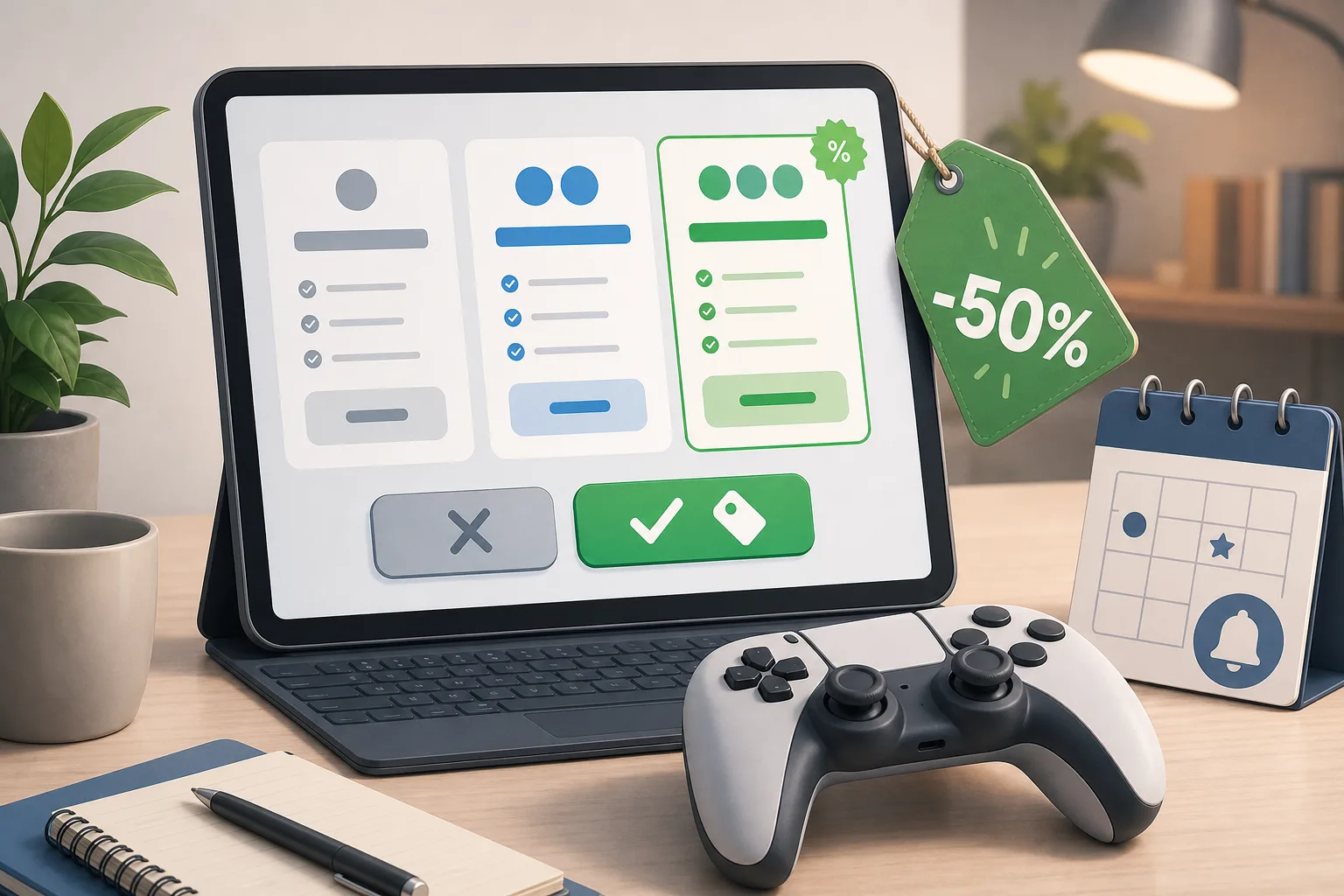
In early July, some PlayStation users trying to cancel PS Plus began reporting retention offers. The headline case came from r/PlayStationPlus: a user said they tried to cancel in protest over Sony's move away from new physical PlayStation game discs from January 2028, and the cancellation flow offered 50% off three months of PS Plus Extra. Other users reported no offer. One said the offer appeared in Japan. Game Rant reported that some annual subscribers were seeing 25% to 33% discounts, while monthly or three-month users could see up to 50%, depending on eligibility.
That is not a universal coupon. It is not a trick you should blindly chase. It is still enough to make every PS Plus subscriber ask a useful question: am I paying for a service I actually use, or am I paying full price because auto-renew made the decision for me?
The answer is not the same for everyone. PS Plus can be a good buy. It can also be an expensive habit disguised as a console requirement.
What changed this week
The retention-offer story did not appear in a vacuum. Sony had just announced that production of physical discs for new PlayStation games will end starting January 2028. That separate decision turned into a broader argument about digital ownership, regional accounts and whether players still control the things they buy. Some users responded by cancelling PS Plus or at least testing the cancellation screen.
Then came the strange part: users trying to leave sometimes saw a discount.
Kotaku framed it as players discovering they could save money by threatening to quit. Android Headlines called it a subscription trap, noting that automated retention discounts are common across modern subscription services. That second point matters. This does not prove Sony manually panicked over one Reddit thread. It does show how subscription pricing often works now. A quiet customer pays the posted rate. A leaving customer may be offered a lower one.
For a channel about buying decisions, that is the whole story. Not outrage. Not fan-war noise. The useful question is whether PS Plus is still worth the money at your actual price.
What PS Plus includes
Sony sells PlayStation Plus in three main tiers.
Essential is the base tier. It includes online multiplayer, monthly games, cloud storage, Share Play, exclusive content and member discounts. If you play paid multiplayer games online every week, this is the tier that often feels unavoidable.
Extra adds the Game Catalog and Ubisoft+ Classics. This is the tier for people who actually play through catalog games, not just add them to an imaginary backlog.
Premium adds Classics Catalog access, game trials, cloud streaming for supported titles and the Sony Pictures Catalog in markets where those features are available. The value varies by region and by how much you care about old games, trials and streaming.
Sony's own PS Plus page describes those benefits clearly, but the price section can be frustrating because offers, regions and account status change what users see. Game Rant put the US annual range roughly at $80 to $160 depending on tier. That is enough money to make inertia expensive.
July's games are good, but that is not the same as value
Sony's official PlayStation Blog confirmed the July 2026 monthly games: Call of Duty: Modern Warfare III, For the King II and CrossCode. They became available July 7 and run through August 3, with the usual note that the lineup may differ by region.
That is a strong month on paper. Modern Warfare III alone will make Essential feel worthwhile for some people. CrossCode is a genuinely good action RPG, and For the King II gives co-op players something to try.
But monthly games only matter if you will play them. A subscription library can make you feel richer while your actual free time stays the same. If you claim games every month and never install them, you are not building value. You are building a receipt pile.
The same applies to Extra and Premium. A catalog is not worth $100-plus because it contains hundreds of games. It is worth that money only if it replaces purchases you would otherwise make.
The simple math
Start with your real use, not Sony's tier names.
If you play online most weeks, Essential may be a cost of owning the console. The question becomes whether you can get it cheaper, whether you need annual billing, and whether the monthly games offset part of the cost.
If you play one catalog game every few months, Extra is probably too much at full price. Buy the specific game on sale instead. If you play two or three catalog games every month, Extra can be a good deal, especially with a real discount.
If you pay for Premium but rarely use classics, cloud streaming or trials, Premium is the easiest downgrade. Many people buy the top tier because it feels complete, then use it like Extra.
If you are subscribing for a single online game, check whether that game actually requires PS Plus. Free-to-play online games often do not. Paid multiplayer usually does. That one distinction can save a family real money.
The cancellation discount is useful, but dangerous
The reported 50% offer is attractive because it exposes the gap between list price and retention price. Still, it is not guaranteed. The Reddit follow-up thread exists precisely because some people tried cancelling and saw nothing. Sony's US PS Plus terms also say promotional offers can vary by country, subscriber and subscriber status.
So the safe version is this: before renewal, review your subscription and cancellation screen carefully. Do not rush through final confirmation if you cannot afford to lose access. If an offer appears before the final step, take a screenshot, check the duration, check the tier, check whether it renews at full price afterward, and set a calendar reminder.
Sony's support page says cancelling PS Plus lets you keep benefits until the end of the paid period. After the subscription ends, you lose PS Plus benefits such as monthly games, online storage and online multiplayer. Monthly games claimed through PS Plus stop being available while the subscription is inactive. Discounted purchases, redeemed packs and avatars remain yours.
That is the part deal hunters sometimes skip. Cancelling is not a harmless button if you depend on cloud saves, multiplayer or a child's favorite monthly-game title.
Who should keep PS Plus
Keep it if you play paid online multiplayer every week. Essential may be annoying, but if your real gaming time is FIFA, Call of Duty, Helldivers-style co-op or another paid online title, dropping PS Plus can break the thing you actually use the console for.
Keep it if your household shares the benefits and several people use the console. A family with two or three players can get more from online play, monthly games and discounts than a single person with a backlog problem.
Keep Extra if you genuinely finish catalog games. Not sample. Finish. If Extra replaces two or three purchases a month, the math is easy.
Keep Premium if you use the Premium parts. Classics, trials and streaming should be active habits, not theoretical benefits.
And yes, keep it if you receive a strong retention discount and already planned to use the service. A half-price subscription you will use is a deal. A half-price subscription you ignore is still wasted money.
Who should downgrade or cancel
Downgrade if you are on Premium but mostly use the Extra catalog. Sony is not grading you for having the top tier.
Downgrade to Essential if you only need multiplayer and cloud saves. The catalog is not useful if your evenings already belong to the same two games.
Cancel if you mainly play single-player games you buy outright, especially physical or heavily discounted digital games. One or two games you actually want can be cheaper than another year of subscription drift.
Cancel if you are keeping PS Plus because you are afraid of losing access to monthly games you never play. That is sunk-cost thinking with a blue icon.
Cancel if the Sony physical-disc decision changed how you feel about funding the ecosystem. A retention coupon does not answer a trust problem. If your point is protest, taking the discount probably weakens the message you wanted to send.
Alternatives to paying full price
The least dramatic alternative is to buy PS Plus only when you need it. Subscribe for the months when you are playing paid multiplayer or when the catalog has a game you were about to buy. Then turn off auto-renew.
Another option is to buy the one game you care about during a sale. That is less exciting than a giant catalog, but it has one advantage: you know exactly what you paid for.
Physical and used games still matter until Sony's 2028 transition for new releases, and they may matter even more for older titles. If price control is your main concern, do not ignore discs, used shops and local retailers just because subscriptions feel convenient.
Game Pass, Nintendo Switch Online and PC bundles can be useful comparisons, but they are not automatic replacements. A subscription is only good if it matches the hardware and games you actually use.
Checklist before renewal
Check your current tier and renewal date. Check whether auto-renew is on. Look at your last three months of play, not your imagined future self. Count how many catalog games you finished. Check whether your main online games require PS Plus. Check whether anyone else in the household depends on the subscription.
If you test cancellation, stop and read each screen. Do not assume a retention discount will appear. If it does, verify the tier, length, renewal price and whether the offer can be stacked. Avoid any trick that depends on unclear terms.
If you keep the service, set a reminder one week before the next renewal. Subscriptions win when you forget them.
The buying answer
PS Plus is worth renewing for active online players, households that use the benefits, and catalog-heavy players who finish enough games to beat the annual price. Extra can be the sweet spot. Premium needs a stricter test.
It is not worth full price for people who mostly play single-player purchases, ignore monthly games, or keep the top tier out of habit. And if the only thing making PS Plus appealing is a cancellation discount, that is a signal to rethink the service, not a reason to celebrate the deal.
The best move this month is not automatically renew or rage-cancel. It is to make Sony earn the renewal like any other subscription.
Related articles
Should you buy a robot vacuum-mop combo in 2026?
A practical verdict on when a robot mop-vacuum earns its price, and when it becomes one more chore.
Should you buy a portable air conditioner in 2026?
A practical verdict on when a portable AC is a smart heat-wave backup and when it is just a loud compromise.

Should you buy a portable power station in 2026?
A practical verdict on portable power stations: when they help, when they disappoint, and what to check before spending money.
Should you buy Meta AI glasses now that useful features can hit a subscription meter?
Ray-Ban Meta-style AI glasses are useful for hands-free capture, but the new Conversation Focus cap and privacy-light backlash change the buying calculation.
Comments
Sign in to comment.
No comments yet.