AI assistants are moving into creative and office tools. The skill now is review, not blind trust
Practical AI work is becoming less about prompts and more about building review habits before the output reaches customers.

AI tools are getting closer to the places where work already happens: the video editor, the document system, the legal inbox, the design file, the support queue. That sounds convenient, and often it is. It also changes the practical skill. In 2026, the people getting the most value from AI are not the ones who ask the cleverest prompt. They are the ones who build a review loop around the machine.

The tool is entering the workflow
Recent announcements and product updates point in the same direction. Adobe is pushing assistants deeper into creative apps. Legal-tech startups are selling AI to in-house teams that need contract review and research help. Developer and agent tools are experimenting with memory, session history, and handoffs between systems. Hacker News is full of small utilities trying to make AI agents less forgetful and less isolated.
The useful pattern is not magic automation. It is narrower. AI drafts, summarizes, labels, cuts, proposes, or searches. A human then checks what matters: facts, tone, rights, customer impact, and whether the output fits the job.
Build the review before the habit forms
Teams often make the same mistake. They let AI into a task because it saves time, then add governance only after someone notices a bad answer. That is backward. The review step should exist on day one, even if it is lightweight.
For writing, keep source notes beside the draft and force a factual pass before publication. For video or design, check licensing, brand safety, accessibility, and whether generated edits changed the meaning. For legal or finance work, AI can prepare a first pass, but the accountable professional still owns the conclusion. For customer support, keep escalation rules simple enough that a tired person can follow them.
The best prompts are boring
Good practical prompts look less like wizardry and more like handoff notes: what source to use, what audience to write for, what must not change, what uncertainty to flag, and what format the reviewer needs. A prompt that says "make this better" is not a workflow. A prompt that says "summarize only the attached contract, list clauses that changed, quote the relevant text, and mark anything uncertain" is much closer.
The same applies to agents. Before asking an agent to run across tools, define the stopping point. Should it draft a plan, open a pull request, prepare a spreadsheet, or ask for approval before sending? The dangerous failures usually come from vague permission, not from one bad sentence.
Measure the dull things
Do not measure only time saved. Measure rework, corrections, approval time, complaints, and how often people ignore the AI output. If an assistant saves ten minutes but creates a quiet review burden elsewhere, the gain is fake. If it helps a junior worker produce a better first draft and a senior reviewer spends less time fixing structure, the gain is real.
The human takeaway is simple. Put AI where the first draft is expensive but the final judgment is still clear. Keep it away from tasks where nobody can tell whether the answer is right. That boundary is less glamorous than a demo, but it is what makes the tool useful on Monday morning.
Related articles
The Automated Research Intern Has Arrived. The Bottleneck Is Now Evidence
OpenAI says its research teams are already using more agent effort than human labor in aggregate. The practical lesson for research and engineering leaders is not to hand over discovery, but to redesign how ideas are tested, recorded, and rejected.
Stop reading AI code like a human linter. Write the acceptance gate first
AI coding assistants are useful only when humans move from line-by-line output reading to executable acceptance criteria, tests, privacy rules and clear stop conditions.
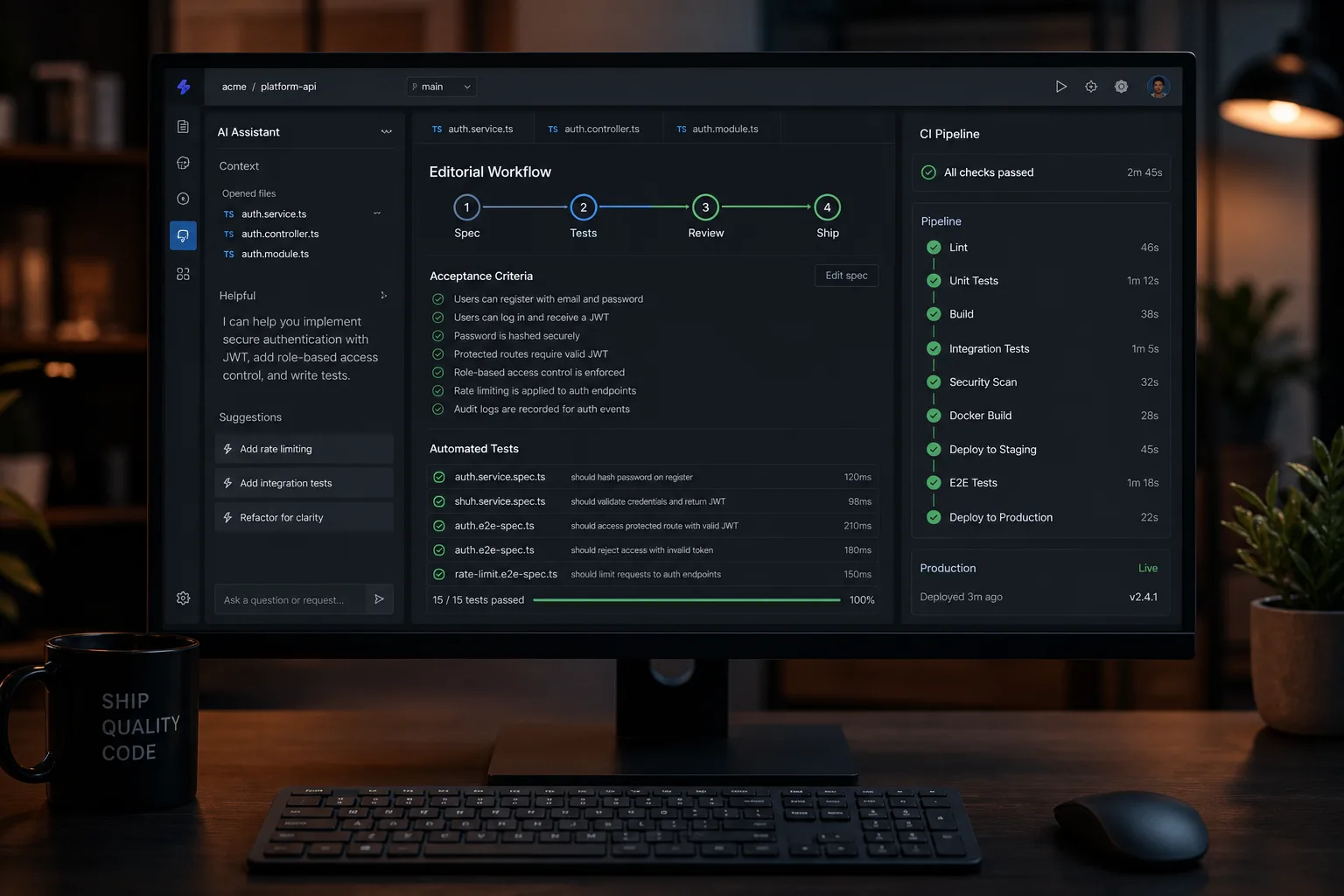
AI agents need office seatbelts before they get bigger jobs
AI agents become useful when their work is bounded, logged and reviewable. The real question is not how much autonomy to grant, but where to put the brakes.

Kimi K3 Is a Router Test, Not a Drop-In Claude Replacement
Moonshot’s new 2.8T model gives AI teams leverage, but the real decision is cost per completed task, data policy, routing, and whether the promised weights become usable.

Comments
Sign in to comment.
No comments yet.