Tiny electric bike pumps from AliExpress: useful ride backup or rechargeable gimmick?
A practical buyer check for 120–150 PSI mini inflators, with valve, battery, heat and backup-plan caveats before you trust one on a ride.

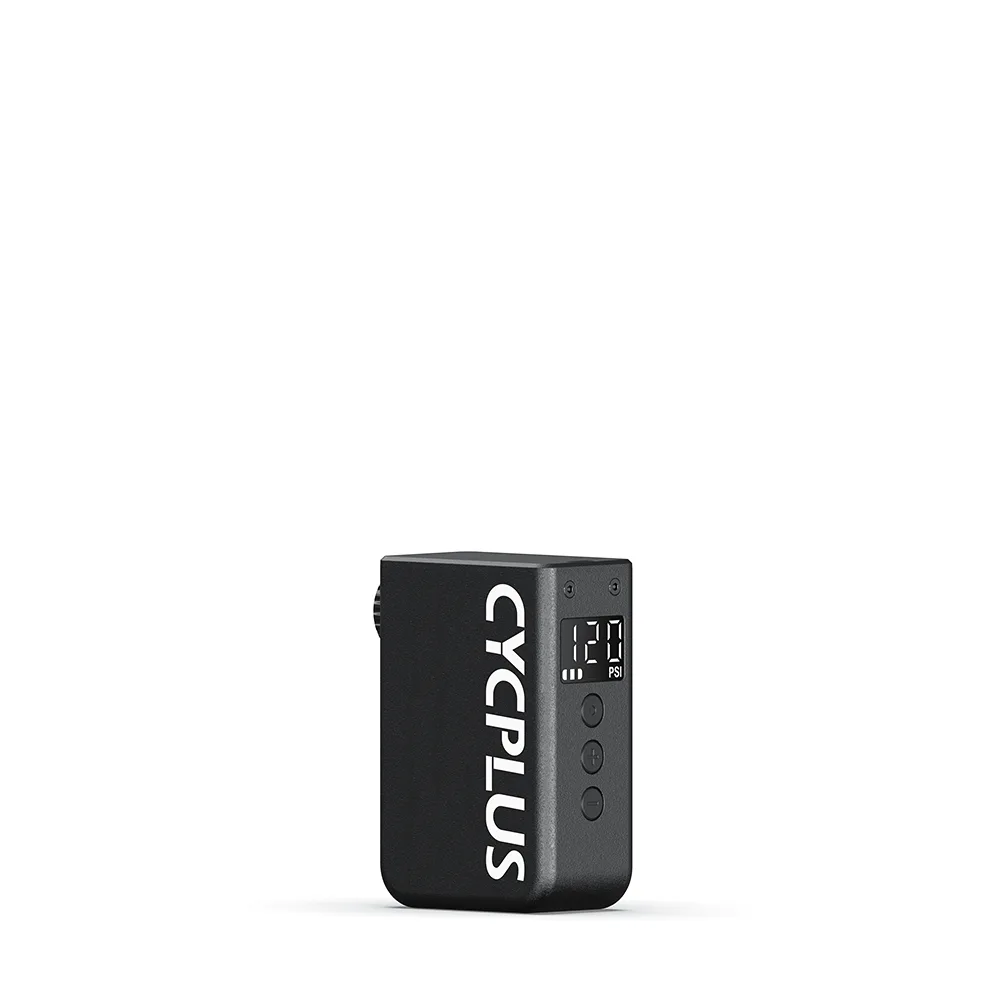
Tiny electric bicycle pumps have become one of those marketplace gadgets that look almost too convenient: a box smaller than many lights, a USB-C port, a pressure display, an auto-stop setting and listing headlines that shout 120 or 150 PSI. AliExpress search pages currently show many variations of this idea, from CYCPLUS-style ride-carry pumps to COOSPO, XOSS, TOPUMP, CYCLAMI and generic cordless inflators, and the same class of product appears across other marketplaces under changing seller names. That abundance is exactly why the useful question is not whether the category exists, but whether a particular pump fits the tyre, ride and backup plan you actually have.
The short answer is cautious rather than excited. A tiny electric pump can be a genuinely useful saddle-bag upgrade for topping up a road, gravel or city-bike tyre, for riders who dislike hand-pumping, or for people who maintain several bikes at home and want a quick pressure correction before leaving. It is much less convincing as the only emergency tool on a long ride, as a car-tyre rescue device, or as a zero-maintenance replacement for a boring floor pump. The product class sits between a CO2 cartridge, a manual mini pump and a larger cordless compressor, and each of those alternatives still wins in some situations.
What the marketplace listings are really selling
Most listings lead with peak pressure, because 120-150 PSI sounds decisive and covers the pressure range of many road tyres on paper. Peak pressure is only one part of the story. A bicycle tyre is a pressure-and-volume job: a narrow road tyre asks for higher pressure but not much air, while a large gravel or MTB tyre asks for more volume and can make a small pump run longer, hotter and lower on battery even at modest pressure. Inflating a completely flat tyre after a tube change is also different from adding 10 or 15 PSI before a commute.
The tiny models are the most tempting because they look rideable: roughly palm-size, often with a short nozzle or screw-on adapter, sometimes with a screen, sometimes with only LEDs. Official CYCPLUS pages are useful benchmarks for the class. The AS2 Ultra is presented by the manufacturer as an 87 g tiny electric bike pump with real-time pressure display, auto-stop and a fast-charge claim, with the important caveat that its 'two tyres up to 110 PSI per charge' claim should be read as a controlled manufacturer scenario rather than a universal promise. The AS2 Pro Max, a larger tiny-pump benchmark, is described by CYCPLUS as 200 g, 120 PSI maximum, LED display, adjustable units, battery display, real-time pressure and auto-stop, with a claim of up to seven 29x2.2 MTB top-ups from 30 to 50 PSI. Keeping the tyre size and pressure range attached to that claim matters.
A second product class is the larger cordless compressor, represented by devices such as Xiaomi's Portable Electric Air Compressor 2 and many Baseus- or EAFC-style marketplace units. Xiaomi's official global page lists a 150 PSI maximum, preset pressure and auto-stop, digital pressure detection, Type-C charging, a built-in 2000 mAh lithium-ion battery and a device weight around 490 g excluding adapters and pouch. It also gives condition-specific inflation examples, such as car-tyre and bicycle-tyre times under stated test conditions. Those are useful reference points for the bigger class, but they do not make a jacket-pocket bike pump equivalent to a workshop compressor.
The first buying check: tyre type and job type
Before looking at coupons or a seller rating, decide what job you expect the pump to do. For a road rider who normally leaves home with tyres already near the right pressure, a small electric pump may be a nice top-up tool and a less sweaty way to finish a tube replacement. For a gravel rider on wider tyres, the same pump may still work but take longer and spend more battery per tyre. For MTB tyres, the question often becomes volume and heat rather than headline PSI. For scooters, motorcycles or car tyres, a tiny bike-specific unit should be treated with suspicion unless the manufacturer explicitly supports that use and reviews show the exact use case.
This is where many marketplace listings become slippery. A title can mention bicycle, motorcycle, ball and car in one breath, while the photos show a tiny bicycle pump with a minimal nozzle. Do not read that as proof it will rescue a car tyre from flat. A larger compressor may be reasonable for home, scooter or occasional car pressure corrections, but it is too bulky for a jersey pocket. A tiny saddle-bag pump may be brilliant for getting home after a road puncture, yet disappointing if asked to fill a high-volume tyre from empty twice in a row.
Valve compatibility is not a small detail
Presta and Schrader compatibility should be verified from photos, not only from the title. A poor Presta adapter can leak enough air to waste battery, loosen a valve core or make the pressure reading jump around. Look for buyer photos that show the actual adapter, hose or nozzle, not just a rendered accessory kit. If the pump screws directly onto the valve, check whether the body can clear spokes, disc rotors and deep rims. If it uses a short hose, check whether the hose is included in the package and whether replacements are sold.
Auto-stop is also only as good as the gauge and seal. Official pages for known models describe real-time pressure and auto-stop as features; generic listings often copy the same language without proving accuracy. Independent cycling tests and forum discussions are useful here because riders ask practical questions that spec sheets hide: whether the pump overshoots, whether PSI and bar are readable in sun, whether the final pressure matches a floor-pump gauge, whether the valve gets hot, and whether the pump becomes uncomfortable to hold after repeated use.
Battery, charging and heat caveats
The battery is the convenience and the weakness. USB-C charging is welcome, but it normally means charging the internal battery, not running the pump directly from a power bank while inflating. If a listing implies power-bank operation, verify the manual or official page before relying on it. A tiny cell also ages, especially if stored discharged, left in a hot car or charged with questionable cables. For a ride tool, the practical question is not 'does it charge?' but 'will I remember to top it up before the day I need it?'
Heat is another reality check. Compressing air takes work, and very small pumps have limited thermal mass. Good manuals usually warn about rest periods or hot nozzles after use. Treat those warnings seriously: repeated full inflations can be harder on a tiny unit than the cheerful listing video suggests. Stop using any lithium-battery gadget that swells, smells, overheats abnormally, has a damaged charging port or came with a visibly poor cable. Do not charge unknown-quality electronics unattended, and stay within the tyre sidewall and rim pressure limits rather than testing the maximum number printed on the pump box.
What photo reviews can and cannot prove
Marketplace photo reviews are useful, but mostly for physical evidence. Good photos show that buyers received the same pump shape, the display exists, the USB-C port matches the listing, the Presta/Schrader parts are present, and the packaging is not wildly different from the product page. Photos can also reveal scale: some 'mini' pumps are pocket-size, while others are really small car compressors with a bicycle adapter. Complaints about missing adapters, weak seals, poor instructions, short battery life or inaccurate pressure readings should be taken more seriously than five-star comments saying only that the parcel arrived.
What reviews cannot prove is authenticity, warranty or long-term safety. A marketplace seller may use official-looking images, sell a regional variant, bundle different adapters, or change supply without changing the title. Do not assume a platform dispute will go your way, do not assume local warranty service, and do not treat a listing badge as certification for chargers or batteries. If the pump is a branded model, compare the official product page, packaging photos and store identity before paying branded-model money.
Mini electric pump versus manual pump, CO2 and floor pump
A manual mini pump is slower and annoying at high road pressure, but it has a beautiful advantage: if it is not broken, it does not care whether you charged it last week. That makes it the safer deep-backup choice for long rides far from help. CO2 is faster and very compact, but cartridges are single-use, pressure can be imperfect, and many riders still correct pressure later with a floor pump. A floor pump with a reliable gauge remains the best tool for home setup because it is stable, quick and easier to read.
The tiny electric pump is strongest when it supplements those tools instead of pretending to erase them. For a commuting bag, it can turn a soft tyre into an easy fix. For a rider with weaker hands, it can be more accessible than forcing a mini pump to high pressure. For a household with several bikes, it can be the gadget that actually gets used before short rides. For remote touring, racing, winter rides or any situation where failure is more expensive, redundancy still matters: carry a manual pump or CO2, and test the electric pump with your own valves before trusting it.
Who should consider one
Consider a tiny electric bicycle pump if you already check tyre pressure, know your tyre size and usual pressure, and want a low-effort top-up tool rather than a miracle compressor. It makes most sense for road and city riders who value compactness, for gravel riders who accept slower inflation, for people maintaining multiple bicycles, and for anyone who has tried hand-pumping and found it physically difficult. A known benchmark model with official specs, clear spare-adapter availability and credible review photos is easier to recommend than an anonymous clone with heroic pressure claims and no support trail.
Also consider the larger cordless-compressor class if the job is mostly home, scooter, stroller, ball or car pressure correction. The Xiaomi-style benchmark is heavier but better matched to mixed household use. It is not a jersey-pocket emergency pump, but its weight, battery and hose layout make more sense when the job is not strictly a bicycle ride. For many buyers the smartest setup is still simple: floor pump at home, reliable manual or CO2 backup on the bike, and a small electric pump only if convenience justifies another battery.
Who should skip it
Skip the tiny electric pump if you want a zero-maintenance emergency tool, ride long routes without a backup, hate keeping small devices charged, or expect one palm-size unit to handle every tyre from a road bike to a car. Skip suspicious listings that hide the valve adapter, show only renders, mix unrelated product photos, quote battery capacity without real inflation examples, or promise guaranteed delivery, warranty or authenticity in language the seller cannot realistically control. A cheap pump that fails at the roadside is not a bargain; it is dead weight plus a repair problem.
My practical verdict is that the category is worth considering, but only with a narrow job description. Buy it as a convenience tool for bicycle pressure corrections and puncture-day help, not as your only plan. Verify the exact listing photos, adapter set, official or manufacturer specifications, and the pattern of review complaints. If those checks look thin, a boring mini pump from a bike shop may be less exciting and still the better marketplace decision.
Related articles
USB-C cables with a watt display: useful marketplace tool or false confidence?
A small screen can reveal charging behaviour, but it cannot certify a cable or turn a charging lead into a high-speed data cable.
Cheap N100 and N150 mini PCs: when the marketplace bargain is real
A practical buyer check for tiny N100/N150 marketplace PCs: RAM, SSD, cooling, 2.5GbE, BIOS, power adapters and return risk.
Cheap Bluetooth label makers: useful marketplace tool or sticker-roll trap?
A practical buyer guide to small thermal label printers from marketplaces: where they help, what refills and apps can ruin, and who should skip them.
USB-C soldering irons from marketplaces: clever repair tool or unsafe starter kit?
A practical buyer check for Pinecil-style portable soldering irons, power supplies, tips, stands and safety before ordering a cheap kit.
Comments
Sign in to comment.
No comments yet.