Budget Hair Oil for “Glass Hair”: What the Formula Can Do Before You Pay for the Hype
Affordable hair oils are being marketed as shine serums, frizz controls and heat protectants in one bottle. Here is how to read the formula, decide whether you need one, and use it without making fine or oily hair look heavy.

A new wave of budget hair oils is being sold as the shortcut to “glass hair”: glossy, smooth-looking lengths with less frizz and a salon-like finish. The appeal is easy to understand. A small bottle can promise several jobs at once—pre-wash treatment, styling aid, heat protection and finishing shine—while costing much less than a prestige serum.
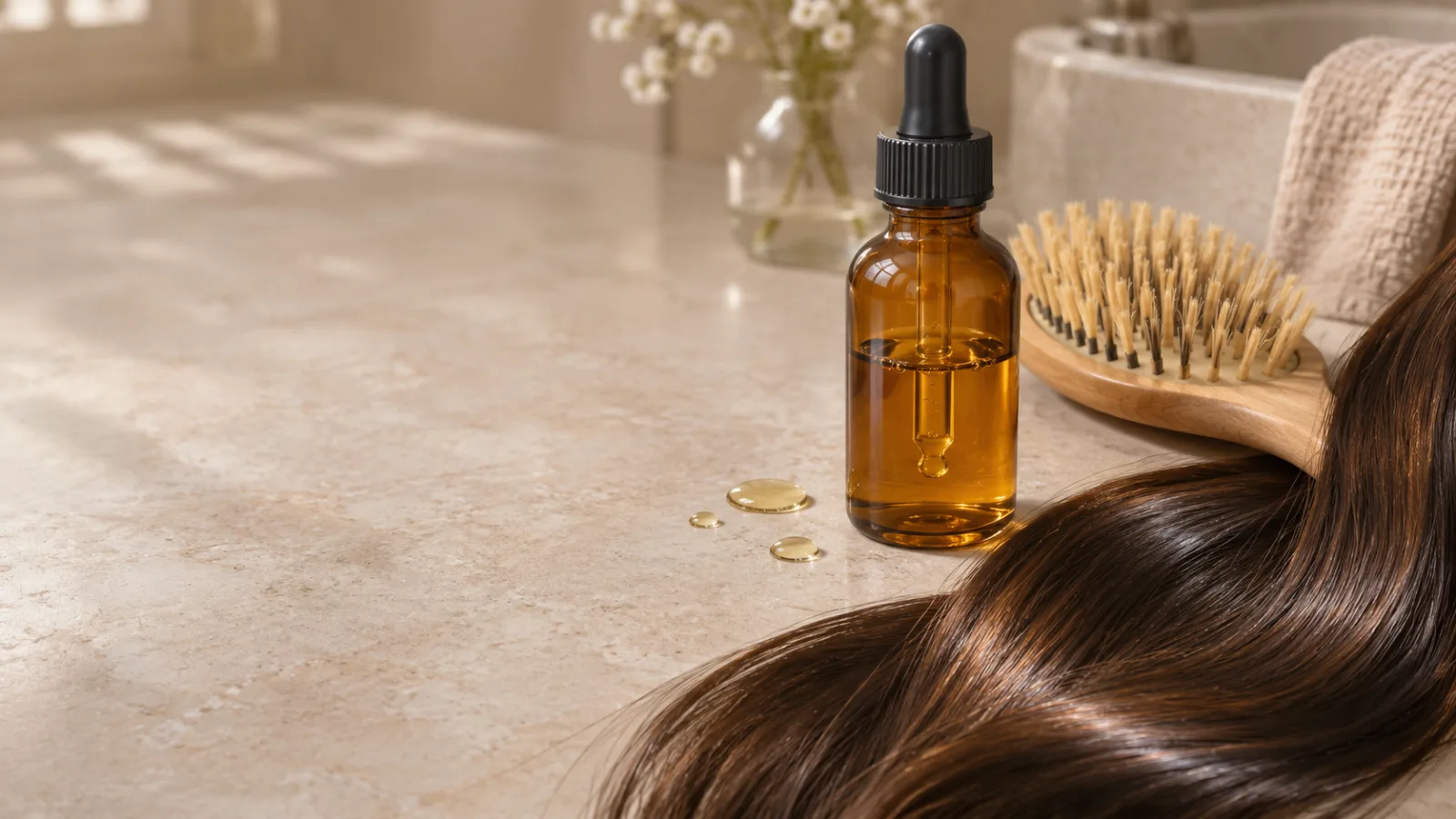
That does not make every inexpensive oil a bargain, and it does not make every expensive serum superior. The useful question is more specific: what is the product formulated to do, and does that job match your hair, styling habits and budget?
Recent beauty coverage has put particular attention on L’Oréal Paris Elvive Extraordinary Oil Sublime Hair Enhancer, described as a new, sub-$20 hair oil that quickly gained online attention for smoothing, shine and a lightweight feel. The wider pattern is bigger than one launch. Haircare trend reporting for autumn and winter 2026 points toward simplified, multifunctional routines, while current holiday-shopping coverage shows consumers looking for affordable ways to reproduce premium-looking results at home.
The formula matters more than the bottle’s promise. Most cosmetic hair oils do not “repair” hair in the literal sense. They improve the way the existing fibre feels, reflects light, detangles and behaves. That can be genuinely useful, especially on weathered or heat-styled lengths, but it is a cosmetic effect rather than a cure for structural damage or a treatment for a scalp or hair disorder.
Why hair oil is trending again
The current interest combines three familiar ideas: glossy hair, shorter routines and the search for less expensive alternatives to salon products. “Glass hair” is a visual description, not a scientific hair type. It generally means a very smooth surface that reflects light evenly. On social media, the finish is often attributed to a botanical oil or a single hero ingredient, but the visible result usually comes from the whole formula plus brushing, drying technique, humidity, hair colour and the condition of the cuticle.
A modern hair oil may contain plant oils such as marula, camellia, argan, sunflower or coconut oil. It may also contain silicones, lightweight esters, fragrance, antioxidants and film-forming polymers. Some products are mostly silicone-based with a small amount of plant oil; others are richer in vegetable oils; some are closer to a serum than a traditional oil treatment.
That distinction explains why two products both labelled “hair oil” can behave completely differently. One may spread quickly over fine hair and leave a dry, polished finish. Another may work better as a pre-shampoo treatment for coarse or very dry lengths but look greasy when used after styling. The name on the front is a category label, not a performance guarantee.
What a hair oil can realistically improve
Hair is a fibre, and the visible surface changes as it is exposed to washing, brushing, ultraviolet light, colouring, bleaching, straightening and heat. Cosmetic conditioners work largely by reducing friction and improving the surface feel. A well-designed oil or serum can contribute to that same effect.
The most realistic benefits are:
- more slip while detangling;
- a smoother feel along the mid-lengths and ends;
- reduced appearance of flyaways and frizz;
- more surface shine because the fibre reflects light more evenly;
- less roughness after drying or styling;
- a temporary reduction in the visibility of dry-looking ends.
These effects can make hair look healthier, but “looks healthier” is important wording. A split end remains split. A chemically overprocessed section is not restored to its original condition by a finishing oil. The product can coat, lubricate and visually improve the fibre; it cannot reverse every change that has occurred inside it.
The American Academy of Dermatology recommends conditioner for easier combing and advises using low or medium heat and a heat-protective product when styling. It also notes that leave-in products can help smooth, detangle and reduce frizz. Those are practical cosmetic goals. They are different from claims that an oil stimulates growth, repairs the follicle or treats hair loss.
Read the ingredient list from the top, not the marketing panel
A front label may highlight marula oil, camellia oil, argan oil or “natural shine.” The ingredient list tells you what the product is actually built around. Cosmetic ingredient lists are not a complete map of the exact percentages, but they are useful for comparing formulas.
Silicones are not automatically a problem
Ingredients such as dimethicone, amodimethicone, phenyl trimethicone and volatile silicones are common in smoothing products. Silicones can form a film over the hair shaft, reduce friction, improve shine and help the hair feel less rough. A 2025 review in Skin Appendage Disorders describes these benefits while also discussing the differences between silicone types, buildup concerns and newer approaches to formulation.
For someone who wants a sleek finish, a silicone-containing serum may be more predictable than a bottle marketed as a pure botanical oil. This is one reason a low-cost product can perform surprisingly well: the visible result may come from a carefully balanced film-forming system rather than from the most expensive plant oil in the formula.
Buildup is not automatically dangerous, but it can affect how hair behaves. If repeated use leaves the hair dull, coated, limp or difficult to wet, reduce the amount, use the product less often or consider a cleansing routine appropriate for your hair. Do not respond to buildup by repeatedly scrubbing fragile lengths or aggressively clarifying until they feel stripped.
Plant oils can soften, lubricate and add weight
Plant oils can improve the feel of dry hair and reduce friction, but “natural” does not mean universally light or universally effective. Coconut oil, for example, can behave very differently from a lightweight ester or a volatile silicone. Argan, camellia and marula oils may feel elegant in one formula and heavy in another depending on concentration and the rest of the base.
A product that is rich in oils may suit thick, coarse, curly or very dry hair, particularly when used before washing or in a tiny amount on the ends. Fine, straight or low-density hair may prefer a serum with a lighter spreading profile. The same ingredient can therefore be useful in one routine and frustrating in another.
Fragrance is part of the formula too
Many hair oils are strongly fragranced because scent is part of the luxury experience they are designed to imitate. If fragrance gives you headaches, causes scalp discomfort or transfers to the face and neck, choose a lower-fragrance option or keep the product away from the roots and skin. A pleasant scent is a preference, not evidence that the formula conditions better.
The heat-protection claim needs careful reading
Heat protection is one of the most valuable claims on a multifunctional hair oil, but it is also one of the easiest to overinterpret. L’Oréal’s official product information for Elvive Extraordinary Oil says the product can be used before styling for protection up to 450°F, in addition to pre-shampoo and finishing uses. That is a brand claim for that specific formulation and use pattern; it should not be generalized to every hair oil.
A bottle of plain cooking oil, a single-ingredient cosmetic oil or an oil that only promises shine should not automatically be treated as a tested heat protectant. Look for an explicit heat-protection statement on the packaging or the manufacturer’s directions. Even then, the claim does not mean that hair becomes immune to damage at the listed temperature.
The American Academy of Dermatology’s advice is more practical than a headline number: limit excessive heat, use lower or medium settings where possible and use a product intended to protect hair from heat. A heat-protective product is one part of risk reduction. Distance from the dryer, fewer passes with a flat iron, completely dry hair before hot tools and less frequent high-heat styling also matter.
Be cautious with the idea that applying more oil creates more protection. Excess product can make hair look greasy, transfer to the skin or produce uneven application. A thick layer is not automatically a better thermal barrier. Follow the product directions and start with much less than you think you need.
How to choose by hair behaviour rather than hair labels
Hair-type categories are useful shorthand, but behaviour is often more helpful when shopping. Ask what happens after washing and styling.
If your hair is fine, straight or easily weighed down
Look for a lightweight serum or oil with a narrow applicator, pump or dropper that lets you control the dose. Use one small drop—or a fraction of a pump—on the last few inches, then distribute what remains on your hands over the mid-lengths. Avoid applying directly to the roots unless the product specifically instructs you to do so.
A product that feels dry or disappears quickly may be easier to use than a rich oil. If your hair loses volume, looks stringy or separates into shiny sections, the formula may be too rich, the amount may be too large, or you may be layering it over several other leave-in products.
If your hair is thick, coarse, curly or very dry
A richer oil may provide useful slip and help reduce the rough feel that appears after washing. It may work best over a leave-in conditioner or on damp hair, depending on the product’s directions and your styling method. Apply in sections rather than dumping a large amount into the palms and hoping it spreads evenly.
Curly and textured hair can need more product, but more is still not always better. If the hair becomes sticky, dull or difficult to cleanse, reduce the quantity or reserve the oil for the ends. A finishing oil cannot replace the hold or moisture balance supplied by a conditioner, cream or gel when those are the products your routine is missing.
If your hair is colour-treated, bleached or frequently heat-styled
Prioritize slip, detangling and a clearly stated heat-protection function. The American Academy of Dermatology notes that long, fine, colour-treated, permed, curly, dry or heat-styled hair may benefit from a leave-in conditioner. An oil can be part of that routine, but it does not have to be the only leave-in step.
Use extra care when hair is wet, because wet hair is more vulnerable to stretching and breakage. Rubbing aggressively with a towel, pulling through tangles or repeatedly ironing damaged sections can undo the benefit of a smoothing product.
If your scalp becomes oily or irritated easily
Keep a hair oil on the lengths rather than the scalp unless the product is specifically designed and labelled for scalp use. The AAD warns that oils in hair products can reach the forehead and hairline and contribute to small breakouts for some people. Hair products can also irritate sensitive skin, especially when fragranced.
Persistent itching, scaling, pain, sudden shedding or noticeable breakage is not a shopping problem to solve with a new serum. A dermatologist can assess scalp and hair concerns. This article does not diagnose or treat those conditions.
Three budget tests before buying a larger bottle
Test the formula, not the story
Compare the ingredient list with the job you want done. If you want a smooth finish and heat protection, a formula built around film-forming ingredients may make more sense than a product whose main selling point is a rare botanical. If you want a pre-wash treatment for dry lengths, a richer oil may be more appropriate.
Do not assume that a longer ingredient list means a more sophisticated product, or that a short list means a purer or safer one. Performance depends on concentration, compatibility, application and the condition of your hair.
Calculate cost per use
A small bottle can be inexpensive at checkout and expensive in practice if you need several pumps per application. A slightly larger bottle may be better value if you need only a drop or two. Conversely, a rich product that requires a large amount may not be economical even when the listed price is low.
Estimate how often you will use it, how much you need per application and whether it replaces another product. A multifunctional claim only saves money if you actually stop buying or using a separate finishing serum, pre-wash oil or heat-protective leave-in.
Compare the result after several washes
Do not judge only the first glossy application. Check whether the hair still feels manageable after washing, whether your usual shampoo removes the product comfortably and whether the finish remains acceptable in humid or dry weather. Take a photo in the same light if you want to compare products; memory is easily influenced by packaging, scent and the first-use novelty.
A budget product is a good buy when it solves a recurring problem at a tolerable cost. It is not a good buy merely because it is viral, has a luxury-style bottle or copies the language of a salon treatment.
A simple application routine that avoids the greasy finish
Start with clean, damp hair if the product directions describe it as a pre-styling product. Blot gently rather than rubbing. Put a very small amount in your palms, spread it until the hands feel evenly coated and press or smooth it through the mid-lengths and ends. Comb or brush only as needed for your hair type.
If you are blow-drying, use the product’s stated heat-protection instructions and keep the dryer moving. If you are using a straightener or curling iron, allow the hair to dry fully and avoid repeated passes. If the product is intended as a finishing oil, use it after styling in a tiny amount, concentrating on the ends and visible flyaways.
Do not combine several new leave-ins at once. If you change the shampoo, conditioner, mask, oil and styling tool together, you cannot tell what caused the improvement—or the heaviness. Introduce one product at a time and give your routine enough use to reveal whether the result is consistent.
For skin-sensitive users, keep the oil away from the eyes and broken or irritated skin. Patch-testing a cosmetic on a small area of skin can be sensible if you have reacted to fragranced products before, but a small test cannot guarantee that a product will never irritate you. Stop using it if burning, swelling, rash or persistent discomfort develops.
What the trend does not prove
The current enthusiasm for budget hair oil does not prove that one ingredient makes hair grow faster, reverses hair loss or repairs all forms of damage. It does not prove that a product is suitable for every texture, that a “clean” or “natural” label predicts safety, or that a 450°F claim makes high-temperature styling harmless.
It also does not prove that an expensive product is a scam. Premium formulas may differ in sensory feel, fragrance, packaging, testing, distribution and the way they perform on a particular head of hair. The relevant comparison is not prestige versus drugstore in the abstract. It is formula against formula, use against use and cost per successful application.
The most defensible reason to buy a budget hair oil is modest: it can make the hair fibre feel smoother and look shinier, may help manage frizz, and—when the product specifically supports the claim—can be part of a heat-conscious styling routine. That is enough for many people. There is no need to turn a cosmetic finishing product into a treatment promise.
Bottom line
Budget hair oils are worth considering when you want a small amount of slip, shine and surface smoothing without adding another expensive step. Read the ingredient list, check whether the heat-protection claim applies to that exact product, and choose the texture according to how quickly your hair becomes heavy or dry.
Use less than you think you need. Keep it mostly on the lengths and ends. Treat “repair,” “growth” and “salon result” language as marketing unless a specific, credible source supports a narrower claim. If the product improves manageability and lasts long enough to justify its price, it is doing its job—even if the bottle never delivers the internet’s version of perfect glass hair.
Related articles
Rosemary Water and Rosemary Oil for Hair: What a Budget Routine Can—and Cannot—Prove
Rosemary-based hair care is gaining attention, but water rinses, diluted oils and finished products do not have the same evidence. Here is how to compare the options, read the claims and avoid wasting money or irritating your scalp.
How to Try Fall Fragrance and Scented Body Care on a Budget Without Irritating Your Skin
Fall fragrance is moving into body washes, lotions and affordable mists. The smart budget move is not buying every scent; it is choosing where fragrance belongs in your routine and where fragrance-free still wins.
Sunscreen over makeup on a budget: what to reapply, what to skip, and why SPF powder is not enough
A practical format-by-format guide to sunscreen touch-ups that protects the budget as well as the makeup bag.
Glycolic acid as deodorant: budget hack or underarm irritation waiting to happen?
A practical budget check on when the viral underarm acid trick may help odor, when it cannot replace antiperspirant, and who should skip it.
Comments
Sign in to comment.
No comments yet.