How to Try Fall Fragrance and Scented Body Care on a Budget Without Irritating Your Skin
Fall fragrance is moving into body washes, lotions and affordable mists. The smart budget move is not buying every scent; it is choosing where fragrance belongs in your routine and where fragrance-free still wins.

Fall fragrance is having a practical moment. The expensive version is obvious: a $100-plus perfume built around toasted rice, amber, dark berries, cardamom, creamy woods or nutty gourmand notes. The budget version is what most people are actually tempted by in stores: body mists, scented body washes, matching lotions, shower scrubs and drugstore body care that promises the same cozy effect for far less.
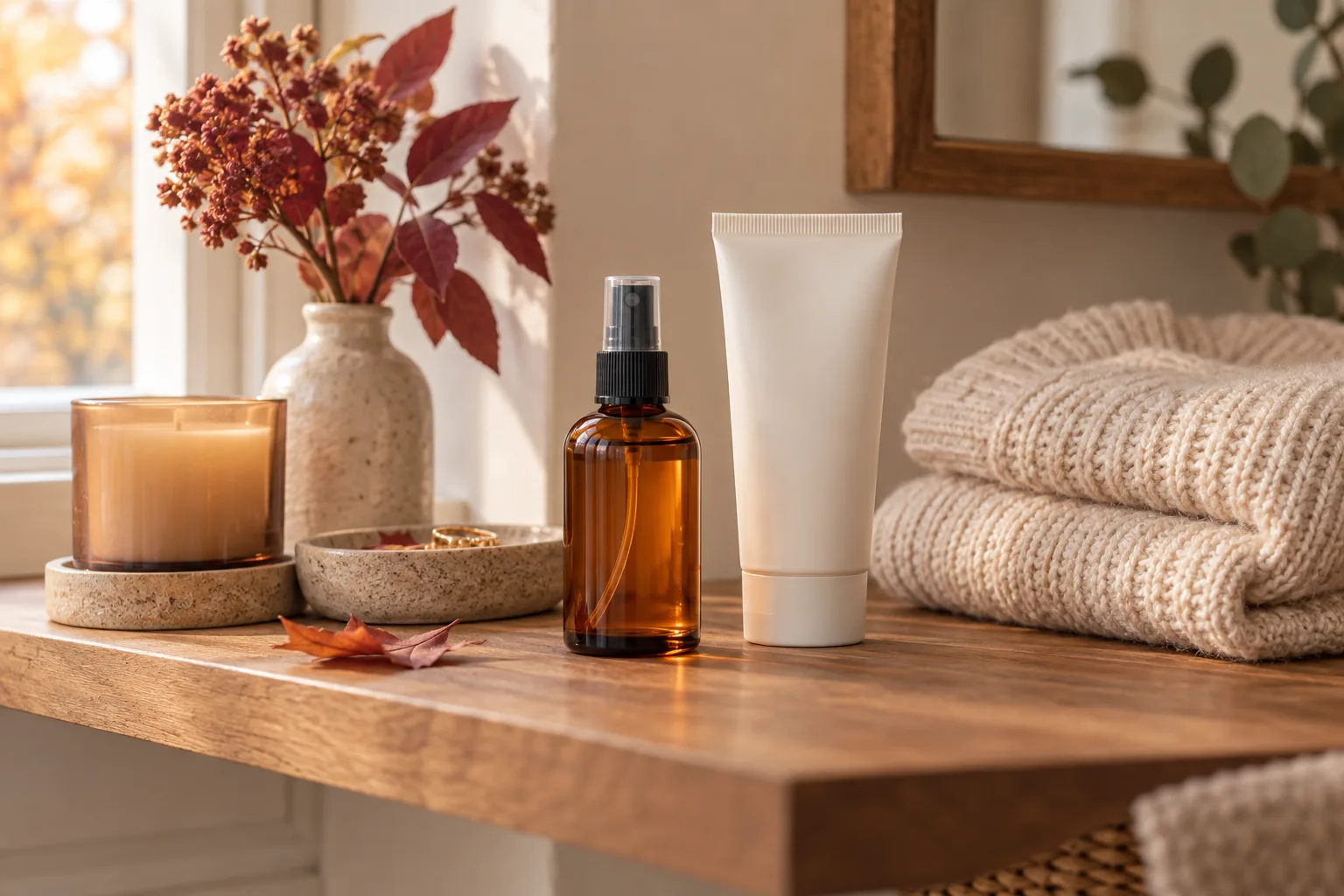
That is a useful trend, but it needs a little editing. Scent can make a routine feel nicer; it does not make a cleanser clean better or a moisturizer repair more skin by itself. And for some people, fragrance is not a harmless bonus. The U.S. Food and Drug Administration notes that fragrance formulas may be listed simply as "fragrance" or "flavor" on cosmetic labels, and that some people can be allergic or sensitive to components in those mixtures. DermNet describes fragrances as a common source of cosmetic contact dermatitis. The American Academy of Dermatology repeatedly advises people with dry, sensitive or eczema-prone skin to choose fragrance-free products rather than relying on vague comfort words like "unscented."
So the budget question is not, "Which cheap scent is a dupe for the expensive one?" A better question is: where can fragrance add pleasure without taking over the whole routine, and where should you spend your limited money on bland, effective basics?
Why this angle is current
Two beauty conversations landed at the same time in mid-September 2026. First, fragrance coverage for fall is leaning into richer, more textured notes. Cosmopolitan’s fall 2026 fragrance trend report points to dark berry, roasted sesame, toasted rice, smoked vanilla, amber, cardamom, creamy cedarwood and nutty notes such as praline, almond and pistachio. That matters because these notes are easy for mass brands to echo in body mists, shower gels and lotions even when the fine-fragrance version is much more expensive.
Second, Allure’s 2026 Best of Beauty "Steals" list, published September 17, 2026, is another reminder that low-cost beauty is not a side category anymore. Its under-$20 picks include body wash, body scrub, sunscreen, cleanser, eye gel, makeup and hair care. Some of those products are chosen for texture and ingredients; others also lean into scent and routine pleasure. In other words, the drugstore aisle is now competing on experience, not only on price.
That combination is exactly where people overspend. A scented body wash looks cheaper than perfume, so it feels harmless to add one more bottle. A matching lotion promises longer-lasting scent, so it feels like a smart set. A body mist is easier to justify than an eau de parfum, so it becomes a casual checkout item. None of these purchases is automatically wasteful. But if you buy them without deciding what job each product has, your "budget" routine can quietly become more expensive, more cluttered and more irritating than the simple routine you were trying to improve.
Scent is a preference, not a skin-care active
A useful scented product can do two jobs: perform its base function and smell good while doing it. A body wash still needs to cleanse without leaving your skin tight. A lotion still needs humectants, emollients or occlusives that help skin feel less dry. A body mist still needs to be understood as scent, not hydration, treatment or barrier care.
This distinction keeps marketing in its lane. "Vanilla cashmere" or "amber skin" may describe a mood, but it does not tell you whether the product will moisturize well. "Clean girl musk" does not mean the formula is gentler. "Essential oil" does not mean lower allergy risk. "Natural" does not mean hypoallergenic. AAD’s moisturizer guidance warns that some natural or botanical ingredients can aggravate allergies in sensitive people.
The ingredient panel is more useful than the scent story. For a body moisturizer, budget shoppers should still look for familiar moisturizing ingredients such as glycerin, petrolatum, mineral oil, dimethicone, shea butter, squalane, ceramides, hyaluronic acid or colloidal oatmeal, depending on the product type and feel you like. For a cleanser or body wash, look for a formula that does not make skin feel stripped after rinsing. If a product contains acids, scrubbing particles or strong scent, count it as a more active or potentially irritating step, even if the price is low.
Fragrance can be part of a pleasant routine. It just should not be the reason you ignore the basic formula.
The budget hierarchy: what to keep bland and what can smell good
If your skin is fairly tolerant, you can probably use some scented products without drama. The smartest budget structure is still selective. Keep the products that sit on large areas of skin for long periods as simple as possible, then use scent in lower-risk places.
The most important product to keep boring is your daily body moisturizer if you use it because your skin gets dry, itchy or tight. A cream or ointment that you apply after showering and again when skin feels dry has a real job. AAD’s dry-skin advice favors gentle, fragrance-free products and says creams or ointments often moisturize better than lotions. If your one reliable moisturizer is fragrance-free, you can experiment with scent elsewhere without risking the product your skin depends on.
The second product to keep simple is facial moisturizer, especially if your face stings easily or you already use sunscreen, exfoliating acids, retinoids, benzoyl peroxide or other actives. Fragrance on the face is not forbidden for everyone, but it is an easy place to cut risk because the face is exposed, frequently layered and often more reactive than arms or legs.
Sunscreen is another place where function beats scent. You need enough product, reapplied as needed, without avoiding it because the fragrance bothers your eyes, nose or skin. A bargain sunscreen that you use generously is better than a lovely scented one you ration or skip. For people with reactive skin, AAD often points toward fragrance-free choices and, in some sensitive-skin contexts, mineral filters such as zinc oxide or titanium dioxide.
Where can scent live? A rinse-off body wash can be a reasonable entry point if your skin tolerates it, because it does not stay on the skin as long as lotion or perfume. A body mist sprayed on clothing rather than directly on sensitive skin can also be a lower-commitment option, though fabric staining is possible, so test carefully. A scented hand cream or body cream used only occasionally may be fine if you know your skin’s limits.
A simple budget rule: if the product is your daily barrier support, keep it fragrance-free. If it is optional pleasure, scent has more room.
Body mist, perfume oil, eau de parfum: spend according to use, not status
Budget fragrance advice often gets stuck in the word "dupe." Dupes can be fun, but chasing them can become its own expensive hobby. A cheaper scent is only a bargain if you actually like wearing it, it does not irritate you, and you do not need six reapplications to feel satisfied.
Body mists are usually the lowest-commitment format. They tend to be lighter, often less concentrated and easier to overspray. That can be a feature if you want a soft scent after a shower or you get headaches from stronger perfume. It can be a flaw if you expect all-day wear from a $10 bottle. If you keep reapplying because it disappears quickly, the cost-per-wear advantage shrinks.
Perfume oils can feel economical because a small amount goes a long way, but they sit directly on skin. If you are prone to irritation from fragrance, that is not automatically gentler. Oils can also change how a scent projects. Some stay close and cozy; others feel heavy. Test before treating them as the budget answer.
Affordable eau de parfums can be a better value than multiple mists if you want a clear scent trail and longer wear. The catch is that a stronger product can be more irritating or headache-triggering for some people, and blind-buying full bottles is still a costly habit. Travel sizes, samples and store testing are unglamorous, but they are where the savings are.
The best budget format is the one you will use at the pace the bottle expects. If you want scent for two hours after a shower, a mist may be enough. If you want a workday fragrance, a small eau de parfum may be cheaper over time. If you only want your sweater to smell faintly cozy, spray fabric cautiously instead of layering three scented skin products.
The fall notes worth shopping for cheaply
The current fall fragrance mood is good news for budget shoppers because many trend notes are broad families rather than rare materials you must buy in luxury form. You are not looking for an exact copy of a niche perfume. You are looking for the effect: warm, toasted, soft, fruity, resinous, spicy or creamy.
Dark berry is one of the easiest categories to try without spending much. Black cherry, blackberry, blackcurrant and jammy berry scents appear often in mists, lotions and candles. The budget risk is sweetness. If a scent smells like syrup in the bottle, it may feel even louder on warm skin. Look for descriptions that add tart, woody, tea, musk or amber notes if you want the berry to feel less like candy.
Textured gourmands are more interesting than plain cupcake scents. Toasted rice, sesame, chestnut, smoked vanilla, burnt sugar and milk notes can make a fragrance feel cozy without the heavy frosting effect. At the drugstore or mall-brand level, you may not get the most nuanced version, but you can still choose a scent that smells warm rather than sticky. If the product has a tester, spray once, leave the store, and check it after 30 minutes. The drydown matters more than the first sweet blast.
Amber is a useful budget note because it can make inexpensive fragrance smell warmer and smoother. It is also vague on labels; "amber" can refer to a style rather than one ingredient. That is not a problem if you like the scent, but it means you should not pay extra just because the word sounds rich.
Cardamom and soft woods can make a body mist feel less juvenile. They pair well with vanilla, coffee, milk, cedar, sandalwood-style notes and musks. If a scent is described as spicy, check whether it is fresh-spicy or hot-cinnamon spicy. Cinnamon-heavy fragrances can feel harsh to some noses and skin.
Pistachio, almond and praline can be charming, but they tip sweet fast. If you already own a vanilla mist, you may not need another nutty gourmand unless it brings something new, such as salt, tea, citrus, woods or a less sugary finish.
Layering is where the overspending starts
Layering sounds budget-friendly because it lets you create a bigger scent from cheaper pieces. It can work. It can also turn one purchase into a set: body wash, scrub, lotion, mist, oil, perfume and hair fragrance. The set may cost more than one carefully chosen perfume.
A better layering method is to separate performance from scent. Use a reliable fragrance-free moisturizer first, especially after showering. Let it absorb. Then apply one scented product: a mist, oil or perfume. If you want more longevity, apply the fragrance to pulse points that tolerate it or to clothing, not necessarily over a matching scented lotion.
Matching lotion can extend a scent, but it is not mandatory. In fact, a fragrance-free cream under perfume can be the most flexible base because it works with every fragrance you own. It also means you are not stuck using a scented lotion on days when your skin feels dry, itchy or annoyed.
Hair mists and scented hair products deserve caution. Hair holds scent beautifully, but scalp skin can be reactive, and alcohol-heavy sprays may be drying to some hair types. If you use fragrance in hair, mist the lengths lightly and avoid the scalp unless the product is designed for that use and you know it agrees with you.
Layering should make your routine easier, not more crowded. One good unscented moisturizer plus one scent you actually love is often the cleanest budget setup.
Fragrance-free, unscented and hypoallergenic are not the same thing
This is the label lesson that saves money and skin. "Fragrance-free" generally means fragrance materials were not added to make the product smell a certain way. "Unscented" can mean the product contains masking fragrance to cover the odor of other ingredients. FDA and AAD both warn consumers not to assume unscented is the same as fragrance-free.
"Hypoallergenic" is also less concrete than many shoppers think. The FDA’s allergen guidance says there is no federal standard or definition in the United States that governs terms such as hypoallergenic, fragrance-free or for sensitive skin. That does not make every product using those words bad. It means the claim is not a substitute for reading the ingredient list and paying attention to your own reactions.
The ingredient list has limits too. Under U.S. cosmetic labeling rules, fragrance and flavor compounds may be declared as "fragrance" or "flavor" rather than listing every component. That can protect trade-secret formulas, but it also means a person with a specific fragrance allergy may not be able to identify the problem from the label alone. If you have known fragrance allergies, contacting the manufacturer or working with a dermatologist is more useful than guessing from marketing copy.
For ordinary budget shopping, translate the label this way: fragrance-free is the safest default for essential daily skin-care steps; unscented is not enough if you are trying to avoid fragrance; hypoallergenic is a claim to consider, not a guarantee.
Who should be more careful
You do not need to treat every scented product as dangerous. Plenty of people use perfume and scented body care for years without obvious problems. But some shoppers have less room for trial and error.
Be more conservative if your skin often stings, burns, itches or turns red after normal products. Be careful if you have a history of eczema, rosacea, allergic contact dermatitis or unexplained rashes. This article is not a diagnosis or treatment plan, but those are situations where fragrance can be a common trigger or complicating factor. If you are under dermatology care, follow that advice first.
Also be cautious if you are already using strong actives. Exfoliating acids, retinoids, acne products and frequent scrubs can make skin less tolerant. Adding a scented lotion or fragranced exfoliating body wash on top may be too much, even if each product seems fine alone.
Pregnancy is another time to keep claims in perspective. Fragrance itself is not automatically prohibited, but sensitivity to smell and skin reactivity can change. If you are pregnant, trying to conceive, nursing or managing a medical skin condition, it is reasonable to ask a clinician before adding products that make treatment-like claims or contain strong actives.
Children and tweens do not need complex scented routines. AAD advice for young skin emphasizes a gentle cleanser, fragrance-free moisturizer and broad-spectrum sunscreen. If a tween wants scent, a small amount on clothing for special occasions is a different decision from fragranced face care or a shelf full of actives.
How to patch-test without turning it into a science project
Patch testing at home is not the same as medical patch testing. A dermatologist’s patch test is designed to identify specific allergens under controlled conditions. Still, cautious product testing can help you avoid using a new scented product all over your body before you know whether it bothers you.
For leave-on products such as lotion, body cream, perfume oil or a scented moisturizer, test a small amount on a discreet area like the inner arm. Use the product there for several days in a row, as long as the area stays comfortable. Do not test on broken, freshly shaved or already irritated skin. Stop if you notice itching, burning, swelling, rash or persistent redness.
Rinse-off products are trickier because leaving cleanser under a bandage or overusing it on a tender area can irritate skin in a way that does not reflect normal use. For a scented body wash, the practical test is gentler: use it on a small area in the shower, rinse well, moisturize with your usual fragrance-free product, and wait a day before using it more widely.
Do not test several new scented products at once. If you start a new scrub, new body wash, new lotion and new mist in the same week, you will not know which one caused trouble. Budget routines benefit from patience because patience prevents duplicate purchases.
If you get a significant rash, swelling, blistering, eye-area reaction or symptoms that keep returning, stop experimenting and seek professional advice. Fragrance allergy and irritant dermatitis are not moral failures or signs that you bought the wrong brand. They are reasons to simplify and get better information.
The low-cost routine that covers most people
If you want fall scent without building a cluttered routine, start with four slots.
First, choose a fragrance-free cleanser or body wash for days when your skin feels dry, freshly shaved, sun-exposed or irritated. This is your reset product. It does not need to be exciting; it needs to be dependable.
Second, choose a fragrance-free cream, lotion or ointment that actually keeps your skin comfortable. Apply it after showering while skin is still slightly damp. This is where ingredients matter more than packaging. Glycerin, petrolatum, dimethicone, ceramides, hyaluronic acid, squalane, shea butter and oatmeal are all common budget-friendly options, though not every ingredient suits every person.
Third, choose one scented wash or scrub only if you enjoy the shower experience and your skin tolerates it. Use scrubs sparingly. Physical exfoliation plus fragrance can be a lot, especially on freshly shaved legs, underarms or upper arms with rough bumps. Smooth skin does not require constant polishing.
Fourth, choose one leave-on scent. That could be a body mist, travel perfume, perfume oil or affordable eau de parfum. Buy the smallest size first when possible. If you already own a scent you like, do not buy a matching lotion just because the set exists. Try it over your fragrance-free moisturizer first.
This structure gives you pleasure and control. You can have a fall scent without making every product in the bathroom scented.
What not to pay extra for
Do not pay extra for a body wash because it claims to contain perfume-level notes if it leaves your skin tight. Fragrance in a cleanser mostly goes down the drain. A good scent can make the shower nicer, but the formula still has to rinse comfortably.
Do not pay extra for "clean fragrance" as if the phrase automatically means non-irritating. Some clean-beauty standards restrict certain ingredient classes, and transparency can be useful, but allergic or sensitive skin can react to natural fragrance materials too. FDA allergen information and dermatology sources both make clear that fragrance sensitivity is individual.
Do not pay extra for a giant set before you know you like the drydown. Many gourmand and amber scents smell appealing for the first five minutes, then become powdery, smoky, sour, overly sweet or faint. A tester, sample or mini prevents a full-size mistake.
Do not pay extra for a "skin scent" if you want projection. Many soft musks and creamy woods are intentionally close-wearing. That can be elegant, but if you keep spraying because no one else smells it, you may be using up the bottle faster than expected.
Do not pay extra for scented skin care that duplicates a product you already own in fragrance-free form. If your current body cream works, adding a scent on top is usually cheaper than replacing it with three seasonal lotions.
When the expensive product may be the budget choice
There are a few cases where spending more can be rational. If one travel-size perfume gives you months of wear and keeps you from buying five body mists you only half like, the pricier item may be cheaper in practice. If a fragrance-free moisturizer costs a little more but prevents the cycle of buying scented lotions that you abandon after irritation, that is a budget win. If a dermatologist-recommended bland product helps you tolerate sunscreen, shaving or winter dryness better, it deserves priority over novelty.
The same logic applies to tools and packaging. A pump bottle that helps you use moisturizer daily may be worth more than a cheaper tub you hate touching. A small bottle that fits in your bag may be more useful than a jumbo size that sits at home. Value is not only price per ounce; it is whether the product earns its place in your actual routine.
A practical shopping checklist
Before buying a scented body-care product, ask what role it will play. If it is your main moisturizer, consider buying fragrance-free instead. If it is a fun scent layer, choose the smallest size you can. If it is a cleanser, judge how your skin feels after rinsing, not only how the bottle smells.
Check the label language. Fragrance-free is more meaningful than unscented if you are trying to avoid fragrance. Hypoallergenic is not a guarantee. Natural fragrance and essential oils can still be irritating for some people.
Smell the product after time has passed. Fall notes such as berry, amber, vanilla, sesame, rice, cardamom and woods can change a lot on skin or fabric. The first spray is advertising; the drydown is what you live with.
Avoid stacking too many new products. Introduce one scented item at a time, especially if it is leave-on. Keep your dependable fragrance-free moisturizer and sunscreen steady so you can tell what changed.
Skip the matching set unless you would buy each item separately. Sets are designed to feel efficient, but a mist plus lotion plus body wash is only efficient if you use all three comfortably and often.
Know when to stop. If a product stings, itches, causes a rash or makes you avoid moisturizing, it is not a bargain. Give it away if appropriate, use it as a room or linen scent only if safe for the fabric and household, or let the lesson be cheaper than repeating the purchase.
The bottom line
Fall fragrance can be done cheaply and well. The strongest budget move is not finding the most convincing dupe; it is refusing to let scent replace function. Keep the boring products boring where your skin needs reliability. Put fragrance where it adds pleasure and is easy to stop using if your skin objects.
A good seasonal routine might be almost plain: fragrance-free moisturizer, comfortable sunscreen, one gentle cleanser and one scent that makes your sweater or skin smell a little warmer. That may sound less exciting than a full matching collection, but it is usually more wearable. It also leaves room in the budget for the thing that matters most: products you finish because they work for you, not products you keep because the bottle promised a mood.
Related articles

AI coding agents need capacity planning, not surprise quota resets
Codex and Claude Code are becoming engineering infrastructure, but context cuts, 5-hour windows and random resets make teams rethink how they budget and schedule AI-assisted work.

Glycolic acid as deodorant: budget hack or underarm irritation waiting to happen?
A practical budget check on when the viral underarm acid trick may help odor, when it cannot replace antiperspirant, and who should skip it.

The September Sheet-Pan Dinner: A Flexible Roast of Corn, Peppers, Chickpeas and Whatever Needs Using
A practical late-summer-to-early-fall dinner built around one hot tray: sweet corn, peppers, onions and chickpeas become a substantial meal with a crisp topping, a cool sauce and easy substitutions.


Jumping worms make plant swaps and compost a garden biosecurity problem
Late summer is the season to spot invasive jumping worms, but the real work is deciding what soil, mulch and plants should not move.

Comments
Sign in to comment.
No comments yet.