Ectoin in Budget Skincare: What the Barrier-Support Ingredient Can Do, and What It Cannot
Ectoin is moving from specialist formulas into affordable moisturizers and serums. Here is how to read the ingredient, compare it with glycerin and ceramides, judge the evidence, and avoid paying for a soothing story instead of a useful formula.

Ectoin is having a quieter kind of beauty moment. It is not as instantly recognisable as retinol, niacinamide or “salmon DNA,” but it is appearing in more moisturizers, barrier creams and serums as skincare shifts toward protection and recovery. Recent trend coverage has grouped ectoin with the new wave of “anti-inflammatory” or stress-protective ingredients, while ingredient-tracking reports list it among the compounds gaining consumer attention in 2026.
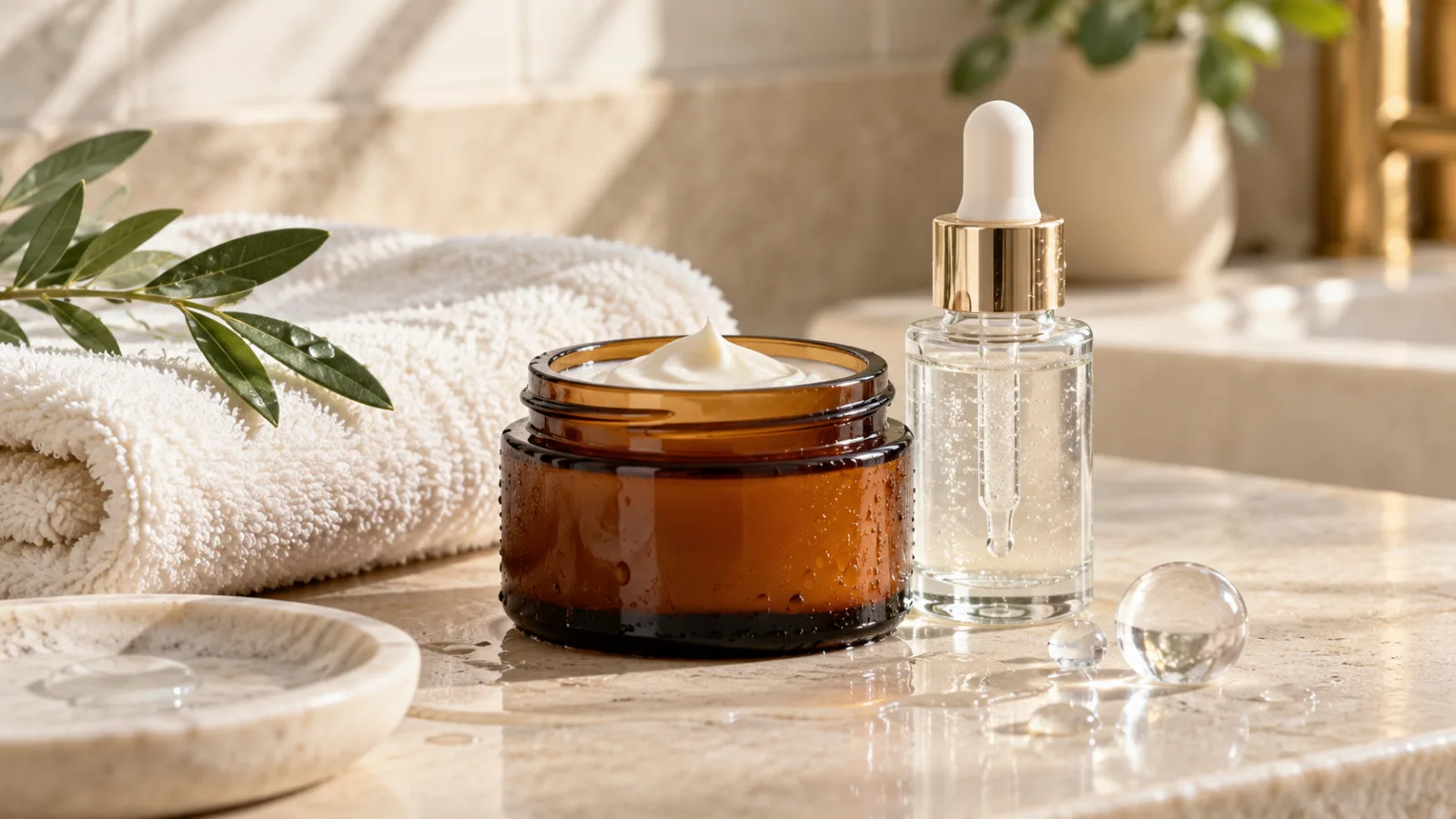
That does not automatically make every ectoin product worth buying. The useful question is narrower: does the product contain a sensible formula that helps reduce dryness and improve comfort, and is ectoin adding something meaningful for the price? For most shoppers, the answer depends less on the fashionable ingredient name than on the rest of the ingredient list, the product texture and the problem the routine is actually trying to solve.
What ectoin is
Ectoin, also written as ectoine, is a small organic compound produced by certain microorganisms that live in harsh environments. In cosmetic science it is generally described as an extremolyte or osmolyte. In practical terms, it helps stabilise water around biological structures under stressful conditions. That mechanism is why formulators use it in products positioned around hydration, environmental protection and barrier support.
The word “stress” needs to be kept in proportion. A jar containing ectoin does not create a shield against pollution, ultraviolet radiation or every irritation trigger. Nor does the ingredient turn a cosmetic into a medical treatment. The more defensible interpretation is that ectoin can be part of a moisturizing formula designed to help skin hold water and tolerate ordinary environmental exposure more comfortably.
Laboratory explanations often sound more dramatic than the consumer benefit. A “hydration shell” around cells is a useful way to describe the chemistry, but it should not be read as a visible film that permanently seals the face. The result you may notice from a well-made product is much more ordinary: less tightness, softer texture and better comfort after cleansing or exposure to cold, dry air.
Why it is trending now
The timing makes sense. Skincare marketing spent several years encouraging consumers to stack exfoliating acids, retinoids, brightening products, peptide blends and treatment-like serums. The current conversation is more interested in reducing routine friction. Dermatology trend coverage for fall 2026 has highlighted barrier support and “recalibration,” with ectoin mentioned alongside other soothing or protective ingredients.
Search and social-media trend data also show a broader movement toward fragrance-free formulas, ingredient safety and products marketed around skin resilience. That environment is favourable to ectoin because it sounds technical but gentle. It offers brands a way to tell a science-led story without asking consumers to tolerate the peeling or stinging commonly associated with stronger actives.
The commercial risk is predictable: an ingredient that is genuinely useful in some formulas can be inflated into a universal solution. Phrases such as “anti-ageing,” “cellular protection,” “detox,” “repairs damage” and “calms inflammation” need to be separated. Some may describe a cosmetic appearance benefit; others may imply disease treatment or a biological effect that the product has not established. In the United States, the Food and Drug Administration says cosmetic claims must be truthful and not misleading, and claims to treat or prevent disease can move a product into drug regulation.
What the evidence actually suggests
The best concise evidence summary is a 2022 systematic review indexed by PubMed. It examined six clinical studies of ectoin-containing topical formulations, mainly in people with inflammatory skin conditions and one study involving retinoid-related irritation. The formulations generally contained 5.5% to 7% ectoin. The review reported improvements in dryness-related outcomes and good tolerability over the study periods, while also noting that the evidence base was limited in size and design.
That review is relevant context, but it should not be used to promise that an over-the-counter ectoin serum will treat eczema, dermatitis or any other condition. The studies assessed particular products and concentrations, often as part of clinical care. A cosmetic sold for general hydration is not automatically equivalent to a studied formulation.
An older randomized, vehicle-controlled study of a 2% ectoin emulsion involved 104 healthy women. It reported improved moisturizing-related measures and participant preference for the ectoin formula compared with the vehicle. This is more relevant to ordinary cosmetic use, but it was a relatively small, short-term study and does not prove a dramatic anti-ageing effect.
A randomized trial published in October 2026 evaluated a 7% ectoin cream in people with facial seborrheic dermatitis and compared it with 1% hydrocortisone during an acute phase, followed by maintenance testing. The researchers reported a reduction in disease-severity scores and acceptable tolerability. That is interesting clinical research, not a reason to self-treat a persistent rash with a cosmetic. A condition-specific trial cannot be converted into a promise for every skin type, every concentration or every product.
The evidence therefore supports a modest conclusion: ectoin can be a useful moisturizing and barrier-support ingredient, and some topical formulations have performed well in controlled studies. It does not establish that ectoin is superior to glycerin, petrolatum, ceramides, panthenol or a plain fragrance-free cream. It also does not show that a higher percentage is always better, because finished-product performance depends on the entire vehicle.
Ectoin versus familiar budget ingredients
A budget shopper should compare ectoin with the ingredients already doing reliable work in inexpensive products.
Glycerin is a humectant that attracts water and is common in effective low-cost lotions and creams. It may not have the novelty of ectoin, but it is often a very efficient way to improve skin hydration. A product with glycerin high on the ingredient list can be a better purchase than a much more expensive formula that advertises ectoin but contains little overall moisturizing support.
Hyaluronic acid is also mainly used as a humectant. Its performance depends on the form, concentration and surrounding formula. It can make skin feel temporarily plumper or more hydrated, but it is not a substitute for an emollient or occlusive when water loss is the main issue. A serum containing hyaluronic acid usually works better when followed by a moisturizer.
Ceramides are waxy lipids used in barrier-support formulas. They are not interchangeable with ectoin: ceramides contribute lipid support, while ectoin is used for water management and cellular-stress protection. A product containing both may be sensible, but the combination is not automatically superior to a simple, well-tolerated moisturizer.
Petrolatum and other occlusives reduce water loss by forming a protective layer. For very dry areas, a low-cost ointment can produce a more noticeable result than a lightweight ectoin serum. The trade-off is feel: occlusives may be shiny, greasy or uncomfortable under makeup, while an ectoin lotion may be easier to wear during the day.
Panthenol can support a comfortable, moisturized feel and is widely used in affordable formulas. Squalane, mineral oil, fatty alcohols and plant-derived emollients can soften roughness. None of these ingredients needs to be treated as a winner in isolation. The texture and balance of humectants, emollients and occlusives are usually more important than the presence of one fashionable active.
The practical comparison is simple. If a basic cream already prevents tightness and does not sting, there is no strong budget argument for replacing it merely because ectoin is trending. Ectoin becomes more interesting when you want a lighter, fragrance-free layer that adds comfort without the heavier feel of an ointment, or when a formula combines it with other well-chosen moisturizing ingredients at a reasonable price.
How to read an ectoin product label
Start with the product category. A moisturizer, serum, mist and eye product may all contain ectoin, but they deliver very different amounts of supporting ingredients. A watery mist may feel refreshing without providing enough emollient or occlusive material to prevent moisture loss. A cream may be more useful if dryness is the central concern.
Then look for ectoin in the ingredient list under the name “Ectoin.” Cosmetic labels do not always disclose the percentage. Ingredients present above 1% are generally listed in descending order, while ingredients at 1% or below may be listed in a less predictable order under United States labeling rules. This means the position of ectoin can offer clues but cannot reliably tell you the exact concentration.
Do not assume that a product is powerful because the front label uses a large number. “10% ectoin complex” may refer to a blend, a solution or a branded raw material rather than 10% pure ectoin. Look for a full ingredient list, the product’s net quantity and clear directions. If the brand makes a claim about a tested percentage, it should explain what that percentage represents.
A useful budget formula often includes several of the following:
- ectoin, glycerin or another humectant;
- water-binding and softening ingredients such as panthenol, beta-glucan or sodium PCA;
- emollients such as fatty alcohols, squalane or lightweight oils;
- occlusives or barrier-supportive lipids when the product is intended for dryness;
- a preservative system appropriate for a water-based formula;
- little or no added fragrance if your skin is easily irritated.
The absence of one ingredient is not automatically a defect. A simple cream containing glycerin, petrolatum and fatty alcohols may be excellent without ectoin. Conversely, a product can contain ectoin and still be a poor fit if it is heavily fragranced, too light for your dryness or crowded with several potentially irritating actives.
What “calming” should mean in a cosmetic context
“Calming” is one of the most overused words in skincare. In a reasonable cosmetic sense, it can mean that the product reduces the sensation of tightness, leaves the skin less dry or feels comfortable after application. It does not necessarily mean that it suppresses a diagnosed inflammatory disease or resolves a recurring rash.
This distinction matters because a product can feel soothing for ten minutes while still irritating the skin later. Fragrance, essential oils, alcohol-heavy formulas and combinations of exfoliating ingredients may overwhelm the benefit of ectoin. A product marketed for sensitive skin can still cause a reaction; “hypoallergenic” is not a guarantee.
If your concern is a persistent, painful, itchy, swollen, oozing or repeatedly peeling area, treat that as a reason to seek professional advice rather than as a shopping prompt. The channel’s remit is general cosmetic care, not diagnosis or treatment planning. Ectoin can be discussed as a cosmetic ingredient without turning it into an alternative to appropriate medical evaluation.
A low-cost way to try it
The most economical approach is to add one ectoin-containing product to an otherwise stable routine. Do not change cleanser, exfoliant, retinoid, sunscreen and moisturizer at the same time. If the result is good, you will know which product helped; if irritation appears, you will have fewer possibilities to investigate.
For dry or tight-feeling skin, a cream or lotion is usually a better first test than a mist. For combination or oily skin, a light serum can make sense if it is followed by a moisturizer only where needed. There is no requirement to use ectoin twice daily. A single application after cleansing is enough to judge its texture and comfort.
Apply sunscreen separately during the daytime. Ectoin is not a sunscreen and should not be treated as a replacement for broad-spectrum sun protection. Marketing language about environmental stress does not change that basic rule.
Patch-test the finished product rather than the isolated ingredient. The American Academy of Dermatology recommends applying a product to a small test area twice daily for seven to ten days before broader use, following the product’s normal leave-on or rinse-off instructions. Stop if you develop redness, itching, swelling or another reaction. If a reaction is severe, persistent or difficult to identify, seek professional advice.
A formal dermatology patch test is different from trying a product on a small area at home. Patch testing is used to investigate allergic contact dermatitis and involves controlled allergens applied and read at specific intervals. A home test can reduce risk, but a negative result does not prove that a product cannot irritate your face after repeated use.
Who may want to skip it
Skip the purchase if your current moisturizer already works and the new product would stretch the budget without solving a defined problem. Ingredient collecting is still spending, even when each individual product seems affordable.
Be cautious if the ectoin product also contains several exfoliating acids, retinoids, strong fragrance or essential oils. In that case, it becomes difficult to credit ectoin for the result, and the formula may be a poor choice for someone seeking a quiet routine.
If you are pregnant, nursing, managing a diagnosed skin condition or using prescribed topical products, ask a qualified clinician or pharmacist about the full formula and your particular situation. The question is not whether ectoin has a scary reputation; it is whether adding another product is necessary and compatible with the care you have already been advised to follow.
People with a history of cosmetic reactions should keep the packaging and ingredient list. Preservatives and fragrance materials can be responsible for reactions, and a product’s “natural” or “clean” positioning does not remove that possibility. Fragrance-free is generally a more useful label than unscented when fragrance is a known concern, although no label guarantees individual tolerance.
The budget verdict
Ectoin is more credible than many viral ingredients because there is a plausible mechanism, controlled cosmetic research and a small clinical literature around barrier-related dryness. That is enough to make it worth considering, especially in a well-formulated, fragrance-free moisturizer.
It is not enough to justify a luxury price, a ten-step routine or claims that it repairs every form of damage. A cheap cream with glycerin, ceramides, panthenol or petrolatum may be just as useful for the outcome most people want: skin that feels less dry and stays comfortable through the day.
Use ectoin as a supporting ingredient, not as the main character. Check the complete formula, compare the price per gram or millilitre, choose a texture you will actually use and introduce one product at a time. If the product delivers comfort without irritation, it has earned a place in the routine. If the only convincing feature is the name on the front of the bottle, keep the money and buy the simpler moisturizer.
Comments
Sign in to comment.
No comments yet.