Gatwick’s September 2026 Assisted-Travel Strike Is Suspended: What Budget Flyers Should Still Check
Planned Gatwick assisted-travel walkouts have been suspended while Wilson James workers vote on a new offer. Here is what the change means for ordinary passengers, travellers who need help, and anyone trying to keep airport costs under control.

A planned disruption at London Gatwick has changed course just before the first walkout was due to begin. Unite says strikes by around 220 Wilson James workers who provide assisted travel at the airport have been suspended after the company made a new pay offer. The action had been scheduled for 17–21 September and again for 23–26 September 2026.
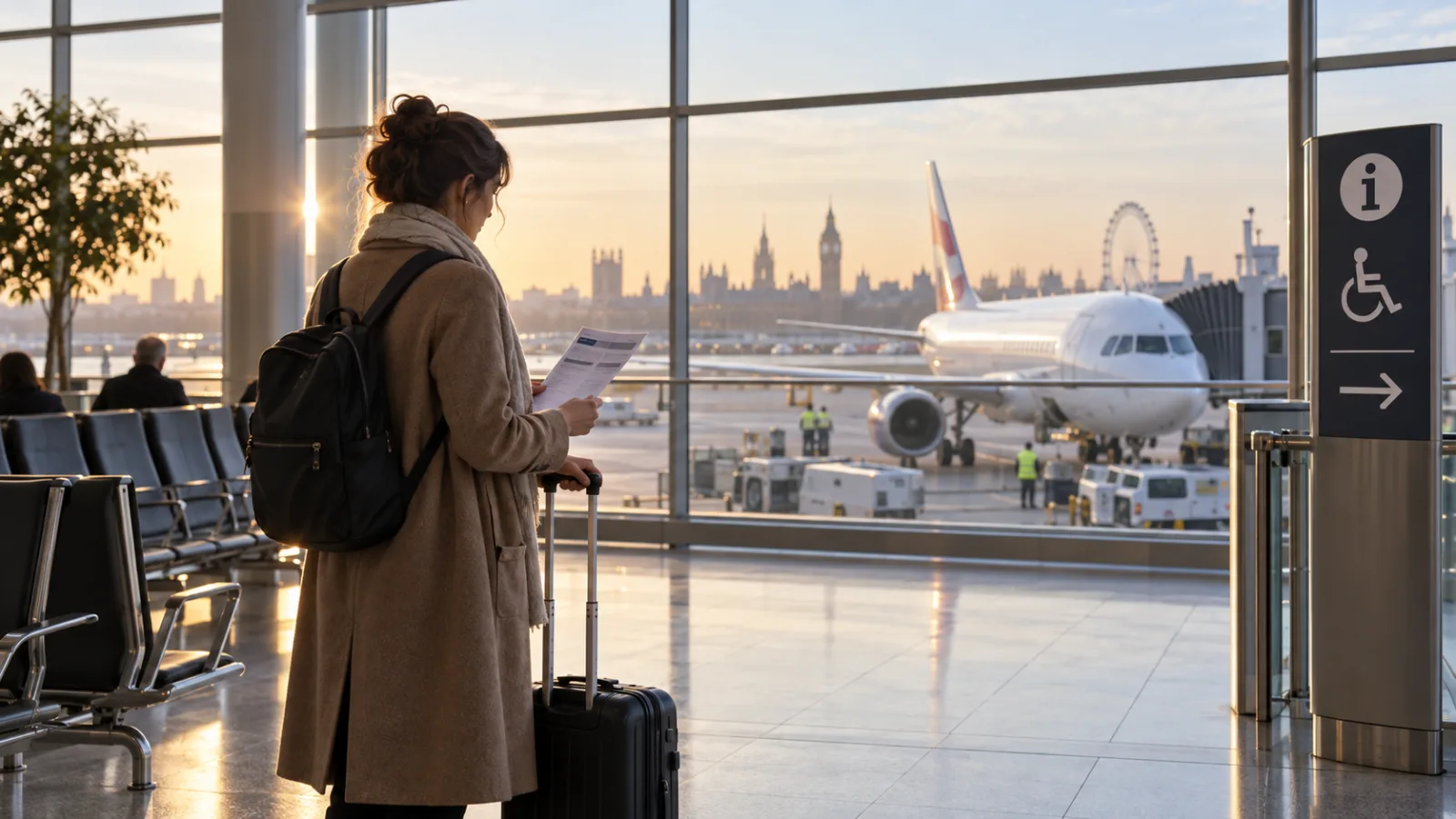
That is useful news for passengers, but it is not the same as a permanent settlement. The offer is being put to a workforce vote, so travellers should continue to check the position before leaving for the airport. The immediate practical lesson is simple: do not rebuild an entire trip around the old strike warning, but do not treat a suspended dispute as a guarantee that every airport process will run normally.
For most flyers, this is a reason to keep the booking and review the airport plan. For passengers who need mobility or other assistance, it is a reason to confirm support directly with the airline or travel agent and to leave more time than the cheapest itinerary appears to require.
What has changed at Gatwick
Wilson James supplies assisted-travel staff at Gatwick. Their work can include helping passengers who need support while boarding or leaving an aircraft and assisting them through parts of the terminal. Unite originally announced strikes because of a pay dispute. In its 14 September update, the union said the planned action had been called off for the time being so workers could consider an improved offer from Wilson James.
The scheduled dates were significant because the first block was due to start on Thursday 17 September, with a second block from Wednesday 23 September through Saturday 26 September. The suspension means those announced walkouts are not currently proceeding. It does not mean the dispute has disappeared, and it does not rule out a new announcement if the offer is rejected or negotiations change.
The airport’s own assisted-travel guidance remains the operational reference point for passengers who need help. Gatwick advises booking assistance through the airline or travel agent, generally at least 48 hours before travel. Its guidance also warns that late or same-day requests can lead to delays and that some mobility equipment, medical equipment and assistance-dog arrangements require advance information from the airline.
The distinction between the labour dispute and the airport’s legal accessibility obligations matters. A traveller should not assume that a strike headline means assistance is unavailable, and should not assume that a suspension means a pre-booked service can be left unconfirmed. The booking record, the airline and Gatwick’s current passenger information are more useful than an old social-media post.
Should you cancel a cheap Gatwick booking?
On the information available on 17 September 2026, the suspended action alone is not a strong reason to cancel a flight. Cancelling voluntarily can turn a manageable airport-planning problem into a large and unrecoverable cost, especially on a basic fare. A better approach is to separate three questions.
First, is the flight itself operating? Check the airline’s flight-status page and Gatwick’s departures information close to travel. The assisted-travel dispute is not a general airport closure and does not automatically cancel flights.
Second, does anyone in the party need assistance? If yes, confirm the request with the airline even if it was already made through a booking platform. Ask what assistance has been recorded, where the passenger should report and whether a mobility aid or medical device has been correctly declared. Gatwick lists assistance points at terminal drop-off areas, entrances, check-in zones and locations before security.
Third, is the connection financially and operationally fragile? A separate rail ticket, a long coach ride, an airport transfer between London airports or a non-refundable hotel can be more exposed to delay than the flight itself. If a cheap fare depends on arriving at the terminal with only the minimum recommended time, its true price includes a high risk of buying a replacement ticket.
For an ordinary passenger travelling with hand luggage, the sensible response is usually to keep the reservation, monitor the status and avoid adding unnecessary complexity. For a passenger who needs assistance, the sensible response is to reconfirm the support arrangement rather than relying on the suspension announcement.
How to get to Gatwick without overspending
Gatwick is south of London and has both North and South terminals. The terminals are connected by the airport’s inter-terminal shuttle, but travellers should still check which terminal their airline uses before choosing a route. The airport railway station is at the South Terminal. If your flight leaves from the North Terminal, allow time for the shuttle after reaching the station.
Train from central London
Southern, Thameslink and Gatwick Express services connect Gatwick with London and other parts of the South East. Gatwick says trains depart frequently and provide direct links to more than 120 stations, with many more reachable with one change. The airport’s rail page also notes that advance tickets can be cheaper and that Gatwick Express tickets bought online may receive a discount.
The fastest-looking train is not automatically the best value. Gatwick Express is convenient for a direct Victoria connection, but compare it with Southern and Thameslink before paying a premium for a journey that may take only a modest amount of time less. For many central London journeys, the cheapest sensible choice is an advance or off-peak ticket on a standard service. For flexible travel, contactless payment may be convenient, but check the fare rules and whether your intended origin and destination are covered before tapping in.
A budget traveller should price the full route, not just the airport train. If a hostel is near London Bridge, a Thameslink journey may avoid a separate Tube leg. If the accommodation is near Victoria, Southern or Gatwick Express may be simpler. The cheapest nominal fare can lose its advantage if it requires a paid cross-London transfer, a taxi after the last Tube or a long walk with luggage.
Coach and local bus
National Express, FlixBus and other coach services connect Gatwick with London, Brighton, Oxford and towns across England and Wales. Coaches can be useful when a train ticket is expensive or when a late arrival makes rail less convenient, but they need more buffer for road traffic. Book ahead when possible, particularly around disruption, because the airport warns that coach services can sell out more quickly when rail services are affected.
For nearby towns, Metrobus serves places including Crawley, Horley, Redhill, Reigate and Horsham. Gatwick’s transport information says local Metrobus single fares are capped at £3. That can make a nearby overnight in Crawley or Horley cheaper than a central London hotel, especially for an early departure. The saving is only real if the bus timetable matches the flight. A room that costs £25 less is not a bargain if it requires a £45 taxi at 03:30.
Travelling between Gatwick and Heathrow
A split-ticket itinerary involving Heathrow and Gatwick can sometimes produce a lower airfare, but it carries a larger failure point. Heathrow states that National Express runs a direct coach between the airports, with an approximate journey time of 70 minutes. That is a planning estimate, not a guarantee. The route also needs time for immigration, baggage collection, check-in, security and traffic.
Do not book a self-transfer between the two airports with the same confidence as a protected airline connection. A low fare can become expensive after a missed second flight, a new airport transfer and an overnight stay. If the saving is small, fly from one airport. If the saving is substantial, use a long daytime gap, carry only what you can manage and keep money aside for a fallback.
A realistic Gatwick budget
Airport advice often focuses on the airfare while leaving the airport day out of the calculation. For a low-cost trip, build a separate Gatwick allowance. The exact amount depends on where you sleep, how early the flight departs and whether you need a paid transfer.
For a traveller already staying in central London, a reasonable planning range for the airport leg is about £12–£30 each way when using a standard train or a pre-booked coach, with a higher figure possible at peak times or on flexible tickets. This is a planning range, not a live quotation. Check the operator’s current fare for your date before booking. Add roughly £5–£15 for food and drinks if you are travelling at a normal hour, or more if you buy everything after security.
For a traveller staying near Crawley or Horley, local transport may reduce the airport transfer to a few pounds, but accommodation prices and very early bus availability must be checked together. A useful comparison is:
- central London room plus airport rail fare;
- airport-area room plus local bus or short taxi;
- a later flight with ordinary public transport;
- an earlier flight that requires an expensive overnight transfer.
For a two-night budget weekend, the transport line can look like this: £25–£60 for return airport transport, £10–£30 for airport-day food, and £15–£40 held as a disruption reserve. The reserve is not an expected charge. It is protection against the specific costs that damage a low-cost trip: a missed coach, a taxi after a cancelled train, a replacement bus or an unexpected overnight stay.
Passengers requiring assistance should not cut the budget by removing time or support. The most economical plan is the one that preserves the booked journey and avoids a last-minute private transfer. If a mobility aid is involved, ask the airline what notice and documentation it requires. Equipment that has not been declared correctly can create delays, extra handling problems or a missed flight.
When to travel through Gatwick
The immediate dates to watch are 17–21 and 23–26 September 2026 because they were the dates named in the suspended strike notice. The labour action is currently paused, but the dispute remains date-sensitive. Recheck the latest information before departure, especially if travelling during the second block or if the workforce vote has not been reported.
The time of day matters even without industrial action. Early flights tend to create the most expensive transport choices because local buses and rail services may not have started. Late arrivals can create the same problem in reverse. A mid-morning or early-afternoon departure often costs more in airfare than a very early flight, but the difference may be smaller than the cost of a hotel, taxi or missed connection.
Weekdays can offer better accommodation or airfare combinations, but a weekday trip also exposes you to commuter demand and possible planned engineering works. Weekends can be quieter on some rail routes, yet leisure travel may fill coaches and airport terminals. Compare the whole itinerary for the actual date rather than assuming that a Tuesday or Sunday is always cheaper.
September is normally a shoulder-season month for many European routes, but that does not make every fare low. Flight prices change with inventory, demand, baggage selection, seat choice and payment timing. A fare seen in a search result is a snapshot, not a promise. Treat a headline price as a lead until the airline checkout page shows the final amount.
If you need assisted travel
Book assistance through the airline or travel agent as early as possible. Gatwick recommends at least 48 hours in advance on its assisted-travel page. The airport says support can include a walking escort, wheelchair help, an electric buggy, help through security and assistance towards the aircraft or onward transport. The exact service depends on the passenger’s needs and the information supplied with the booking.
Before travel, keep four details together: the airline booking reference, the assistance request confirmation, the terminal and flight number, and a description of any mobility equipment. If the passenger uses an electric wheelchair or another battery-powered aid, contact the airline because it may need technical information before accepting the equipment. An assistance dog also needs advance notification.
At the airport, use the designated reception or help point rather than waiting for an informal arrangement. Gatwick says help points are available at terminal entrances, bus stops and other locations, and that passengers arriving by bus or coach should note that some stops, particularly around the North Terminal, can involve a five-to-ten-minute walk. That distance may be trivial for one traveller and a serious obstacle for another.
Allow time for the service to work through the whole route: vehicle drop-off, terminal entry, check-in, security, waiting for the gate and boarding. Assistance passengers may board early, and Gatwick notes that staff can sometimes leave for the gate before the gate number is announced because alternative routes or extra handling time may be needed.
If the service is delayed, tell airline staff immediately and ask them to record the problem. Do not leave the airport or arrange an unsafe workaround without understanding how it affects boarding and the carriage of equipment. The aim is not merely to reach the terminal; it is to reach the aircraft with the correct support and enough time to board safely.
What ordinary passengers should do on the day
Check the flight with the airline before travelling to the airport. Then check the Gatwick departure board and the rail or coach operator. Screenshots are useful when a service changes, but they do not replace the operator’s current terms. If you are using an advance rail ticket, read the conditions before buying so that a missed train does not automatically turn into a second fare.
Arrive with enough time for the flight, but do not assume that arriving absurdly early always saves money. A very long wait can mean buying meals, charging equipment or paying for a lounge. The better budget strategy is to know the airline’s check-in and bag-drop deadlines, then add a practical margin for the route you are using. A traveller with checked baggage, children, a mobility aid or a self-transfer needs a larger margin than someone with a boarding pass and one small bag.
Keep essentials in hand luggage: identification, medication, chargers, proof of onward travel where relevant, booking references and any assistance documents. Do not put all backup money and cards in checked baggage. If the itinerary is built around a cheap coach or rail ticket, save the departure platform, ticket conditions and the next viable service before leaving.
If rail disruption appears, compare a coach with a taxi before panic-booking. The airport says coaches can become busy on disrupted days and recommends booking in advance. If the train is cancelled but the flight is still running, ask the rail operator what ticket rights apply before buying again. A taxi can be the right choice for a group of three or four, but it is rarely the cheapest automatic answer for one passenger.
The booking decision in plain terms
The September Gatwick announcement is a reminder that airport disruption has layers. The current labour issue concerns assisted-travel workers and is suspended while a pay offer is considered. It is separate from airline cancellations, rail engineering, road congestion and security queues. One favourable update does not remove every risk, but it does change the decision a traveller should make today.
If you are flying without special assistance, keep the booking unless the airline reports a separate problem. Reprice the airport transfer, add a modest reserve and monitor the dispute. If you need assisted travel, confirm the service with the airline and request the support at least 48 hours ahead. If your itinerary involves a self-transfer between London airports, calculate the cost of failure before celebrating the headline airfare.
The cheapest trip through Gatwick is rarely the one with the lowest flight number on a search page. It is the itinerary that still works after transport, baggage, timing, food and a small disruption reserve have been added. For travel on or near the dates that were due to be affected, that calculation is more useful than either alarm or complacency.
Sources and date-sensitive checks
This article was prepared for 17 September 2026. The strike status, transport fares, schedules and airline rules can change after publication. Check the latest information before paying for a non-refundable ticket or leaving for the airport.
Related articles

Gatwick’s robot valet shows where everyday robotics may really arrive
Stanley Robotics’ airport parking launch is less flashy than a humanoid demo, and far more useful as a test of trust, liability and constrained autonomy.
Робот-парковщик Gatwick показывает, где роботы станут повседневными
Запуск Stanley Robotics в аэропортовой парковке менее эффектен, чем демо гуманоидов, зато лучше проверяет доверие, ответственность и constrained autonomy.
Le robot valet de Gatwick montre où la robotique du quotidien peut arriver
Le lancement de Stanley Robotics dans le parking aéroportuaire est moins spectaculaire qu’un humanoïde, mais teste mieux confiance, responsabilité et autonomie contrainte.
Gatwicks Roboter-Valet zeigt, wo Alltagsrobotik wirklich ankommt
Stanley Robotics’ Flughafenparking ist weniger spektakulär als ein Humanoid, prüft aber Vertrauen, Haftung und begrenzte Autonomie viel besser.
Comments
Sign in to comment.
No comments yet.