Nantucket and Martha’s Vineyard Ferry Plans for September 24–27: How to Handle the Nor’easter Without Wasting Your Budget
A September nor’easter is disrupting ferry plans for Nantucket and Martha’s Vineyard. Here is how to check cancellations, protect reservations, reach the terminals without overspending and decide whether to delay an island weekend.

A cheap island weekend can become expensive very quickly when the ferry is the part that fails. A cancelled crossing may mean a wasted bus ticket, a non-refundable room, extra parking, or a last-minute night on Cape Cod. That risk is unusually clear this week: the Steamship Authority is warning passengers about a nor’easter expected to affect Cape Cod and the islands from Thursday, September 24 through Sunday, September 27, 2026.
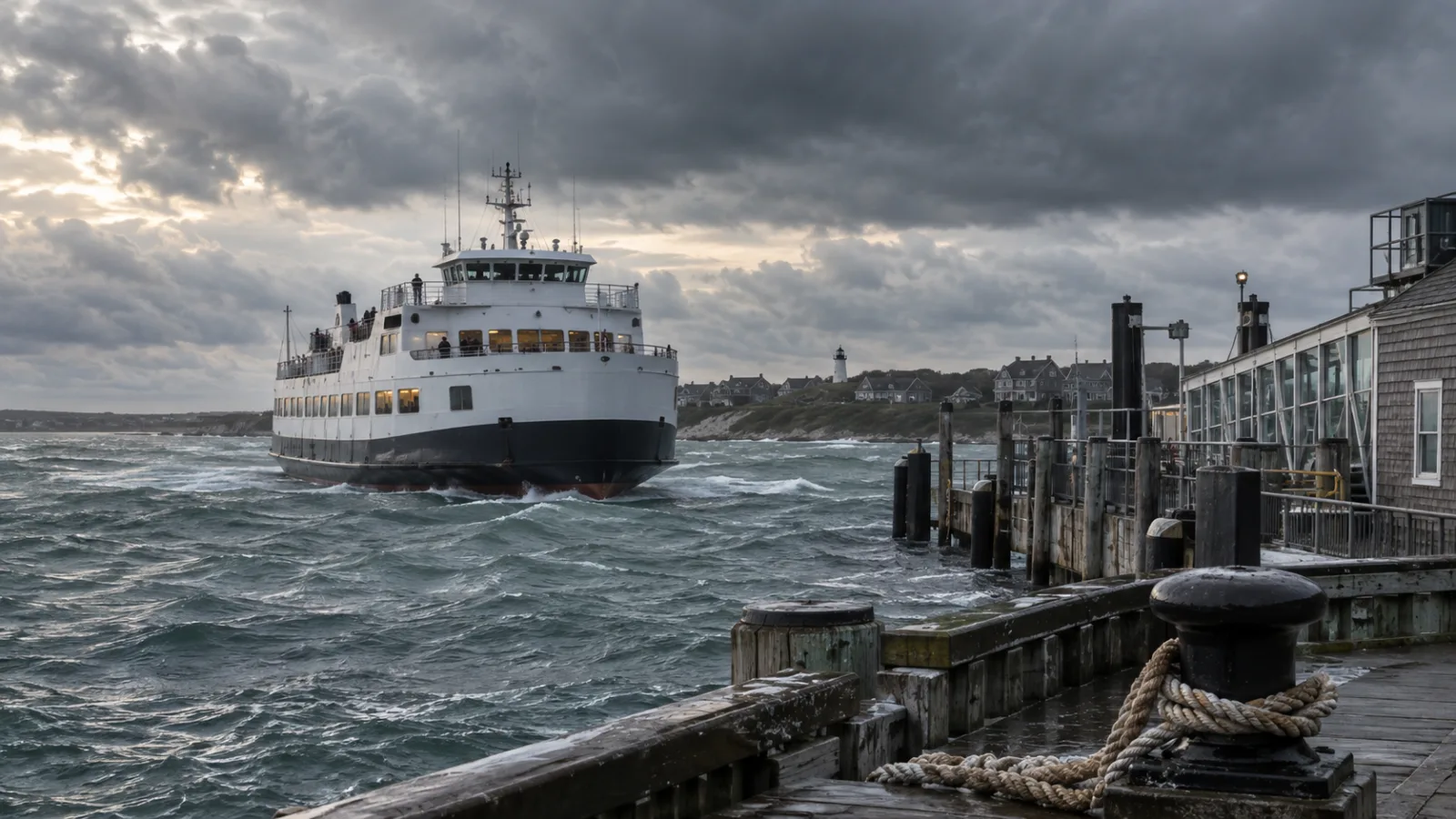
The operator has already cancelled some Nantucket sailings, expanded its change and cancellation-fee waiver, and warned that vehicle availability is affected by both weather and vessel assignments. The National Weather Service has also issued gale warnings for nearby waters, with northeast winds, strong gusts and hazardous seas. This is not a normal late-September schedule adjustment. It is a situation where the cheapest decision may be to move the trip before you travel to the terminal.
The practical advice is simple: treat the ferry as the controlling reservation, do not build a tight same-day connection around it, and check the operator’s live status immediately before leaving for Hyannis or Woods Hole.
What is happening on September 24
The Steamship Authority’s travel-status page says it is monitoring an approaching nor’easter expected to have significant effects in the region through Sunday, September 27. The company has expanded its waiver of change and cancellation fees for trips scheduled from Thursday, September 24 through Sunday, September 27. That gives passengers an option that is often more useful than waiting for a final cancellation notice: move the booking while alternative accommodation and transport are still available.
The live status page showed the first Nantucket departure from Hyannis, scheduled for 5:30 a.m. on September 24, cancelled because of weather, while a 6:30 a.m. departure was listed as on time at the time of the update. That difference matters. A sailing being listed as on time does not guarantee that later trips will operate, and an early departure can be cancelled while the next one runs. Ferry decisions can change as wind, visibility, sea conditions and vessel positioning develop.
For Martha’s Vineyard, the same page showed early Woods Hole–Vineyard Haven services operating on time in the latest overnight update. That is not a promise for the entire day or weekend. The two routes have different vessels, terminals and exposure to wind, so a status on one island should not be used as a proxy for the other.
The operator also reported that vehicle reservations on the Woods Hole–Martha’s Vineyard route were unavailable from Saturday through Wednesday, September 30 because of vessel-assignment changes unrelated to the storm. That detail creates a second planning problem: even if the weather improves, a visitor may not be able to move a car onto the island on the preferred date.
Why the weather is serious for ferry passengers
The National Weather Service’s Boston/Norton marine warning described northeast winds of roughly 20 to 30 knots with gusts up to 40 knots and seas of 6 to 9 feet in Nantucket Sound, Vineyard Sound and nearby waters. For waters south of Martha’s Vineyard and Nantucket, the warning described stronger conditions, including gusts up to 40 knots and seas of 8 to 13 feet, with even larger seas farther offshore. The warning advised mariners to avoid hazardous conditions, remain in port or seek safe harbor.
Those figures do not mean every ferry will be cancelled. They explain why a schedule can deteriorate during the day and why a high-speed passenger ferry may be treated differently from a larger conventional vessel. Travellers should not try to infer operational safety from a land forecast alone. A grey but calm-looking morning at the terminal does not tell you what conditions are like along the entire route.
A current observation from Nantucket Memorial Airport recorded northeast winds around 20 mph with gusts near 31 mph early on September 24. Airport observations are not ferry forecasts, but they provide useful context: the wind pattern is already noticeable on the island, and conditions are not merely a distant possibility.
The weather is also relevant after arrival. Even when a boat runs, strong wind can affect local buses, bike travel, walking with luggage and harbour transfers. A budget itinerary with a ferry arrival, a rental-bike pickup and a timed activity may fail even if the ferry itself is only late.
The first decision: Nantucket or Martha’s Vineyard
The routes are not interchangeable. Nantucket is served from Hyannis. Martha’s Vineyard is served by the Steamship Authority from Woods Hole, and the operator also has separate service patterns and terminals for the island. The correct terminal depends on the island, the sailing type and whether you are bringing a vehicle.
For Nantucket, the Steamship Authority describes two principal options from Hyannis: a high-speed, passenger-only ferry taking about one hour and a traditional ferry taking about two hours and fifteen minutes. Passenger reservations are recommended for the high-speed service. Passengers without vehicles may buy tickets for traditional sailings at the terminal on the day of travel, but that flexibility is not the same as a guarantee of space during a disruption. Advance vehicle reservations are required.
For Martha’s Vineyard, the trip from Woods Hole to Vineyard Haven takes about 45 minutes according to the operator’s schedule information. Vehicles require advance reservations. Passengers travelling without a vehicle can generally buy day-of-sailing tickets at the terminal, but bad weather and the weekend demand created by changed bookings can still make that option uncertain.
If you are choosing between the islands for a low-cost replacement weekend, compare the total logistics rather than the headline ticket. Nantucket may be easier if you are already travelling to Hyannis and only need passenger space. Martha’s Vineyard may be simpler from Falmouth or Woods Hole, especially if you are travelling without a car. Neither conclusion holds if the available sailing does not match your accommodation check-in or return connection.
How to get to the terminals without creating a second problem
From Boston, intercity buses run to Hyannis. Peter Pan lists service from Boston South Station to the Hyannis Transportation Center, and Plymouth & Brockton also publishes Boston–Hyannis and Logan-area schedules. Check the carrier directly for the exact departure on your travel date; published route information is not a substitute for a live seat inventory or a disruption notice.
The Hyannis Transportation Center is connected to local Cape Cod Regional Transit Authority services. The authority identifies a route between Hyannis and the Woods Hole Steamship Authority docks, although route frequency and seasonal operation vary. The summer Hyannis Trolley, for example, is described as running from Memorial Day to Labor Day, so it should not be assumed to operate on September 24. For a September trip, check the current CCRTA schedule and allow time for the transfer rather than relying on a seasonal map or an old travel blog.
Peter Pan’s Hyannis location also notes an on-demand shuttle request for transport between the transportation centre and the Steamship Authority. Confirm that the shuttle is available when you arrive, especially if your ferry has been retimed. A short taxi or rideshare may be more reliable than missing a reserved crossing, but its price should be included in the trip budget.
For Woods Hole, a traveller arriving by bus or local transport should verify the final connection to the terminal. The last part of the trip is not automatically covered by a Boston ticket. A low fare to Falmouth can turn into a costly taxi if the ferry status changes and the local bus no longer lines up with the new departure.
If you drive, do not use the terminal parking situation as a substitute for a vehicle reservation. The Steamship Authority separates vehicle reservations from passenger travel, and a car may be left on the mainland even when you can still travel as a foot passenger. That can be the correct budget choice for a short stay, but only if island transport and accommodation access make it practical.
What the fee waiver means in practice
A change and cancellation-fee waiver is valuable, but it does not automatically refund every part of a trip. Read the specific conditions attached to your ferry booking. A waiver may remove the operator’s fee while your hotel, bus, car rental, parking provider or third-party booking retains its own rules.
Before changing anything, list each reservation in order of flexibility:
- Check whether the ferry operator allows a free date change, cancellation or credit for the September 24–27 travel window.
- Check the accommodation’s cancellation deadline and whether moving by one or two nights changes the rate.
- Check the bus, train or flight rules for the mainland journey.
- Check parking, rental car and activity reservations separately.
- Keep written confirmation of every change, including the new sailing date and whether a vehicle is attached to the booking.
Do not cancel the ferry first and assume you can reconstruct the same itinerary later. During a storm-related disruption, alternative sailings can fill quickly. If the operator permits a no-fee move, secure the replacement option before releasing the original whenever the booking system allows it.
If the operator cancels your sailing, ask what choices are available: a later sailing, a different date, a refund, or a passenger-only alternative. Do not pay a second ticket before confirming whether the original fare will be refunded or transferred. Screenshots of the status and booking confirmation can help if the website or phone lines become busy.
A realistic budget for the mainland part of the trip
Exact fares change by date, sailing type, passenger category and vehicle. The operator’s tariff and booking system should be used for current prices. A useful budget is therefore a structure, not a fake single number.
For a foot passenger travelling from Boston, allow for four transport components: the Boston-to-Cape Cod ticket, the local transfer to Hyannis or Woods Hole, the ferry fare, and the return transfer. Add a weather buffer for food and one extra night on the mainland. If you are travelling with a car, add terminal parking or the cost of the vehicle reservation, fuel, tolls and the possibility that you may need to leave the car behind.
A simple planning table can look like this:
| Cost line | What to confirm | Why it can change |
|---|---|---|
| Mainland transport | Bus, rail or car to Hyannis/Woods Hole | Date, seat availability and disruption |
| Ferry | Passenger or vehicle booking | Sailing type, weather and inventory |
| Terminal transfer | Local bus, shuttle, taxi or rideshare | Ferry time and seasonal service |
| Island transport | Bus, taxi, bike or rental car | Weather, weekend demand and arrival hour |
| Accommodation | Flexible cancellation and new rate | Storm-driven demand and minimum stays |
| Contingency | Food, hotel or mainland parking | Cancellation, delay or missed connection |
For a budget weekend, the contingency line should be treated as part of the price before booking. A trip that costs less on paper but leaves no money for one night in Hyannis is not genuinely low-cost. The risk is higher if you are travelling with children, medical needs, mobility equipment or a pet, because an improvised overnight may be harder to arrange.
When to go instead
The current warning covers September 24–27, but the best replacement date depends on more than the end of the gale warning. Ask whether the ferry operator has resumed normal service, whether displaced passengers have filled later sailings, and whether vehicle reservations are available. A calm forecast does not instantly restore capacity.
For a short trip, moving from Thursday to a later weekday can be more reliable than moving into the first clear weekend. A Sunday return may also be exposed to accumulated delays from earlier cancellations. If the trip is primarily for beaches, cycling or outdoor walks, moving it by a full week may produce a better experience than forcing a two-day slot immediately after the system passes.
September can be attractive because summer crowds often ease and accommodation may be cheaper than in July or August. That advantage is offset by shorter daylight, cooler water, more changeable weather and a greater chance of wind affecting boats. A low price is not evidence that the date is operationally easy.
A safer decision rule for last-minute travellers
Use the following rule if you are deciding whether to leave for Cape Cod today: do not depart for the terminal until you have checked the live status for your exact route, sailing time and passenger or vehicle category. Check again before boarding your mainland transport. If the ferry is marked on time, keep monitoring it because the status can change.
If the ferry is cancelled, do not improvise by hiring an unlicensed boat or accepting a private transport offer from a stranger. The weather warning is a safety issue, not an invitation to bypass the operator. Use the official rebooking, refund and assistance channels.
If you are already on an island, monitor both the ferry operator and local emergency information. A return crossing can be affected even when the outbound leg operated normally. Keep medication, documents, chargers and essential clothing with you rather than in checked or inaccessible luggage. Maintain enough payment capacity for food and accommodation if the departure moves.
Travellers with a flight from Boston or another mainland airport should leave a substantial buffer after the planned ferry arrival. A ferry that reaches Hyannis or Woods Hole on time still needs a land transfer, and a sailing that is cancelled may not have a same-day replacement. Do not book a non-refundable airport hotel or flight connection on the assumption that the ferry schedule is fixed during a marine warning.
What to check before booking any replacement
Open the Steamship Authority’s live travel-status page and the schedule page, then compare the exact sailing with your accommodation and mainland connection. Check the National Weather Service marine forecast for the relevant waters, not only the island’s general forecast. Confirm the current local transport schedule with Cape Cod RTA or the intercity bus operator. Finally, review the cancellation terms for every paid part of the itinerary.
The Steamship Authority states that schedules and fares can change without notice. That caveat matters especially during this event. Information retrieved on September 24, 2026 describes conditions and availability at that time; it does not guarantee a future sailing, a fare, a seat, a vehicle space or a particular weather outcome.
The cheapest sound plan for this weekend may be a delayed trip, a foot-passenger booking instead of a car, or a mainland stay while the sea conditions settle. The expensive plan is the one that saves a few dollars on flexibility and then pays for a missed ferry, emergency accommodation and a second journey.
Sources and live checks
- Steamship Authority travel status — current cancellations, operating notices, waiver information and terminal status.
- Steamship Authority schedules — route durations, passenger and vehicle reservation rules, and seasonal schedule periods.
- National Weather Service marine weather message — gale-warning conditions and affected waters.
- National Weather Service Nantucket observations — current wind and visibility observation for Nantucket Memorial Airport.
- Cape Cod Regional Transit Authority routes — local connections and service information around Hyannis and Woods Hole.
- Peter Pan Boston–Hyannis service — intercity bus route information and terminal connection.
All ferry status, weather, fares and transport information is date-sensitive. Recheck the official operator and weather pages immediately before travelling.
Comments
Sign in to comment.
No comments yet.