Oktoberfest 2026 on a budget: dates, U-Bahn routes, table rules and real costs before you book
A practical Munich plan for checking the official festival window, transport links, lodging pressure and reservation rules before a cheap fare becomes expensive.

A cheap ticket to Munich is only the beginning. For Oktoberfest 2026, the real budget test is whether your dates, bed, transport and table expectations match the official rules before you pay for anything non-refundable.
Start with the date, not the cheap fare
The useful budget question is not whether Oktoberfest is “free” to enter. The 190th Oktoberfest is officially listed for 19 September to 4 October 2026 on Munich’s Theresienwiese, and that window is the first filter for every fare, room and group plan. A low airfare that lands on a Saturday evening can be a poor bargain if the bed is far away, the tents are already full, and the return from the festival depends on an expensive late taxi. A slightly less dramatic train or flight arriving earlier on a weekday may leave more room in the budget because it reduces luggage problems, crowd pressure and last-minute transport choices. Treat the official dates as the fixed part of the trip and treat everything else as variable until checked at booking time.
Why this can still be a budget trip
Oktoberfest can work for a careful traveler because the event grounds are central, public transport is strong and a table is not the same thing as an entry ticket to Munich. The trap is that many costs sit outside the headline fare. Accommodation during the festival, food and non-alcoholic drinks inside the tents, luggage storage, airport or rail transfers, and a legal table reservation for a group can matter more than the price of getting to Germany. Budget planning should therefore happen in this order: confirm the official event days and opening hours, price lodging on useful U-Bahn or S-Bahn corridors, decide whether the group genuinely needs a reservation, then buy the transport. Reverse that order and a cheap fare can become a very expensive weekend.
How to get there: use Munich, not taxis, as the hub
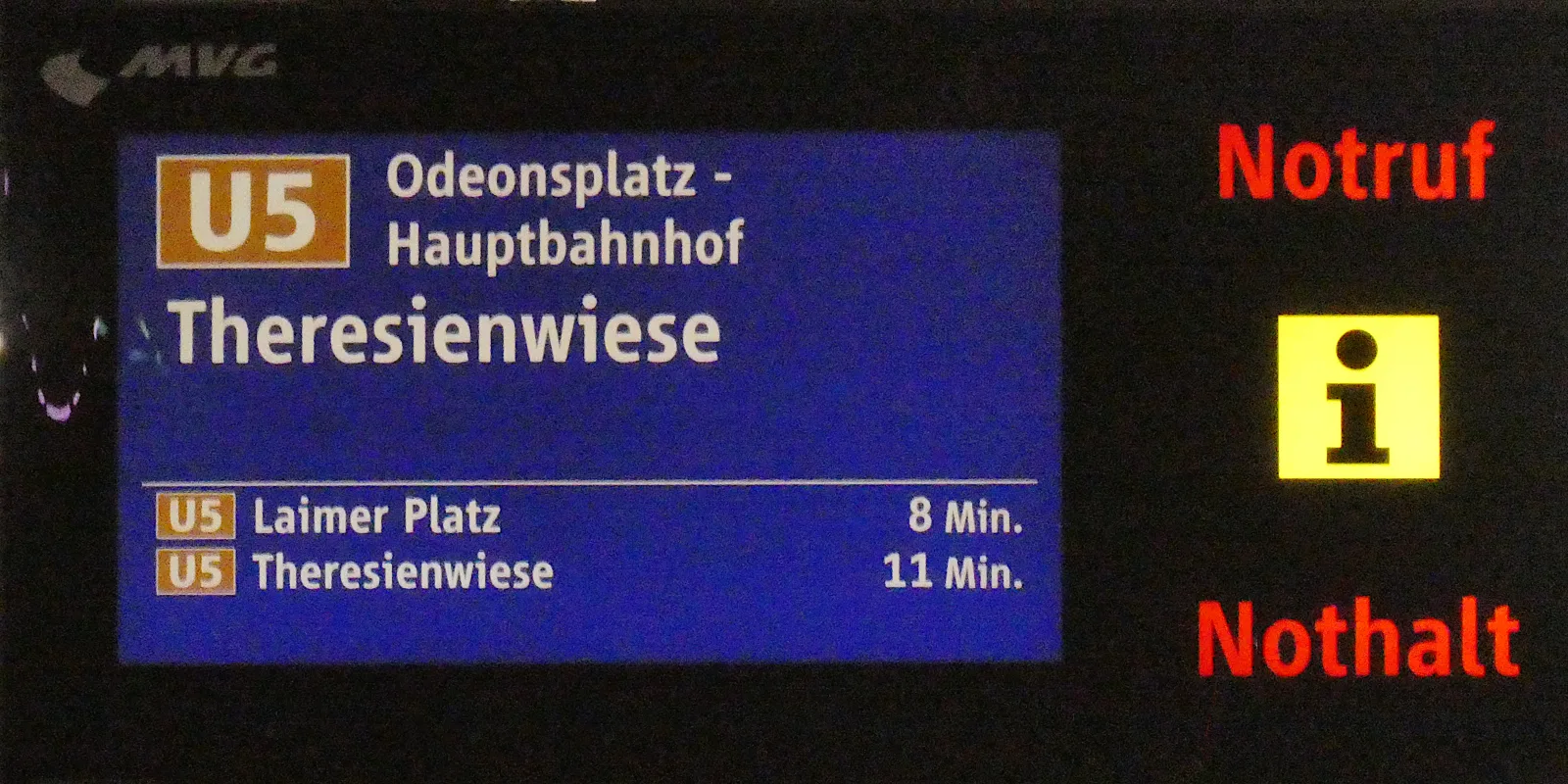
For most visitors the practical route is to arrive at Munich Hauptbahnhof, Munich bus station, or Munich airport, then use MVV public transport instead of building the trip around taxis. The official Oktoberfest transport guidance points to U4 and U5 from central stations such as Odeonsplatz, Karlsplatz/Stachus and Hauptbahnhof to Theresienwiese in only a few minutes. It also notes that other nearby stations can be sensible when the main stop is crowded, including Schwanthalerhöhe and approaches by U3/U6 via Goetheplatz or Poccistraße. That is budget information, not just map trivia: a cheaper hotel becomes risky if it is cheap only because it leaves you with a long, fragile, late-night transfer.
Choosing a base: cheap is not always cheap
A room outside the central hotel zone can be sensible if it has a reliable rail or metro connection and if the last useful service still works for your plan. It is less sensible if it requires a regional train after midnight, a long walk with bags, or a ride-hail fare at the exact hour when thousands of other people are leaving the Wiesn. Before booking, test the route from the hotel door to Theresienwiese and back at the time of day you actually expect to travel. If the route involves several changes, an infrequent suburban train or a station you would not want to navigate tired, add a contingency amount to the budget. If that contingency destroys the saving, the remote room is not the cheap option.
Reservations: useful, limited and easy to misunderstand
The official reservation guidance for Oktoberfest 2026 says timely reservations are particularly advantageous for larger groups and describes an official booking and resale portal for many tents. That does not mean every visitor must buy a table from a stranger, and it does not make unofficial “guaranteed table” offers safe. Tent policies, time slots, voucher rules and minimum consumption differ, and legitimate availability should be checked through the official Oktoberfest route or the official tent pages. For one or two people who can arrive earlier and accept uncertainty, walking in may be part of the plan. For a larger group with a narrow evening window, a legal reservation may be the cheapest way to avoid splitting up, queueing pointlessly or paying for a trip that misses the main purpose.
What to budget beyond the room
The official 2026 beverage-price page gives useful anchors: a liter of beer ranges from €14.80 to €15.90, while average non-alcoholic prices per liter include bottled water at €11.13, Spezi at €12.84 and lemonade at €12.35. These are not recommendations to drink more; they are reminders that food and drinks inside the tents are real budget items and tent-specific prices can change. Add public-transport tickets, meals outside the grounds, water, luggage storage if arriving before check-in, payment-card or cash needs, and a late-return reserve. International visitors should also check Schengen entry requirements, passport validity and travel insurance for their own nationality before committing money.
When to go: choose friction, not fantasy
Weekday daytimes and earlier arrivals are usually easier to manage than Friday or Saturday evenings. The official opening-hours page should be rechecked before travel, but the 2026 event window itself is fixed enough for planning: late September and early October are peak-demand days in Munich. A traveler who can arrive on a weekday morning, leave bags at accommodation or a station facility, and use public transport before the worst crowding has a much better budget profile than someone landing late with luggage and expecting a prime evening tent seat. If only a Saturday evening works, price it honestly as a high-friction trip rather than pretending it is a standard cheap city break.
Three practical plans
The lowest-risk cheap plan is a weekday day trip or one-night stay with a central rail arrival, no promise of a prime table, and a return route already checked before leaving home. The group plan is different: reserve early through official channels, budget the voucher or minimum-spend terms, and choose lodging where the whole group can get back without improvising. The risky late plan is a bargain flight plus a distant bed plus a Saturday-night arrival. That combination can still be fun for someone flexible and experienced, but it is not a dependable budget recommendation because luggage, queues, full tents and late transport can erase the apparent saving.
What not to buy
Do not buy table offers that rely on bypassing tent rules, fake confirmations or vague “guaranteed entry” language. Do not assume a social-media screenshot proves a reservation is transferable. Do not book a non-refundable distant room without checking the late route back. Do not present a fare found on one search engine as guaranteed available for everyone else; flight, rail and room prices move quickly. A safe budget article can mention where to check, what variables matter and which official pages govern the decision. It should not turn a temporary fare or a forum anecdote into a promise.
Extra checks for international visitors
Visitors arriving from outside Germany should separate universal event logistics from personal entry requirements. Oktoberfest does not replace normal border, visa, passport, insurance or accommodation-registration rules. A traveler from another Schengen country, a visa-waiver country and a country that needs a Schengen visa may all see the same beer-price page, but their pre-trip paperwork is not the same. Check passport validity, allowed stay, travel-medical insurance and any airline documentation rules before paying for non-refundable transport. That is also a budget step: a missed document can be more expensive than any hotel premium, and no festival reservation will fix it at the airport.
The decision rule
Book Oktoberfest 2026 as a budget trip only after three checks pass. First, your dates match the official 19 September to 4 October window and the opening-hours page still supports the way you want to visit. Second, your accommodation has a public-transport route that works at the real arrival and departure times, not only on a daytime map. Third, your table expectations match your group size, time of day and the official reservation route. If any check fails, the cheaper choice may be a different Munich weekend, a Bavarian beer festival with lower accommodation pressure, or a day visit without pretending that a Saturday-night table is part of the bargain.
A compact pre-booking checklist
Before paying, open the official Oktoberfest pages and write down the event dates, the current opening-hour details, the relevant tent or reservation page, and the public-transport route from your bed to Theresienwiese. Then price the whole movement, not just the fare: airport or station transfer, MVV ticket, luggage plan, meals, drinks, insurance and the return after the tents close or become too crowded. If the answer depends on “we will find something later,” make that unknown visible in the budget. Unknowns are not free; they usually become taxis, missed connections or overpriced rooms.
A final budget test for the room
The most useful last check is to compare two complete nights, not two room prices. Put the cheaper distant room beside the better-connected room and add the late return, luggage storage, extra food during transfers and the risk of missing the last convenient train. If the remote option wins only by a few euros, choose the simpler route. The point of a budget trip is not to make every line item look small; it is to avoid one fragile line item becoming the expensive emergency that defines the whole weekend.
Comments
Sign in to comment.
No comments yet.