Garbage disposal hums but will not spin? Safe steps before you call a plumber
A safe jam-and-reset checklist for a humming kitchen-sink disposal, with clear limits on when to stop and call a professional.

A garbage disposal that hums, buzzes, clicks, or stops after a small object falls into the sink is usually asking for a calm shutdown, not another flip of the switch. The safe home repair is limited: turn the unit off, keep fingers out of the chamber, free a simple jam with the tool the manufacturer expects you to use, remove visible debris with tongs, let the overload protector cool, and reset only after the turntable moves freely. If the symptom points to wiring, leaking plumbing, a burned motor, a hard-wired unit you cannot isolate, or a reset that keeps tripping, this stops being a quick DIY job and becomes a plumber, appliance technician, landlord, or electrician call.
What this checklist is — and what it is not
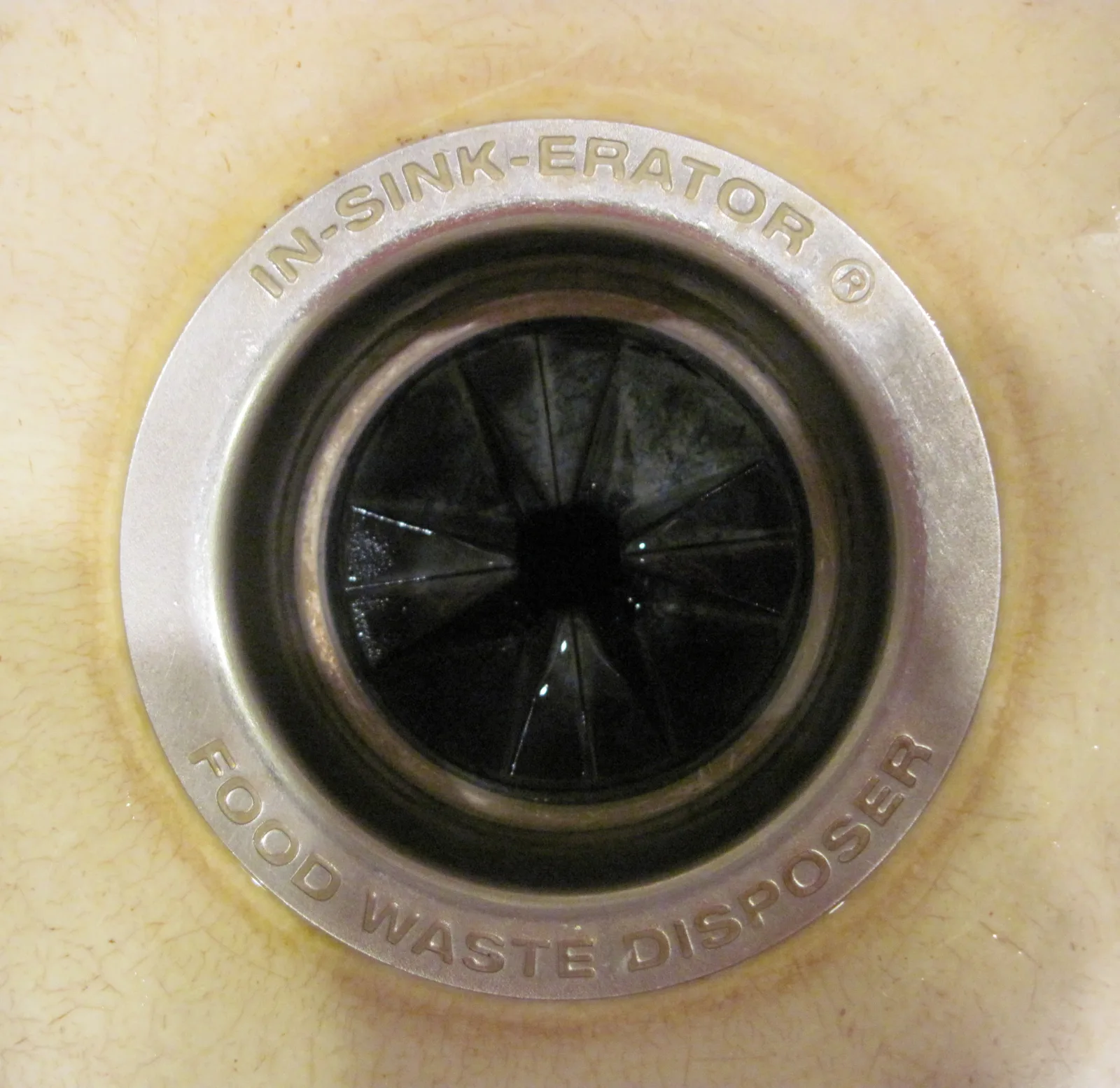
This guide covers a common kitchen-sink symptom: the disposal hums but does not spin, spins for a moment and stops, clicks after a jam, or went silent after you tried to run it through an overload. It is written for the outside of the appliance and for the normal jam-clearing and reset actions described by disposal manufacturers such as InSinkErator. It does not ask you to open the motor housing, defeat an overload protector, change a switch, work on wet electrical parts, or put a hand inside the grinding chamber.
A humming motor means the motor is trying to start while something may be preventing the turntable from moving. Holding the switch on can overheat the motor or trip the overload again. A completely silent unit after a jam can mean the reset device has opened, the wall switch or outlet is off, or a breaker/GFCI issue exists. A unit that spins while the sink still drains slowly may have a separate drain-line or P-trap problem. A leak under the sink is a plumbing or mounting issue, not a reason to keep testing the motor.
Use the steps only when the area is dry enough to work safely, the disposal can be turned off without guesswork, and the object appears to be an ordinary jam such as a bottle cap, spoon, bone fragment, fruit pit, or small piece of glass you can remove with tools. If you are renting, if the unit is under warranty, or if local rules require service approval, call the landlord or warranty provider before loosening plumbing or replacing parts.
Tools and materials
- Flashlight or headlamp.
- Long tongs or needle-nose pliers for visible debris; never fingers.
- Manufacturer Jam-Buster/self-service wrench, or a standard 1/4-inch Allen wrench only if your model has the compatible bottom hex socket.
- Wooden spoon handle for models whose instructions allow gently rotating the turntable from above.
- Bucket, pot, or cup for bailing standing water if the sink will not drain on its own.
- Towel for dry footing and for protecting the cabinet floor.
- Phone camera for the model label, before/after photos, and documenting leaks if you need service.
- Work gloves for handling tongs and sharp debris outside the chamber; gloves are not permission to reach into the disposal.
Safety rules before any step
- Put the wall switch in the off position before you inspect, reach with tools, use a wrench, press reset, or test. If the disposal is plug-in and you can safely reach the plug without touching wet surfaces, unplug it as an extra layer. If it is hard-wired and you cannot confidently isolate power, stop and call a professional.
- Keep hands out of the drain opening at all times. The impellers and edges inside can injure you even when the unit is off, and an accidental start is unacceptable.
- Do not work through dirty standing water if you cannot see what your tool is touching. Bail water first or wait for it to drain.
- Do not use chemical drain cleaners before mechanical work. Splashing chemical-treated water into your face or onto tools is a predictable hazard.
- Do not tape, hold down, bypass, or repeatedly hammer the reset button. The overload protector is a safety device, not an inconvenience.
- Do not open the motor housing, change wiring, bypass a GFCI, alter grounding, or replace breakers as part of this checklist.
Step-by-step: safe jam and reset triage
-
Turn the disposal off and let the symptom stop. If it hums, release the switch immediately. Do not keep testing to “see if it clears itself.” A short hum is enough information: the motor is stalled or overloaded.
-
Name the symptom before touching anything. Humming without rotation usually points to a jammed turntable or seized mechanism. One click or silence after a hum often points to an overload protector that has tripped. Spinning plus poor drainage points away from the motor and toward the drain path. Leaking, smoke, burned smell, or a hot housing points out of DIY territory.
-
Clear the view. Remove the sink stopper or splash guard only if your model allows it without disassembly. Shine a flashlight into the opening. Look for a spoon, cap, screw, twist tie, bone, pit, glass, or other hard object. If the sink is full, bail water with a pot so you can see; do not probe blindly.
-
Remove only what you can safely reach with tongs or pliers. Grip the visible object and lift it out. If the item breaks, is sharp glass, wedges under an impeller, or cannot be grasped without pushing your tool deep into the chamber, stop. Do not use fingers. Do not use a screwdriver as a pry bar against the chamber wall.
-
Use the bottom wrench method if your disposal supports it. From underneath, find the small hex socket in the center of the bottom of the unit. Insert the manufacturer wrench or the compatible 1/4-inch Allen wrench. Work it back and forth gently. The goal is to free the turntable until it can move through a full revolution, not to twist the mounting assembly or plumbing. If the wrench will not move with reasonable hand pressure, stop and call service.
-
If your model instructions call for the top spoon method, use it gently. With the switch off, place a wooden spoon handle against the turntable or impeller from above and rock it only enough to break a simple jam. Wood is less likely to damage metal parts than a steel pry tool, but force is still the warning sign. If the turntable does not move, stop.
-
Remove loosened debris. After the turntable frees up, use the flashlight again and lift out the object with tongs or pliers. Small fragments left behind can jam the unit again or damage impellers. Rotate the wrench once more by hand if needed, then remove the wrench from the bottom socket before testing.
-
Give the overload protector time to cool. Manufacturer reset instructions commonly start with the switch off and note that some units need a cool-down period after overheating. If your model’s support page says to wait, wait. A reset that is pressed immediately while the jam remains can trip again or hide the real problem.
-
Press the reset button once, after the jam is cleared and the switch is still off. The reset button is usually on the bottom or side of the unit. It should click in and stay in if the overload has cooled and the fault is gone. If it will not stay in, pops out again, or the unit smells hot, stop.
-
Test briefly with cold water running. Turn on a steady stream of cold water first, then switch the disposal on for only a short test. A healthy unit should spin without humming or struggling. If it hums again, trips again, leaks, shakes the plumbing, or throws debris, switch it off immediately.
-
Check the drain behavior without overdiagnosing. If the motor now spins but water still backs up, the obstruction may be in the drain pipe, P-trap, dishwasher drain hose, or air gap. Clearing traps can be a separate plumbing task, but do not combine it with powered disposal testing, chemical cleaners, or guesswork around leaks.
-
Record the model and symptom if you need help. A technician will ask whether it hummed, clicked, reset, leaked, overheated, or jammed on a known object. A photo of the model label and a clear description can shorten the visit and prevent unsafe repeat testing.
Common symptoms and what they usually mean
Hums for one or two seconds and stops: treat it as a stall. Turn it off, use the wrench or spoon method where allowed, remove debris with tongs, cool, reset, and test once.
No sound after a jam: the overload protector may be open, the switch or outlet may have lost power, or a breaker/GFCI may have tripped. You can note whether other kitchen outlets work, but do not work on wet electrical parts or replace components as part of this repair.
Reset button keeps popping out: stop. That usually means the fault is still present, the motor is overheating, or there is an electrical/mechanical problem. Forcing the button defeats the point of the safety device.
Wrench moves part way, then locks hard: stop before twisting the mount or pipes. A hard object may be wedged, the turntable may be damaged, or the motor bearings may be failing.
Spins but drains slowly: look beyond the disposal. Food waste may have moved into the drain line, the P-trap may be clogged, or the dishwasher connection may be involved. If you are not comfortable opening plumbing, call a plumber.
Water under the sink: stop running water and power tests. Dry the area, photograph the leak path, and call a plumber or landlord if the mounting ring, discharge pipe, dishwasher hose, or cabinet floor is wet.
Do not do this
Do not put a hand in the chamber, even “just for a second.” Do not keep flipping the switch while it hums. Do not pour chemical cleaner into a jammed disposal and then work over the opening. Do not pry with a screwdriver until the sink mount twists. Do not open the motor. Do not bypass reset, thermal protection, grounding, fuses, GFCI protection, or a manufacturer interlock. Do not change a hard-wired connection because an online comment says it is easy.
When to stop and call a pro
Call a plumber, appliance technician, landlord, warranty provider, or electrician when the disposal leaks, smokes, smells burned, overheats, trips the reset repeatedly, will not turn with the wrench, contains glass or metal you cannot remove with tongs, involves a wet outlet or GFCI/breaker issue, is hard-wired and cannot be isolated confidently, moves the sink mount or pipes when you apply light force, or sits in a rental/warranty situation where service rules matter. Also call if the sink backs up after the motor spins normally; that is likely a drain problem rather than a motor reset problem.
The practical takeaway
The safe repair is not heroic. A humming disposal is a warning to stop, remove power, keep hands out, free only an accessible jam with the correct wrench or wooden-spoon method, remove debris with tongs, reset once after cooling, and test briefly with cold water. If any part of the story becomes electrical, leaky, smoky, overheated, hard to move, or unclear, the cheaper fix is often the one that stops before damage spreads under the sink.
Related articles
Sink smells bad? A safe P-trap, overflow and leak checklist before you call a plumber
A practical repair-first guide for separating a dry trap or dirty overflow from leak, vent, septic and sewer-gas problems that are not safe DIY.

The Ocean Cleanup lesson: good technology gets better when it listens to evidence
The Ocean Cleanup did not make ocean plastic simple, and that may be its most useful lesson. Real environmental technology has to combine ambition with ecology, local waste systems, river prevention, transparent data and the humility to change course.


Bun’s Rust rewrite is not just a Rust versus Zig story
Bun turned a million-line language migration into a public test of AI-assisted open source engineering. The useful lesson is about tests, CI and human ownership.

Rust’s Move Goal: Why Immobile Types Matter for Open Source
Rust’s accepted 2026–2027 goal is an early but important attempt to make immovability and destructor guarantees explicit in the type system.

Comments
Sign in to comment.
No comments yet.