Dyson CameraJet Puts a Machine-Vision Camera and Mouthwash Jet in a $499 Toothbrush
Dyson’s first toothbrush uses a tiny camera and machine-learning software to find gaps between teeth, then aims a burst of mouthwash at them. The unusual design is technically ambitious, but its price, upkeep and unproven clinical advantage matter as much as the headline feature.

Dyson’s first toothbrush is also its strangest departure from the company’s usual territory. The CameraJet combines a sonic electric brush, a water-flossing system and a miniature intraoral camera. Its central promise is simple to describe: watch the spaces between the teeth, identify them in real time and fire a short burst of mouthwash at the gap while brushing continues.
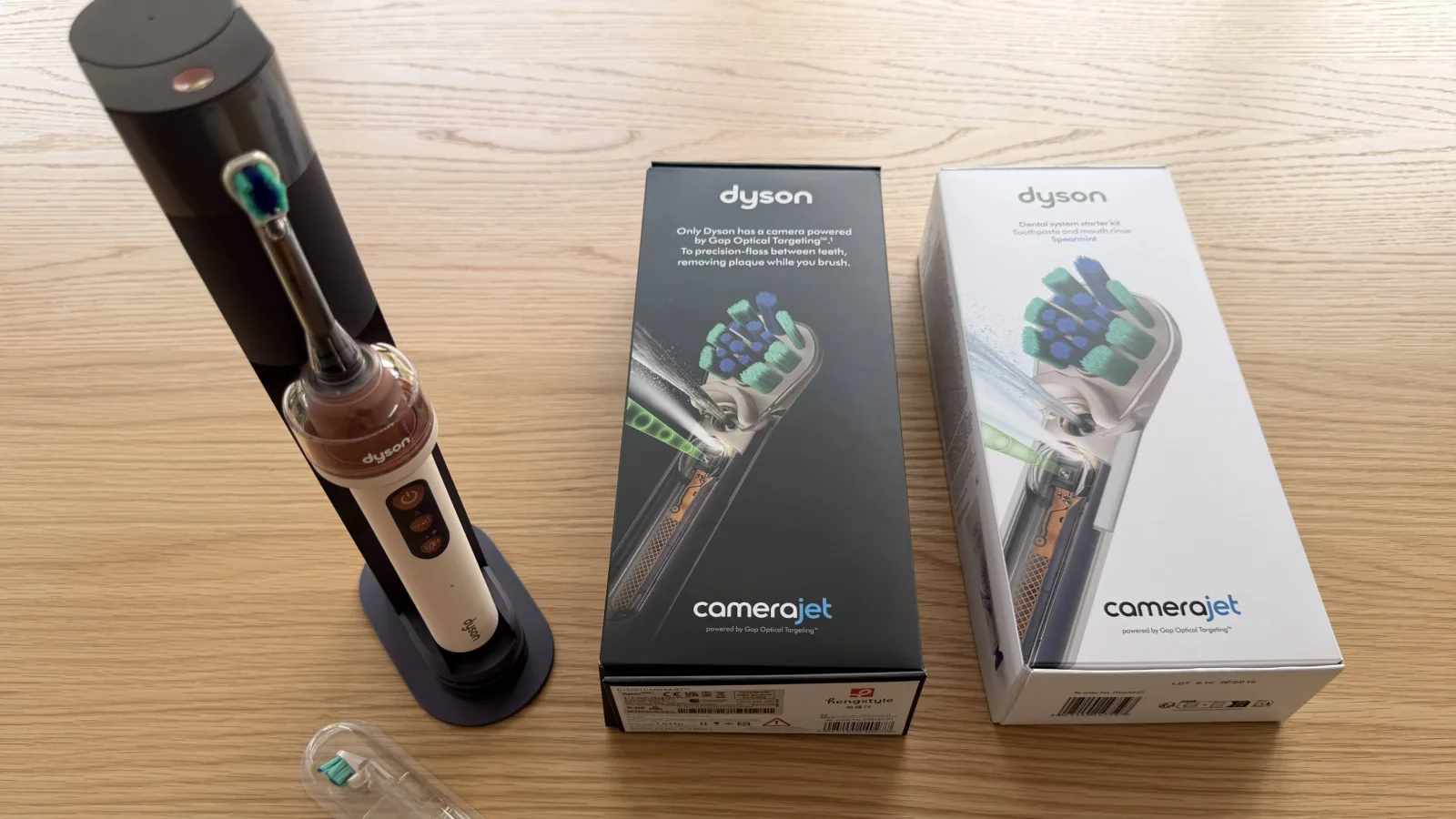
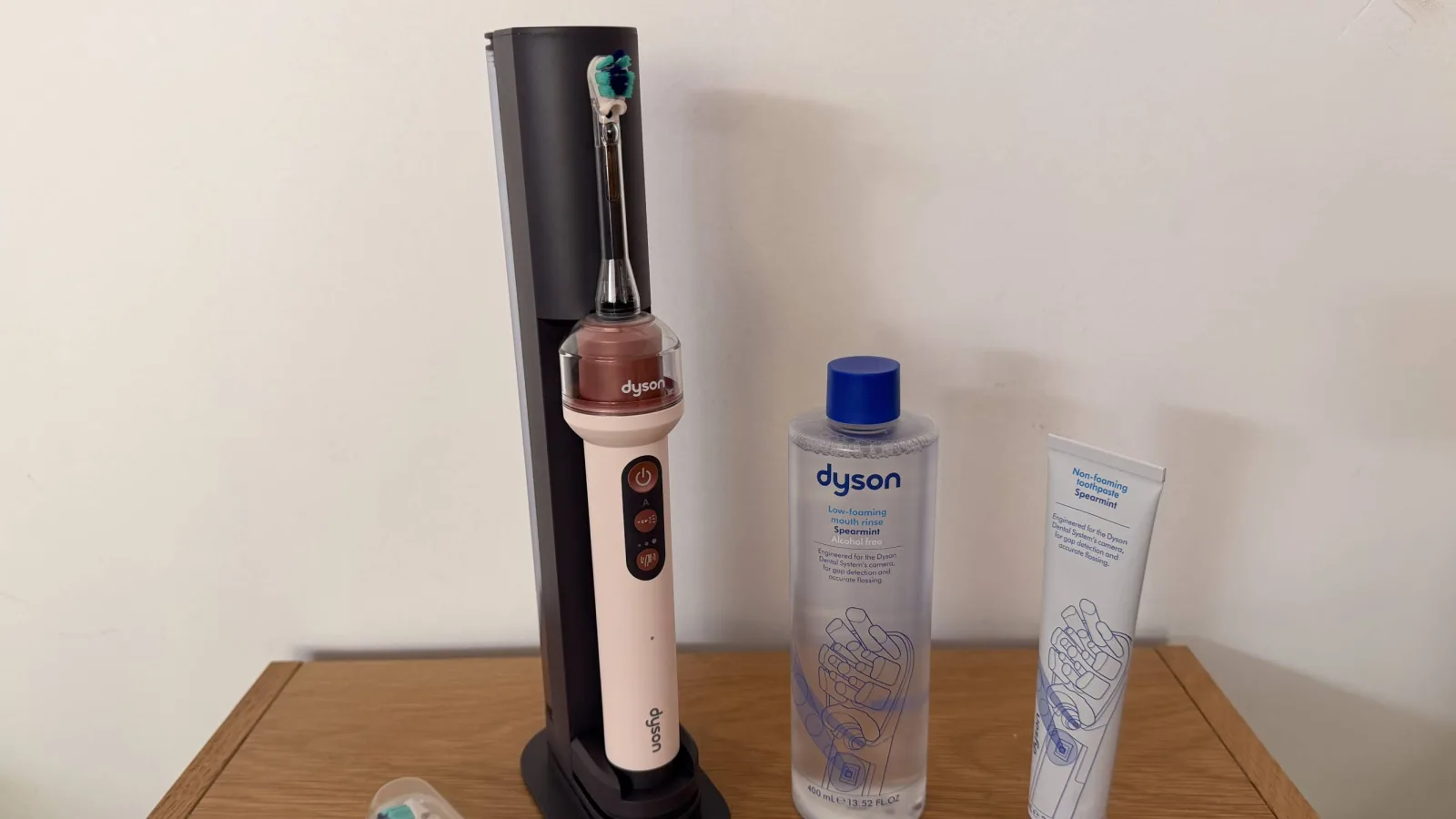
The device launched on September 1, 2026, as part of what Dyson calls the Dyson Dental System. The package costs $499.99 in the United States, £419.99 in the United Kingdom and AU$799 in Australia, according to TechRadar’s hands-on review. It includes the CameraJet handle, a charging and refill dock, a travel case, two brush heads, toothpaste and mouthrinse. Dyson offers the device in Ceramic Ultra Blue and Ceramic Pink.
How the camera-guided jet works
The camera sits just below the brush head. Dyson describes it as a 100,000-pixel macro-lens camera, with a lens roughly 1.2 millimeters across. A strobing light operating at 257Hz is synchronized with the movement of the head so the software can obtain a usable view despite the vibration. The camera processes 28 live images per second.
Dyson’s software, called Gap Optical Targeting, is trained to recognize, track and predict interdental gaps. When it identifies a gap, the company says the brush can trigger a conical burst of mouthwash within 100 milliseconds. The system is not simply spraying continuously in the general direction of the teeth. Its selling point is that the camera supplies a target and the machine decides when to activate the jet.
Dyson says the machine-learning model was developed using 470,000 dental images. The company also says the product contains 16 million lines of code, involved 661 engineers and led to 38 patent filings. Those figures indicate the scale of the engineering effort, but they do not by themselves demonstrate that the brush improves long-term dental outcomes.
The liquid system is built into the handle rather than placed in a separate countertop irrigator. Dyson calls the reservoir an anti-gravity tank. A diaphragm pump and pressure chamber are intended to keep the flow consistent when the brush is turned or held at an angle, preventing air pockets and empty bursts. TechRadar found the cordless design comfortable enough to control, though bulkier than a conventional electric toothbrush.
The spray is conical rather than the narrow needle-like stream used by many water flossers. Dyson says the broader jet is designed to cover more of the tooth surface while being gentler on gums and enamel. The company developed a proxy plaque for engineering tests in a five-year collaboration with the Faculty of Dentistry at the National University of Singapore. That is useful for refining the hardware, but a laboratory plaque model is not the same thing as an independent clinical trial involving people with different gum conditions, restorations and spacing between teeth.
What it is like to use
There are three cleaning modes: brushing alone, brushing and precision flossing separately, or automatic brushing and flossing together. The brush offers three intensity levels, and haptic feedback warns when the user is pressing too hard, scrubbing too aggressively or should move to another section of the mouth. Dyson recommends a three-minute session in automatic brushing-and-flossing mode to achieve coverage. Its broader owner guidance still recommends brushing twice a day and cleaning between the teeth at least once daily.
That distinction matters. CameraJet is designed to make interdental cleaning easier to remember and more automatic, not to shorten oral care to a few seconds. The company’s own instructions ask users to make small, controlled movements and to hold the jet roughly horizontal to the teeth and gumline. The owner’s page also warns that splatter is normal at first, especially in automatic mode. Closing the lips helps, but the bathroom mirror may still receive some of the experience.
The optical system creates a second constraint: foam can obstruct the view. Dyson recommends its own non-foaming toothpaste and low-foaming mouthwash. The owner’s documentation says users who prefer other products should choose a non-foaming gel toothpaste, usually labeled SLS-free, and a clear mouthwash. This does not mean every regular fluoride toothpaste is automatically unsafe; it means a foamy formula may interfere with the camera’s ability to detect gaps. Buyers should check the current instructions before substituting products, particularly if they use prescription or sensitivity formulas.
The routine also involves more maintenance than a normal electric toothbrush. Dyson recommends rinsing the brush head, device and tank after every use, giving the system a thorough clean at least weekly, and descaling the tank monthly in hard-water areas. The camera and nozzle need to be wiped gently when dirty. The company says the replaceable battery is available as a click-in lithium-ion part, while the product works properly only with genuine Dyson spare parts and accessories. That last point raises the eventual running-cost question: the initial price is only one part of owning a device that combines consumables, tagged brush heads and mouthrinse.
A full charge takes about eight hours. Dyson says one charge supports up to 14 complete automatic brushing-and-flossing sessions. The refill dock can replenish the mouthrinse tank at the press of a button, and the handle can also be charged with a USB-C-to-pogo-pin cable. The dock is convenient, but it adds another proprietary piece of hardware to a bathroom counter and another component to pack when traveling.
The camera is useful, and also the privacy issue
The MyDyson app provides live viewing from the brush, guided cleaning, coverage maps and session insights. The live feed is the consumer-facing version of an intraoral camera: users can see the brush moving across teeth and inspect areas that are otherwise difficult to view. In TechRadar’s early testing, the image was clear and streamed without noticeable lag, although the reviewer described the view as a close-up of teeth, gums and bubbles rather than a polished diagnostic image.
Dyson says the camera is active only during live viewing or automatic jetting. It also says images are processed directly on the device and are not recorded, stored or uploaded to the cloud. The owner’s page says neither Dyson nor third parties have access to the live view. Those are important privacy assurances, especially for a Wi-Fi-connected appliance used inside the mouth. They remain manufacturer statements, however, so privacy-conscious buyers should read the current app permissions, account requirements and data policy before pairing the brush. The brush can be used without the MyDyson app, but live viewing, guided cleaning and session insights then disappear.
Does it replace floss?
Dyson presents CameraJet as a way to precision-floss while brushing, and the mouthwash jet may be attractive to people who consistently skip string floss. But “replaces floss” is a stronger claim than the hardware description establishes. The American Dental Association says toothbrush bristles cannot effectively reach tight spaces between teeth and recognizes several interdental options, including floss, interdental brushes and water flossers. It also notes that the best choice depends on the person’s tooth spacing and dental condition.
The ADA’s evidence summary describes the evidence for oral irrigators as limited and inconsistent, while noting that interdental cleaning used with brushing can help reduce plaque or gingivitis. That is a reason to view CameraJet as a new powered interdental cleaner, not as a guaranteed substitute for every form of flossing or a treatment for gum disease. People with braces, implants, bridges, bleeding gums, periodontal disease or very tight contacts may need advice from a dentist or hygienist about which tool is appropriate. A jet that feels gentle is not a diagnosis of healthy gums, and a camera view is not a dental examination.
The broader need is real. The World Health Organization estimates that oral diseases affect nearly 3.7 billion people and recommends brushing twice daily with fluoride toothpaste containing 1,000 to 1,500 parts per million fluoride. Interdental cleaning addresses a part of that routine, but it does not compensate for high sugar intake, tobacco use, inadequate fluoride exposure or missed professional care. CameraJet’s technology targets one practical failure point: people often do not clean the spaces they cannot easily see.
Who should consider it
The strongest case is for a user who already wants a water flosser, values feedback and is willing to maintain a connected appliance. The camera could make technique visible, while the automatic jet may reduce the friction of switching between a brush and a separate irrigator. Someone who finds ordinary water flossers awkward may also appreciate a single cordless tool with a built-in reservoir.
The value case is much weaker for everyone else. A conventional electric toothbrush paired with ordinary floss, interdental brushes or an established water flosser costs far less. Smart brushes from Oral-B, Philips Sonicare, Oclean and Feno already offer sensor-based coaching or app guidance, while Waterpik and Philips sell dedicated powered interdental devices. Those alternatives may be less futuristic, but they separate the basic cleaning job from the camera, Wi-Fi connection and proprietary refill ecosystem.
CameraJet is therefore best understood as an ambitious first-generation product rather than a settled new standard. Dyson has solved a striking engineering problem: placing optics, lighting, vibration control, machine vision, a fluid pump and a battery into a handheld brush that can operate in a wet mouth. Whether that complexity produces meaningfully better oral health will depend on independent testing, reliability over time and the habits of actual owners. At $499.99, early adopters are paying to find out.
For most people, the fundamentals remain less glamorous and more decisive: fluoride toothpaste, two minutes of careful brushing twice a day, daily cleaning between the teeth, sensible food choices and regular dental care. CameraJet may make that routine more visible and engaging. It does not make those basics optional.
Related articles

Should You Buy the Dyson CameraJet? The $500 Toothbrush Needs a Reliability Pause
Dyson’s CameraJet combines sonic brushing, mouthwash jets, a camera and app guidance, but early component failures and a temporary supply interruption change the buying decision. Here is who should wait, who might still consider it, and what to check first.
¿Deberías comprar el Dyson CameraJet? El cepillo de 500 dólares necesita una pausa por fiabilidad
El Dyson CameraJet combina cepillado sónico, chorros de enjuague, cámara y guía mediante una app, pero los primeros fallos de componentes y una interrupción temporal del suministro cambian la decisión. Esto conviene saber antes de comprar.
Faut-il acheter le Dyson CameraJet ? La brosse à dents à 500 $ mérite une pause côté fiabilité
Le Dyson CameraJet associe brossage sonique, jets de bain de bouche, caméra et guidage par application. Mais les premières pannes de composants et une interruption temporaire de l’approvisionnement changent la décision d’achat.
Стоит ли покупать Dyson CameraJet? Зубная щётка за $500 требует паузы из-за проблем с надёжностью
Dyson CameraJet объединяет звуковую чистку, струи ополаскивателя, камеру и подсказки приложения. Но ранняя проблема с компонентом и перебои с поставками делают ожидание разумнее для большинства покупателей.
Comments
Sign in to comment.
No comments yet.