Don’t buy a foldable phone this week unless you have to
Foldables are getting better, but Samsung’s July 22 event, leaked price shifts, Motorola discounts and Apple rumors make patience the smartest gadget move right now.

Foldable phones are finally interesting for ordinary buyers, not just early adopters. That is exactly why July 2026 is a bad moment to buy one in a hurry.
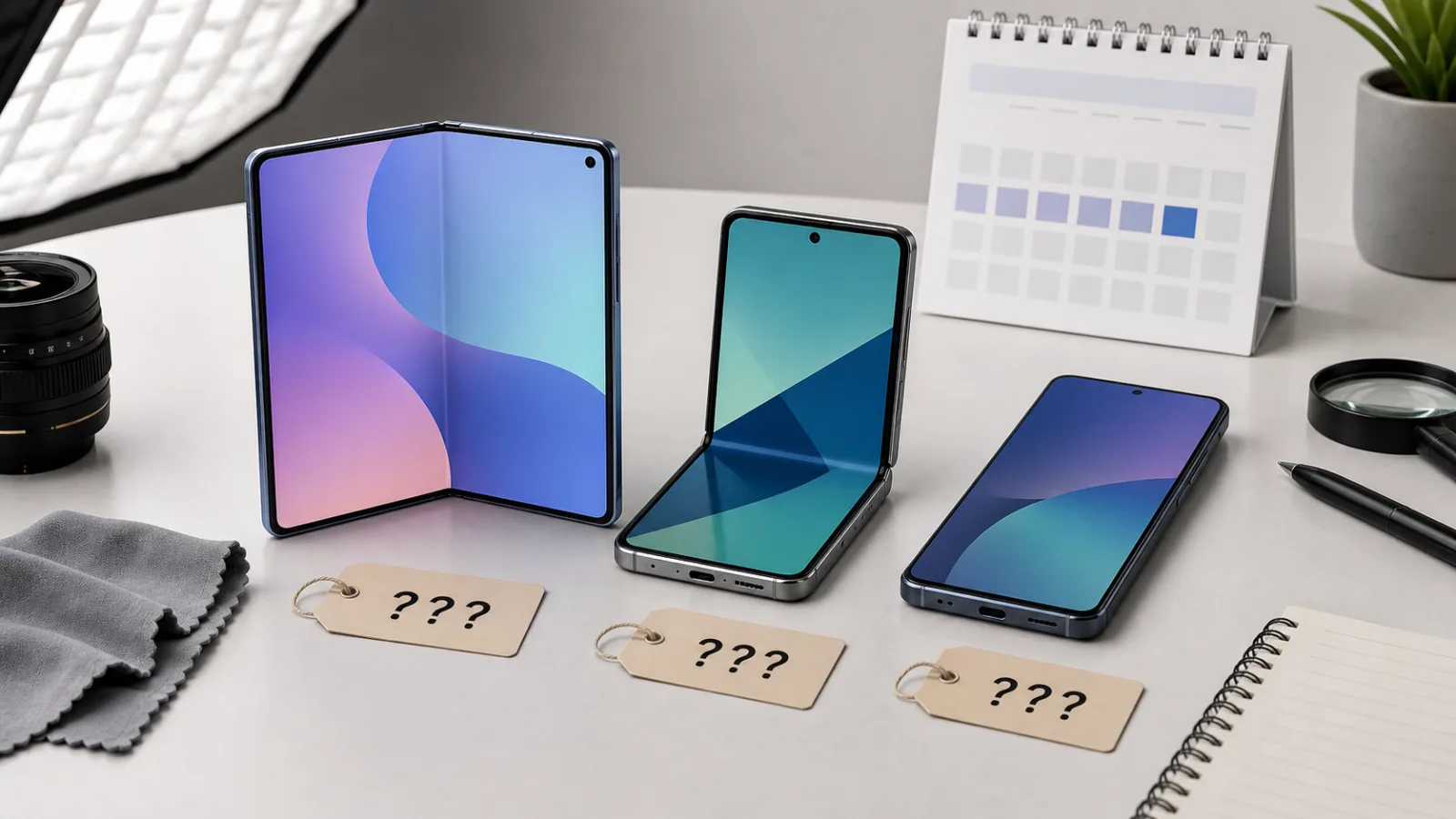
The category is not standing still. Samsung has an official Galaxy Unpacked event set for July 22 in London. Its own site and newsroom confirm the date and the "A New Shape Unfolds" framing. Leaks and retailer chatter around the Galaxy Z Fold 8, a wider Fold 8-style design, a Fold 8 Ultra label and the next Flip are arriving almost daily. Android Authority is telling readers not to buy a foldable right now, not because foldables are bad, but because the next few weeks could change the choices and prices.
That is the practical point. A buyer who spends $1,500 to $2,100 today may be buying just before Samsung announces new form factors, before older models get better discounts, before Motorola's Razr Fold starts the discount cycle that Motorola phones often follow, and before Apple's first rumored foldable iPhone changes the conversation in September.
If your current phone is broken, that is different. If you have a large trade-in offer that expires today, maybe the math works. But for most people who are simply foldable-curious, patience is the best feature available this month.
The Samsung timing problem
Samsung's July 22 event is close enough that buying a Galaxy Z Fold 7 or Z Flip 7 at normal pricing now makes little sense. The current devices do not become bad phones overnight. The problem is information. In less than two weeks, buyers should know official prices, trade-in offers, launch bundles, dimensions, battery claims, camera differences and whether the rumored wider Fold really changes daily use.
Droid Life reports the event starts at 9am ET, 6am PT and 2pm BST, with livestream access. Samsung's US reservation page also shows July 22, 2026 at 9:00 AM EDT. The public message is clearly about foldables, not a small accessory refresh.
The rumored lineup is also more complicated than usual. Instead of one obvious successor, Samsung may split the book-style Fold line into a wider model and an Ultra-style model. If the branding holds, that turns the buying question from "new Fold or old Fold" into "which Fold shape fits my life?"
That matters because foldables are not only spec sheets. The outer screen shape changes how often you use the phone closed. The inner screen ratio changes video, games, reading, split-screen work and keyboard comfort. A small difference in aspect ratio can matter more than a benchmark score.
What the leaks suggest
The most interesting leak is the wider book-style Fold. 9to5Google, citing Android Headlines renders, describes a 5.5-inch QHD+ cover display with a 16:10 aspect ratio and a 7.6-inch inner display closer to 4:3. The same report points to a Snapdragon 8 Elite Gen 5 for Galaxy, 12GB of RAM, storage options up to 1TB, a 4,800mAh battery and 25W charging.
Those details are not official until Samsung says them on stage. Still, they explain why the decision is worth delaying. A wider cover display could make the device feel more like a normal phone when closed, which has been one of the long-running complaints about tall book-style foldables. A more rectangular inner display could improve video and some games compared with the almost square canvases that make many apps look awkward.
The caveat is just as important. A 4,800mAh battery and 25W charging, if accurate, would not be a dramatic leap. The category still has familiar pain points: hinge durability, screen crease, dust and grit, repair cost, insurance cost, camera compromises, battery life and the awkward fact that a foldable is both a luxury phone and a mechanical object you open and close all day.
That is why the right question is not "is Fold 8 exciting?" It is "will the official device fix the problem that keeps me from buying?"
The price issue
Android Authority's July 10 price report, citing Korea's SE Daily and industry sources, says the Galaxy Z Fold 8 Ultra could likely start around $2,099 in the US, while the Galaxy Z Fold 8 or Wide Fold could start around $1,899 for 256GB. The same report says Samsung is still conducting a final review of pricing strategy, so those numbers should be treated as leaks, not settled prices.
Even so, they frame the decision. Foldables are already expensive. A $100 or $200 difference matters less in isolation than it does after adding a case, insurance, possible screen protection, trade-in uncertainty and repair anxiety. If the Ultra costs more but does not clearly improve the parts you care about, the cheaper wider model may be the real story. If the wider model loses a feature you need, the older Fold with a post-launch discount may make more sense.
This is why pre-event buying is risky. You do not yet know the full price ladder.
Why older models may get better
Waiting does not mean buying the newest model. It often means buying last year's model at the right price.
Once Samsung announces new phones, retailers and carriers usually have to make room for inventory. Trade-in values change. Bundle offers change. Refurbished and used pricing changes because owners start upgrading. The same Fold 7 that looks too expensive today may become much more reasonable after the event, especially for someone trying foldables for the first time.
That is also where Reddit is useful as a signal. In r/GalaxyFold, current posts are not only about specs. People are asking whether a used Fold 7 makes more sense than a new wide Fold 8, whether the new aspect ratio is better, and whether the form factor has finally solved their personal objections. That is the real buyer problem. The best foldable is not always the newest one. It is the one with the right shape, price, warranty and risk.
Motorola and the discount question
Motorola complicates the timing further. Android Authority's argument is that the Razr Fold may be worth waiting on because Motorola phones often become much more attractive after discounts. That does not mean a specific future discount is guaranteed. It does mean the first price you see may not be the price you should pay.
For clamshell buyers, this is especially relevant. The use case is different from a book-style Fold. A Razr-style phone is about pocketability, quick notifications, style, camera compromises and how much you use the outer screen. If that is what you want, Samsung's book-style Fold news may matter less than whether Motorola drops the price or whether the next Flip changes the outer display experience.
Again, the advice is not "never buy." It is "do not buy at full price two weeks before the market resets."
The Apple shadow
The rumored foldable iPhone, often discussed as an iPhone Fold or iPhone Ultra, should be treated carefully. Apple has not announced it. Rumor roundups from Apple-focused outlets point to a possible September 2026 launch and a book-style design, but this remains an expected product, not a confirmed one.
Still, even Android buyers should pay attention. Apple's entry into a category can change developer attention, accessory ecosystems, carrier marketing, trade-in values and public perception. It may also pressure Samsung and Motorola on pricing, durability claims and software polish. The first Apple foldable may be expensive and imperfect. It may also reset what mainstream buyers expect from a foldable.
If you are platform-agnostic and planning to spend around $2,000, waiting for the autumn picture is rational.
Who can still buy now
There are exceptions.
Buy now if your phone is failing and the best available deal is already excellent. A large trade-in promotion, employer subsidy or carrier bundle can beat future uncertainty. Buy now if you know you want a specific current model and have tested it in person. Buy now if you need a foldable for work, accessibility, reading, note-taking or multitasking and the productivity benefit is worth more than the risk of better deals later.
But do not buy now just because a leak looks exciting. Leaks are not return policies. They do not reveal real battery life, hinge feel, screen reflections, app scaling, camera processing or repair terms.
Who should wait
Wait for Unpacked if you want a Samsung foldable. That is the simplest advice. Let Samsung announce the actual names, prices, trade-ins and regional availability. Then wait for early hands-on impressions that answer the questions spec sheets do not.
Wait for discounts if you are looking at Motorola. The device may be good, but the purchase decision changes if the price drops by hundreds of dollars.
Wait for September if you might consider Apple's first foldable. Even if you ultimately buy Android, you will know whether Apple has changed carrier deals, trade-in pressure and the software story.
Do not buy a foldable at all if durability, dust, repair cost, camera quality or battery life are deal-breakers. A normal flagship phone is still the safer object for most people. Foldables are better than they used to be, but they remain expensive mechanical devices with compromises.
What to check after July 22
After Samsung's event, ignore the launch hype for a day and check the boring details.
Look at the official price after storage upgrades. Check the trade-in value for your exact phone, not the maximum number in the banner. Read the repair and insurance terms. Compare the folded thickness and weight against your current phone. Check whether the outer screen is comfortable for typing. Watch for early reports on app scaling and heat. If possible, try the hinge in a store.
For book-style foldables, spend time thinking about closed use. If you hate using the outer screen, you will resent the phone every day. For clamshell foldables, think about camera and battery compromises. If you always need the best camera or two-day battery life, style will not save the purchase.
The sensible answer
Foldables are no longer just expensive experiments. That is the good news. The bad news is that a maturing category creates bad buying moments, and July 2026 is one of them.
Samsung is days away from showing its hand. Motorola pricing may get more interesting. Apple's rumored entry could change the autumn market. Current models may become better deals after the announcements.
So the practical answer is simple: if you can wait, wait. Not forever. Just long enough for official prices, reviews and discounts to replace today's leak fog.
Related articles
Smart glasses have a people problem, not just a privacy problem
Meta, Snap and Google can make camera glasses look normal. The harder question is whether bystanders will accept them.

IFA 2026’s Local AI Home Hubs: What They Replace, What They Don’t, and Who Should Wait
IFA 2026 has made local AI the smart-home pitch of the moment. Here is how to separate a useful local camera and automation hub from an expensive pre-order, and how to test whether it fits the home you already have.


Japanese beetles are back: why traps and a wet lawn can make July worse
A practical July plan for protecting roses, grapes, berries and lawns without turning traps or overwatering into part of the infestation.


Don’t paste the AI: the new etiquette rule for useful workplace automation
A viral “Don’t Paste the AI” page captured a real workplace problem: AI can help draft, translate and structure messages, but unedited model output shifts thinking and verification onto everyone else.
Comments
Sign in to comment.
No comments yet.