Pixel 11 is coming on August 12. The price leak is the real story.
Google has confirmed its next Pixel event, but the bigger question is whether a 256GB base model and possible price increase make the Pixel 11 worth waiting for.

Google has now put a date on the next Pixel cycle. The harder question is whether buyers should put money on it.
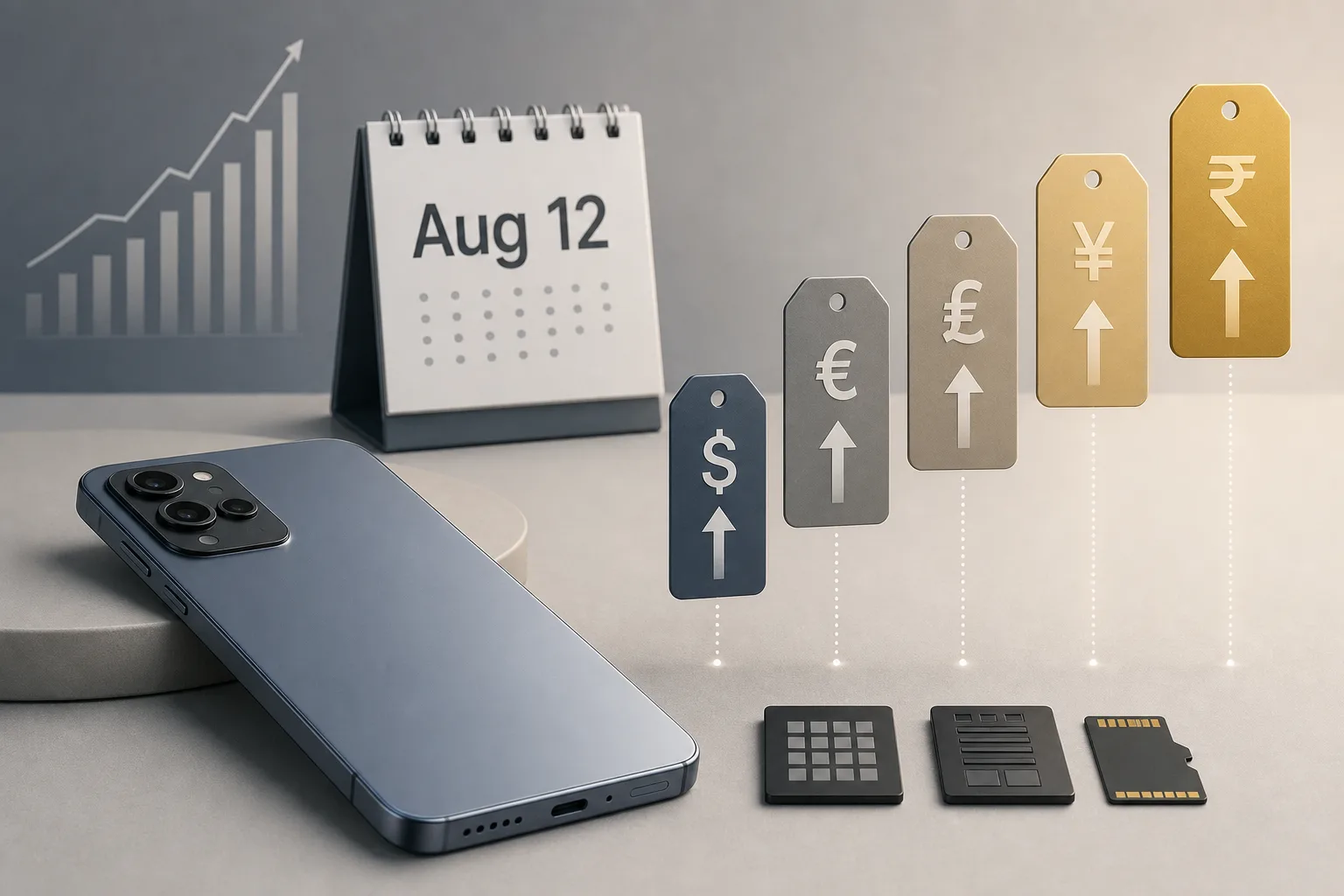
The next Made by Google event is scheduled for August 12 in New York City. The invitation seen by The Verge and Ars Technica does not spell out every device, but the teaser shows a Pixel-looking phone, and the timing fits the expected Pixel 11 family. That part is simple. Google is about to show its next phones.
The discussion around the launch is not simple at all. Almost as soon as the event date landed, the phone itself became less interesting than the price. Reports from 9to5Google, Ars Technica, Droid Life and Android Authority point to a European leak in which parts of the Pixel 11 line move away from 128GB entry models and start at 256GB. That sounds like an upgrade until the bill arrives: several reported configurations rise by about €100, and Android Authority argues that similar pressure could turn into a roughly $100 higher starting point in the United States.
None of those prices are official yet. Google has not announced final Pixel 11 pricing, storage tiers, camera specs, Tensor details or preorder bundles. That matters. A leak is not a price tag. But the shape of the leak is still useful because it exposes the buyer problem around flagship phones in 2026: the phones are mature, the upgrades look gradual, and the entry price keeps creeping upward.
This is not a story about Pixel 11 being bad. It may turn out to be a very good phone. The question is whether it will be a good purchase at launch, especially if the design looks familiar, the camera bar remains recognisably Pixel, the processor upgrade is incremental, and the cheaper storage tier disappears.
What Google has actually confirmed
Google has confirmed the event, not the full product sheet. The Verge reports that Made by Google will take place on August 12 in New York City at 6PM ET. Ars Technica also reports the August 12 date and notes that the invite image clearly looks like a Pixel device even if the text does not list the phones by name.
That is the firm ground. Everything else should be sorted into two buckets: likely but unconfirmed, and pure buyer speculation.
Likely but unconfirmed: Pixel 11, Pixel 11 Pro, Pixel 11 Pro XL and Pixel 11 Pro Fold are expected because Google has used this broader family structure before and because leaks around those model names have been circulating. The Verge mentions leaks suggesting slimmer bezels on the base Pixel 11, a darker camera bar, a slightly thinner Pixel 11 Pro and a thinner Pro Fold with a redesigned camera bump.
Still unconfirmed: exact prices, exact storage tiers, battery capacities, charging speeds, Tensor G6 performance, camera hardware, trade-in offers, launch promotions and whether a rumored design feature such as Pixel Glow will be genuinely useful or just visually distinctive.
For buyers, this distinction is important. It is fine to use leaks to decide whether to wait for the event. It is not fine to preorder emotionally before the official numbers and review data arrive.
The price leak matters because it changes the entry point
The most sensitive part of the leak is not simply "Pixel costs more." It is the possible removal of the cheaper 128GB starting point on at least some models.
9to5Google summarizes the reported European storage and price structure: Pixel 11 and Pixel 11 Pro would start at 256GB rather than 128GB, with Pixel 11 at €999 and Pixel 11 Pro at €1,199. Pixel 11 Pro XL and Pixel 11 Pro Fold are also reported at higher prices in base 256GB configurations, with the foldable remaining in very expensive territory. Ars Technica and Droid Life repeat the same basic tension: the extra storage softens the blow for some buyers, but the starting bill still moves up.
This is the trick with storage-based pricing. A company can say, accurately, that you are getting more storage for the money. Many buyers will still experience the change as a price increase because they never wanted to pay for the bigger tier. If you were happy with 128GB because you use cloud photos, streaming music and a modest app library, 256GB is not a gift. It is a more expensive minimum.
There is also a psychological effect. The cheapest visible price sets the tone for the whole lineup. If the base Pixel moves from a more approachable entry to a near-flagship price, the phone stops feeling like a clever alternative and starts competing head-on with Samsung, Apple and OnePlus at their strongest.
The rumored hardware does not yet justify a blank cheque
The leaked design direction sounds evolutionary. That is not automatically bad. Mature phones should not change shape every year just to look new. A familiar Pixel body can be a strength if the ergonomics, cameras, repair policies and software improve.
But a higher launch price needs a stronger case. So far, the public rumor set does not clearly provide one.
Tensor G6 may improve efficiency and AI performance, but Google’s Tensor chips have often been judged more by thermals, modem behaviour and sustained performance than by peak benchmark claims. If Google wants buyers to pay more, real-world battery life and heat management will matter more than stage demos.
Camera upgrades will matter too. Pixel phones have a strong photography reputation, but that reputation cuts both ways. Because the baseline is already good, small image-processing improvements may not convince Pixel 9 or Pixel 10 owners to upgrade. Buyers need to know whether the sensors, lenses, video performance, zoom range and low-light results changed enough to show up outside a controlled keynote.
Charging is another practical test. Android flagships have been split for years between conservative charging speeds and much faster competitors. If Pixel 11 remains cautious on charging while asking more money, that will be an easy complaint for users who already feel the line is behind OnePlus and some Chinese-market devices on battery convenience.
Design details such as a glowing element may help the product feel new. They do not decide value by themselves. A light on the back is fun only after the phone has already passed the boring tests: battery, camera, signal, heat, durability, storage, repair, update policy and price.
Why the community reaction is sharper this year
The Pixel audience is not just reacting to one leak. It is reacting to a broader 2026 pattern.
Android Authority frames Pixel 11 as part of a year in which phones are generally getting more expensive. Samsung and Motorola have already moved prices up in parts of their lineups, and component pressure around memory and chips is a common explanation. 9to5Google uses the same context around memory and storage costs, while also pointing out that the removal of 128GB changes the way buyers experience the upgrade.
Reddit’s r/gadgets thread, visible through old.reddit RSS, shows the same anxiety in rougher language. One commenter expects the price hike to be "legendary." Another hopes Pixel stays a budget-friendly alternative as iPhones get more expensive. Another replies that Pixel has not really been a budget phone since the Pixel 5. That is not a scientific survey, but it is a useful signal: the old mental category of Pixel as the smart-value Google phone is under pressure.
The Verge and Ars Technica comment sections also show active discussion, with dozens of visible comments around the event and the price reporting. Again, comments are not facts. They are buyer mood. And the mood is clear: people do not mind paying more when the upgrade is obvious. They mind paying more when the product looks like last year’s phone with a new launch video.
For Pixel 8 owners: wait, but do not assume you need it
If you own a Pixel 8 or Pixel 8 Pro, Pixel 11 may be the first model that looks tempting on paper. You would be skipping two generations, so battery life, display brightness, modem behaviour, camera processing and AI features may all feel better.
Still, the launch price matters. A discounted Pixel 10 Pro after the Pixel 11 announcement could be the smarter buy if the Pixel 11 hardware step is small. Google’s long software support also changes the equation. If your current phone still gets updates and the battery is healthy, you do not need to upgrade just because the keynote exists.
The right move is to wait for reviews that measure heat, battery and camera consistency. Pixel phones often look best in feature demos and photo galleries. Daily use is where modem quality, charging habits and thermal management show up.
For Pixel 9 and Pixel 10 owners: the bar should be high
Owners of recent Pixels should be skeptical. If the leaked price increase is real, Pixel 11 has to earn money from people who already own a competent phone.
For Pixel 10 owners, the default answer should be no until proven otherwise. A similar design, a new chip, some AI features and a storage change are not enough by themselves. You should need a specific reason: your battery is weak, you want a foldable, your carrier gives a very strong trade-in, or reviews show a large jump in camera/video performance.
For Pixel 9 owners, the case is more mixed. A two-generation jump can make sense if Google improves the areas that bother you. But if your complaints are mostly about price, charging speed or Google’s tendency to reserve some features for newer models, wait for actual tests.
For first-time Pixel buyers: the best Pixel may not be the newest one
If you are coming from another Android phone or an iPhone, Pixel 11 could be a good entry into Google’s camera and software style. But the newest Pixel is rarely the only Pixel worth buying.
The best value window often opens after the new launch, when last year’s Pixel drops in price. A Pixel 10 Pro or Pixel 10 Pro XL with a meaningful discount may offer most of the experience for less money. A Pixel 10a or later A-series model may be better if you mainly want Google’s camera processing and long software support without flagship pricing.
This is where the 256GB issue becomes personal. If you need local storage for 4K video, offline maps, travel photos and games, a 256GB base tier is genuinely welcome. If you mostly stream, back up to the cloud and keep phones light, the missing 128GB model makes the entry price worse.
For camera buyers: do not judge by the keynote
Pixel phones have earned trust in still photography, but camera buyers should be careful with launch promises. The useful questions are specific.
Did the main sensor change? Did the ultrawide improve at the edges? Is telephoto zoom better in dim light? Is video stabilisation stronger? Does the phone keep detail without overprocessing skin and shadows? Does the camera app launch faster and stay reliable when the phone is warm?
Those answers come from reviews, not the event. If photography is the reason you are buying, do not preorder because of a montage. Wait for side-by-side comparisons against Pixel 10 Pro, Galaxy S26, iPhone 17 and OnePlus 15.
For foldable buyers: treat the Pro Fold as a separate product
The Pixel 11 Pro Fold, if the naming and leak structure hold, should not be judged like the slab phones. Foldables have different pain points: hinge durability, inner display crease, repair cost, app layouts, weight, battery life and insurance.
A thinner foldable with a redesigned camera bump could be attractive. It could also remain a very expensive compromise. If the leaked pricing is close, this is not an impulse upgrade. It is a device you buy because you already know why a foldable helps your work or media habits.
For many buyers, a discounted previous foldable or a competing Samsung foldable will be part of the comparison. For others, a normal Pixel Pro plus a small tablet may still make more sense.
The alternatives are stronger than they used to be
Pixel does not launch in a vacuum.
Samsung’s Galaxy S26 family will compete on displays, zoom cameras, ecosystem familiarity, carrier deals and broad retail support. OnePlus 15 will likely push hard on charging, performance and value. iPhone 17 will keep Apple users inside the iMessage, Watch, AirPods and app ecosystem. Older Pixels will become more attractive if discounts are aggressive.
That does not mean Pixel 11 has no place. Google still has real strengths: clean software, fast Android feature access, strong computational photography, long updates and useful call/screening features in supported regions. But those strengths must be weighed against hardware trade-offs and price.
A more expensive Pixel needs to win on the whole package, not only on being the Google phone.
The preorder checklist
Before putting money down, wait for the official storage and price table in your country. European leaks do not always convert neatly into U.S. prices, and carrier bundles can distort the real cost.
Check whether the base model you want still exists. If 128GB is gone, decide whether you actually need 256GB or are being moved into it.
Compare the launch price with expected Pixel 10 and Pixel 10 Pro discounts. The best phone deal in August may be last year’s model.
Wait for battery and heat testing. Tensor performance on paper is less important than whether the phone stays cool, holds signal and lasts a full day.
Check charging speed and charger requirements. A premium phone with slow or picky charging can feel old quickly.
Look at camera comparisons, not sample photos from the event. Pay attention to video, zoom, low light and moving subjects.
Check trade-in terms carefully. A high advertised trade-in can hide conditions, bill credits or carrier lock-in.
Check repair and warranty terms, especially for the foldable. A foldable screen problem can erase the value of a launch promotion.
Decide whether AI features matter to you outside the demo. If a feature is region-limited, cloud-dependent or tied to a subscription later, it should not carry the purchase decision.
Verdict
Wait for the launch and the first independent reviews. Do not preorder Pixel 11 only because the event is official.
Buy at launch only if Google keeps the price sensible in your market, the 256GB base tier fits your real storage needs, reviews show clear gains in battery, heat, camera and modem behaviour, and your trade-in deal is genuinely good.
Consider a discounted Pixel 10 Pro if Pixel 11’s upgrades look modest. Consider Pixel 10a or a later A-series phone if you want the Pixel experience without flagship pricing. Consider Samsung, OnePlus or iPhone if your priorities are zoom, charging speed, gaming performance, resale value or ecosystem.
Pixel 11 may be a strong phone. But in 2026, "strong phone" is not enough. When the starting price moves up, the upgrade has to feel bigger than a new storage floor and a familiar camera bar.
Related articles
Pixel 11 Pro Fold’s bend-test problem is really a buyer-risk problem
Google sells its new foldable as thinner, lighter and stronger. Independent stress testing says the old question has not gone away: at almost $1,900, buyers need to price durability, insurance and repair risk as part of the phone.
Pixel 11 trade-in reports show the hidden risk in phone upgrades
Pixel 10 owners report rejected Google Store trade-ins after ordering Pixel 11. The lesson: a trade-in is not a discount until the credit lands.
The iPhone 18 Pro’s variable-aperture camera is useful, but it is not a reason for everyone to upgrade
Apple’s iPhone 18 Pro adds a mechanical variable-aperture main camera, manual exposure controls, a new chip and better claimed battery life. Here is what those changes mean in ordinary photos, video, upgrades and buying decisions before full reviews arrive.
Official phone cases are now gadgets, and they deserve gadget-level skepticism
Pixel case and Pixelsnap complaints show why a $50 official case is no longer a harmless checkout add-on. Treat phone accessories like devices, not decorations.
Comments
Sign in to comment.
No comments yet.