People are buying smart-glasses detectors. That is the real warning for face-worn AI gadgets
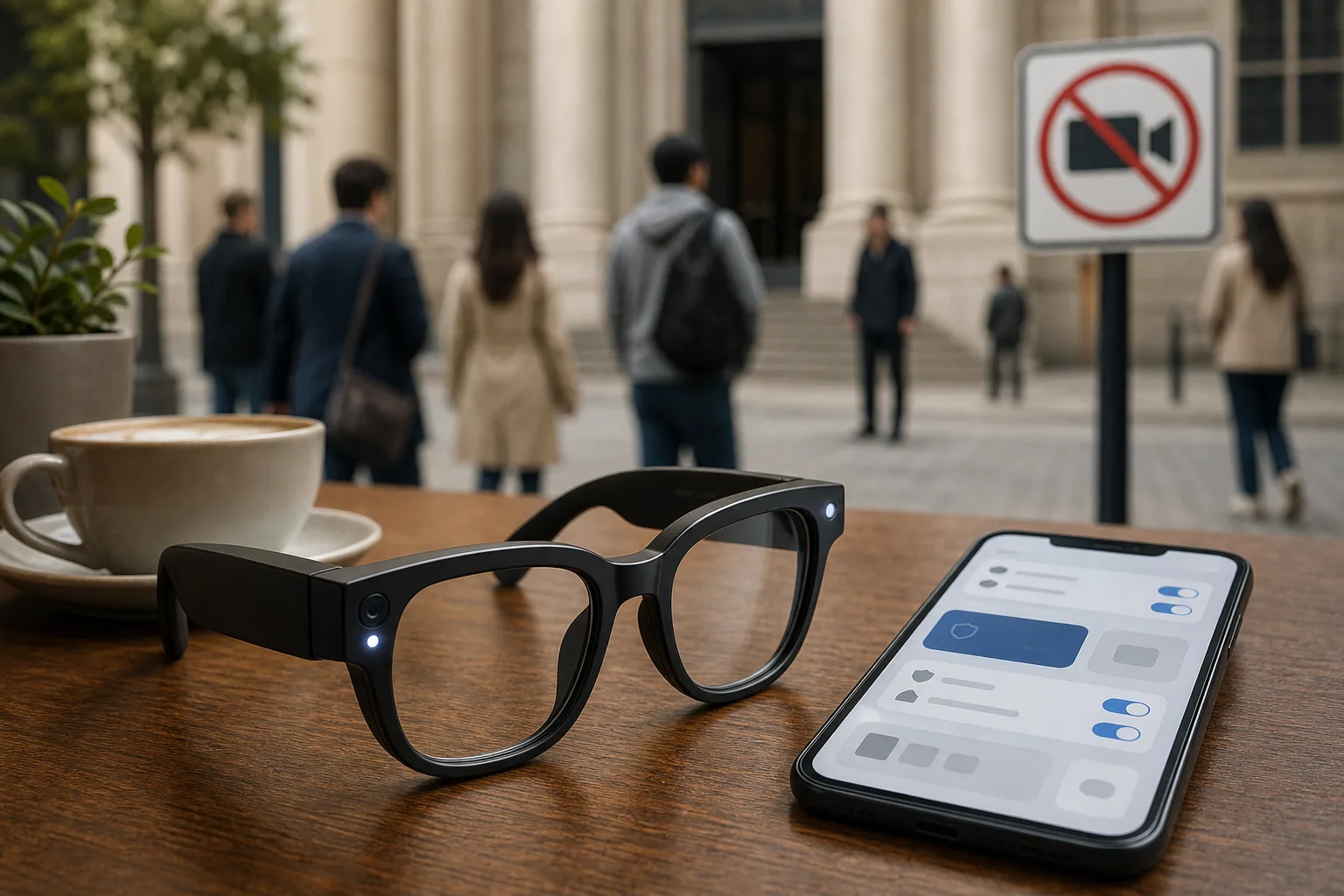
Antizuck is not a perfect way to find camera glasses, but its popularity shows that smart glasses now have to win the trust of bystanders, venues and buyers alike.

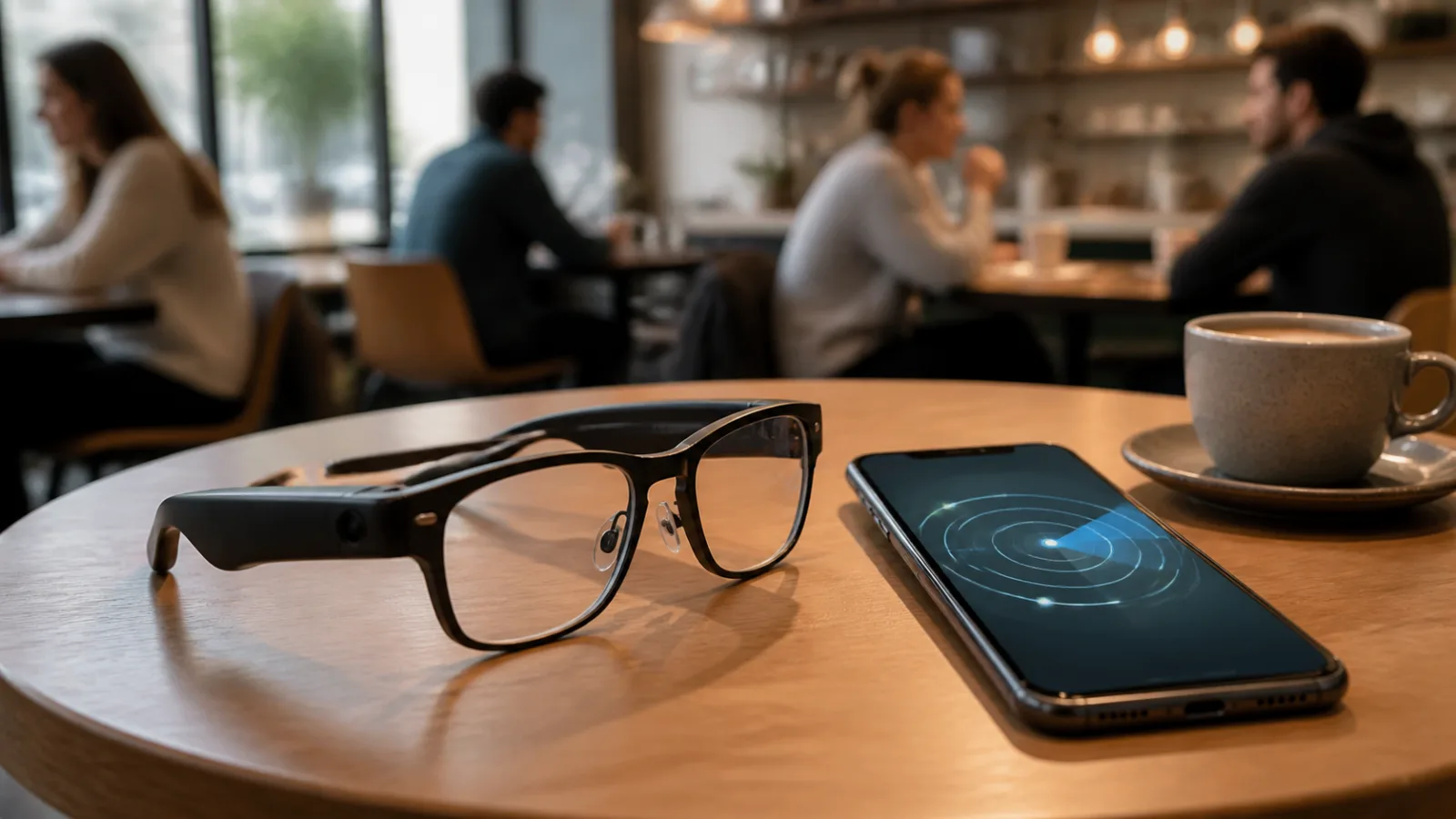
A $3 iPhone app briefly becoming one of the most visible paid downloads is not usually a hardware story. Antizuck is different. Gizmodo reported on August 5 that the app, which tries to spot nearby smart glasses by listening for Bluetooth signatures, had reached number three among paid apps in the iOS App Store and was still there when the story was written. That does not mean Antizuck is a magic privacy shield. It means a new consumer reflex has arrived: some people no longer ask only whether they should buy camera glasses; they ask how to live beside someone else who already did.
What Antizuck actually proves
Antizuck’s promise is simple enough to go viral. Open the app, let it scan nearby Bluetooth signals, and it tries to identify categories of connected eyewear. Gizmodo says the app claims support for Meta smart glasses, Snap Specs, RayNeo smart glasses and Amazon Echo Frames. In testing, the app sometimes detected Ray-Ban Meta glasses and could show rough distance ranges such as zero to six feet or six to twenty-five feet. It also missed some glasses outside its stated list, and the distance estimate could be loose. In a crowded place such as New York’s Union Square, knowing that smart glasses might be more than twenty-five feet away did not identify the wearer or the context.
That limitation is the important part. A Bluetooth scanner can reveal that a known radio signature may be nearby. It cannot tell whether the camera is recording, whether the user is taking a photo, whether the glasses are sleeping, whether the device has randomized its address, whether a different model is present, or whether the person beside you is using a non-camera audio wearable. It can produce false reassurance and false suspicion at the same time. Antizuck is useful as a smoke alarm for social discomfort, not as a courtroom-grade sensor for hidden filming.
The app’s popularity still matters. People do not usually pay for a detector unless the thing being detected has become socially ambiguous. A phone raised toward a scene is an obvious camera gesture. A small camera in a frame is not. The wearer may be looking, listening to music, asking an assistant a question, capturing a quick clip, or doing nothing at all. For bystanders, those states look too similar. That gap between technical state and social signal is where the market for anti-gadgets appears.
Why smart glasses feel different from phones
Camera phones normalized public recording, but they did not erase social cues. A person who lifts a phone, points it and taps the screen announces intent even when the announcement is imperfect. Smart glasses move the camera to the face, which is where conversation already happens. The wearer can look directly at someone while the other person wonders whether the gaze is simply a gaze or a recording interface. The device succeeds as a gadget because it disappears into normal eyewear; it fails socially for the same reason.
That is why the debate is not only about Meta or one app. The Guardian’s August 6 reporting captured the split well. Some owners said the glasses changed photography and daily use for the better. One user in The Hague said he was not spying and used them for walks and bike rides. A blind user in the UK described them as a real gamechanger because she could ask the glasses to describe what was ahead. Another buyer with severe hearing loss expected live captions to help, but said the feature worked in a quiet demonstration and failed in noisy group conversations. Other people described moving away in a cafe or becoming more wary in public because the camera was too discreet.
Those stories should stop both easy caricatures. It is lazy to call every smart-glasses owner a creep. Hands-free cameras, object description, navigation help, quick translation, live captions and assistant access can be genuinely useful. It is equally lazy to tell bystanders to stop worrying because a privacy policy exists. Bystanders did not buy the device, did not accept the account terms and may not know whether their face, voice or behavior is being captured, processed or used for an AI request.
The LED is necessary, but not enough
Meta’s July explanation says its AI glasses have a white capture LED that blinks when content is being captured for the wearer’s gallery. For a photo, Meta says it blinks briefly; for a video, it continues while recording. Meta also says the capture LED has no off switch, and that beginning with its second generation of glasses the camera is disabled if the LED is blocked. The company says it is updating the glasses to disable the camera if the LED is physically tampered with or destroyed. That is a real safeguard and should be credited as one.
But a light is not the same as trust. It must be visible in daylight, visible across a room, persistent enough to notice, hard to modify and tightly coupled to the camera state that matters. PrivacyGuides highlighted a July concern about reported plans for future Meta glasses to use extended camera analysis without activating the indicator for a so-called super-sensing feature; the report itself said plans could still change. The consumer lesson is broader than that rumor: if a camera can analyze surroundings without an obvious public state, people will stop treating the indicator as the whole answer.
The LED also cannot answer every question bystanders care about. Is this a gallery photo, an AI prompt, audio capture, live translation, local processing, cloud processing or a feature that stores nothing? How long is the data retained? Can a venue require a camera-off mode? Can a user prove the camera is off without asking everyone to trust them? The hardware indicator solves one slice of the problem. The category needs a clearer language for all the other states.
Where detector apps help, and where they do not
A scanner app can be reasonable in places where recording-capable eyewear is unusually sensitive: a gym, spa, clinic waiting room, classroom, private office, courtroom hallway, children’s event or support group. If a venue has a clear policy, a detector can help staff notice that a conversation is needed. It can also help ordinary people understand why they feel uneasy: the discomfort is not abstract paranoia; it is a response to a device class that hides a camera in a normal social object.
The same scanner becomes much less helpful on a train, street, concert line or crowded cafe. Bluetooth range is messy. Many devices advertise signals. Some eyewear may not be on the app’s list. Some glasses may be off, sleeping or using changed signatures. A phone can tell you that a signal exists without telling you which person, which lens, which feature or which action is involved. If the result makes everyone in the room suspicious of everyone else, the app has not restored trust; it has measured its absence.
That is why the right role for Antizuck-style tools is modest. They are not anti-camera force fields. They are consumer countermeasures that reveal a market failure. People are buying them because the device makers, app stores, venues and etiquette norms have not yet created an ordinary way to answer a basic question: am I being recorded, analyzed or merely looked at?
A buyer checklist before you put cameras on your face
First ask whether you need a camera model at all. Many people who want notifications, audio, captions, translation or an assistant may be better served by audio glasses, earbuds, a smartwatch or display-only eyewear. A camera is the feature that makes the product socially expensive. If you mostly want music and hands-free voice, do not buy the version that makes every meeting feel like a recording session.
Second, map the places where you would actually wear the glasses. A park, bike ride or solo travel day is different from a gym, school, hospital, bar, date, office meeting, court building or friend’s kitchen. If half of your useful moments happen in places where people reasonably dislike face cameras, the product may be less practical than the review score suggests. Prescription users also need a backup plan; if the glasses are your daily lenses, taking them off to respect a venue rule becomes harder.
Third, read the privacy controls before purchase, not after. Check how photos and videos are saved, when cloud services are used, what happens with AI requests, whether voice recordings are stored, whether human review is possible, how deletion works, whether settings differ by region and whether enterprise or family controls exist. If the answer is hidden in several help pages, that is a product signal too. A wearable camera should make its data flows easier to understand than a phone app, not harder.
Fourth, decide whether you can explain the device without sounding defensive. A good owner can say: these glasses have a camera; I am not recording you; I will take them off if you prefer; I ask before recording; the indicator lights during capture; I do not use them in changing rooms, clinics or private meetings. If that conversation feels unbearable, the product may not fit your social life yet.
Etiquette for owners
The basic rule is that face cameras require more courtesy than phone cameras, not less. Do not wear recording-capable glasses in locker rooms, bathrooms, medical settings, confidential meetings, classrooms with children, courtrooms or any space with an explicit no-recording policy. In smaller social settings, disclose before recording and accept a no without argument. In a cafe or bar, assume that a person who asks about the glasses is asking for reassurance, not picking a fight.
Owners should not hide behind the LED. The LED is a useful public signal, but it is small and many people do not know what it means. If someone is uncomfortable, folding the glasses, removing them or putting them in a case is a better trust gesture than explaining the specification. The Guardian’s earlier and current reporting around owners folding or removing glasses in crowded spaces shows why visible restraint can matter more than a privacy statement.
Creators need a stricter rule. If the point of the glasses is social content, treat bystanders as people, not texture. Do not film service workers, children, dates, intoxicated people, patients, students or people in distress just because the camera angle is convenient. If you would feel awkward raising a phone to capture the same scene, the glasses do not make it more acceptable.
Policies for venues and employers
Venues should not wait for a confrontation at the door. A simple sign can say whether recording-capable eyewear is allowed, must be removed, must be folded, or may be used only for accessibility with staff notification. Staff need a script that avoids accusing the wearer of spying: ‘We have a policy for camera glasses here; please put them away or speak with us if you need them for accessibility.’ That is calmer than improvising when a customer complains.
Employers should separate convenience from governance. Smart glasses can help field service, warehousing, training, translation and accessibility. They can also leak whiteboards, customer data, unreleased products and private conversations. A workplace policy should define approved models, recording states, storage locations, retention periods, consent rules, restricted rooms, visitor handling and exceptions for disability accommodation. The policy should apply to all camera wearables, not just one brand.
Accessibility deserves an explicit exception path. A blanket ban can punish people who use glasses to navigate, read signs, identify objects or follow speech. But an exception should not mean unlimited recording. A venue can allow assistive use while requiring no gallery capture, no posting, no face recognition and a clear response if another guest raises a concern. The goal is not to make disabled users justify themselves at every doorway; it is to design rules that preserve access without pretending the camera does not exist.
What manufacturers should build next
The next trust features should be physical, visible and auditable. A hardware shutter would be easier for bystanders to understand than a software promise. A larger capture indicator, or a light pipe visible from more angles, would help. A venue mode could disable gallery capture and show an unmistakable public state. A paired phone could display a clear camera-off status. Logs could let the wearer show when recording occurred without exposing the content itself. Local processing modes could reduce the fear that every glance becomes cloud data.
Manufacturers should also stop treating privacy as an FAQ problem. If a device lives on the face, privacy is part of the industrial design. The camera placement, indicator, shutter, sounds, app settings, onboarding, packaging and marketing should all teach the same norm: useful when invited, obvious when recording, limited when analyzing, respectful when refused. The companies that make this boring and legible will have a better chance than those that ask society to squint at a tiny light.
The practical verdict
Antizuck’s rise does not prove that smart glasses are doomed. It proves that the category has reached the stage where the non-buyer matters as much as the buyer. People will accept cameras in eyewear only if they can understand the state of the device, challenge it in sensitive places and trust that accessibility and convenience are not being used as cover for casual surveillance.
For buyers, the decision is no longer just battery life, camera quality and style. It is whether the product fits the rooms you enter and the people you meet. For owners, the winning habit is visible restraint. For venues, the answer is clear policy, not panic. For manufacturers, the message is blunt: if people feel they need detector apps to share a cafe with your gadget, the trust interface is not finished.
Related articles
The September Android Drop’s Most Useful Changes Are a New Memory for Your Stuff and a Better Way to Read in Motion
Google’s September Android Drop adds remembered items to Find Hub, Motion Assist for passengers, Guided Vision, and new Messages tools. Here is what each feature does, which phones need Android 16 or 17, and what to check before trusting it.
Snap Specs Put a Standalone AR Computer on Your Face. What the $2,195 Glasses Actually Change
Snap’s new Specs are a serious standalone augmented-reality computer, not a cheaper pair of camera glasses. Their value depends on whether you need hands-free spatial tools often enough to justify the price, weight, battery limits, and still-forming software ecosystem.
Meta's Kylie AI glasses make the camera harder to see. That is the problem
Meta's Starfire Kylie Edition turns AI glasses into a fashion purchase. The harder part is deciding what rules should follow when a camera looks like ordinary eyewear.
Smart glasses have a people problem, not just a privacy problem
Meta, Snap and Google can make camera glasses look normal. The harder question is whether bystanders will accept them.
Comments
Sign in to comment.
No comments yet.