UNA GPS Watch asks the right question about repairable wearables
A modular GPS watch with USB-C, a replaceable battery and an SDK is exactly what many wearable users want. The hard part is water, parts and trust.

UNA is the kind of gadget people want to root for before they know whether they should buy it. A GPS sports watch with USB-C charging, a replaceable battery, repair videos and an SDK sounds like the answer to years of sealed wearables, lost charging pucks and watches thrown away because one button or cell failed. That is why the watch hit Hacker News so hard on July 29: 219 points and 138 comments when checked, and the comments were less about hype than about the gap between a repairable ideal and a reliable sports tool.
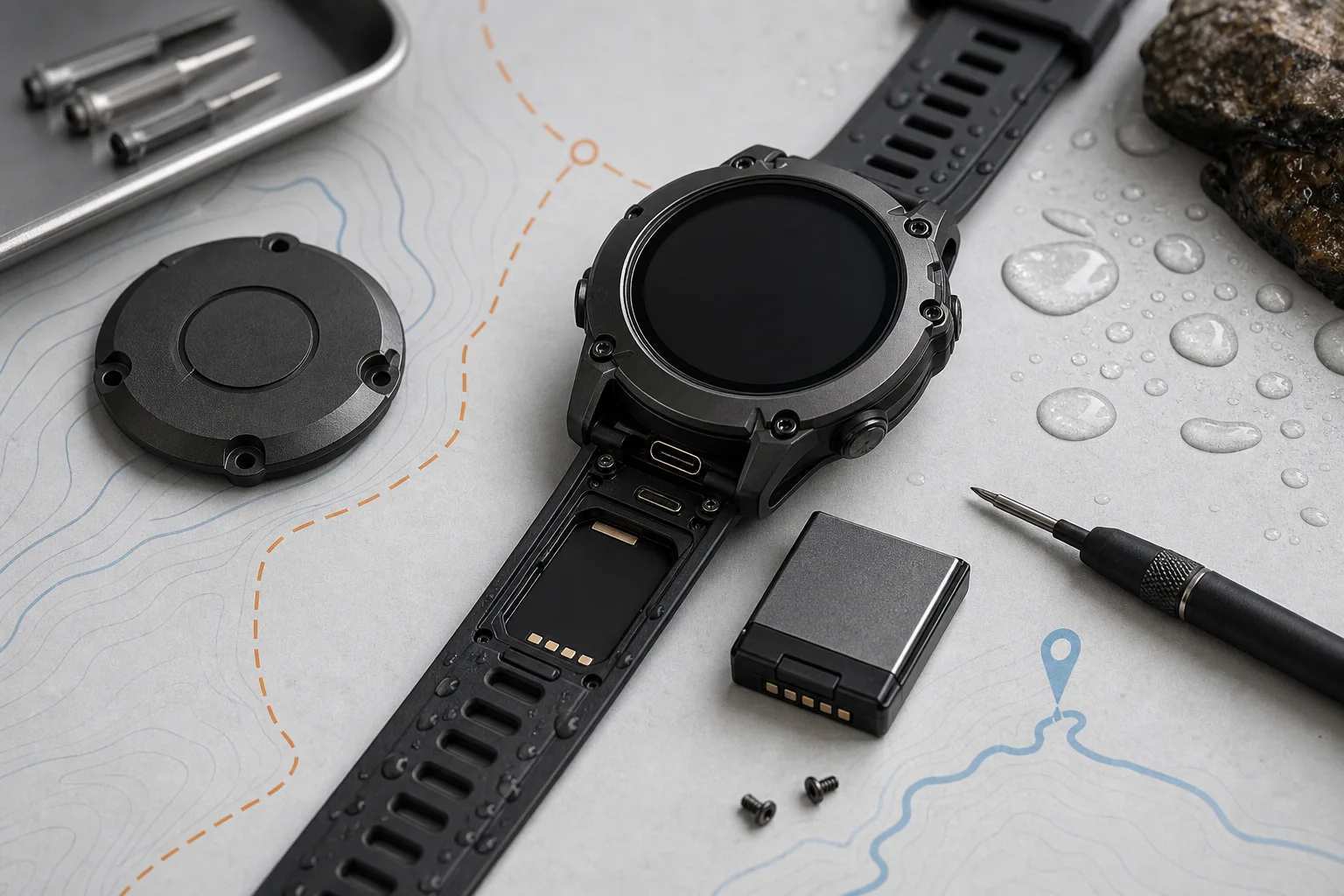
That gap is the story. UNA is not interesting because it is another smartwatch. It is interesting because it asks a sharper question: can a wearable be something you own, open, charge with a normal cable and repair, without giving up the things that make Garmin, Coros and Apple watches trusted on a run, ride or hike?
The official pitch is clear. UNA calls itself “The GPS Watch Built For Life” and says it is repairable, upgradeable and sustainable. The product page lists a 6-axis accelerometer, dual-frequency GPS, always-on heart-rate monitoring, USB-C charging, a fully modular design, claimed 10-day battery life, an open SDK and a barometric altimeter. It is aimed first at simple activity tracking for runs, rides and hikes, with iOS and Android apps and Strava sync.
The repair angle is not just marketing copy. UNA says the watch uses a 280 mAh hard-shell battery that can be replaced with a single screwdriver. Its repair videos page advertises guides for replacing the display and the battery. The Kickstarter page describes replacing a cracked screen, swapping a battery and eventually adding new sensor modules instead of replacing the whole watch.
That is exactly the pain wearable users know. The device on your wrist is exposed to sweat, rain, sunscreen, dirt, knocks, charging cycles and years of firmware changes. Yet most smartwatches are built like small sealed appliances. When the battery fades, the button fails, the screen cracks or support ends, many people replace the whole thing. UNA’s pitch is basically: why should a watch that costs hundreds of dollars behave like a disposable accessory?
USB-C is another obvious crowd-pleaser. Garmin’s charging clips and Apple’s magnetic pucks work, but proprietary chargers are annoying when you travel, lose a cable or lend a charger to someone else. UNA says it charges over USB Type-C, and the Kickstarter material says the connector is IPX8 rated. That does not make the whole watch a dive watch, but it does show the company knows the port is the first thing skeptics will attack.
And skeptics attacked it. The biggest objection in the Hacker News thread was water. One quoted UNA’s own wording that the watch is currently non-submersible because of its modular design, that swimming is not offered or advised, and that the device is IPX5 rated, meaning splash and shower proof to a high degree. For many sports-watch buyers, that is the line where interest cools. A runner can accept no maps. A developer can accept a young SDK. A triathlete, swimmer, surfer, kayaker or mountain user may not accept a watch that is not built for submersion.
This is not pedantry. Sports watches are judged by boring reliability. People buy Garmin Forerunner, Fenix, Instinct, Coros Pace/Apex or Apple Watch Ultra not only for bullet points, but because they expect the thing to survive weather, workouts and mistakes. A watch lives on skin. It goes under sleeves, into showers, through storms and sometimes into pools even when the owner did not plan carefully. Modularity is a virtue only if seals, spare parts and repair routines stay trustworthy.
The second objection is spare parts. Repairability is only real if parts are available at sane prices for years. In the HN thread, readers pointed to UNA’s accessories/parts situation and complained that display and battery parts appeared to be “coming soon,” with repair videos covering mainly those two components. That may change as production scales, but early buyers should treat it as a key check, not a footnote. A repairable watch without available batteries, screens, seals and tools is a promise, not a repair ecosystem.
The third objection is openness. UNA has public developer documentation, and the SDK docs describe setup, platform overview, tutorials and example apps. That is good. It is also not the same as fully open firmware, operating system, hardware schematics, bootloader policy and independent app distribution. HN users noticed the difference. One comment argued that calling the watch an “open source wearable” feels misleading if the visible open part is the SDK. The fair version is: UNA looks developer-friendly today; whether it is owner-sovereign is a separate question.
That matters because “open” has become a loaded word in gadgets. A watch can let developers write apps but still require a manufacturer account, a phone app, a cloud service or signed firmware. It can expose sensors through an API but keep health algorithms, sync paths and recovery metrics closed. None of that makes the product bad. It just changes what kind of openness buyers are getting.
The Garmin and Coros comparison is brutal because those companies are not selling ideals. They sell years of activity profiles, GPS tuning, heart-rate smoothing, training load, recovery metrics, maps, battery modes, route support, accessories and forums full of hard-won workarounds. Apple brings the broader app ecosystem, cellular options, excellent integration and a polished health platform. UNA does not need to beat all of that on day one, but it has to be honest about which users can live without it.
For a developer, maker or right-to-repair supporter, UNA is worth watching closely. If you mostly run, hike or ride in conditions where splash resistance is enough, and if you enjoy experimenting with first-generation hardware, the watch could be more interesting than another sealed black rectangle. The existence of a real SDK also gives it a different flavor from ordinary Kickstarter wearables. You are not just buying a tracker; you may be buying a small wrist computer you can extend.
For mainstream sports users, caution is the better default. Swimmers and triathletes should wait. People who rely on mature training-load or recovery algorithms should wait. Anyone who needs a proven navigation stack, durable waterproofing, robust spare-parts supply and years of firmware evidence should wait for independent reviews. A comment in the HN thread said only about 400 units were in the wild and that shipping had recently started; even if that count is informal, the broader point holds. There is not yet a deep public review base.
Kickstarter context also deserves a sober reading. Startup coverage from 2025 said the campaign targeted £500,000 through 2,500 pre-orders, with more than 13,000 pre-registrations and 3,000 deposits, and later reported strong early backing. That proves interest, not long-term product quality. Kickstarter hardware can become great. It can also get stuck between prototype charm and mass-production reality.
So the practical checklist is simple. Before buying, confirm the current price, shipping region and return policy. Check whether battery, display, seals, tools and other spare parts are actually in stock, not just promised. Read the water-resistance wording, not only the USB-C connector rating. Watch the repair videos and ask whether you would really open the watch yourself. Check whether the SDK license, firmware policy and data export match your expectations. Look for owner reports on GPS accuracy, HR accuracy, battery life, app stability, Strava sync and rain/sweat durability.
The verdict is not “buy” or “avoid.” UNA is one of the more interesting wearable ideas because it moves the conversation from features to ownership. But the first version should be treated like early-adopter hardware, not a Garmin replacement for everyone. If you want a repairable, hackable GPS watch and can live with the current water limits, it deserves attention. If you need a proven sports instrument that you can swim with, race with and forget about in bad weather, wait.
Even if UNA ends up compromised, the question it raises is the right one. Why are wrist computers still so hard to repair? Why do batteries and buttons end the life of otherwise useful devices? And why should a watch built for outdoor activity depend on a charging cable nobody else in your bag can use? The wearable industry has good answers for performance. It still owes users better answers for ownership.
Related articles

¿Merece la pena comprar Pixel Watch 5? Más salud y GPS, la misma duda de batería
Pixel Watch 5 mejora la experiencia Android, pero la compra depende de autonomía, confianza en Google Health, GPS real y alternativas más baratas.
¿Deberías comprar el Apple Watch Series 12? Los sensores de salud son nuevos, pero el motivo para actualizarse es limitado
El Apple Watch Series 12 incorpora mediciones cardíacas más frecuentes y una puntuación de preparación, pero la experiencia diaria sigue siendo familiar. Esta guía explica quién debería comprarlo, quién puede esperar y cuándo conviene elegir un modelo anterior o más barato.
¿Conviene comprar un anillo inteligente en 2026 o esperar a que se calmen las patentes?
El anillo inteligente sirve como rastreador nocturno discreto, pero suscripciones, ecosistemas y disputas de patentes cambian el coste real.

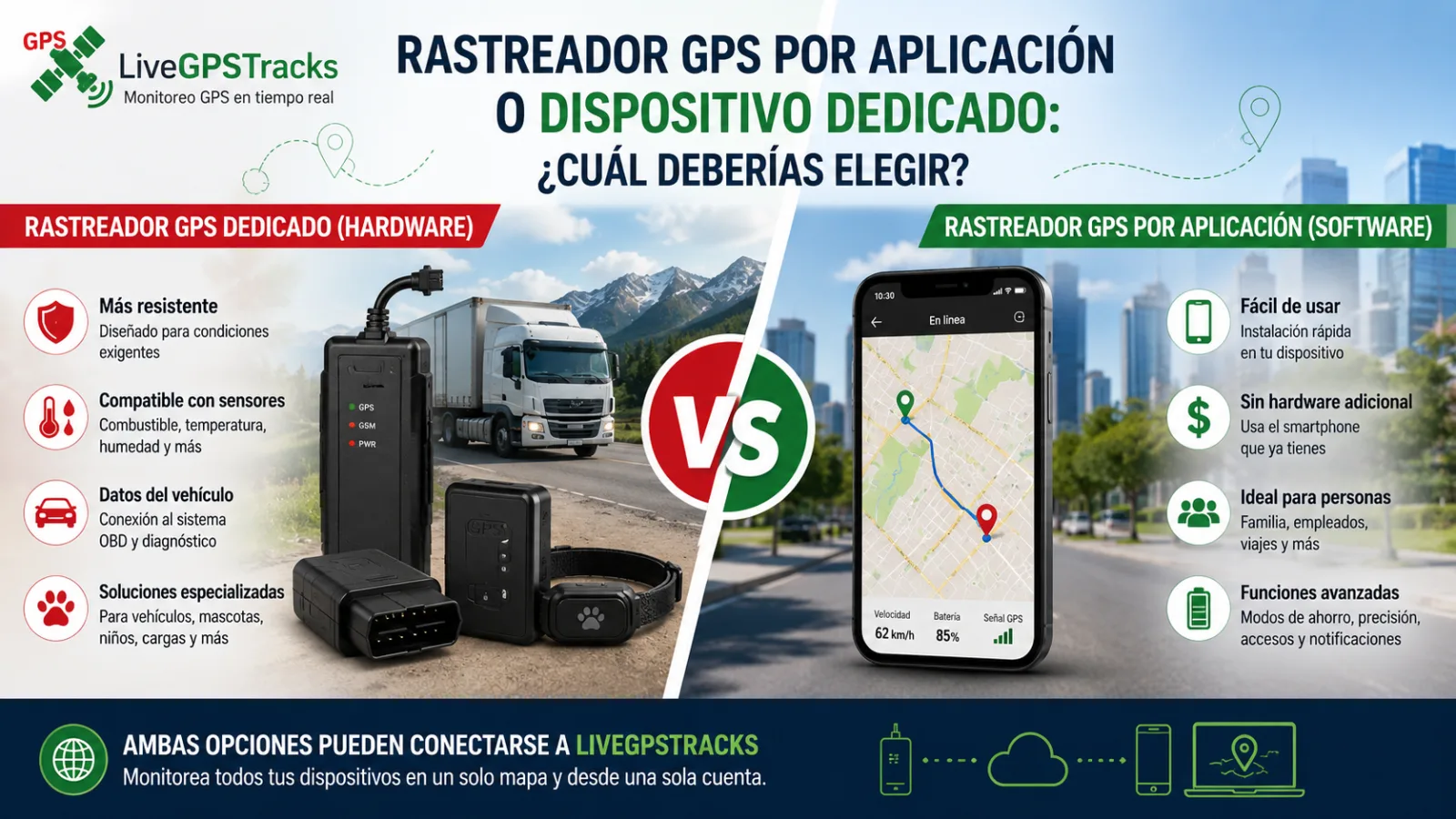
Rastreador GPS por aplicación o dispositivo GPS dedicado: ¿Cuál deberías elegir?
¿Aplicación GPS o dispositivo GPS dedicado? Descubre las diferencias, ventajas y limitaciones de los rastreadores por software y hardware, y encuentra la mejor solución para personas, vehículos, mascotas, flotas y necesidades empresariales.
Comments
Sign in to comment.
No comments yet.