The Practical 2026 USB-C Travel Charging Kit

A good travel charging kit in 2026 is less about maximum wattage and more about fewer wrong compromises. USB-C Power Delivery made one-cable charging realistic for phones, tablets and many laptops; Qi2 brought magnetic wireless alignment into the mainstream; G
A good travel charging kit in 2026 is less about maximum wattage and more about fewer wrong compromises. USB-C Power Delivery made one-cable charging realistic for phones, tablets and many laptops; Qi2 brought magnetic wireless alignment into the mainstream; GaN chargers made compact high-power bricks normal. The trap is buying the biggest number on the box and ignoring ports, cables and heat.
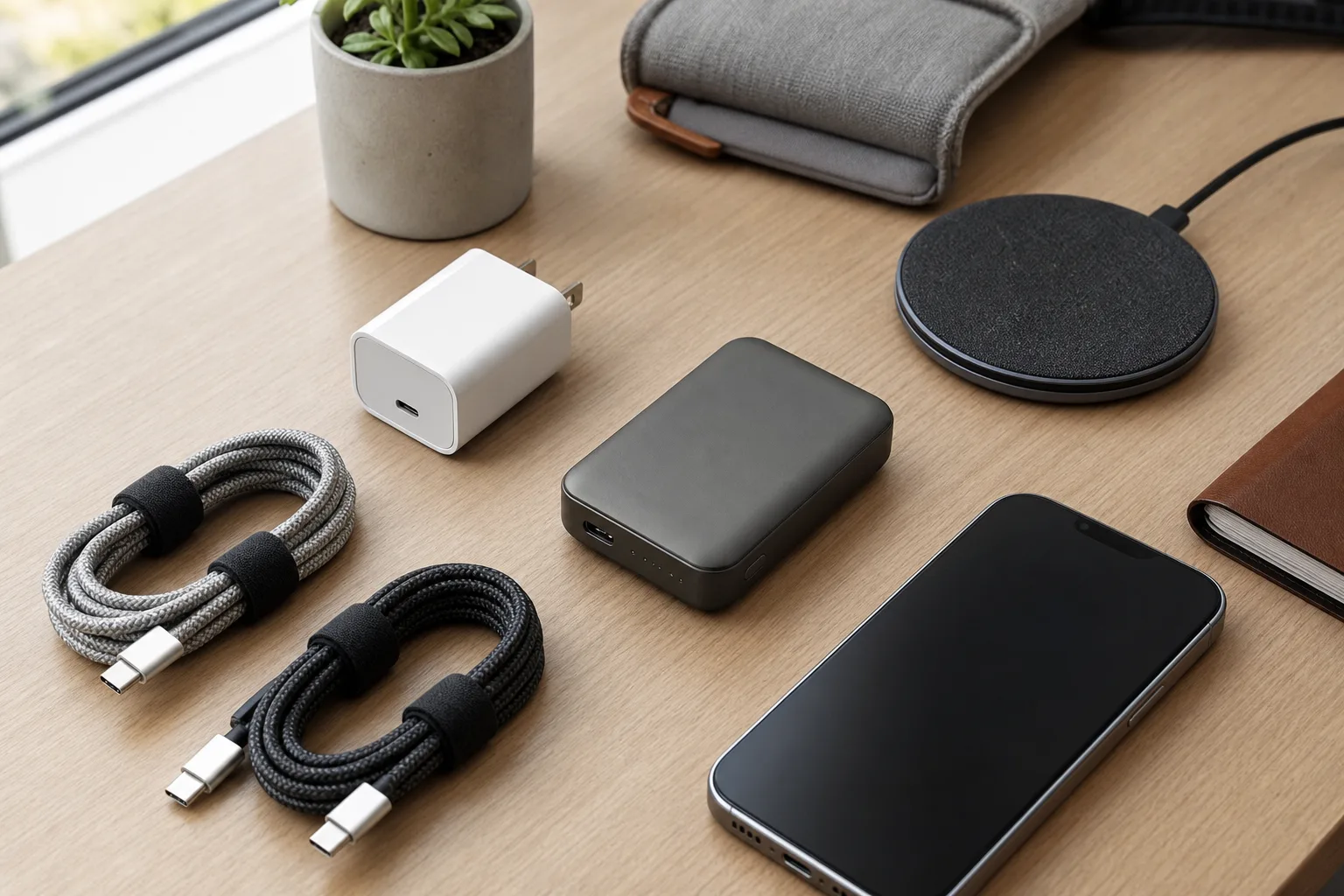
Start with the devices, not the charger
List what actually travels together. A phone, earbuds and e-reader do not need a 140 W charger. A laptop, tablet and phone probably do. USB-IF’s Power Delivery guidance matters because compatible devices negotiate voltage and current; the useful question is whether the charger can deliver the right profile while more than one port is occupied.
Many multi-port chargers advertise a headline wattage that drops sharply when the second cable is plugged in. Check the per-port split, not only the front label.
Cables are part of the system
A 100 W or 240 W USB-C cable with an e-marker is not glamourous, but it is the difference between a reliable kit and a mystery. Cheap unlabeled cables can make a good charger look broken. For travel, two short certified cables and one longer cable are usually better than a drawer full of almost-right spares.
Where wireless charging fits
Qi2 is useful for a bedside table or desk because magnetic alignment reduces the “woke up to 17% battery” problem. It is still not the best answer for fast emergency charging, heat-sensitive environments or charging inside a crowded bag. Treat wireless as convenience, not as the only plan.
What to buy
For most people, the sweet spot is a compact 65–100 W GaN USB-C charger with clearly documented port splits, a 10,000–20,000 mAh USB-C power bank that can both input and output at useful speeds, and certified cables. Skip mystery marketplace bundles, permanently attached cable bricks unless they match your exact use, and overpowered chargers that become bulky travel ballast.
The practical win is boring: one charger, honest cables, fewer adapters and enough headroom for tomorrow’s device.
Comments
Sign in to comment.
No comments yet.