Before Freezing Weather: A Safe Autumn Storage Plan for Garden Tools, Batteries and Hoses
A late-October storage plan for the equipment that fails quietly over winter: drain hoses, protect batteries, clean cutting tools and avoid the shortcuts that turn spring maintenance into repair work.

What Must Be Stored Before the First Hard Freeze
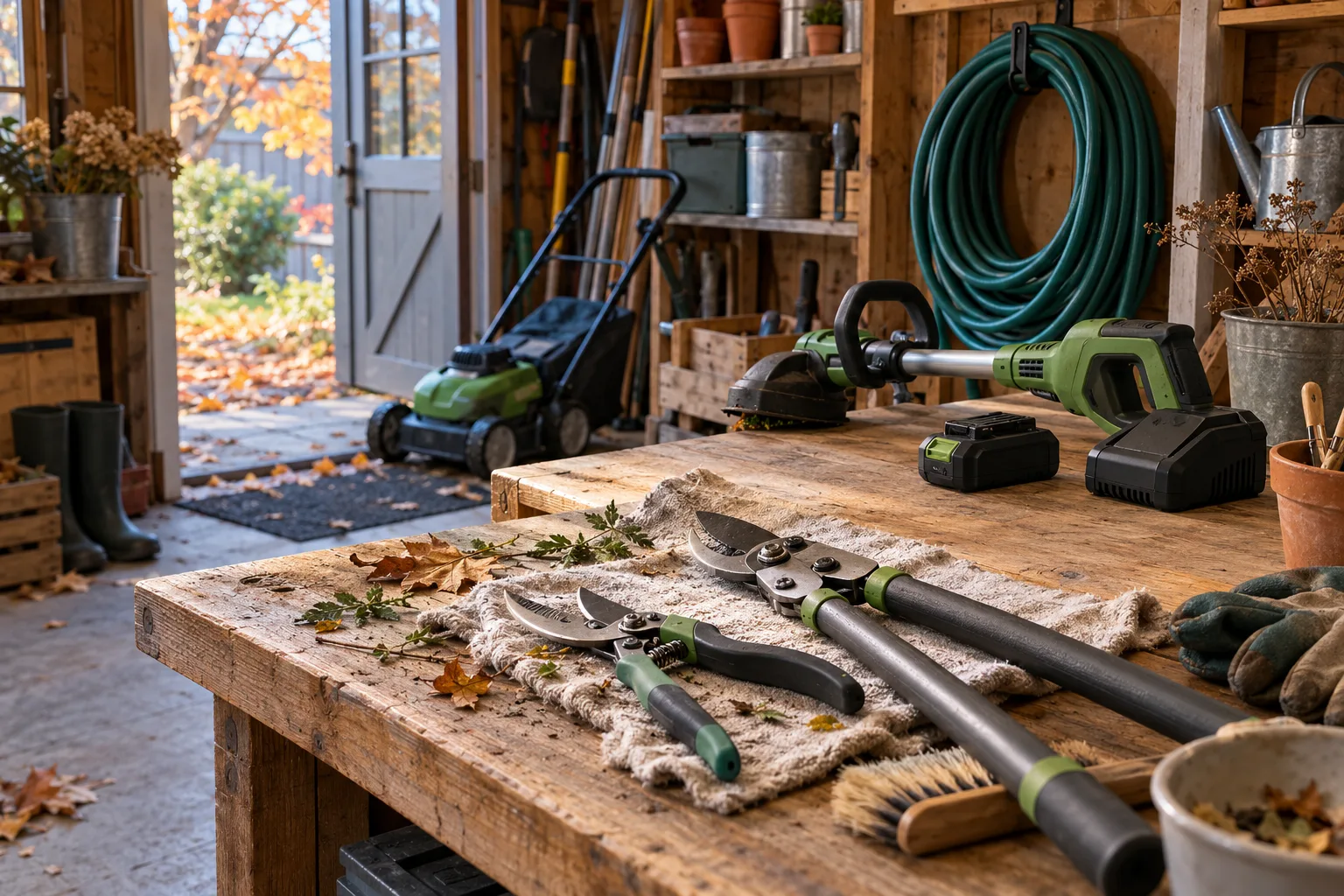
Autumn storage is not the same job as clearing leaves, protecting plants from a brief frost or shutting down an irrigation system. The equipment that needs attention is anything that can retain water, fuel, plant residue or electrical charge while it sits unused: hoses and sprayers, mowers and trimmers, pruners and other cutting tools, removable batteries and their chargers. The useful deadline is the first hard freeze expected in your area, but the exact timing depends on the local forecast. Use the forecast as a prompt to inspect equipment, then follow the manufacturer’s instructions for when and how each item should be stored.
The quiet failures usually begin with something left inside the tool. Water trapped in a hose, spray wand or fitting can freeze and stress plastic connections and seals. Moisture left on metal encourages corrosion, while soil, sap and plant residue can harden around cutting edges and moving joints. Winter-equipment guidance from Penn State Extension and late-season yard-care advice from Utah State University Extension both treat cleaning, servicing and suitable storage as part of preparing equipment for the off-season. The practical point is simple: winterization is a short maintenance task now, not a promise that every item will work immediately in spring.
Start with flexible water equipment. Disconnect hoses from taps and accessories, drain them as completely as possible and keep them away from standing water. Store them off the ground where practical, with fittings protected from repeated freezing. Sprayers need the same attention: liquid may remain in the tank, wand or nozzle even when the outside looks empty. Open the relevant connections and follow the product instructions for draining, rinsing and storage rather than relying on a quick shake.
Next address engine-powered equipment such as a mower or trimmer. Remove grass, leaves and packed soil from the deck, guard, underside and air-intake area, then let the machine dry before covering it. Handle fuel according to the engine manual; the correct procedure may involve draining the system or using an approved stabilizing method. Do not improvise by combining products or leave a fuel system in an uncertain half-finished state. A fuel smell, leak or damaged line calls for repair, not merely a better storage location.
Electric tools require a separate check. Remove detachable batteries before putting the tool away, inspect them for swelling, cracks, leakage or other damage, and store them separately in a dry, temperate place protected from weather. The battery manual takes priority over a generic checklist, including its instructions for storage charge, temperature and the specified charger. Keep chargers dry and protect their contacts. Do not charge a battery that appears damaged simply to find out whether it still works.
Cutting tools need less space but still deserve a deliberate finish. Pruners, loppers, shears and similar tools should be free of soil and plant residue, dried fully and checked for loose fasteners or damaged parts. University of Minnesota Extension cleaning guidance emphasizes removing debris before disinfecting, since dirt can interfere with effective cleaning. After cleaning and drying, apply a light protective coating to appropriate metal surfaces if the tool’s care instructions allow it. Keep lubricant away from grips and other areas that must remain clean for safe handling.
A quick inventory makes the pre-freeze work manageable:
- hoses, connectors, spray wands and sprayers, emptied and dry;
- mowers, trimmers and other powered equipment, cleaned and checked for leaks;
- pruners and other cutting tools, clean, dry and inspected;
- removable batteries, chargers and battery contacts, stored according to their manuals; and
- fuel containers and fuel-powered equipment, handled only as directed by the relevant instructions.
This checklist is about equipment winterization, not every autumn garden task. Plant protection, frost cloth, irrigation-system procedures and general cleanup are separate decisions. Here the question is whether each tool can spend the cold months clean, dry, safely de-energized and protected from avoidable moisture. If an electric-equipment manual conflicts with a broad storage tip, follow the manual. If conditions are uncertain, check the forecast again before moving equipment into an unheated shed or other exposed storage area.
Begin with the low-cost prevention: disconnect and drain water equipment, wash residue away, dry surfaces thoroughly, inspect housings and cables, and label anything that needs service before spring. Do not force a damaged connector, sharpen around a bent or cracked cutting part, or keep using a suspect battery because replacement is inconvenient. Winter storage cannot repair a failed seal, unsafe battery or leaking fuel system; it can prevent a sound tool from becoming a repair project simply because it was put away wet or dirty.
A Room-by-Room Winterization Workflow for Yard Equipment
Treat winterization as a short movement through the spaces where equipment actually lives: the shed for hand tools and hoses, the garage for powered machines and batteries, and the covered outdoor area for items that cannot be brought inside. The order matters. Clean first, dry completely, inspect while the parts are visible, and only then put equipment away. Utah State University Extension recommends cleaning and sharpening garden tools, treating them with oil or another rust-inhibiting product, disconnecting hoses from water spouts and winterizing mowers and rototillers by draining gas or adding fuel stabilizer according to the manufacturer’s recommendations. Utah State University Extension
Start in the shed with the tools that have had the most contact with soil, sap and plant residue. Use water and detergent to remove grime, then a stiff brush for dried soil and material lodged around joints or teeth. The University of Minnesota Extension notes that visible debris can interfere with disinfection and that pathogens may remain on tools even when they appear clean. That makes the end of the season a useful cleaning point: remove the residue, disinfect when the tool has been used on diseased plants, and allow every surface to dry before storage. University of Minnesota Extension
Once pruners, loppers, shears, shovels and other metal tools are dry, sharpen cutting edges where needed and apply a light coating of oil to exposed metal. Keep the coating on metal parts rather than plastic, rubber or drive belts; Penn State Extension warns that oil can accelerate deterioration of those materials and may make belts slip. A tool that has only surface dirt or light rust is usually a sensible low-cost maintenance task. A blade that is badly damaged, a joint that will not move after cleaning, or corrosion that has fused metal parts is a different category: note it for repair or replacement instead of forcing it and risking further damage.
In the hose area, disconnect every hose from the water source, drain it fully, and coil it loosely. Store it off the ground on a shelf, hook or other support where it will not sit in meltwater or damp soil. The aim is not a tight, compact coil but a dry one that does not place unnecessary strain on fittings. Inspect connectors as you go. If a fitting is already cracked or the hose has a split, label it for repair or replacement rather than returning it to the pile and discovering the problem during the first spring watering.
The garage is the place for a more deliberate equipment sequence. Brush or wash grass, soil and plant material from mowers, trimmers and other small machines, taking care around electrical components, bearings, chains and belts. High-pressure water or degreaser should not be directed at sensitive parts. Let washed equipment dry in open air before moving it into an enclosed space; Penn State Extension cautions that parking wet machinery in a humid enclosure encourages corrosion. If cleaning exposes bare metal, a light machine-oil coating can help protect it, provided the oil stays away from rubber, plastic and belts. Penn State Extension
For fuel-powered equipment, do not choose a universal storage shortcut. Read the operating manual for that specific mower, trimmer or cultivator and either empty the fuel system or use the recommended stabilizer. Utah State University’s guidance explicitly pairs draining gas or adding stabilizer with following manufacturer recommendations. Record what you did on a label attached to the machine or in a simple inventory note. That small record prevents uncertainty when several months have passed and also flags equipment that needs service before it is used again.
Remove detachable batteries from cordless tools and store them separately from the machines after inspecting the casing and contacts. Wipe dirt from the contact area with a dry, suitable cloth and keep the battery and charger dry. Do not leave a battery hidden inside a tool where a leak, swelling or other visible change could go unnoticed. The Consumer Product Safety Commission reports that battery and charger incidents, including overheating and fire, have occurred during storage as well as charging, and emphasizes that the battery, product and charger should function as a compatible system. U.S. Consumer Product Safety Commission
A small materials tray is enough for most of this work: detergent, water, a stiff brush, clean cloths, a sharpening tool, a suitable light oil, labels and a container for small parts. Add the manufacturer-specified fuel stabilizer only when the manual calls for it. These are inexpensive, reversible maintenance steps. Reserve paid service for repairs involving damaged blades, seized mechanisms, fuel-system problems, electrical faults or equipment that cannot be safely inspected and tested at home. In the covered outdoor area, prioritize keeping machines protected from moisture and direct weather, while moving batteries, chargers and the most moisture-sensitive equipment into the driest suitable indoor location. The goal is a clean, dry and documented handoff to winter, with no wet hose, oily belt or unexamined battery buried in storage.
Battery, Fuel and Electrical Safety in Cold-Weather Storage
Cold-weather storage is safest when batteries, fuel and electrical equipment are treated as separate risks rather than packed together in one corner of the shed. Remove cordless-tool batteries before storage, inspect the pack and contacts, and wipe away dirt or moisture. Keep batteries in a dry, temperate place, away from condensation, direct heat and accidental impact. The tool manual should determine the exact storage and charging instructions. A cracked, swollen, leaking or otherwise damaged battery should not be connected to a charger or returned to service.
Use only the charger specified for the battery system. A charger that fits is not necessarily the correct charger, because the battery, device and charger are intended to work as one system. Charge on a stable surface away from paper, fuel cans, paint, solvents, sawdust and other combustible materials, then disconnect the charger when charging is complete. Do not charge a battery that has been dropped, crushed, exposed to water or visibly damaged; follow the manufacturer’s service or disposal instructions instead. The U.S. Consumer Product Safety Commission’s battery guidance notes that hazards can occur during use, storage and charging.
The storage location matters as much as the battery itself. A garage may be suitable if it stays dry and the packs are protected from knocks. An unheated detached shed or outbuilding may be unsuitable when it is damp, prone to condensation, or also used for fuel and solvent storage. Do not leave batteries beside a heater, under a leaky roof, or loose with metal tools that could bridge the contacts. Keep chargers dry, protect them from freezing moisture, and follow any more restrictive temperature instruction in the equipment manual.
Gasoline-powered equipment requires a separate winterization decision. Before draining or stabilizing fuel, identify the engine manufacturer’s procedure for that machine. Utah State University Extension advises winterizing mowers and rototillers by draining the gas or adding fuel stabilizer while following manufacturer recommendations; its broader guidance also notes that draining is usually preferred unless the manufacturer says otherwise. Do not overfill the tank, mix products without checking instructions, or assume that every mower, trimmer and small engine uses the same procedure.
Store gasoline only in an approved, clearly identified container with its cap secure. Keep it upright and away from flames, pilot lights, heaters, electrical sparks and other ignition sources. The area must be suitable for fuel storage and ventilated; a closed occupied room is not a substitute for a safe storage location. Do not place fuel beside a battery-charging station or under equipment where a slow leak could collect. Penn State Extension’s winter equipment guidance supports treating the storage site as part of the maintenance job: machinery should be protected from weather and positioned for safe access and inspection.
Before moving a mower or trimmer into a garage, consider the whole room. Is the equipment clear of a furnace, water heater, charging shelf and cord clutter? Could fumes be trapped, or could a child reach a blade, fuel cap or battery? A covered outdoor area may keep rain off while still exposing equipment to freezing damp; an enclosed shed may be drier but poorly ventilated. Local climate and building layout therefore matter. Use the forecast to choose when to prepare equipment, but use the manual and the actual condition of the storage area to choose how.
A simple separation rule prevents many mistakes: batteries and chargers in a dry protected place; gasoline in approved containers away from ignition and charging areas; fuel-powered machines clean, stable and accessible; and damaged items kept out of service. Do not connect a swollen battery merely to test it, and do not start an engine indoors to see whether old fuel survived. If there is a fuel odor, leaking container, damaged machine or compromised battery, stop casual handling and follow the manufacturer’s service or disposal route.
The Spring Test That Finds Damage Before the First Busy Weekend
Treat every stored tool as untested until it has passed a deliberate spring inspection. Begin with equipment switched off and disconnected from its battery or fuel supply. Look for cracked hose fittings, split couplings, corrosion around metal connections and signs that water remained inside. Freezing water can damage irrigation components and hoses, which is why extension guidance recommends disconnecting hoses and draining systems before winter. A hose or fitting that looks intact should still be tested gradually; if it leaks, replace the damaged part before returning it to service.
Inspect pruners, shears, loppers and other cutting tools for blunt, loose or misaligned parts. Remove soil and plant residue, then clean and dry the tool before deciding whether it needs sharpening or repair. University of Minnesota Extension recommends cleaning tools in fall before storage, or in spring if that work was missed, and notes that visible debris can interfere with disinfection. Light residue and surface rust may be manageable with cleaning, sharpening and a suitable light oil, but a damaged blade, unsafe pivot or guard that no longer works should be repaired or replaced rather than forced into use. University of Minnesota Extension
Powered equipment needs a slower pre-start check. Examine cables, housings and connectors for cuts, brittleness, corrosion or moisture. Check air filters for visible blockage where the owner’s manual permits cleaning, and inspect guards, belts and other exposed parts. Look for fuel odor around engines, tanks and containers. Do not switch on equipment with a damaged cable, an unexplained fuel smell or a battery that is swollen, cracked or otherwise damaged. The U.S. Consumer Product Safety Commission identifies overheating, fire, electrical shock and other hazards involving batteries and chargers, including incidents occurring during storage and charging; use the battery and charger as the matched system specified for the tool. CPSC battery guidance
A damaged battery is not a spring experiment. Isolate it from normal equipment storage, do not charge it to see whether it still works, and follow the manufacturer’s disposal or service instructions. A charger or battery that was stored damp should be dry and inspected before use. If the condition is uncertain, stop at the inspection stage and ask the manufacturer, retailer or qualified service provider what to do. The cost of replacing one suspect battery is easier to control than the consequences of using a damaged high-energy component.
Check fuel systems before starting an engine. Replace a cracked or leaking container, and do not try to solve an odor problem by topping up fuel or overfilling a tank. Store fuel only in a suitable closed container, with ventilation and separation from flames, heaters and other ignition sources. For draining, stabilizing or restarting a small engine, follow the engine manual: Utah State University Extension lists draining gasoline or adding fuel stabilizer as winterization options, subject to manufacturer recommendations. If fuel has leaked or an engine will not start after a basic inspection, move the repair to a properly equipped service shop rather than repeatedly starting it in an enclosed garage. Utah State University Extension
Make a short inventory label before putting equipment back in regular storage. Note which batteries belong to which tools, whether fuel was drained or stabilized according to the manual, and which items need a new fitting, sharpening, battery or professional service. Mark anything that is not ready for use and keep it separate from working equipment. This small record prevents forgotten tools from being bought again and turns unresolved damage into a visible task instead of a surprise on the first busy weekend.
The avoidable mistakes are familiar: storing tools wet, leaving water in a hose, ignoring corrosion, overfilling fuel, leaving a charger connected without need, or charging a damaged battery. The spring routine should be simple: inspect first, clean and dry what is sound, isolate anything damaged, and test only equipment that passes the visual and safety checks. That final pause is the practical conclusion of winter storage: the goal is not to make every tool work immediately, but to identify what is safe, what needs attention and what should not be used at all.
Related articles
Before You Winterize the Garden: A Water-System Check That Prevents Spring Repairs
A late-season irrigation shutdown is more than opening drain valves. Inspect the backflow device, filters, buried lines, hose bibs and pump before the first freeze, then document what you found for spring.

The First-Frost Triage: What to Move, Cover, Clean, or Leave in the Garden This October
The first frost is not a single deadline for every plant. Use a short October triage to decide what belongs indoors, what can stay under a breathable cover, what needs greenhouse sanitation, and what is better left in the ground.
Late-October Fertilizer Check: When to Feed the Lawn, When to Stop, and What to Do Instead
Late October is not a universal “winterizer” window. The right decision depends on grass type, active growth, soil temperature, recent feeding, and local rules. Here is a practical way to avoid wasted fertilizer and winter-sensitive growth.


Small-Batch September Jam: A Plum and Fig Refrigerator Spread Without Canning
September’s glut of plums and figs is ideal for a small batch of jam, but you do not need a canning setup. This stovetop spread is designed for the refrigerator or freezer, with practical guidance on texture, substitutions, storage and ways to use it.

Comments
Sign in to comment.
No comments yet.