Before You Winterize the Garden: A Water-System Check That Prevents Spring Repairs
A late-season irrigation shutdown is more than opening drain valves. Inspect the backflow device, filters, buried lines, hose bibs and pump before the first freeze, then document what you found for spring.

The job is a system shutdown, not a single drain
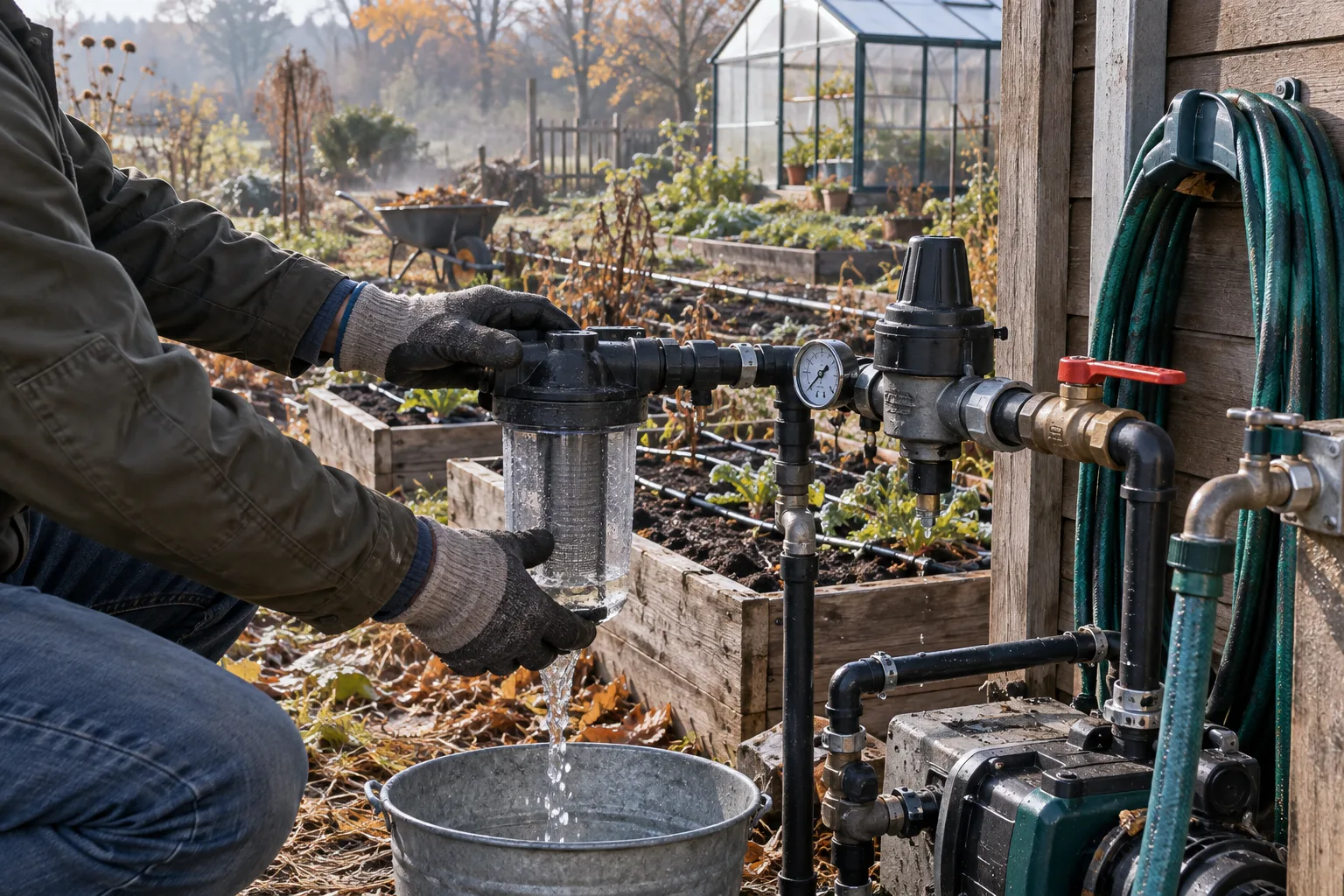
Irrigation damage in winter usually comes from water trapped in a component that was never included in the shutdown plan. A hose is emptied, but the filter bowl stays full. A valve box is drained, but a low loop of poly pipe holds a pocket of water. The pump is unplugged, but the intake line is still charged. When that water freezes, it expands and can split plastic, crack a transparent filter housing or damage a fitting.
The practical goal is simple: by the time a hard freeze arrives, every part that can hold water is either protected from freezing or emptied by a method appropriate to that component. That means identifying the system before touching it. Draw a quick map if you have several beds, a greenhouse branch or a buried line. Mark the shutoff, backflow preventer, pressure regulator, filter, pump, valves, drains, hose bibs and any low points. A ten-minute sketch can save a long search for a leak next spring.
University and water-efficiency guidance agrees on the broad sequence: shut off the supply, release pressure, drain water-holding components and inspect the system for damage. The details vary by climate, pipe material and equipment. A small above-ground drip kit is not winterized in exactly the same way as an in-ground lawn system or a pump-fed greenhouse.
Local freeze timing matters more than a fixed calendar date. In parts of the northern United States, extension guidance places blowout work in October, but exposed equipment can freeze earlier than buried pipe, and mild regions may need only selective protection. Use the first sustained freeze forecast for your site as the deadline, leaving enough time for a dry work window.
Inspect while the system is still intact
The most useful inspection happens before you disconnect anything. Walk the entire route and look for damp soil, algae, cracked emitters, split tubing, loose clamps and fittings that have already been repaired more than once. A leak that is harmless in October can become a spring failure hidden under mulch. Wet spots, unusually green patches and pooling around sprinkler heads can also indicate leaks or poor adjustment.
Run each zone briefly if weather permits, then turn the water off and record what you see. This gives you a baseline for spring. Note weak spray, missing heads, clogged emitters, pressure changes and areas where water runs onto paths. EPA WaterSense recommends regular inspection for leaks, broken or clogged heads and inefficient spray patterns; the same observations are valuable before shutdown because they identify repairs that should not be buried under winter cover.
Check these components individually:
- Backflow preventer: identify the model and note whether it has test cocks, shutoff valves or an insulated enclosure. Do not bury, tape over or alter relief openings. Some devices require a specific drain-down procedure; follow the manufacturer’s instructions and local plumbing requirements.
- Filter: close the upstream supply, release pressure, remove the screen or cartridge and clean it. Drain the bowl completely. A clear bowl left outside is especially vulnerable because a small amount of trapped water can split it. Store removable parts where they will not be lost.
- Pressure regulator: check whether it has a drain or bypass arrangement. A regulator can retain water even when nearby tubing appears empty.
- Valves and valve boxes: open the system’s drain points and examine boxes for silt, standing water or roots. Do not fill a valve box with loose insulation that can absorb water and conceal a leak.
- Hose bibs and quick-connects: remove timers, splitters, sprayers and hoses. A frost-free faucet only works as designed when the hose is removed and the outlet can drain.
- Pump and tank: use the equipment manual to determine what must be drained, whether a plug should remain open and how to protect the intake. Do not run a pump dry to force water out.
Start with the water source and pressure
First close the irrigation supply at the dedicated shutoff. If the system uses a pump, follow the pump maker’s shutdown procedure: switch off the control, isolate power at the appropriate disconnect and prevent an automatic start while you are working. Never open a pressurized fitting simply because a controller has been turned off. Confirm that pressure has fallen before loosening a filter bowl, drain plug or union.
If the system shares a domestic line, leave household water available only if the irrigation branch is positively isolated. A shutoff that does not close fully is not a reliable winterization point. Repair or replace it before relying on it, and do not remove or disassemble a backflow assembly from a live line.
For systems connected to a well, pressure tank or booster pump, the shutdown may involve more than a garden faucet. Water can remain in the pump casing, tank connection, pressure switch assembly or exposed intake. The University of Minnesota’s winterization checklist specifically calls for draining water-carrying pipes, valves, tanks, booster pumps and pump casings where applicable. Follow the equipment manual because some pumps require a particular drain position or storage condition.
Keep electrical safety separate from plumbing safety. Turn off power at the intended disconnect before servicing a pump or controller, keep connections dry and do not use outdoor electrical equipment in standing water. If the system has damaged wiring, a missing cover or a control box exposed to moisture, stop and have it inspected.
Drain a small drip system methodically
For a garden-scale drip system, begin at the supply and work toward the farthest beds. Open the main drain or disconnect the downstream line only after pressure is off. Remove end caps from each lateral line and lift low sections so water can escape. Emitters themselves are not a dependable drain path; narrow passages can retain water, and mulch can hold the tubing in a sag.
Take apart timers, filters, injectors and pressure regulators that are rated for removal. Shake water from portable components, wipe threaded connections and store them above freezing. If a filter screen is dirty, clean it now rather than leaving the job for spring, when residue may have dried into a hard layer. Keep small parts in a labeled bag attached to the controller or stored with the system map.
Do not put antifreeze, automotive coolant or unapproved chemicals into a garden irrigation system. Products intended for one type of equipment may contaminate soil or water, damage seals or violate local rules. For a system that cannot be completely drained, use only a method and product explicitly approved by the equipment manufacturer and appropriate for the water source. In many home gardens, better access to low points and correct isolation is the safer solution.
A greenhouse branch deserves extra attention. It may be sheltered from wind but warmer during the day, which encourages condensation and repeated freeze-thaw cycles at night. Drain bench lines, misting manifolds and hose reels inside the structure. If the greenhouse will be heated, do not assume every corner will remain above freezing during a power outage.
Decide whether a buried system needs air
Some buried systems are designed to drain through automatic or manual drains. Others contain low spots that will not empty by gravity. A compressed-air blowout may be appropriate, but it is not a universal do-it-yourself step. The allowable pressure depends on pipe material and the components installed; excessive pressure can damage valves, fittings and sprinkler bodies, while compressed air can eject debris at high speed.
Utah State University Extension describes the basic choice clearly: shut off the main valve, set the controller to off, open each valve to release pressure and drain the system; where drainage is not enough, the system may need to be blown out with pressurized air. The university advises homeowners to consider an irrigation professional when air is required.
If you use a professional, ask what pressure and air volume the system requires, where the air will be connected and which component is being protected. Request a written scope that says whether the visit includes draining, blowout, backflow protection, pump service and spring restart. A vague “winterization” line makes it difficult to know what was actually done.
If you do the work yourself, use the system manufacturer’s instructions and proper eye protection, keep people away from outlets and open one zone at a time. Never stand over a sprinkler head or disconnected fitting. Air should push water out; it should not be used to spin a pump or pressurize a closed system.
Do not connect an air compressor directly to a household water line without a correctly arranged isolation and connection point. Backflow protection is not a substitute for safe procedure. If the system has a complex backflow assembly, a pump, a pressure tank or mixed pipe sizes, professional winterization is usually cheaper than replacing a damaged assembly in spring.
Protect exposed hardware after the water is out
Drainage reduces the risk, but it does not make outdoor equipment indestructible. Protect components according to their instructions. Remove portable controllers and batteries if the manufacturer says to do so. Cover equipment only with breathable, weather-appropriate protection; wrapping a wet assembly tightly in plastic can trap condensation and hide corrosion.
Insulation is not a substitute for shutting off and draining. It delays freezing, but it does not remove water from a valve, filter or fitting. Foam covers can help with exposed hose bibs and short branches when installed correctly, yet they are most useful as a second layer after the line is isolated. Keep relief openings, vents and drain paths unobstructed.
For a pump, protect the motor from precipitation while allowing heat and moisture to escape as specified by the manufacturer. Drain the wet end if required. If the pump is mounted outdoors, mark the disconnect and record the date it was taken out of service. A tag reading “irrigation winterized—do not energize” is a low-tech safeguard against an accidental start.
Store gauges, timers, filters and other removable accessories somewhere dry and above freezing when the manufacturer recommends it. A pressure gauge can be damaged by freezing even if the main pipe survives. Photograph the orientation of parts before removal; this is especially useful when a filter, regulator or injector can be installed in more than one direction.
Do not confuse lawn watering with system winterization
In a dry autumn, perennial turf and landscape plants may still need water before the soil freezes. The University of Minnesota notes that watering lawn and perennial landscape plants before soil temperatures freeze can help them enter winter without additional moisture stress. That final watering decision is separate from the shutdown itself.
If the ground is dry and a hard freeze is approaching, water early enough for the soil to absorb it and foliage to dry. Then allow the system to drain before freezing conditions arrive. Do not keep an automatic schedule running simply because plants still need occasional moisture. Change the controller to off after the final watering window, and make sure a rain sensor or smart controller cannot restart a zone unexpectedly.
The right timing depends on region, soil, plant selection and exposure. A coastal garden, high-elevation site, warm southern yard and continental vegetable plot will not share the same final watering date. Avoid treating a regional extension calendar as a universal rule.
What the shutdown should cost
A simple drip system may require only a few hours, a labeled storage container, replacement washers, a filter-cleaning brush and perhaps an inexpensive hose-bib cover. The cost rises when the system has buried zones, a backflow assembly, a pump or poor access to the shutoff. Professional pricing varies widely by region and system size, so compare the scope of work rather than the headline price.
The cheapest approach is not always the one with the lowest total cost. Skipping a filter drain can ruin a housing. Leaving a hose attached can defeat a frost-free faucet. Blowing out a complex system with an oversized compressor can damage the very valves the service was meant to protect. Buying a compressor for one annual job may also be poor value if the system has a backflow assembly or pump that still needs specialized handling.
A useful budget separates immediate repairs from optional upgrades. Immediate work includes leaks, failed shutoffs, cracked filters, damaged wiring and unsafe connections. Optional improvements might include a pressure gauge, labeled drain points, a dedicated isolation valve, a flow meter or a controller that adjusts watering to weather or soil moisture. Fix the failure that can cause damage before buying automation.
Leave evidence for spring
Winterization is easier to verify when you leave evidence for your future self. Photograph the shutoff position, filter orientation, valve-box locations and the connection used for draining or blowout. Write down which zones were weak, which emitters were clogged and where you found standing water. Add a note about the last watering date and whether the soil was already wet from rain.
A simple record can include:
- the date and forecast conditions;
- the location of the main shutoff and drain points;
- the method used for each zone: gravity drain, manual drain or professional blowout;
- removable parts stored indoors;
- leaks or repairs postponed until spring;
- the name of the contractor and the work included, if someone else performed the shutdown.
This record prevents a common spring mistake: turning on the supply without remembering that a filter was removed, a drain was left open or a valve box contained a known defect.
Restart slowly in spring
In spring, open the supply slowly and inspect before starting every zone. Look for leaks around the backflow device, filter, regulator and exposed unions. Run one zone at a time, keeping the controller off until you have checked the system by hand. Replace cracked tubing and failed emitters before covering them with mulch.
If pressure behaves differently from last year, stop and find the cause rather than compensating by opening every valve. A sudden pressure drop can point to a leak, clogged filter or damaged regulator. A sudden pressure increase can indicate a regulator problem or a valve that is not operating correctly.
Walk the property while each zone runs. Look for pooled water, broken heads, spray on pavement and dry areas that should be receiving water. EPA WaterSense recommends checking equipment after winter weather and correcting leaks and misdirected spray before returning to a normal schedule.
The mistakes worth preventing
The common failures are procedural, not mysterious. People drain the visible hose and forget the filter. They leave a timer attached to a faucet because the battery is still working. They insulate a full line and call it winterized. They use compressed air without checking pressure limits. They close the main valve but never release pressure. They restart a pump without checking whether the intake is flooded and protected.
A reliable shutdown has a clear endpoint: the supply is isolated, pressure is released, each water-holding component has been drained or protected according to its design, portable parts are stored, exposed hardware is safe and the system map records what happened. That is enough for most home gardens. The work is unglamorous, but it turns a frantic spring repair into a controlled restart.
Related articles
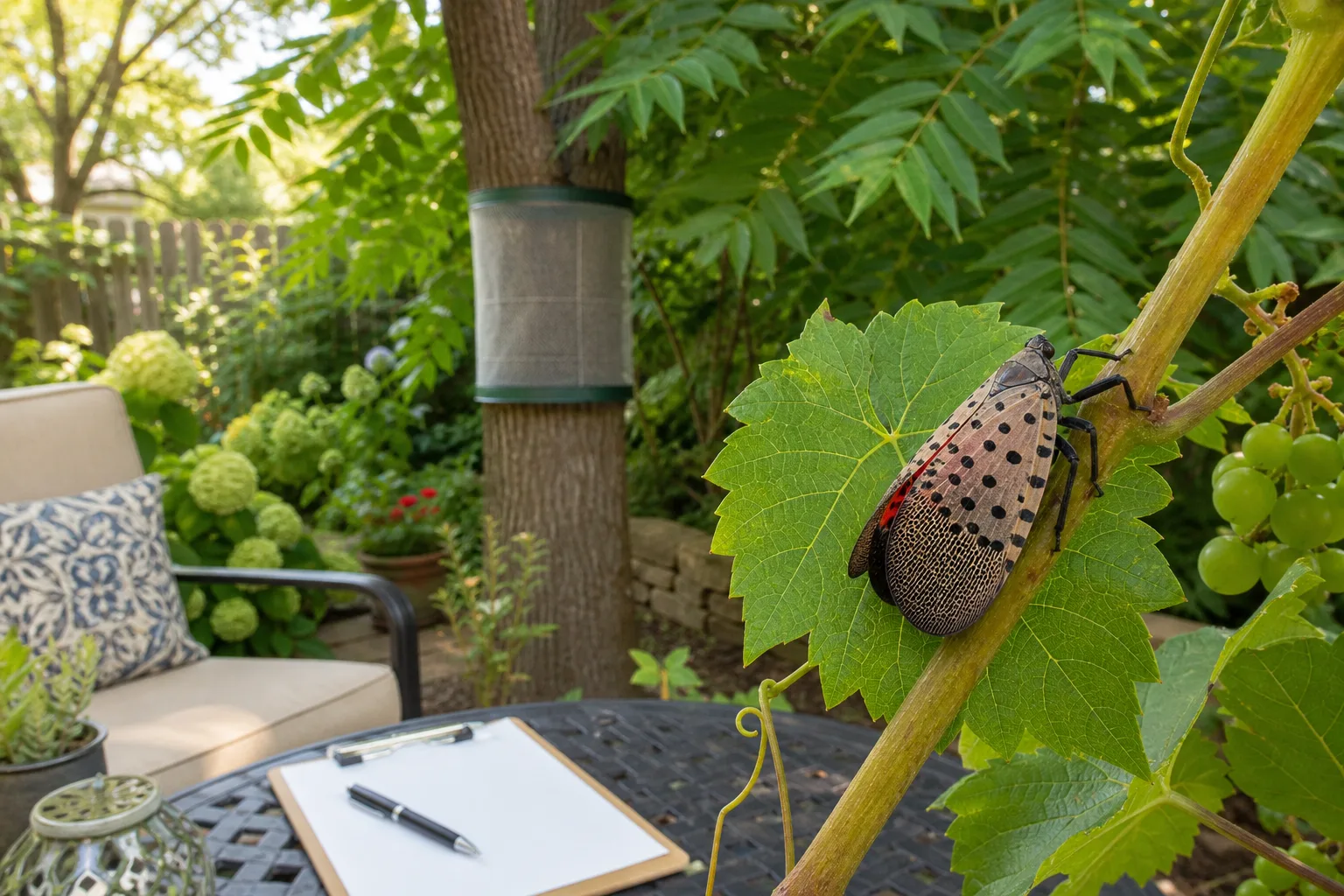
Spotted lanternfly in the yard: what to do before you spray
Adult spotted lanternflies are easy to spot in late summer. The practical response is not panic spraying, but ID, reporting, inspection and targeted control.

Before you buy a cheap TV stick, ask who else gets your internet
Some no-name streaming boxes are not just cheap gadgets. Recent KrebsOnSecurity and Bitsight research shows how a living-room streamer can become residential proxy and ad-fraud infrastructure.


Before You Pay: How the Payment Method Changes Your Fraud and Refund Options
A payment button can hide very different levels of protection. Here is how cards, bank transfers, payment apps and stored balances work, what recent enforcement actions reveal, and which checks to make before money leaves your account.


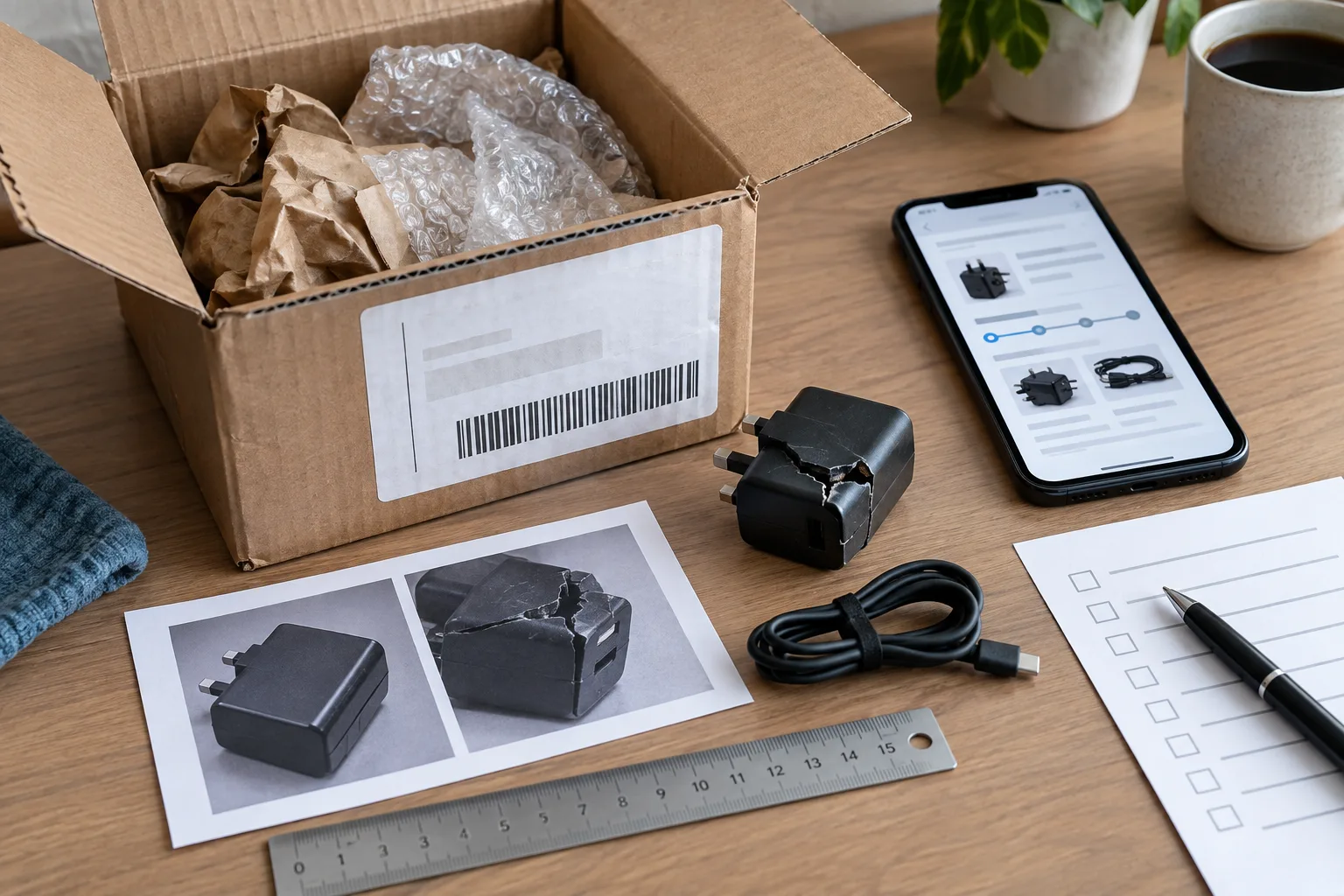
Before You Open an AliExpress Dispute: A Practical Evidence Checklist for Wrong, Fake or Damaged Orders
Marketplace bargains are easy to evaluate before payment and much harder after a seller sends the wrong item, a counterfeit or a damaged parcel. This guide explains what to record, what to submit, and when platform rules are not the same as local consumer rights.
Comments
Sign in to comment.
No comments yet.