Your garden is not a carbon vacuum, but it can still fight heat, drought and wasted work
The useful climate yard is not sold as an offset. It is designed for shade, water, soil, habitat and less maintenance.

A good climate garden starts with a disappointment: your yard is not a carbon-capture machine. A few houseplants will not fix stale indoor air. A lawn marketed as a carbon sponge will not offset a car. Two new trees do not erase a household's emissions by themselves.
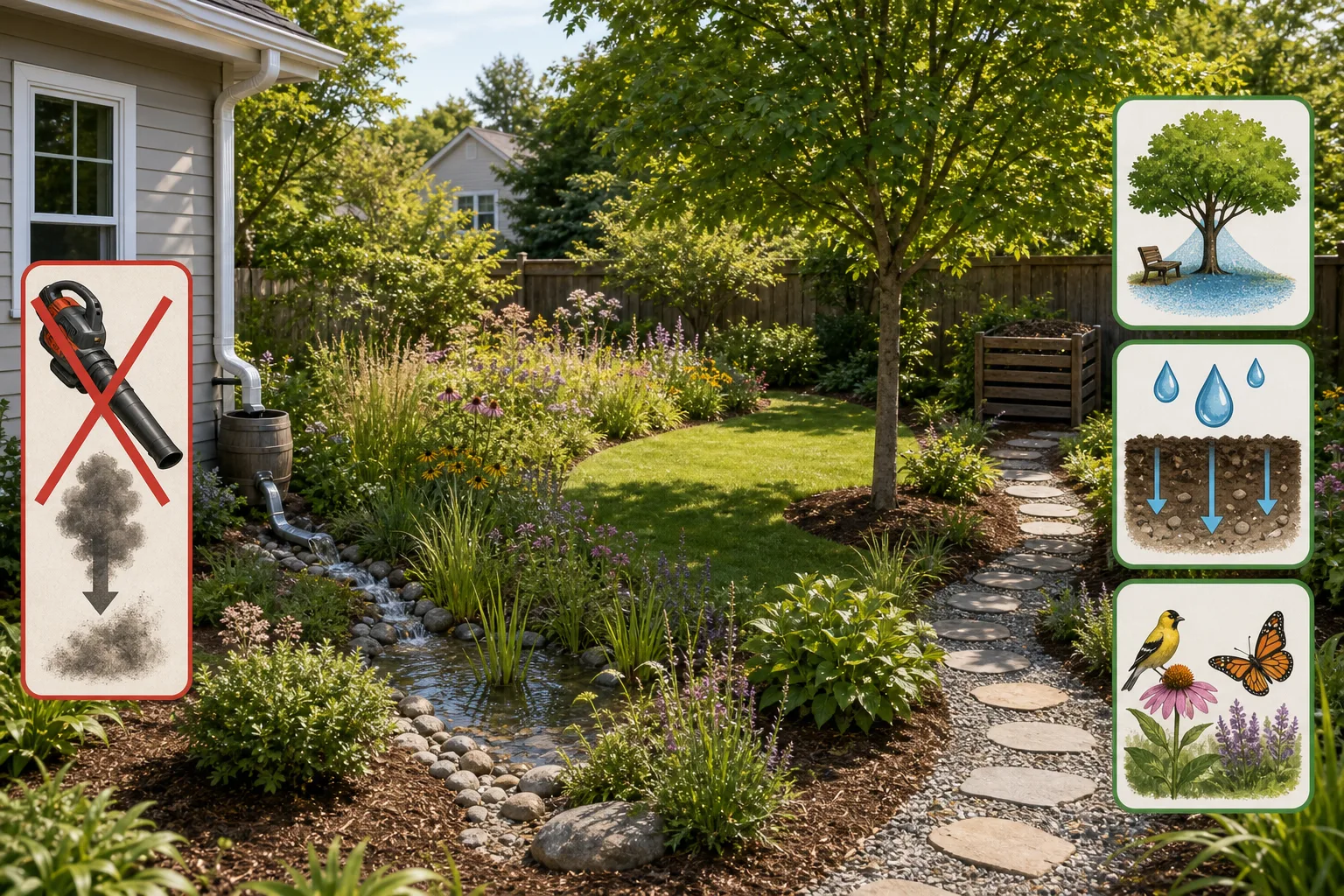
That sounds bleak, but it is useful. Once the carbon myth is out of the way, the real work becomes clearer. A garden can make a plot cooler, slower to dry out, better at handling heavy rain, cheaper to maintain, friendlier to insects and birds, and less dependent on mowing, fertilizer and constant irrigation. Those gains are local, practical and visible.
The current debate was kicked along by Dynomight's July 30 essay, "So you want to use plants to reduce indoor CO₂." The post used plain arithmetic to show why indoor plants are a terrible CO₂ scrubber at household scale. One person produces roughly 1 kg of CO₂ per day. Under the essay's assumptions, neutralizing that indoors would require at least 17.6 square meters of packed fern leaf surface, huge light input and continuous plant growth that must be removed from the room. The punchline was not subtle: open a window.
The Hacker News thread around the post had 122 points and 108 comments when checked. It quickly moved beyond indoor air. Commenters argued about trees, algae, fungi, soil respiration, biochar, lawns and whether backyard carbon claims make any sense. That is exactly the right argument for gardeners, because the most useful answer is not "plants do nothing." It is "plants are living systems, not one-way carbon vacuums."
Why the simple plant equals CO₂ fix story breaks
Plants photosynthesize, but they also respire. Soil life respires too. Leaves fall, roots die, mulch decomposes, fungi break organic matter down and some carbon goes back to the air. If you mow, fertilize, irrigate, haul bags of amendments, run a blower every weekend or replace plants every season, maintenance can erase much of the good story you wanted to tell.
Carbon sequestration is not just "green thing exists." It means carbon has been captured and kept out of the atmosphere for a meaningful period. A tree that lives for decades is different from annual bedding plants thrown away in October. Compost spread on soil is different from peat extracted from an ancient carbon store. A native meadow that needs little mowing is different from a thirsty turf lawn fed with nitrogen and clipped twice a week.
This is why small-yard claims should stay modest. A backyard can store some carbon in woody plants and soil. It can also avoid emissions by reducing mowing, synthetic inputs, peat use and water pumping. But unless you measure biomass, soil changes and maintenance inputs over time, "my garden offsets my life" is usually just a comforting story.
The garden jobs that matter this season
The strongest yard benefits are not abstract. They show up in August, when soil is hot, lawns brown, rain arrives in bursts and patios turn into heat plates.
Shade is first. A well-placed deciduous tree, hedge or pergola vine can lower surface temperatures, make a seating area usable and protect nearby planting from heat stress. Long-lived woody plants also hold carbon longer than annuals, but their local cooling value is the reason most households will feel first.
Water is next. The U.S. EPA's green infrastructure material lists rain gardens, planter boxes, green roofs and permeable pavements as ways to manage stormwater where it falls. For a yard, that means slowing water before it runs into the street: direct a downspout into a planted basin where legal, replace some hard runoff surfaces with permeable paths, keep soil covered, and use swales or shallow depressions where they fit the site.
Soil is the third job. RHS advice on gardening for the environment puts soil care, water management, pollution reduction and wildlife habitat at the center. Good soil work is boring in the best way: mulch bare ground, compost plant waste, avoid peat-heavy mixes, disturb soil less, feed the soil before buying more plants, and stop treating leaf litter as trash everywhere. A thin, living or mulched cover often does more than another impulse shrub.
Lawn is not evil, but unused lawn is expensive
The point is not to declare every lawn a moral failure. A lawn can be the right surface for play, dogs, seating, walking, fire safety zones or a clear view at a road edge. The mistake is keeping a large monoculture lawn just because it came with the house.
The National Wildlife Federation's 2024 survey shows the shift is already mainstream in the U.S.: 12% of adults reported converting part of a lawn to a natural or wildflower landscape, 17% bought native plants, and 28% bought plants useful to native bees, butterflies and birds. NWF also repeats the often-cited figure that lawns use about 9 billion gallons of water a day in the U.S., a number also reflected in EPA WaterSense consumer materials about outdoor residential water use.
The practical compromise is simple. Keep the lawn you use. Convert the lawn you only mow. A strip along a fence can become shrubs and perennials. A wet corner can become a rain garden. A sunny rectangle can become vegetables, drought-tolerant planting or a regional meadow mix. A narrow awkward patch can become a path and groundcovers. The goal is not a wild-looking yard for its own sake. The goal is to stop spending water, fuel and time on turf that nobody uses.
Native planting needs a zip code, not a slogan
"Plant natives" is good advice only when it is local. A plant that supports pollinators in one region can be useless or invasive in another. Climate-resilient planting should start with regional extension guidance, local botanical gardens, water authorities, conservation groups and nurseries that can name the source of their plants.
Choose structure first: canopy or small tree where there is room, shrubs for shelter and nesting, perennials for bloom sequence, grasses or sedges for roots and cover, and some winter stems or seed heads if local rules allow. A garden that feeds insects in May but becomes bare in August is not resilient. A garden that looks perfect for a month and then needs constant rescue watering is a decoration, not infrastructure.
No-Mow May and low-mow lawns need the same nuance. Less mowing can help flowers and insects where the turf already contains useful species. It can also grow weeds, annoy neighbors, violate rules, hide invasive plants or create tick concerns in some places. NWF warns that No-Mow May is not one-size-fits-all because growing zones differ and tall grass can unintentionally favor invasive species. A better plan is regional: mow paths, leave intentional planting beds, remove known invasives, and communicate with neighbors before the front yard becomes a fight.
Biochar is interesting, not magic dust
Biochar belongs in the conversation because it can keep some plant-derived carbon stable for longer than ordinary compost. It can also improve some soils. But it is not a universal bagged miracle.
The questions matter. What was the feedstock? Was it clean? Was it made at an appropriate temperature? Is it certified or tested for contaminants? What is the soil pH already? Will it be charged with compost or nutrients before use? How much is being applied? A sandy vegetable bed, a heavy clay border and a container mix do not need the same treatment.
For most gardeners, biochar is a cautious experiment, not the first move. Start with shade, water routing, mulch, compost, peat-free choices, fewer inputs and better planting. If those basics are in place and a reliable local source exists, test biochar on a small bed before spreading it everywhere.
A decision tree for a useful climate yard
If the goal is cooling, plant or train shade where heat hurts: west-facing walls, seating areas, paved edges and exposed soil. Use long-lived trees or shrubs if there is space, and temporary shade cloth while new planting establishes.
If the goal is less watering, shrink unused turf, group plants by water need, mulch, use drip irrigation where practical, water deeply and less often, and pick plants adapted to local dry spells rather than plants that only survive on a hose.
If the goal is pollinators, choose regional native plants with staggered bloom, avoid routine insecticide, leave some stems or leaf litter where appropriate, and add shrubs or hedges instead of only flowers.
If the goal is lower maintenance, replace awkward mowing zones first: steep slopes, narrow strips, fence edges, wet corners and places where the mower always scalps the soil. Do not convert the entire yard in one heroic weekend. Make one section work, then expand.
If the goal is carbon, think in decades and maintenance. Favor trees, shrubs, perennial roots, soil cover, composted plant waste, peat-free materials and electric or manual tools where possible. Avoid selling the result to yourself as an offset. It is a better yard, not a license to emit.
August work that will not backfire
Do not do the most stressful planting in the worst heat unless your climate and water supply support it. August is often better for triage and planning.
Add mulch to bare soil, but keep it off trunks and crowns. Move containers out of brutal afternoon sun. Set up temporary shade for young plants. Mark the places where runoff collects during storms. Photograph the hot, dry and dead zones so you remember them when autumn planting catalogs arrive. Check local rules for rain barrels, front-yard meadow strips, tree planting near utilities and HOA requirements.
Plan fall planting now: one shade tree in the right place, a hedge that breaks wind and shelters birds, a rain garden for a downspout, a smaller functional lawn, or a native bed that replaces the strip you hate mowing. That is more useful than buying a random "carbon plant" because a label made you feel good.
The honest climate garden does not promise to clean the planet from one backyard. It does something humbler and more reliable. It makes the yard cooler, slows water, supports more life, wastes less, and turns maintenance from a weekly fight into a system that mostly helps itself.
Related articles
Your garden needs a water budget before the next heatwave
When drought rules limit outdoor watering, the safest garden plan is not watering everything. It is choosing what must survive first.
Empty Vegetable Beds in September Need a Cover Crop, Not Bare Soil
A practical September guide to choosing oats, rye, clover, radish or a simple mulch for empty vegetable beds, with timing, rates, watering and spring termination caveats.

When a zucchini wilts overnight: how to spot squash vine borer before the stem is gone
A practical late-summer guide to diagnosing squash vine borer, deciding whether to rescue a plant, and planning prevention without harming pollinators.
Late blight turns one tomato plant into a neighbourhood problem
Confirmed regional alerts change the home-garden response: diagnose carefully, check local disease reports, and remove truly infected tomatoes or potatoes before they spread spores.

Comments
Sign in to comment.
No comments yet.