October Garden Cleanup: Which Plant Debris Belongs in Compost—and Which Does Not
A practical fall decision guide for sorting healthy leaves, spent vegetables, diseased foliage, invasive weeds, and suspicious debris before they enter a home compost pile or leave the property.

The October sorting rule: healthy, uncertain, or diseased
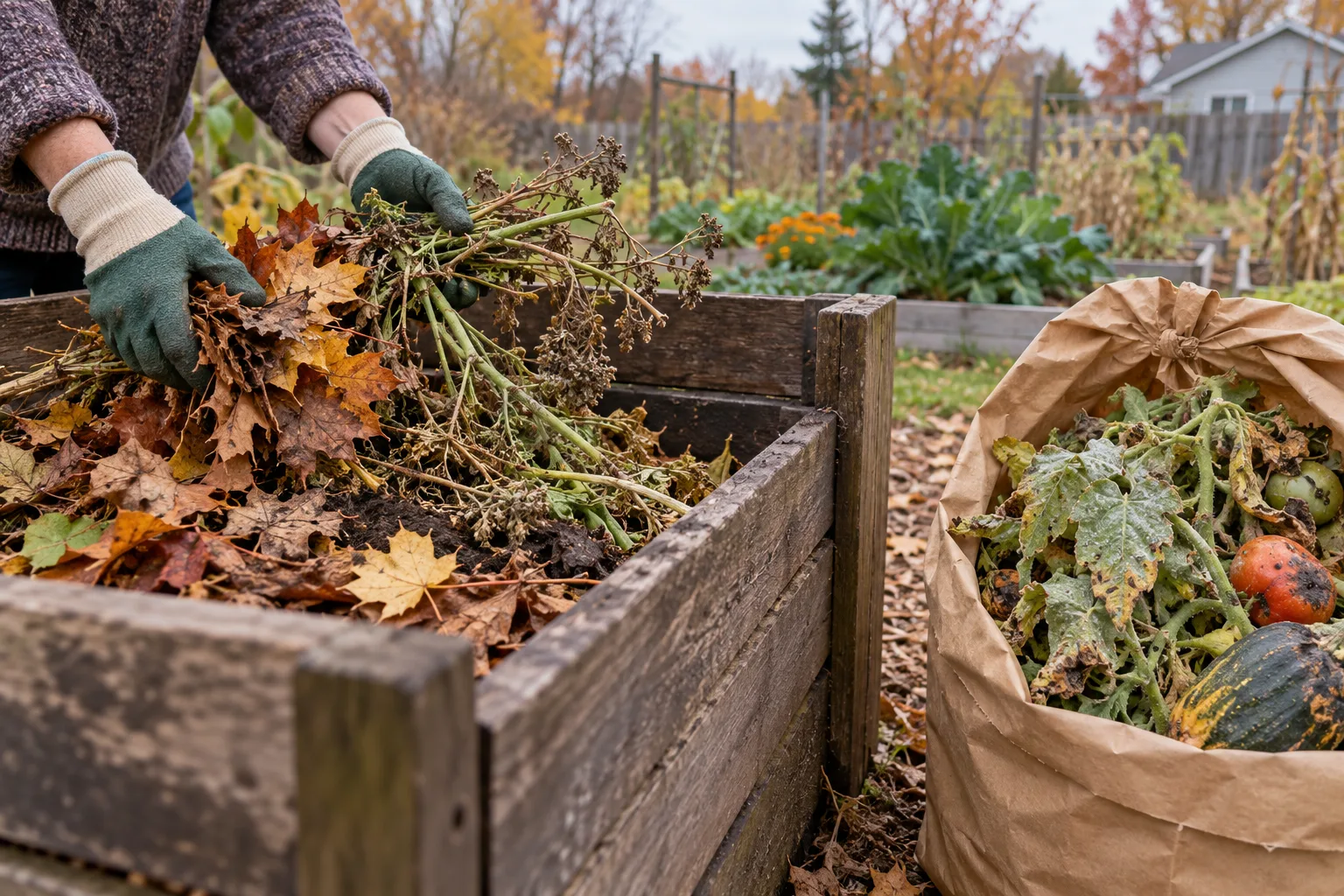
October cleanup is less about making every bed look empty than about deciding where each piece of plant material should go. A dead annual, clean leaves, healthy stems, and a tomato vine with suspicious spots may all look like ordinary end-of-season debris, but they do not carry the same risk or serve the same purpose in a home compost pile. The useful first question is not “Is this plant finished?” It is “Do I know that this material is clean enough for the compost system I actually manage?”
That distinction matters because fall cleanup removes both harmless residue and the remains of problems that could persist into the next growing season. The University of Minnesota’s October garden checklist recommends clearing spent annuals and garden debris, while fall-garden guidance also treats the season as a time to remove diseased plant material and tidy beds before winter. Clean leaves and healthy crop residue can be useful organic matter. Foliage with clear disease symptoms, rotten produce, or a history you cannot establish deserves a more cautious decision. When in doubt, sort it out rather than mixing it into a pile simply because it is biodegradable.
Start with three categories, not one pile
A practical sorting system uses three categories: healthy, uncertain, and diseased. The healthy category includes clean autumn leaves, spent annual plants that showed no signs of disease, and crop residue that remained sound through the season. These materials are ordinary compost inputs when they are free of contaminants and managed as part of a balanced pile. Healthy does not mean attractive; faded or frost-damaged plant material can still be useful if it was not showing a disease problem.
The diseased category is for material with visible symptoms or obvious decay that make it unsuitable for an ordinary backyard pile. Examples include foliage covered with suspicious leaf spots or powdery growth, vines that clearly declined with disease, and fruit or vegetables that are rotting rather than simply overripe. The same caution applies to plant parts whose disease history is known even when the symptoms have dried. Keeping such material out of home compost reduces the chance that incompletely decomposed residue will be returned to garden beds later. The University of Minnesota’s disease-management guidance supports treating diseased debris as a separate management problem rather than ordinary garden litter.
The uncertain category is important because diagnosis is not always possible during a hurried cleanup. Yellowing leaves, insect damage, drought stress, frost injury, and natural senescence can resemble disease, so a gardener should not label every discolored leaf as infected. But uncertainty is also a reason to avoid casual mixing. If you cannot tell whether a vine, fruit, or leaf pile is healthy, keep it separate until you have identified the problem or checked the disposal route recommended by a local extension service or waste authority.
“Discard” depends on local rules
“Discard” does not automatically mean putting every suspect plant into household trash. Yard-waste and municipal composting programs may accept materials that a home gardener should not place in a small backyard pile, or they may impose their own restrictions. Rules differ by location, so check your municipality’s instructions before bagging, bundling, or transporting plant debris. Follow local requirements for diseased foliage, spoiled produce, invasive weeds, and material that may spread through seed or fragments.
The key is to contain questionable material while you decide. Do not drag visibly affected vines across clean beds or scatter rotten fruit where it can be forgotten. Place suspect debris in a bag or closed container, keep it separate from clean leaves and healthy stems, and avoid using it as mulch. If a local program does not accept it, use the disposal method specified by the responsible authority. The aim is simple: compost what you can confidently identify as healthy, hold questionable debris apart, and keep clearly diseased or rotten material out of the ordinary home pile.
Why a home compost pile is not automatically a pathogen-killing system
A home compost pile is a managed decomposition system, not a guaranteed sterilizer. That distinction matters during October cleanup, when a gardener may have a large amount of dead foliage, vines, and fallen produce to sort. A plant can be finished for the season without its disease-causing organisms being destroyed. Heat helps, but the pile must reach the required temperature and the suspect material must fully break down.
University of Minnesota guidance says diseased plant material can be composted only if the pile reaches at least 148°F and the plants completely decompose. The temperature is therefore a condition, not a general guarantee attached to every backyard pile. A pile that feels warm, shrinks, or turns dark has not necessarily reached that threshold throughout its contents. If the temperature is unknown, or if the material remains recognizable, the requirement has not been established.
This is the practical weakness of ordinary home composting. Typical household piles may not get hot enough for long enough to control disease. They can contain cooler areas, and their performance changes with the pile’s size, moisture, mix of materials, and management. A gardener may see active decomposition while diseased leaves or stems remain only partly broken down. The finished-looking exterior is not proof that questionable debris has been treated.
For that reason, “dead” is not a sufficient category for fall sorting. Clean leaves and healthy spent plants can be useful compost inputs, while debris from a plant with clear disease symptoms requires a separate decision. Either the gardener must be able to manage a composting system that reaches the required heat and completes decomposition, or the diseased material should stay out of the ordinary home pile. Oregon State University’s end-of-season guidance gives the simpler household rule: diseased material should never go into home compost.
The distinction does not mean every yellowing or collapsing plant is diseased. Many plants naturally decline at the end of the growing season. The concern is material associated with a known or strongly suspected problem, such as spotted foliage, rotting produce, or vines that showed disease before they died. Minnesota Extension specifically advises removing rotten produce and completely removing diseased plants at the end of the season. Leaving that residue in place, or mixing it casually with clean leaves, makes it harder to control what enters the compost pile.
Keeping suspect material out of home compost protects the purpose of the finished product. Compost is usually returned to garden soil, beds, or planting areas. If diseased residue has not fully decomposed, that material may be carried back into the growing space when the compost is spread. The point is not to claim that every pathogen survives every composting process; it is to avoid relying on a heat level and breakdown period that a typical backyard pile may not reliably provide.
The alternative should follow local disposal rules. October guidance from Minnesota Extension recommends placing diseased debris in yard-waste bins or bags, or taking it to a commercial composting facility that accepts diseased plant material. Other communities may have different instructions, so check the local program before using the curbside collection or a drop-off site. Keep questionable debris contained and separate from clean leaves and healthy crop residue until its destination is clear.
A temperature reading can improve compost management, but it does not replace the full test. Before adding diseased debris, ask three questions: Did the pile reach at least 148°F? Was the suspect material actually incorporated into the managed pile rather than left at its cooler edges? Has it completely broken down? If those answers cannot be supported, the safer choice is to keep diseased plant material out of the ordinary home compost pile and reserve that pile for clean garden debris.
A fall cleanup workflow that limits spread
Fall cleanup is easier to manage when diseased-looking material is treated as a separate stream from ordinary garden waste. The key is to make a decision before cutting plants into pieces or pulling them through neighboring beds. A yellow leaf, an early-season blemish, or a plant that has simply finished producing is not automatically evidence of disease. Look for a pattern instead: powdery growth on the surface, recurring leaf spots, lesions that enlarge or spread, soft or rotting fruit, or vines and foliage that declined in a way that does not match normal aging. When the cause is uncertain, keep the material out of the home compost pile until it can be identified or handled according to local guidance.
Begin the inspection while plants are still in place. Identify suspect leaves, stems, fruit, supports, and nearby weeds before starting a general clearing pass. This prevents healthy residue from being mixed with material that may carry a plant problem. It also avoids a common mistake in autumn cleanup: interpreting every brown, yellow, or wilted plant as infected. Seasonal decline, frost injury, drought stress, insect damage, and disease can look similar from a distance, so the safest workflow is based on visible symptoms and the history of the planting rather than color alone.
Choose a dry day for the work whenever possible. Wet foliage and damp debris are more likely to cling to gloves, tools, clothing, and plant supports, making it easier to move material unintentionally. Remove suspect leaves or stems carefully and place them directly into a bag or another closed container. Do not carry an open armful across the garden if it can be avoided, and do not drag vines through beds or shake soil and fragments from them over healthy plants. Keeping questionable material contained from the moment it is removed makes the later disposal decision much simpler and reduces unnecessary contact with the rest of the garden.
A practical sequence is to work from the cleanest areas toward the most questionable ones. Clear healthy annuals and other ordinary residue first, then handle plants showing symptoms, and finish by collecting fallen fruit, leaves, and fragments beneath those plants. If a diseased plant is supported by stakes, cages, ties, or trellising, inspect those items as part of the same task rather than leaving them in place for the next crop. Plant material can remain on surfaces that are reused, so supports should be cleaned before storage or before they are put back into service.
Tool hygiene matters most when one plant is followed by another of the same or a closely related crop. Clean pruners and other cutting tools after removing suspect tissue and before moving to healthy plants. The same principle applies to hands, gloves, and reusable supports: remove visible residue and clean the item before it returns to routine use. This is particularly important after cutting tomato or squash vines that show disease symptoms, because fragments can be spread by the tool or by the gardener even when the original plant is being removed from the bed.
The symptoms to watch for are not limited to one crop. Powdery mildew may appear as a conspicuous pale coating on leaves. Leaf spots can be isolated at first but become more concerning when they follow a spreading pattern or are accompanied by premature leaf drop. Rotten fruit should be gathered rather than left to collapse in place, especially when the rot is associated with other signs of disease. Tomato and squash vines with obvious lesions, extensive spotting, or a general disease pattern belong in the suspect-material stream instead of being assumed to be harmless because the season is ending.
That does not mean every affected-looking plant must be diagnosed on the spot. A gardener may not be able to distinguish a disease from weather damage or ordinary senescence during a quick cleanup, and confident-sounding guesses can lead to the wrong disposal choice. When the history is unclear, contain the debris and consult a reliable local extension or plant-diagnostic resource. Disposal rules for yard waste vary by location, so the final destination should be checked with the local authority or waste program rather than inferred from what another garden permits.
Before leaving the bed, make a final pass for pieces that are easy to overlook: fallen leaves trapped under plants, fruit hidden beneath foliage, broken stems, and weeds mixed into the row. Keep suspicious material separate from clean leaves and healthy annual stems. Bagged or closed-container handling is especially useful when the debris is wet, visibly rotting, or difficult to sort without scattering fragments. If a plant was removed because of a suspected disease, do not return its pieces to a backyard pile simply because they look small after cutting; size does not resolve the question of whether the material is appropriate for that composting system.
The purpose of this workflow is not to make autumn cleanup unnecessarily cautious. It is to preserve the distinction between routine organic matter and material that may recreate a problem when it is moved, stored, or composted. A clean separation at the time of removal gives healthy residues more options later, while keeping uncertain or visibly diseased debris out of the ordinary stream until its handling is clear. Once the beds are empty, the next decision is whether the clean material is suitable for a home compost pile and whether that pile is being managed in a way that supports complete breakdown.
What can safely become compost and how to build the pile
Once diseased and suspicious material has been set aside, the clean remainder of an October cleanup can provide useful compost ingredients. Healthy autumn leaves are a dependable source of brown, carbon-rich material. Spent annual stems, untreated grass clippings, and weeds that have not formed seeds can also go into a home compost pile when they show no signs of disease. The key distinction is not whether a plant is finished for the season, but whether the material is clean and unlikely to carry a problem into the next growing season.
Sort these materials before they reach the pile. Remove obvious trash, plastic labels, wire, and other non-plant material, then separate dry leaves from fresher green scraps where practical. Healthy vegetable residue can be composted, but rotten produce, diseased vines, and material with an uncertain history should remain out of an ordinary backyard pile. A few questionable pieces are not worth mixing through an otherwise useful batch, especially when the material came from a plant that showed leaf spots, powdery growth, soft rot, or another unexplained decline.
A workable pile needs both brown and green inputs. Dry leaves and other dry plant material supply the brown portion, while fresh grass clippings and other green scraps add moisture and nitrogen. Avoid building the pile from one material alone. A thick layer of leaves can mat together and restrict airflow, while a large mass of fresh clippings can become compacted. Mixing the materials helps keep the pile open enough for air to move through it and gives decomposition a more even start.
Moisture matters as well. The pile should be damp throughout, with a texture comparable to a wrung-out sponge rather than dripping wet or dusty dry. If the material is too dry, decomposition slows; if it is saturated, air movement becomes more difficult. Add water gradually when needed, and mix dry leaves with wetter green material instead of soaking the pile all at once. Turning the pile helps redistribute moisture and air and brings less-decomposed material from the outside toward the center.
Fall composting does not have to look active every day. Cooler weather slows the process, and the pile may take longer to break down through winter. Continue adding suitable clean material when available, keep the mixture reasonably moist, and turn it when conditions allow. The objective is not to force every leaf and stem to disappear immediately, but to maintain a pile that can continue decomposing as temperatures and moisture conditions permit. If the pile settles, mix in additional dry leaves or other clean brown material rather than adding debris that might introduce disease.
When compost is ready for use in spring, it should be dark, crumbly, and earthy-smelling, with no recognizable diseased material remaining. That final inspection is part of the sorting decision, not an afterthought. Finished compost should look and smell like a stable soil amendment rather than a collection of identifiable stems, leaves, or rotten plant parts. If suspicious material is still recognizable, keep the batch from garden beds until it has broken down further, and do not use the compost as a way to conceal debris whose disease status was never clear.
This approach makes October cleanup more deliberate: clean plant material becomes a managed resource, while diseased or uncertain debris stays out of the home pile. A well-built compost pile can support the garden over time, but only when the inputs are chosen carefully and the finished material is checked before it returns to the soil.
Related articles
Fall Garden Cleanup: Which Perennials to Leave, Cut Back, or Remove After Frost
A plant-by-plant fall cleanup plan for deciding what to leave standing for winter habitat, what to cut back for disease control, and what to remove before next season.
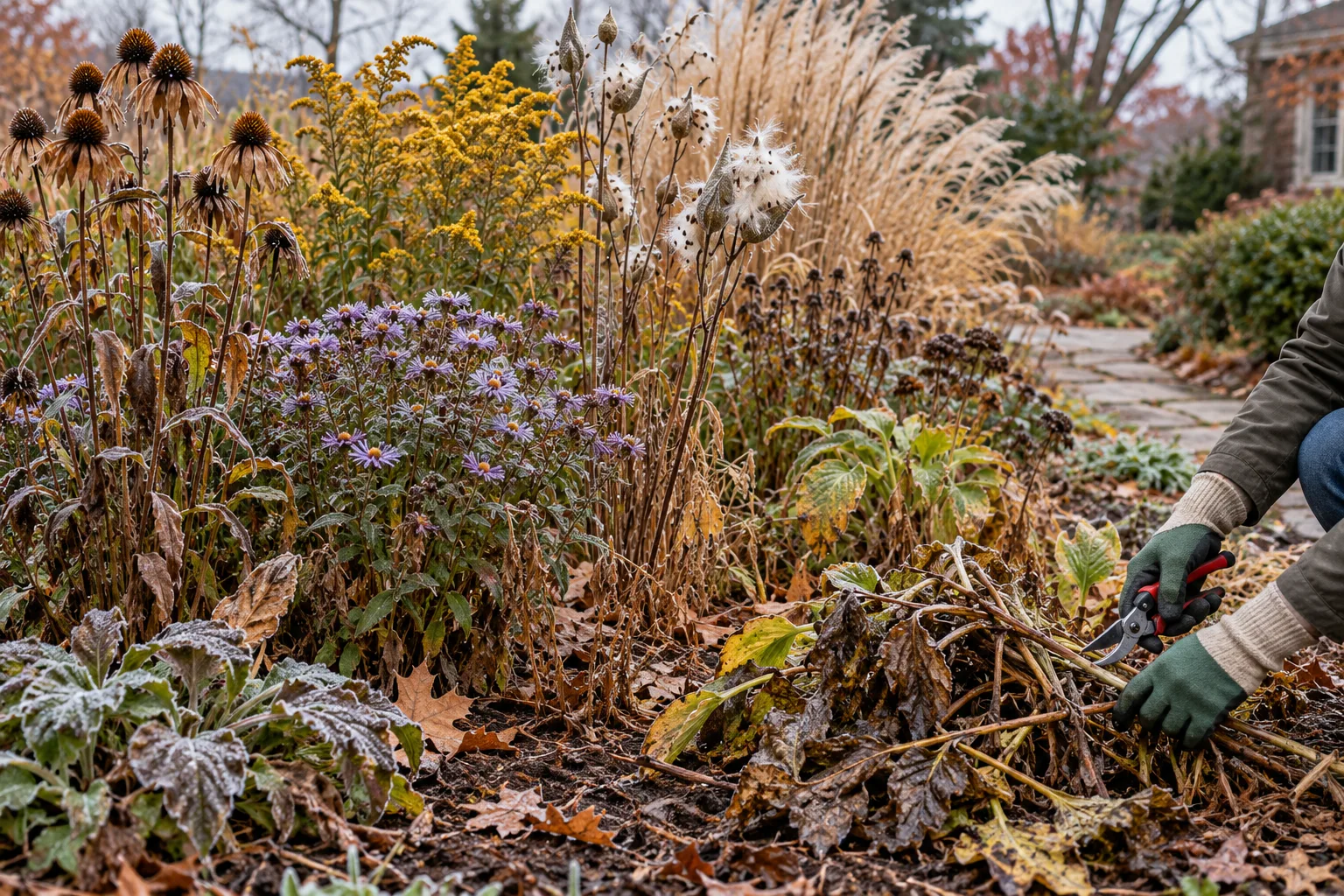
October Tree-Decay Check: How to Decide What Needs an Arborist Before Winter
A cavity, mushroom, dead limb, or buried trunk flare does not automatically mean a tree must come down. This practical October check helps you separate routine monitoring from urgent risk, protect targets, and hire the right help.
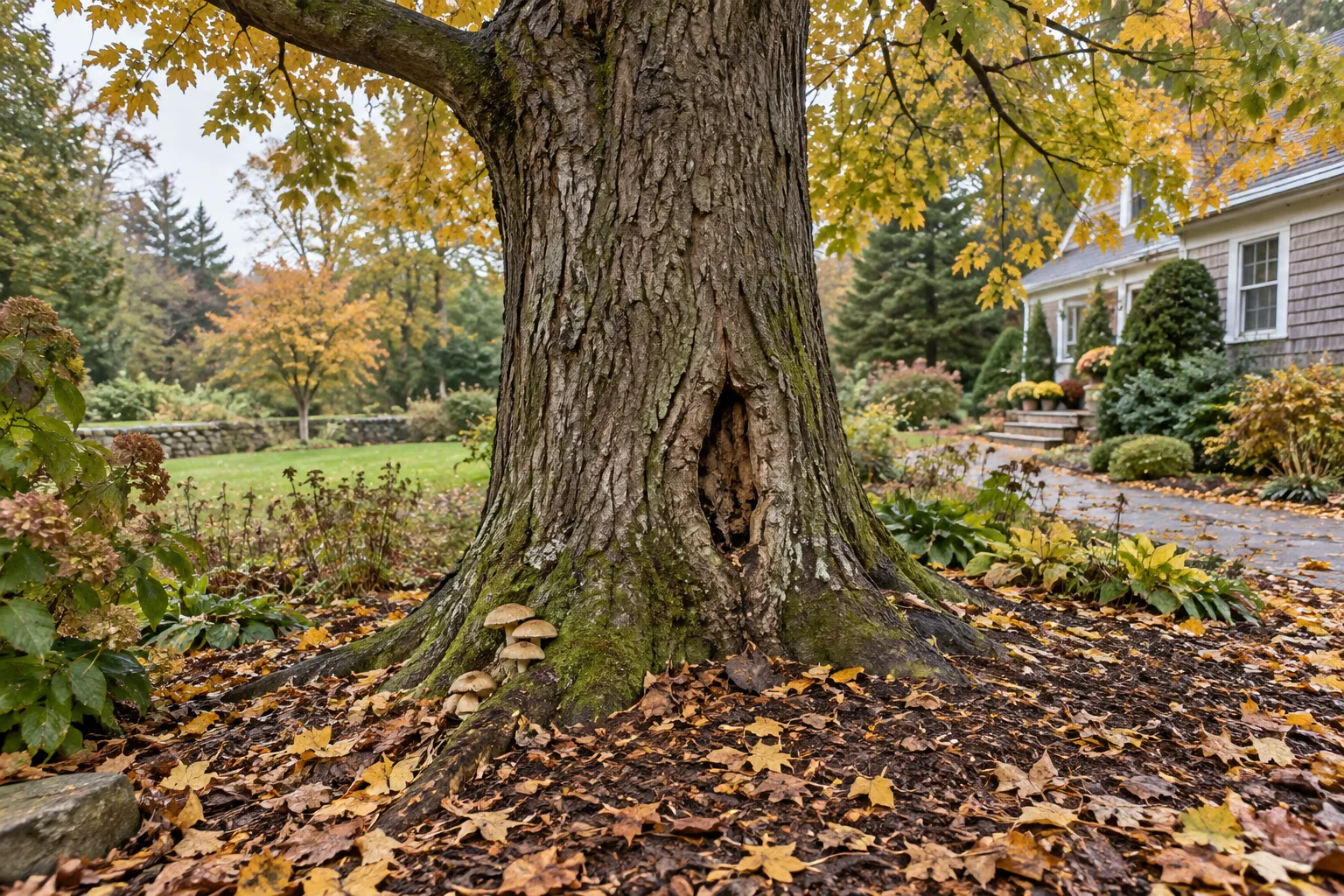
Fall Garlic Needs a Reserved Bed Before It Needs a Planting Day
Gardeners are buying seed garlic now, but the useful move is not always planting immediately. Match the bed, mulch and spacing to your first hard freeze so next summer’s bulbs are worth the space.
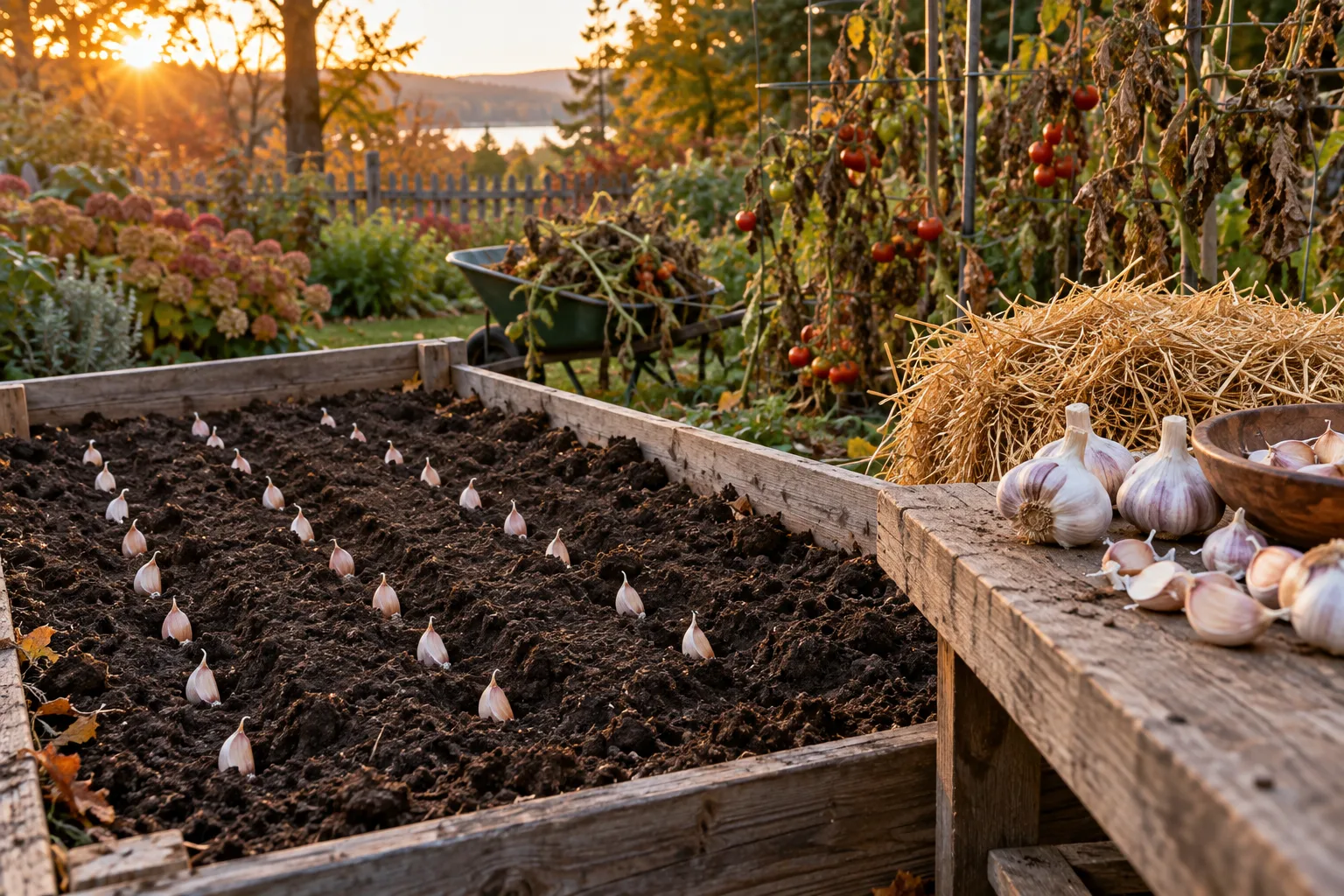
Empty Vegetable Beds in September Need a Cover Crop, Not Bare Soil
A practical September guide to choosing oats, rye, clover, radish or a simple mulch for empty vegetable beds, with timing, rates, watering and spring termination caveats.

Comments
Sign in to comment.
No comments yet.