Fall Garden Cleanup: Which Perennials to Leave, Cut Back, or Remove After Frost
A plant-by-plant fall cleanup plan for deciding what to leave standing for winter habitat, what to cut back for disease control, and what to remove before next season.

Start with the plant, not the calendar
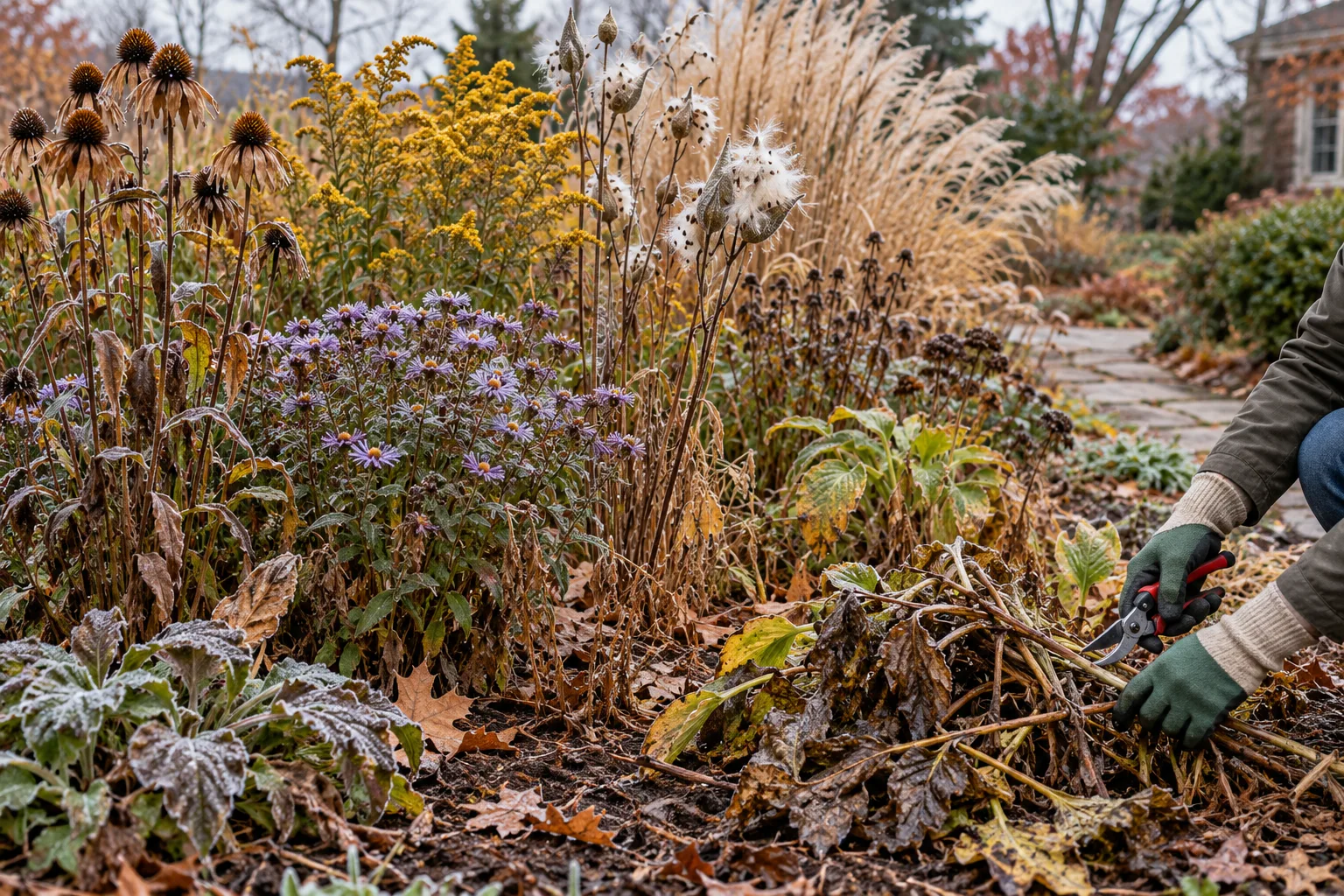
The first frost is a useful signal to inspect the garden, but it is not an automatic command to cut every perennial to the ground. A blanket October cleanup can remove seedheads that still feed birds, eliminate standing stems used by overwintering beneficial insects, and make it harder to distinguish plants that are finished from those that are simply dormant. The practical starting point is the plant itself: identify what is growing, check its condition, and decide whether leaving, cutting back, or removing it serves a clear purpose.
Many healthy, seed-bearing perennials can remain upright through winter. Coneflower, goldenrod, asters, milkweed, and ornamental grasses are all examples of plants that can provide visible structure and habitat after flowering. Their stems and seedheads may also help mark the location of a crown or clump until spring growth returns. Leaving them standing is not the same as neglecting the bed: it is a deliberate choice to preserve useful plant material while avoiding a task that can wait. Guidance on fall cleanup from the Associated Press, Clemson Extension, and Cornell Cooperative Extension all support treating fall work as a set of plant-by-plant decisions rather than a single calendar deadline.
That approach matters because timing and treatment vary with climate as well as with the plant. A dry, upright stem in an open bed is a different situation from foliage that has collapsed into a wet mass around the crown. A plant that is still carrying seed is different from one whose leaves are visibly diseased. Local weather also changes how long stems remain useful and when wet conditions make cleanup harder. The first frost can prompt a walk-through, but it does not supply enough information by itself to determine what every bed needs.
Start by separating herbaceous perennials from woody plants. Herbaceous stems die back to the ground, while shrubs and other woody plants may carry next season’s flower buds on older wood. Spring-flowering shrubs are especially important to recognize before pruning: cutting them back as though they were spent perennial stems can remove buds that were formed for the following display. They should not be folded into a routine frost cleanup without confirming the plant’s identity and the appropriate pruning window. If you are unsure whether a stem belongs to a perennial or a woody shrub, pause and identify it before making the cut.
A simple visual test can keep the first pass conservative. Leave healthy plants that are upright, dry, and free of obvious disease when their seedheads or stems add habitat or structure. Flag plants that you want to revisit later rather than treating uncertainty as a reason for immediate removal. Cutback becomes more defensible when foliage has collapsed, stayed wet around the crown, spread disease concerns, or obstructed a path or another necessary garden task. Removal is the strongest response and should be reserved for material that is clearly finished, unwanted, or diseased—especially when leaving it in place could carry a problem into the next season.
This does not mean every stem should remain. Garden access, drainage, visibility, and plant health still matter. The goal is a selective cleanup that keeps useful winter cover while addressing material that creates a real maintenance or disease problem. Look at each clump in context: is it standing cleanly, or is it pressing against the soil? Is the seedhead intact, or has it become part of a saturated tangle? Is the plant’s location helping wildlife and winter structure, or is it blocking a path or covering a crown that needs attention? Those questions produce a more reliable result than cutting by month alone.
The same caution applies to plants that are valuable for more than their appearance. Coneflower and asters may look untidy after frost, but their remaining seed can be part of the winter garden’s food supply. Goldenrod and milkweed likewise deserve an identification check before removal, particularly where the intent is to retain habitat. Ornamental grasses can contribute strong winter form when they remain upright, but collapsed or waterlogged growth may need attention if it is smothering nearby plants or interfering with spring access. The decision is not whether a bed looks perfectly finished in autumn; it is whether each plant is healthy enough, useful enough, and safely positioned to remain until a later cleanup.
Before reaching for shears, therefore, walk the garden and make three mental or physical groups: plants to leave, plants to cut back, and material to remove. In the first group, preserve healthy stems and seedheads that can stand through winter. In the second, target only growth whose condition or position justifies the work. In the third, be more careful about disposal if disease is suspected. That short classification step turns fall cleanup from a race against the calendar into a decision based on plant identity, condition, habitat value, and local growing conditions.
The three-way cleanup decision
A useful fall cleanup starts with a decision for each plant, not a race to make every bed look bare. Walk through the garden and sort what you see into three groups: healthy stems and seedheads to leave, collapsed growth to cut back, and confirmed diseased debris to remove. This simple division keeps the work focused. Upright, healthy perennial stems can remain in place when they are not blocking a path or creating a problem. Cut back plants when their foliage has fallen into a wet, dense mass, is interfering with access, or is likely to make the bed harder to manage. Remove suspect material when disease is evident, especially among vegetable plants, rather than treating all spent growth as equally disposable.
Leaving a plant standing is not neglect. Some stems and seedheads provide useful winter structure and habitat, so the first question should be whether the material is healthy and serving a purpose. If a perennial is upright, dry rather than slimy, and out of the way, there is usually no cleanup advantage in cutting it simply because the calendar has turned to fall. By contrast, foliage that has collapsed against the crown or formed a persistently wet layer deserves closer attention. The goal is not a uniformly clipped garden; it is to remove material that is creating a specific risk or obstruction while preserving sound growth that can remain through winter. Guidance from UConn Extension and Cornell Cooperative Extension supports treating end-of-season work as a selective process rather than an automatic cutback.
Leave: healthy, upright growth
Leave stems and seedheads when they are healthy, stable, and not in the way. This applies particularly to perennial plantings where standing growth contributes to winter habitat. Before reaching for pruners, check whether the stems are still upright, whether the seedheads are clean, and whether the plant is crowding a path, drain, or nearby planting. If the answer is no, mark it mentally as a “leave” plant and move on. A bed can be tidy without every stem being cut to the soil line.
Cut back: collapsed or obstructive growth
Cut back growth when it has become a practical problem: a mass of fallen foliage is staying wet, the plant is covering a path, or its remains are obstructing drainage or access to other plants. Make the cut selectively, taking away the material that has collapsed rather than stripping every nearby perennial. Work in dry weather when possible, because handling wet foliage spreads material around the bed and makes it harder to distinguish clean stems from suspect debris. Regional conditions matter as well. The pace at which plants collapse, remain wet, or become inaccessible varies with local weather and the garden’s exposure, so a calendar date is less useful than the condition of the plant itself. Missouri Integrated Pest Management guidance likewise places fall tasks in the context of site and seasonal conditions.
Remove: confirmed diseased debris
Disease changes the decision. If vegetable debris is clearly diseased, gather it and discard it instead of adding it to a home compost pile. Keep that material separate from clean leaves and healthy cut stems. Home composting is useful for suitable, clean organic matter, but it is not the place to assume that every diseased plant remnant has been neutralized. When in doubt, treat visibly diseased vegetable debris as a removal task rather than mixing it into material intended for reuse. This separation also prevents one questionable plant from turning a whole pile of otherwise usable garden material into a problem.
Use clean, sharp tools and wear gloves while sorting and cutting. After working on a plant that appears diseased, clean the tool before moving to another suspect plant; otherwise, the same pruners can carry residue from one stem to the next. The same caution applies when moving through several beds: finish the healthy, leave-in-place plants first, then handle questionable material, and avoid dragging diseased debris across clean areas. UConn Extension and Cornell’s seasonal gardening guidance emphasize practical end-of-season care, while the distinction between clean material and diseased debris keeps cleanup decisions proportional to the actual condition of the plants.
A final check prevents over-pruning. Before cutting, ask: Is this growth healthy? Is it upright or part of a wet, collapsed mass? Is it blocking a path or drainage? Is there evidence of disease? The answers point to leave, cut back, or remove. If the plant’s identity or condition is uncertain, leave it temporarily and make a note to reassess under dry conditions. That small pause is safer than making an irreversible cut merely to finish the bed in one pass.
What to do with leaves and cut material
Fall cleanup becomes easier when plant material is sorted into two groups: clean material that can stay in the garden or return to the soil, and suspect material that should leave the property. Healthy stems, seedheads and dry leaves are not automatically waste. Some can remain as winter cover, while others can be moved only when they block a path, cover a spring bulb planting or collect against a plant crown. The goal is not to make every bed bare, but to prevent thick, wet layers from smothering lawns and crowns while preserving useful structure where it causes no practical problem.
Leaves are usually the most versatile material in the autumn garden. A thin coating of light, dry leaves can be mowed into turf, but leaves that are wet or dense enough to sit on the grass should be raked or otherwise redistributed. Cornell Cooperative Extension advises composting those heavier accumulations or using them as mulch in a perennial garden; it also notes that leaf mulch can provide winter protection for beneficial organisms, with regional caution where voles are a concern. In other words, do not treat the lawn and perennial bed the same way: what is too thick for grass may be useful around established plants when spread lightly. Cornell Cooperative Extension’s October guidance makes that distinction explicit.
Before spreading leaves, look at where they are landing. A dense, wet blanket over low-growing crowns can hold moisture against the plant and leave new growth buried when the season turns. Move enough material to expose the crown without scraping or piling it tightly around the base. Keep drainage routes, steps and frequently used paths clear. If spring-flowering bulbs have already been planted, do not bury their area under a heavy layer simply because the rest of the bed is being mulched. This is a selective job: leave the stems and leaves that are standing comfortably, and shift only the material that interferes with drainage, access or the plants’ position in the bed.
Clean cut material can be handled in much the same way. Chopped leaves and healthy spent plants may be added to a home compost pile, used as a light mulch or left in place where the material is not blocking the bed. UConn’s end-of-season guidance specifically recommends natural mulches such as shredded leaves to cover soil and help prevent erosion, and its composting notes identify fallen leaves as a useful carbon source. Compost works best when the pile receives a balance of dry, carbon-rich leaves and fresher plant material; a pile made almost entirely of leaves may decompose slowly. That does not mean every brown stem should be forced into the compost bin. If the material is tangled, too wet, or likely to mat over a crown, use it selectively or remove it from that location first. UConn’s October garden guidance outlines both the mulch and compost uses of fall plant material.
Disease changes the decision. Do not put confirmed diseased vegetable debris into a home compost pile simply because it is technically plant matter. Pulling finished tomato plants and other spent crops can reduce the pests and diseases carried into the next garden season, but the useful distinction is between healthy debris and material showing a known or strongly suspected problem. Separate suspect leaves, stems and fruit from the clean pile, bag or otherwise dispose of them according to local guidance, and avoid scattering them through a perennial border as mulch. The same caution applies when a cut plant has obvious symptoms: keep the material contained rather than chopping it into a general-purpose mulch.
Work in dry conditions when possible, wear gloves, and clean tools after cutting suspect plants. A quick wipe or wash between questionable plants helps avoid carrying residue from one stem or clump to another. There is no advantage in rushing through a wet bed simply to finish the calendar’s version of fall cleanup. If material is healthy but inconvenient, it can often be left standing until a clearer maintenance need appears. If it is diseased, blocking drainage, covering a path or forming a dense mat on grass, deal with that specific problem and leave the rest of the habitat structure intact.
A practical sorting routine is therefore simple:
- Leave: healthy stems, seedheads and scattered leaves that are upright, not obstructing access and not forming a wet layer over crowns or turf.
- Redistribute: clean leaves or cut stems that are useful as light mulch but have collected too thickly, especially on lawns, around crowns or over bulb areas.
- Compost: clean, healthy plant material mixed with leaves in a functioning home compost pile.
- Remove: confirmed diseased vegetable debris and any material that is creating a drainage, access or smothering problem.
This approach keeps the bed from becoming overmanaged. Clean leaves can become mulch or compost, some stems can continue to provide winter structure, and only the material that presents a clear problem needs immediate removal. Penn State Extension’s fall garden task guidance is a useful companion for the broader seasonal handling of leaves and garden debris.
A low-regret October checklist
The safest fall cleanup is a short inspection, not a race to make every bed look empty. After the first frost, walk the garden with a phone or notebook and photograph each bed before cutting anything. Use those images to identify plants that should remain standing, shrubs that flower on old wood, and areas where fallen leaves or stems are actually blocking a path, drain, or emerging spring bulb. First-frost timing varies widely by region, so the calendar alone is a poor signal for deciding when every plant needs attention. Local extension guidance likewise treats October work as a sequence of observations and tasks rather than one universal deadline. Cornell Cooperative Extension’s October tips and Clemson’s October garden guidance both support adjusting the work to local conditions and the plant in front of you.
Begin by marking the habitat plants you intend to leave. Healthy, upright coneflower, goldenrod, asters, milkweed, and ornamental grasses can provide winter structure, seed, and shelter, so they do not automatically belong in the cutback pile. Leave them in place unless they are diseased, creating a clear access problem, or interfering with another necessary task. At the same time, flag any shrub whose flowers form on old wood. Those woody stems should not be treated like spent herbaceous foliage; an uncertain pruning decision is a good reason to pause and confirm the plant’s identity and local timing before making a cut. The practical objective is a garden that is orderly enough to function while retaining the stems and seedheads that still serve a purpose. The AP guide to fall cleanup provides the same useful distinction between plants worth leaving for winter interest and wildlife and material that should be removed.
Next, separate routine cleanup from sanitation. Remove diseased annuals and vegetable debris when symptoms are confirmed, and discard that material rather than putting it into a home compost pile. This is especially important when plant residue is visibly infected or has collapsed into a wet mass. Healthy cut stems and clean leaves can be handled separately. UConn’s end-of-season guidance and Missouri’s October gardening tips emphasize matching the treatment to the condition of the material, not simply to its location in the garden.
Before you cut, put on gloves, choose a dry-weather window, and make sure pruners or loppers are clean. If you move from a suspect plant to a healthy one, clean the tool between plants so the cleanup itself does not spread a problem. Cut back only what has a clear reason to come down: diseased foliage, a collapsed mass that is staying wet around a crown, stems that obstruct a walkway, or material that prevents drainage. Leave a little extra time for plants whose identity is uncertain. A temporary untidy stem is easier to correct later than a mistaken cut that removes the framework for next year’s flowers.
Handle leaves with the same restraint. Clean leaves may be shredded into the lawn, used as a light mulch in beds, or added to compost; Penn State’s fall garden task guidance outlines these uses in the broader context of seasonal maintenance. Do not spread a dense, wet layer over crowns, turf, or a planting where it can smother growth. Thin or move only the material that is genuinely creating a problem, and keep mulch from burying plant crowns or covering spring bulbs. If leaves are mixed with clearly diseased debris, keep the suspect portion out of the home compost and manage it separately.
A final pass should leave you with three clearly different piles: habitat material staying in place, clean material available for shredding or composting, and diseased material for disposal. Clean tools, store the photographs, and write down any plant that needs identification before winter pruning. This low-regret checklist also fits alongside the channel’s existing seasonal coverage: it does not replace leaf-raking or frost-triage advice, but applies the same principle to perennial beds—observe first, act where there is a concrete reason, and preserve what is still useful. When the right decision is unclear, postponing the cut until the plant and local timing are clear is itself a sound fall-garden decision.
Related articles
When an HOA calls native plants weeds, design is your best defense
A native or drought-wise yard can save water and feed pollinators, but it still has to read as maintained. Here is how to plan, document and defend a living yard before a fine arrives.
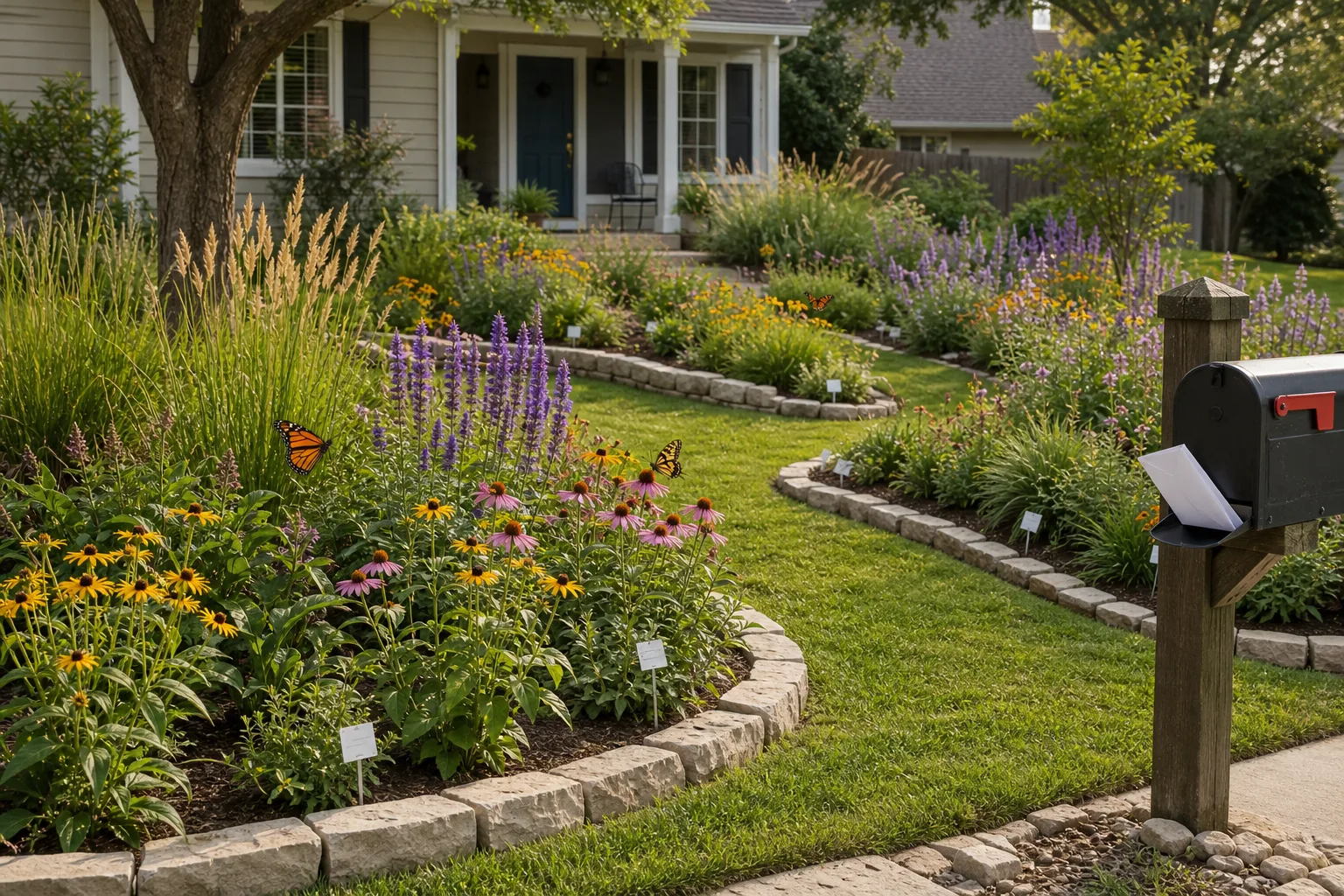
Do not rake every leaf: a practical fall cleanup plan for lawns, beds and pollinators
The best autumn yard cleanup is not total removal or total neglect. Zone the yard so leaves feed soil where they help and move them where they cause damage.
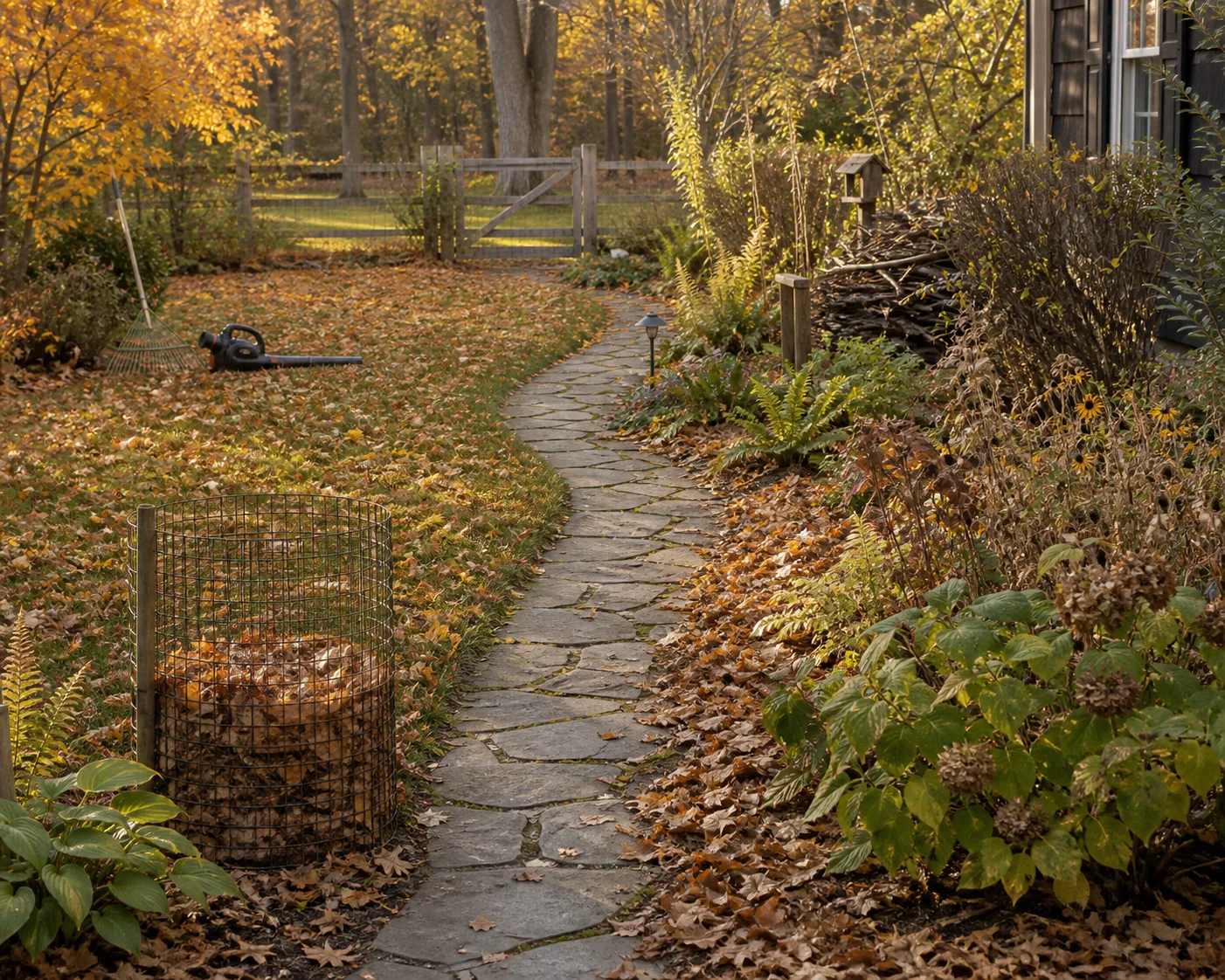
The September Equinox Garden Audit: Test, Drain and Cover Tired Beds Before Winter
After a dry, demanding season, the most useful fall garden job may be an audit rather than a cleanup marathon. Check what the soil is telling you, correct drainage problems safely, and cover only the beds that can still support a useful autumn crop.
Before Autumn Rain: A Practical Apple-Tree Check for Scab, Rot and Next Year’s Crop
A wet spell can turn a minor apple-tree problem into next spring’s disease reservoir. Use this late-season checklist to sort harvestable fruit, remove infection sources and prepare a realistic prevention plan without spraying blindly.
Comments
Sign in to comment.
No comments yet.