A Low-Maintenance Landscape Starts With the Site, Not the Plant Label
“Low maintenance” is not a promise that a plant can be ignored. It is a design result: match the plant to the light, soil, moisture, mature size and wildlife pressure already present in your yard.

Gardeners often ask for plants that can be left alone. The request is understandable: a shrub that needs yearly cutting, constant watering or repeated pest treatment can turn a small planting bed into a permanent obligation. But the useful answer is not a universal list of supposedly effortless plants. It is a method for making the site do more of the work.
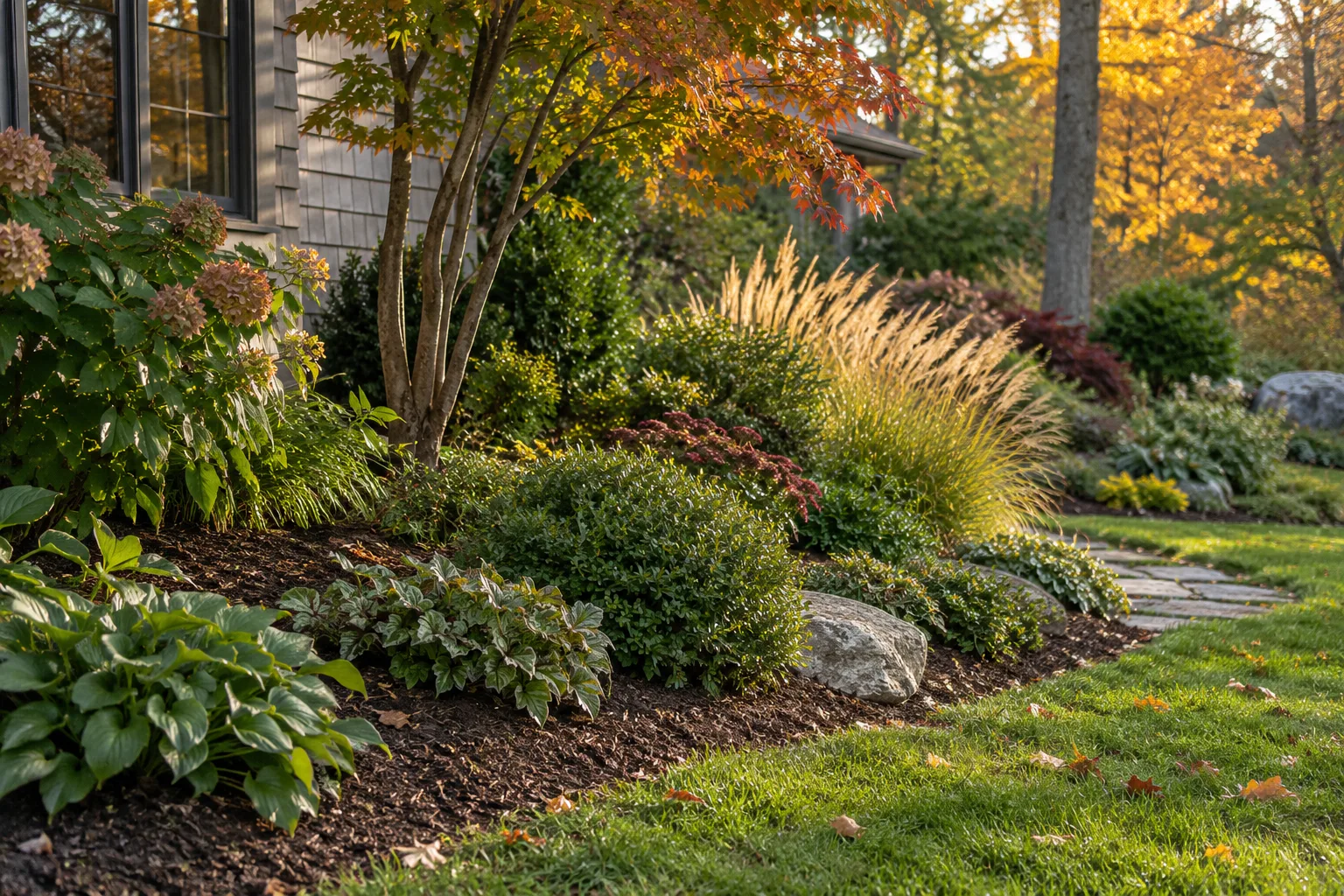
A timely note from North Carolina State Extension puts the idea plainly: there is no truly maintenance-free plant in a managed landscape. Even a resilient plant needs water while it establishes, some control of competing weeds, and a site that does not work against its natural requirements. “Low maintenance” is better understood as resilience in the right place.
That distinction matters in October, when many gardeners are choosing trees, shrubs and perennials for fall planting or planning changes for next spring. The best time to reduce future pruning and watering is before buying the plant. A few minutes spent measuring light, checking drainage and reading the mature-size information can prevent years of corrective work.
What “low maintenance” should mean
A low-maintenance plant is not one that survives every situation. It is one that performs reliably when its basic needs match the conditions around it. In practice, that usually means four things:
- It is adapted to the local climate and hardiness range.
- Its preferred light and soil moisture fit the exact planting spot.
- It has enough room to reach its natural mature size.
- It has useful resistance to the pests, diseases, browsing or weather stresses common in that location.
A plant can be tough in one setting and troublesome in another. A drought-tolerant species planted in a poorly drained hollow may decline from wet roots. A shade plant placed beside a hot south-facing wall may require frequent irrigation. A vigorous shrub squeezed under a window may need annual shearing even though it is otherwise healthy.
This is why a list headed “ten plants that need no care” is rarely practical without a region, a site description and a purpose. The same plant may be a sensible choice for a dry bank, a poor choice for a rain garden, and an expensive mistake beside a foundation.
Begin with a site audit
Before visiting a nursery, choose one specific planting area and describe it. Do not assess the entire yard as if it were one growing environment. Light, wind, soil and drainage can change dramatically over a few steps.
Record the light
Watch the area on a clear day if possible. Note whether it receives full sun for most of the day, morning sun with afternoon shade, filtered light beneath a tree, or very little direct sun. The pattern may change as nearby trees leaf out or as the sun moves lower in autumn.
A label such as “sun” or “shade” is only useful when it matches the plant’s actual requirements. If a plant needs full sun to flower well, placing it in a bright-looking but shaded bed may produce weak growth and fewer flowers. If a plant prefers shade, reflected heat from paving or a wall may make the location harsher than it appears.
Check moisture and drainage
Ask whether the soil stays wet after rain, dries quickly, or swings between the two. Look for clues: moss, standing water, cracked soil, algae, a sour smell, or plants that wilt even when the surface looks damp. A simple hole test can help. Dig a hole roughly 12 inches deep, fill it with water, let it drain, then fill it again and observe how quickly the water disappears. This is not a laboratory soil test, but it can reveal an obvious drainage problem before you plant.
Do not solve every drainage problem by adding random amendments or building a raised bed. First decide whether the location is naturally wet, compacted, sloped, or receiving runoff from a roof or driveway. A plant selected for the actual moisture regime is often easier to maintain than a plant selected for appearance and then rescued with irrigation or drainage work.
Measure usable space
Measure the width of the bed, the distance to paths and structures, and the clearance from utility lines. Then look up the plant’s mature height and spread, not just the size of the container at purchase. The small shrub in a two-gallon pot is a temporary condition; its mature dimensions determine whether the design will work.
Give trees and shrubs room to develop their natural form. If a plant must be cut back every season to keep branches away from siding, windows, wires or a walkway, the placement is creating the maintenance problem. Pruning is useful for health, structure and clearance, but it is not a reliable way to make a large plant permanently behave like a small one.
Note pressure from animals and weather
Deer, rabbits, rodents, salt spray, strong wind, reflected heat and snow load can matter as much as soil and sunlight. A plant that is listed as resistant to one problem is not guaranteed to be immune to every local stress. Treat resistance as one selection criterion, not as a warranty.
If browsing is common, choose plants with documented resistance where possible and protect young plants while they establish. If winter wind is severe, a plant may need a sheltered position even if it is cold-hardy. Hardiness describes temperature survival; it does not automatically describe tolerance of drought, wet soil, wind or salt.
Use a filter, not a wish list
NC State Extension recommends using its Plant Toolbox search to filter plants by cultural conditions and resistance to challenges. The same logic can be applied with any reliable regional plant database, nursery catalog or extension guide. Start with what your site offers, then narrow the list by the qualities you want.
A practical search sequence looks like this:
- Select the light level, hardiness zone and available space.
- Match soil moisture and drainage as closely as the database allows.
- Add resistance filters for deer, insects, diseases or other known problems.
- Choose the function: screening, shade, flowers, erosion control, edible harvest, habitat or ground cover.
- Check the full plant profile rather than relying on the search result or a nursery tag.
The order is important. Many buying mistakes begin with a desired flower color or a photograph, followed by an attempt to force the site to suit the plant. A better process begins with the site and uses appearance as the final choice among plants that can actually thrive there.
Verify the mature size twice
Plant descriptions may list a typical mature size, but growth varies with climate, soil, pruning and cultivar. Check the plant’s expected dimensions in a regional source and confirm the information at the nursery. Pay particular attention to cultivars with similar names but different growth habits. A compact selection can be appropriate for a narrow bed, while the straight species may eventually outgrow it.
Spacing is not just a visual preference. Plants placed too close together compete for water and light, have poorer airflow and may require repeated thinning. Dense foliage against a wall can also keep surfaces damp and complicate inspection. On the other hand, spacing young plants too widely can leave the bed exposed to weeds until the canopy develops. The goal is to plan for mature spread while providing temporary weed suppression during establishment.
For hedges, decide whether you want a formal clipped line or a row of plants that can grow in their natural shapes. A naturally narrow shrub may be lower maintenance than a broad shrub forced into a narrow rectangle. The cheapest plant at purchase can become the most expensive one if it requires years of shearing, replacement or professional removal.
Prepare the ground before the root ball arrives
A site-matched plant still needs a reasonable start. Soil testing is useful when a bed is new, heavily amended, unusually poor, or being converted from turf. A test can identify pH and nutrient conditions that are difficult to judge by sight. Apply lime, fertilizer or other amendments based on the test and the plant’s needs rather than adding products by habit.
Improve the planting area broadly when appropriate instead of creating a small pocket of highly amended soil around each root ball. A sharply different pocket can hold water differently from the surrounding soil and encourage roots to remain confined. The exact preparation depends on soil type, the plant and local recommendations, but the principle is consistent: prepare a growing environment, not just a hole.
Remove perennial weeds before planting. It is much easier to clear a bed while it is empty than to pull aggressive weeds around newly installed roots. Keep grass from invading the bed and define the edge so mowing does not damage trunks or stems.
Plant for establishment, not just installation day
The first season is the period when a “low-maintenance” plant needs the most attention. Its root system has not yet occupied the surrounding soil, so it cannot be expected to manage drought on its own. The exact watering schedule depends on weather, soil and plant size, but checking the root zone is more reliable than following a fixed calendar.
Water slowly enough to wet the root area rather than producing runoff. Newly planted trees and shrubs need water across the root ball and the surrounding soil as roots move outward. Light, frequent sprinkling can leave deeper soil dry and encourage shallow rooting. As the plant establishes, lengthen the interval between thorough waterings when conditions allow, while watching for wilting, dry soil and unusually hot or windy weather.
Established plants also need water during prolonged dry periods. University of Minnesota Extension advises checking soil dryness in the upper root zone and using deep watering rather than repeated shallow applications. A well-sited plant may need little supplemental water during regular rainfall, but “drought tolerant” does not mean “never water,” especially during establishment or an exceptional dry spell.
Apply mulch in a broad, even layer to reduce evaporation, moderate soil temperature and limit weed competition. Keep mulch away from trunks and stems; piled mulch that stays against bark can create moisture and decay problems. Replenish it as needed rather than building a tall mound every year.
Reduce pruning by respecting natural form
Pruning is often treated as evidence that a plant is high maintenance, but the deeper issue is usually poor placement or an unsuitable growth habit. A plant that naturally fits its allotted space may need only inspection, removal of dead or damaged wood, and occasional corrective cuts. A plant that does not fit will need repeated intervention.
When a plant is young, remove crossing, damaged or badly placed branches according to the needs of that species. Training early can prevent structural problems later, particularly in young trees. Make conservative cuts and learn where the branch collar is located. Do not top a tree or cut every branch to the same height in an attempt to control size.
For shrubs, preserve the natural shape unless the design specifically calls for a maintained hedge. Selective thinning is usually more compatible with natural growth than repeated shearing. If the plant must be cut back severely every year to keep it away from a building, replace it with a plant whose mature dimensions fit the location.
Large branches near roofs, power lines or structures are not a good beginner project. A qualified arborist is appropriate when the work involves height, heavy limbs, electrical hazards or a tree that could damage property if it fails. Lower maintenance includes knowing when a job is beyond the safe reach of household tools.
Make pest resistance part of the decision
No plant is resistant to every pest in every year. Stress, weather and nearby host plants influence what appears in a landscape. Still, selecting plants with resistance to known local problems can reduce the need for intervention. Use regional extension resources to identify recurring diseases or insects before you buy.
Monitor rather than treating by calendar. Walk the planting area regularly and look for changes in leaf color, new holes, wilt, distorted growth, dieback or insect activity. Identify the problem before choosing a treatment. Many cosmetic injuries do not justify spraying, and an unnecessary pesticide application can affect beneficial insects or create a new problem.
If a pesticide is genuinely needed, read and follow the label, use only a product registered for the intended site and target, and keep people, pets and water bodies protected according to the label. Do not improvise mixtures or apply products in windy weather. In many cases, better spacing, removal of diseased debris, improved watering and replacement with a better-adapted plant address the underlying problem more effectively than repeated treatment.
Avoid the common “easy plant” traps
Choosing by label alone
Words such as “easy,” “tough,” “fast-growing” and “low care” are not complete maintenance plans. They may describe a plant’s performance under suitable conditions, but they do not replace information about mature size, moisture, light, hardiness or local pests. Read the full description and ask what the plant will require in the first two years.
Confusing survival with good performance
A plant that stays alive while flowering poorly, leaning toward light or losing leaves in summer is not necessarily a successful low-maintenance choice. The goal is not merely survival. It is steady growth, useful form and acceptable appearance with ordinary care.
Planting too many different species
Variety can support habitat and visual interest, but every additional plant type brings its own instructions, mature size and seasonal behavior. In a small bed, a restrained palette of well-matched plants can be easier to monitor than a collection of one-off purchases. Repetition also makes irrigation, mulch and seasonal inspection simpler.
Installing a fast grower to fill a gap
Fast growth can look like a shortcut, but it often creates future pruning, crowding or removal work. Before buying a quick filler, find out how large it becomes, whether it spreads by seed or runners, and how difficult it is to control. A slower plant that fits the space may be the quicker route to a stable landscape.
Ignoring the next owner of the space
A bed beside a path may be manageable now but difficult when access changes, a fence is installed or a young tree matures. Think about mowing routes, hose reach, snow storage, utility access, windows, doors and roof gutters. A landscape is maintained in three dimensions, not just viewed from the garden center.
A practical fall shopping checklist
If you are buying plants this October, take a short site record with you:
- A sketch showing the bed’s length, width and nearby structures.
- The number of hours of direct sun and the time of day it occurs.
- Notes on wet spots, runoff, dry soil and wind exposure.
- The plant’s mature height and width, plus the recommended spacing.
- Your hardiness zone and any relevant regional limitations.
- Known pressure from deer, rabbits, salt, insects or disease.
- The purpose of the planting: screening, shade, flowers, food, habitat or erosion control.
- A realistic estimate of how much watering, weeding and pruning you can provide during the first season.
Ask the nursery to identify the cultivar if the plant is named, and compare the tag with a reliable regional reference. Inspect the root ball and foliage for obvious problems, but remember that a healthy-looking plant can still be wrong for the location. The most important quality is compatibility, not temporary perfection at purchase.
Budget the whole maintenance cost
The purchase price is only one part of the cost. Include soil testing, compost or other recommended amendments, mulch, stakes or guards, irrigation equipment, replacement risk and your time. A plant that costs slightly more but matches the site can be cheaper than a bargain plant that dies after one dry summer.
Also budget for establishment water. A drip line, soaker hose or carefully managed hand watering may be useful, but irrigation equipment does not compensate for a mismatch in soil or light. Automation can reduce missed waterings, yet it must be adjusted for rainfall and inspected for leaks, clogged emitters and overspray.
For trees and large shrubs, include eventual pruning access. If a plant will require a ladder, heavy equipment or work near wires, its maintenance cost is higher than the label suggests. Choosing a smaller mature form may be a design decision and a safety decision at the same time.
The simplest test: can the plant stay in place?
Before planting, ask one question: if this plant reaches its expected size and the weather is ordinary for the site, can it remain here without annual rescue work? If the answer is no, keep searching.
A low-maintenance landscape is built from compatible decisions: the plant fits the soil, the light fits the plant, the mature size fits the space, and the maintenance available fits the design. Establishment watering and weed control are still part of the deal. After that, the right plant should settle into a rhythm that does not require constant correction.
That is the useful promise behind “low maintenance.” It is not neglect. It is fewer avoidable problems because the landscape was designed around the conditions already present.
Related articles
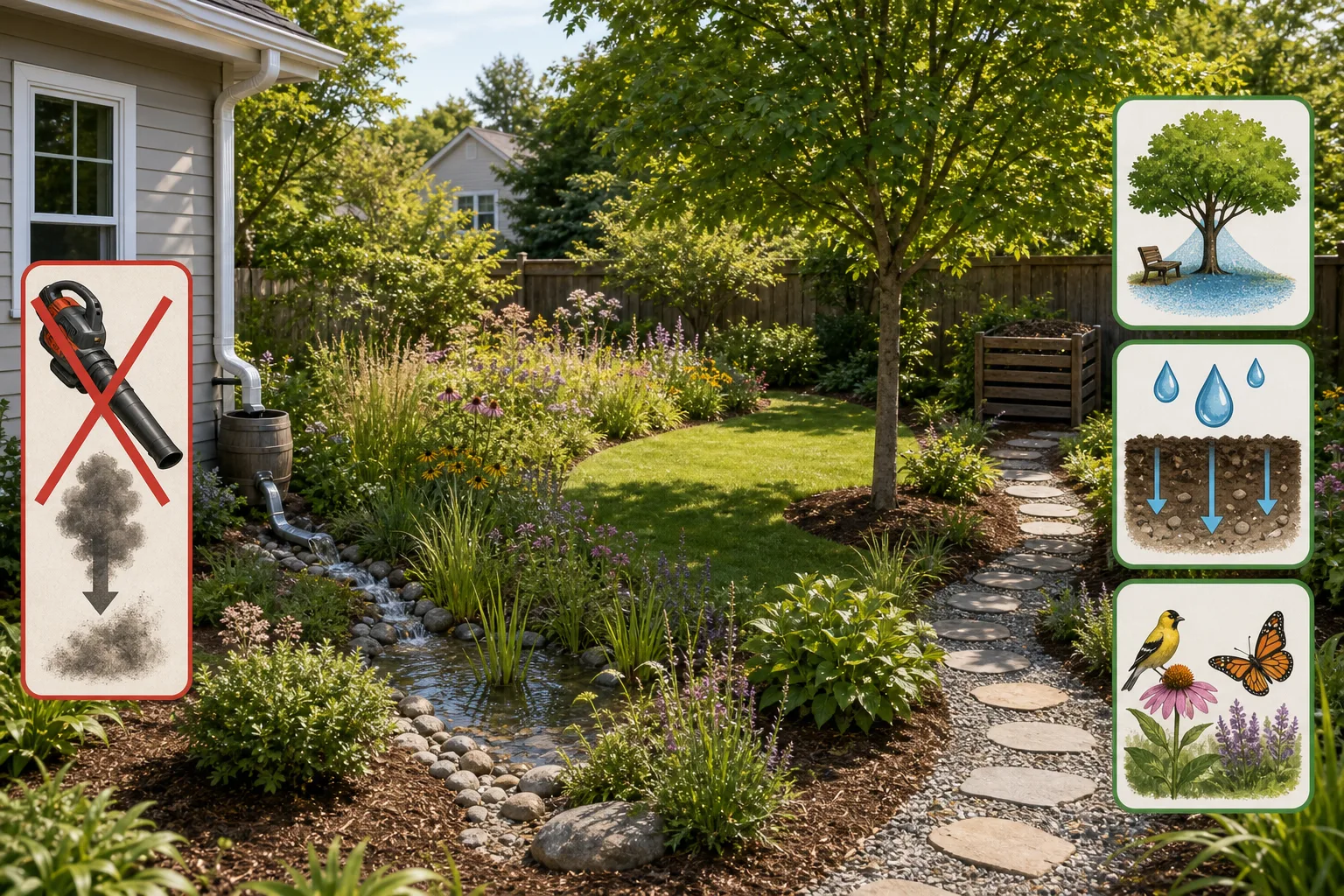
Your garden is not a carbon vacuum, but it can still fight heat, drought and wasted work
The useful climate yard is not sold as an offset. It is designed for shade, water, soil, habitat and less maintenance.
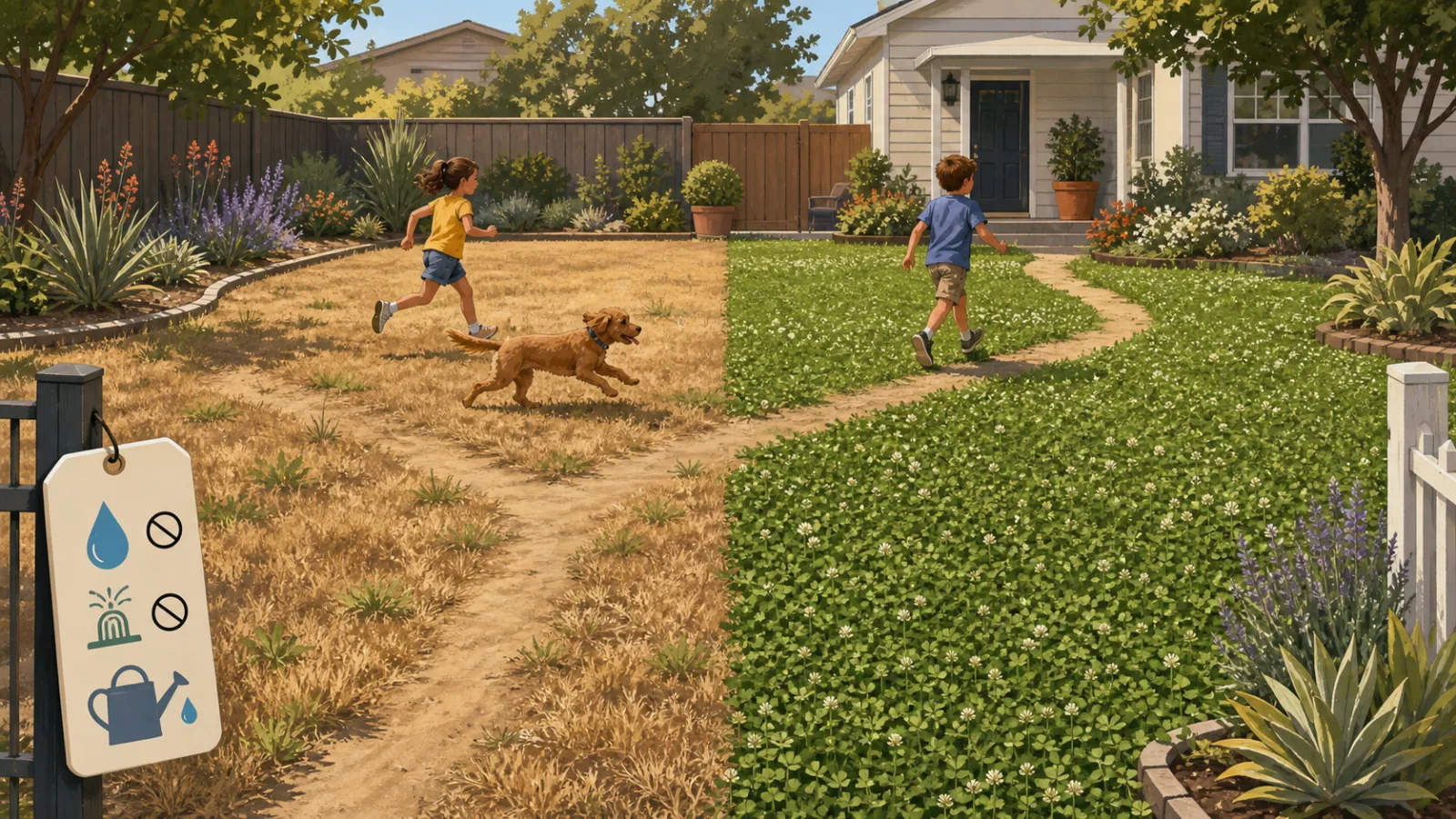
Microclover lawns can beat the heat. They can also be the wrong answer
A viral clover patch stayed green under drought limits, but the practical lesson is not “plant clover everywhere.” Start with region, species, water, traffic and rules.
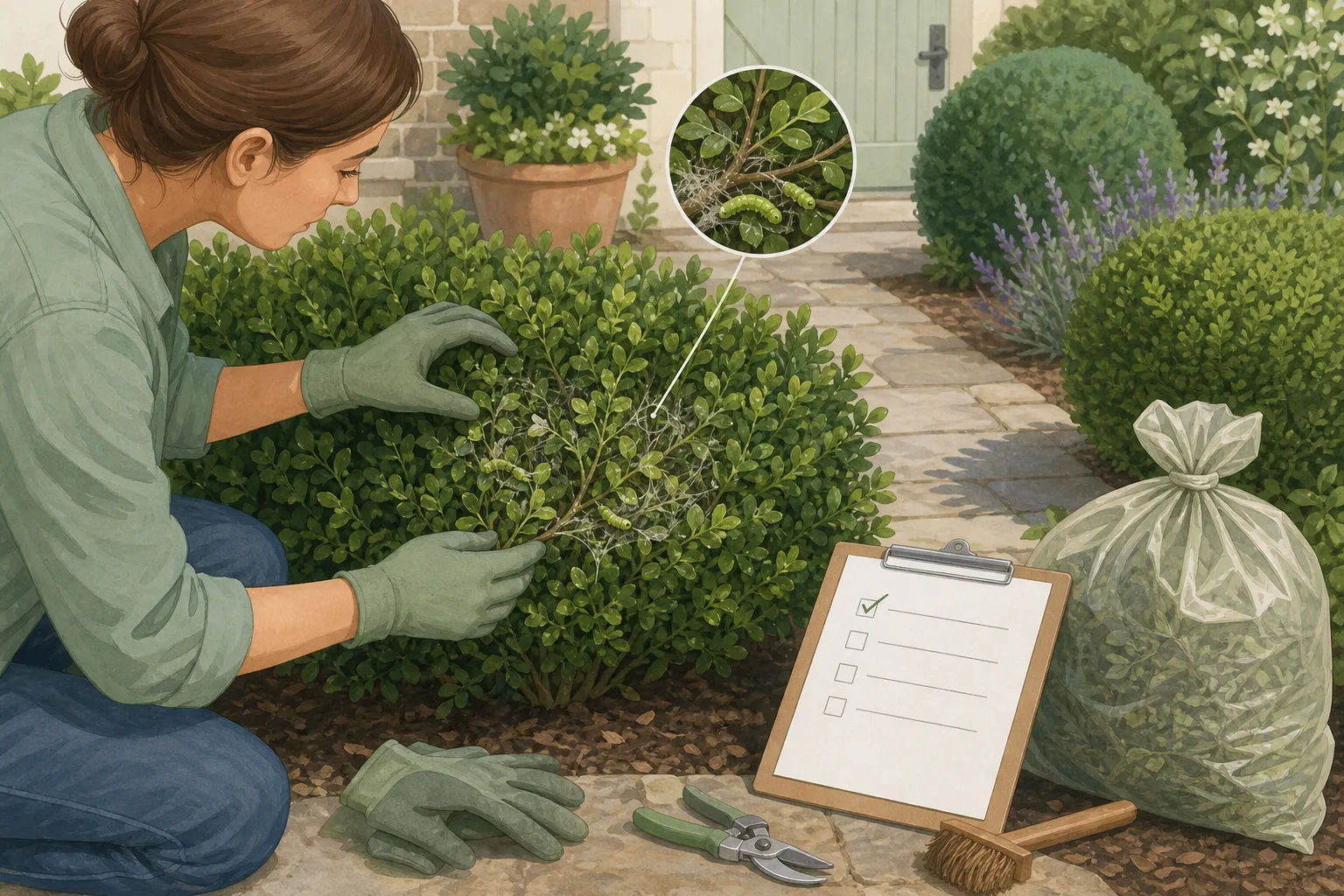
Box tree moth: what to do in the first 48 hours when boxwoods turn brown
A brown boxwood hedge is not always drought scorch. Check inside the plant, isolate clippings, follow local reporting rules and decide quickly whether to treat or replace.
When an HOA calls native plants weeds, design is your best defense
A native or drought-wise yard can save water and feed pollinators, but it still has to read as maintained. Here is how to plan, document and defend a living yard before a fine arrives.
Comments
Sign in to comment.
No comments yet.