Squirrels Are Digging Up Fall-Planted Bulbs: A Practical Protection Plan for November
Freshly planted tulips, crocuses and other bulbs can become easy targets in late autumn, when squirrels are both caching food and investigating disturbed soil. Here is how to identify the damage and protect bulbs with physical barriers instead of unreliable scent tricks.

A newly planted bulb bed can look fine one evening and appear peppered with holes the next morning. The damage is especially common in late autumn, when squirrels are burying food, revisiting old caches and investigating freshly disturbed soil. Tulips and crocuses are particularly vulnerable, but the digging can also displace bulbs that the animal does not eat.
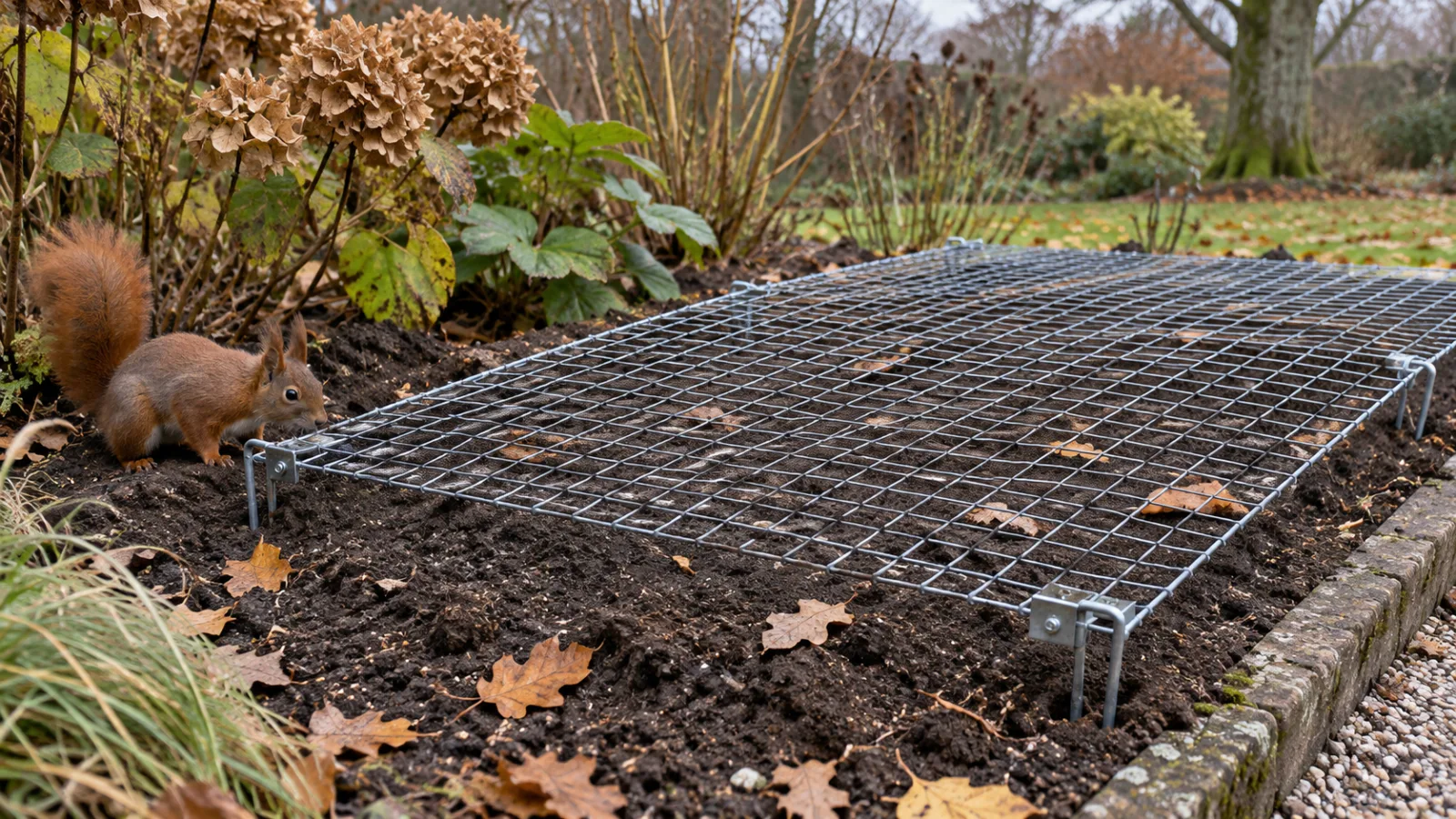
The useful response is not to declare war on every squirrel in the yard. It is to protect the planting for the short period when the soil is loose and the bulbs are easy to find. A temporary physical barrier, installed without trapping stems or creating a hazard for pets and wildlife, is usually more dependable than a strong-smelling home remedy.
This matters now because a bulb that is dug up, chewed or left sitting near the soil surface may rot, dry out or freeze before it has a chance to establish roots. The following plan is designed for the northern-hemisphere late-autumn planting window. Adjust the timing to your local frost pattern and always follow the depth and spacing instructions supplied with the bulb.
First, work out what is actually digging
A hole by itself is not proof that a squirrel has eaten a bulb. Squirrels often dig in a bed because the soil is easy to work, because they are hiding acorns or nuts, or because the smell of freshly handled bulbs has attracted their attention. They may leave a bulb untouched beside the hole. Chipmunks, mice, voles, birds and even a curious dog can produce superficially similar disturbance.
Look for a pattern rather than one mark. Squirrel damage commonly includes shallow conical holes, scattered soil, an exposed bulb or a bulb pulled out and left nearby. The disturbance may occur across the entire newly planted area rather than in one tunnel-like line. If the planting is in a pot, look for soil pushed over the rim or a single deep hole made close to the surface.
Voles are more likely to work from below or through existing cover, and their damage can include gnawing. Mice may remove small bulbs or seed-like material. A cat, dog or person can create larger, irregularly placed depressions. If the soil is wet, footprints and the direction in which soil was thrown can help, but do not spend hours trying to identify an animal before protecting the planting. Repeated disturbance is the important fact.
A simple overnight check can settle the question. Smooth a small section of soil, cover part of it with a loose piece of mesh that cannot catch an animal, and inspect the bed in the morning. A cheap motion camera can also help, but it is not necessary for a small border. The aim is to choose a safe barrier, not to build a wildlife investigation.
Why freshly planted bulbs attract trouble
Bulbs are most exposed immediately after planting. The ground has been loosened, the surface carries the smell of handled soil and bulb skins, and there is little root growth to hold the planting in place. In a mature bed, roots, leaf litter and established groundcover make digging less convenient. In a newly turned strip, the animal encounters an easy patch.
The seasonal timing adds another pressure. Tree squirrels spend autumn gathering and storing food. The Royal Horticultural Society notes that grey squirrels may damage bulbs, corms, seeds, fruit and other plant material, with tulips among their preferred targets. That does not mean every hole is a feeding attempt. It does mean a newly planted tulip bed is competing with a very active period of squirrel foraging and caching.
Bulb choice can change the odds, but it is not a complete solution. Daffodils and some alliums are generally less attractive to many rodents because of their chemical defenses and taste. Tulips and crocuses are more frequently disturbed. Even a less palatable bulb can be dug up accidentally while a squirrel searches for something else, so plant selection should be treated as a risk-reduction measure rather than a guarantee.
The most reliable fix: cover the planting
For a border, the most practical protection is a sheet of rigid or semi-rigid metal mesh laid over the soil and secured at the edges. One-inch poultry wire is a commonly recommended size for bulb beds; University of Missouri Extension and Ask Extension both describe poultry wire or similar mesh as a way to prevent squirrels from reaching newly planted bulbs.
The mesh should cover the whole disturbed area, not just the spot where one bulb was found. Extend it beyond the edge of the bed so an animal cannot simply dig around the perimeter. Pin it firmly with landscape staples, bent wire pins or safe garden pegs. Check the corners after rain and wind; a lifted corner turns a barrier into an invitation.
You can install the mesh in two ways. The simplest is to lay it flat on top of the soil, then cover it lightly with leaves or mulch so the bed looks less industrial. The other is to position it just below the surface or several inches above the bulbs, depending on the construction of the bed. The barrier must not press directly on emerging shoots, and it must remain accessible for removal when growth begins.
For bulbs planted in a lawn or an open border, a flat cover is often enough. For a raised bed with soft sides, a shallow frame can hold the mesh level. For a small group of bulbs, a cut section of hardware cloth can be shaped into a cage or basket. The edges should be folded or capped so there are no sharp points exposed where a child, pet or gardener can catch skin or clothing.
Do not use loose fishing line, thin plastic netting with large loops, or tangled scrap wire as a casual cover. Materials that can wrap around feet, paws, wings or necks create a wildlife hazard. If plastic netting is used at all, it needs to be taut, visible, securely supported and appropriate for the local wildlife; metal mesh with a sensible opening is usually easier to manage for a short-term bulb barrier.
Plant depth helps, but it is not squirrel insurance
Plant bulbs at the depth recommended for that species and the local soil conditions. A common horticultural rule is to plant many bulbs at roughly two to three times their own height, measured from the bulb base to the soil surface, but packaging instructions and regional guidance take priority. Some bulbs need shallower placement, while heavy or poorly drained soil may require adjustments.
Planting too shallow leaves bulbs exposed to animals, temperature swings and drying. Planting excessively deep can delay emergence, reduce flowering or make the bulb more vulnerable in heavy, wet soil. Digging deeper solely to outrun squirrels is therefore a poor substitute for a barrier.
After setting the bulb, firm the soil gently so there are no large air pockets. Water according to the conditions: enough to settle the soil and begin root development, but not so much that the bed remains saturated. In a cool, wet autumn, additional watering may be unnecessary. If the bulb has been dug up, replant it at the correct depth rather than leaving it beneath a thick pile of loose soil.
A thin mulch can make the surface less inviting and can moderate freeze-thaw changes, but mulch by itself will not reliably stop a determined squirrel. Avoid burying the planting under a heavy, wet layer before the soil has settled, especially in poorly drained ground. The University of Wisconsin–Madison Extension guidance emphasizes that winter mulch is intended to reduce damaging cycles of freezing and thawing and is best applied when plants are dormant and late-fall conditions are appropriate. That is a separate job from wildlife exclusion.
Container bulbs need a different approach
Pots are easy for squirrels to investigate because the soil is loose, the planting area is small and the rim provides a convenient place to land. A squirrel may dig a single hole in a container and undo several bulbs in minutes.
Cover the surface with a piece of chicken wire or hardware cloth cut slightly larger than the pot. Secure it under the rim, around the outside of the container or with discreet pins that cannot be pulled out easily. Leave enough clearance for the shoots to emerge. If the pot has drainage holes, do not block them with the barrier or place the container in a saucer that holds standing water.
A second option is to use an aquatic basket or bulb basket with openings large enough for stems but small enough to make digging difficult. The RHS tulip growing guide specifically recommends protecting bulbs in containers with chicken wire and notes that interplanting tulips with daffodils may reduce losses. The basket is not a magic shield: a determined animal can still dig around it if the top is exposed, so the soil surface may need a separate cover.
Move containers to a sheltered, bright location only if that location still provides the cold period the bulbs require and does not create a watering problem. Do not bring hardy spring bulbs into a warm room simply to keep squirrels away. A cold frame, protected porch or fenced area may be suitable, but the correct overwintering conditions depend on the plant and the climate.
Choose barriers before repellents
Scent-based deterrents are tempting because they are easy to scatter. Garlic, chilli, coffee grounds, strong soaps, blood-based products and commercial repellents are all suggested in gardening discussions. Their performance is inconsistent. Rain dilutes them, new digging exposes fresh soil, and an animal that is highly motivated by food may ignore an unpleasant smell.
Repellents can also create new problems. Powders may wash into waterways, irritate skin or paws, attract other animals, or be inappropriate around edible crops. A product label is not optional merely because the product is sold as natural. If you use any commercial deterrent, check that it is legal and labeled for the intended site, follow the application directions and keep it away from children, pets and food crops as required.
Extension guidance generally favors exclusion when the goal is to protect a specific planting. University of Florida’s wildlife-damage guidance lists hardware cloth as a way to prevent squirrel access to bulbs, while University of Maryland Extension’s answer on squirrel deterrence cautions that repellents are not always reliable and recommends physical barriers where possible.
That approach also has a practical advantage: you can see whether the barrier is still in place. A scent treatment is hard to evaluate after rain. A mesh cover either covers the bed or it does not.
What to do if the bulbs have already been dug up
Start by checking the bulbs rather than discarding everything. A firm bulb with intact scales can usually be replanted. Remove loose soil gently and inspect for deep tooth marks, soft rot, mold or severe drying. A bulb that is mushy, foul-smelling or badly eaten is unlikely to recover and should not be planted beside healthy stock.
Replant sound bulbs promptly at the correct depth. Do not leave them exposed while you search for a solution; place them temporarily in a cool, dry, shaded spot for the shortest practical time, then finish the planting and cover it. If the ground is frozen solid, waterlogged or impossible to work without smearing the soil, wait for a workable window rather than forcing a planting hole into saturated ground.
If the animal has dug only a few test holes, firm the soil and protect the bed. If the entire planting has been excavated, consider whether the site is too close to a tree, feeder, hedge or other route used by squirrels. Relocating a container or changing the layout can help, but it should not be necessary to redesign the whole garden around one night of damage.
Do not respond by sealing holes in trees, destroying nests or using poisons. Those actions can harm non-target wildlife and may violate local wildlife rules. The Washington Department of Fish and Wildlife recommends temporary wire cages or netting for vulnerable plantings and notes that wildlife-control decisions should be made with attention to local law and humane practice.
Make the barrier seasonal, not permanent
Inspect the planting once a week through the active digging period and after major wind or rain. Remove leaves that hide a lifted edge, repair gaps and check that the mesh has not sunk onto the bulbs. When shoots begin to emerge, decide whether the barrier can remain safely above them or whether it must be removed.
A flat mesh cover is often most useful until the ground freezes firmly or until the planting has settled and the risk of fresh digging declines. In milder climates, squirrels may remain active for much of the winter, so a calendar date is less useful than observing the bed. In colder climates, the barrier may be buried by snow, but it still needs to be secured before the first storm.
Remove or reposition the cover before shoots become trapped. If you leave it in place too long, stems can grow through the mesh and become bent, damaged or difficult to release. Keep a small pair of wire cutters nearby in case an unexpected shoot becomes caught, and wear gloves when handling galvanized mesh.
Store reusable mesh dry after the season. Shake off soil, check for broken wires and mark the sharp edge. A labeled roll of mesh, a handful of staples and a pair of cutters are usually more valuable for repeated bulb protection than a cabinet full of scented remedies.
A low-conflict planting strategy for next autumn
If squirrels repeatedly defeat tulip plantings, change the design rather than repeating the same expensive loss. Plant the most vulnerable bulbs in concentrated groups that can be covered efficiently. Mix in daffodils, alliums or other locally suitable bulbs that are less appealing to many rodents, while remembering that no plant is completely animal-proof. Use containers with a built-in barrier or place pots where they cannot be launched from a nearby branch or fence.
Avoid leaving bulb wrappers, broken scales and loose soil piled around the bed. Clean the planting area, but do not treat ordinary garden soil as contaminated. The goal is simply to remove clues and make the surface less attractive to repeated investigation.
If a bird feeder is drawing squirrels directly over the bulb bed, move it rather than trying to protect both systems with increasingly strong deterrents. The distance needed depends on the feeder and local wildlife, but Kansas State University Extension advises placing bird feeders at least eight feet from vegetation or structures from which squirrels can jump. Feeders also need regular cleaning and safe placement for birds; relocating one is not a guarantee that squirrels will disappear.
Choose the protection level according to the value of the planting. For a few inexpensive bulbs, replacing several may be simpler than constructing a cage. For a rare collection, a large container display or a bed planted with dozens of tulips, a reusable mesh system is cheap insurance. The right answer is the one that protects the plants without creating an ongoing maintenance burden.
The November decision in one minute
If you see fresh holes, exposed bulbs and scattered soil, assume the bed needs protection even if you have not identified the animal. Replant firm bulbs, firm the soil and cover the entire disturbed area with securely anchored, wildlife-safe mesh. Use the bulb’s recommended depth, not extreme depth, and treat mulch as winter protection rather than a squirrel barrier.
If the damage is limited to a container, cover the pot surface and check the rim after rain. If repellents have failed, stop adding more scents and improve the physical exclusion. If the planting is in a region with mild autumn weather, keep checking the bed because digging activity may continue. If the ground is frozen or waterlogged, wait for workable soil before replanting.
Spring bulbs are a long-term promise made in autumn. A short period of careful protection is often enough to keep that promise intact, while allowing squirrels to remain part of the wider yard rather than turning the whole garden into a wildlife conflict.
Related articles
Comments
Sign in to comment.
No comments yet.