Solar flux 101, low Kp: what August 7 space weather means for FT8 and JTDX operators
A practical HF diagnostic workflow for a quiet but not high-margin propagation day: read the NOAA numbers, check spots, then decide whether the antenna or software really needs attention.
A thin waterfall is not always a broken station. On 7 August 2026 the official space-weather picture is more useful than the usual shack folklore: NOAA’s WWV message at 09:10 UTC reported solar flux 101, an estimated planetary A-index of 3 for 6 August, and a K-index of 1.67 at 09:00 UTC. The SWPC three-day forecast issued at 00:30 UTC put the greatest observed three-hour Kp in the previous day at 1, with the highest expected three-hour Kp for 7–9 August at 3.67. That is below NOAA storm-scale levels. The same forecast listed no observed radio blackouts in the previous 24 hours, a 10 percent chance of R1–R2 radio blackouts on 7 and 8 August, and 5 percent on 9 August.
The first editorial correction to the briefing is important. The short 3-day forecast says no G1 or stronger geomagnetic storms are expected, while the longer SWPC Forecast Discussion notes that active conditions and a chance of G1 storming are possible late on 7 August if older CME material arrives, with unsettled or active intervals possible into 8–9 August. That is not a contradiction operators should ignore; it is the difference between the compact probability table and a forecaster’s narrative about low-confidence late-period influences. For practical FT8 and JTDX work, the conclusion is: start the day from a quiet baseline, but keep watching the numbers if the evening bands change abruptly.
Read the baseline before touching the station
A quiet geomagnetic reading does not mean every band will sound loud. Solar flux near 101 is workable, but it is not the generous high-flux environment that makes 10 metres feel easy. In many mid-latitude paths, 20 metres and 17 metres remain the dependable daylight workhorses, 15 metres can be selective, and 10 metres may open only briefly or toward favourable paths. After local sunset, 40 metres and 30 metres often become the more honest bands for low-power digital operation, while 80 metres depends heavily on local noise and antenna compromise.
For a digital operator, the mistake is to treat a low Kp value as a promise of high signal reports. Kp and A-index tell you mainly about geomagnetic disturbance. They do not replace MUF, grey-line geometry, D-layer absorption, seasonal noise, antenna takeoff angle, or whether the other end of the path is awake. A day can be geomagnetically calm and still feel weak on higher bands because solar flux is modest, the path is marginal, or the active region mix is not producing useful ionization for your route.
Make the first check outside the shack. Read the SWPC WWV alert for SFI, A and K. Then read the 3-day forecast for geomagnetic and blackout probabilities. If you have time, skim the Forecast Discussion because it explains why the table may change later. In this case it reports low solar activity, an isolated C1.0 flare on 6 August at 19:29 UTC from a new unnumbered southeast region, four numbered regions on the visible disk, no Earth-directed CMEs in available coronagraph imagery for the reporting period, and quiet ambient solar wind that fell from about 350 km/s to below 300 km/s.
What the numbers imply for FT8 and JTDX
FT8 is excellent at making a band look alive, but it can also make marginal propagation look deceptively binary: either the screen fills with decodes or it feels dead. On a solar-flux-101 day, expect weaker margins on 12 and 10 metres than during stronger Cycle 25 peaks. If you see only a few decodes on 10 metres, do not immediately blame the antenna. Compare the same hour on 15, 17 and 20 metres. If 20 metres is producing broad intercontinental spots while 10 metres is thin, the station is probably behaving normally.
JTDX and WSJT-X users should also watch the shape of the waterfall. A quiet RF environment with few signals suggests propagation or activity, not necessarily receiver overload. A waterfall full of vertical streaks, wide noise bands, switching-supply hash or repeated local birdies points back to the station. The difference matters: changing AGC, input gain or decode settings will not fix a closed path, while waiting for the band to improve will not fix a laptop charger spraying noise into the receiver.
Use PSK Reporter, WSPRnet, Reverse Beacon Network and local skimmer data as comparative instruments rather than scoreboard trophies. Look at stations near your grid and antenna class if possible. If several nearby stations with modest antennas are being heard on 20 metres across the same target area, but your station is absent, the problem may be local. If the entire regional map is thin on that band and path, the correct repair may be patience or a band change.
A practical order of checks
Start with time and band. Record UTC, band, mode, power and antenna before changing anything. Then write down the WWV/SWPC snapshot: SFI 101, A-index 3, current K or Kp, and the radio blackout probability if you are operating near daylight paths affected by X-ray events. A short note is enough. The point is to give tomorrow’s self a way to separate weather from wiring.
Next compare receive evidence. Are you decoding stations at normal strength for the band? Are you being heard by remote reporters at distances that make sense? If receive is normal but nobody answers, check transmit audio level, ALC behaviour, split operation, clock synchronization and whether the software is using the intended radio and sound device. If both receive and transmit reports are poor, move the same setup to a more reliable band before unscrewing feed lines.
Only after that should the hardware bench come out. A NanoVNA sweep is valuable when the symptom follows the antenna across bands, when an outdoor connection may have taken water, when SWR changed suddenly, or when a portable antenna was rebuilt. It is less useful as the first reaction to a global propagation dip. Measure at the right reference plane, use a proper calibration, and remember that an antenna can show an acceptable match while still having a poor radiation pattern, bad common-mode current, lossy feed line or unfavourable height.
Finally, check local noise. Turn off laptop chargers, LED lamps, solar inverters, USB hubs and cheap wall supplies one at a time. Watch the waterfall and the audio spectrum, not just the S-meter. A three-decibel noise reduction may be worth more than another twenty watts on FT8, especially when the path is already marginal.
Band expectations for 7–9 August
For daytime operation from many temperate locations, 20 metres is the safe starting point for international FT8. Seventeen metres is worth checking when 20 metres is crowded or when the path geometry favours it. Fifteen metres may reward patience around local midday and afternoon, but it will be less forgiving of small antennas and low elevation angles. Ten metres should be treated as opportunistic: watch beacons, spots and the waterfall, but do not diagnose the station from one quiet 10-metre hour.
For evening and night, 40 metres and 30 metres deserve more attention than operators sometimes give them during high-solar-activity months. They can provide steadier digital contacts when higher bands collapse, but they also expose local noise and compromised antennas. Eighty metres is useful for regional work and late-night experiments, yet it is often the band where household interference and small-lot antennas dominate the result.
The slight R1–R2 blackout probability matters mostly as a caution against overconfidence. An R1 event can disturb the sunlit side of Earth, especially lower HF, but the forecast probability is low. Do not write the day off because a table says 10 percent. Also do not ignore a sudden fade if SWPC alerts start changing. The right habit is to compare your log with the official timeline.
Logging that pays back later
The most useful station log is not only callsign, grid and signal report. Add a propagation column: SFI, Kp or K, A-index, band, UTC, power, antenna, and a one-line observation such as “20 m open to western Europe, 10 m only local decodes” or “waterfall clean, no reports from nearby PSK Reporter nodes.” This takes less than a minute and prevents false repairs.
ARRL’s 1 August Solar Update gives the wider amateur-radio context: late July had more activity, but visible regions were expected to fade after the beginning of August, while shorter periods of degraded shortwave propagation could still appear irregularly. That matches the operator experience many people report in forums: one day feels productive, the next one looks thin, and the first instinct is to retune something. The better response is to put the current NOAA numbers next to your own evidence.
Recent amateur-radio discussion also points in the same practical direction. Operators are asking about lost ADIF timing, NanoVNA choices, QRP build problems, antenna parts and type-acceptance rules. Those threads are not factual authority for space weather, but they show where real station anxiety lives: logs, antennas, measurement tools and whether the equipment is doing what the operator thinks it is doing. A propagation checklist keeps those anxieties in order.
The operator takeaway
For this slot, the channel fit is strict: the subject is amateur-radio practice, FT8/JTDX operation, propagation interpretation and hobby-electronics troubleshooting. The official 7 August data does not justify a dramatic “HF is broken” story. It supports a more useful conclusion: today begins from quiet geomagnetic conditions with modest solar flux and a small blackout risk, while late-period CME influences remain worth watching.
So if FT8 or JTDX looks weak, resist the urge to change five variables at once. Check SWPC and WWV, compare bands, look at reporter maps, verify clock and audio, then measure the antenna. If the evidence says propagation is the main limit, move bands or wait. If nearby comparable stations are being heard and you are not, then the NanoVNA, feed line, noise hunt and software settings have earned their place on the bench.
Related articles
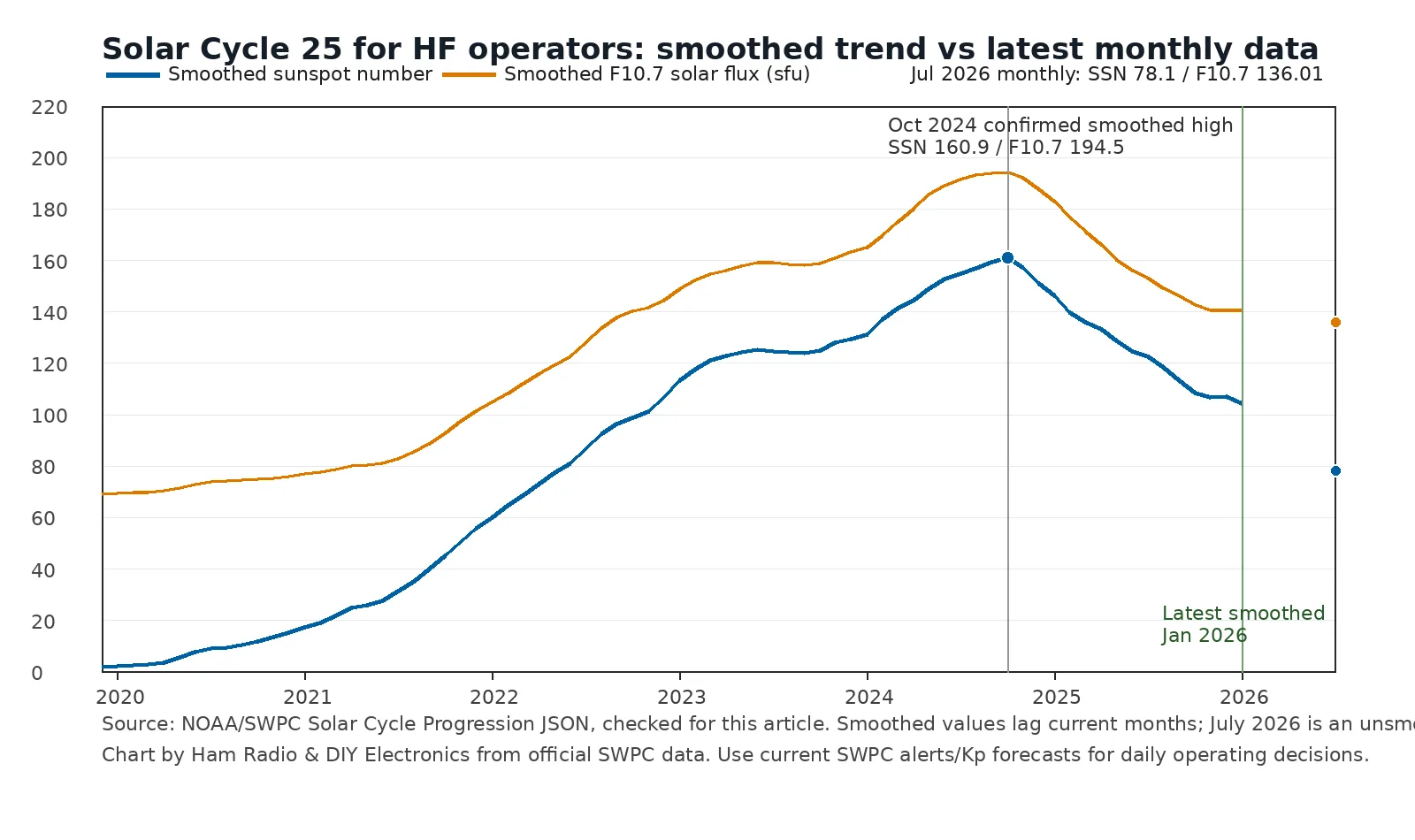
Solar Cycle 25 after the peak: how FT8 and JTDX operators should read SWPC data before blaming the antenna
A practical HF guide for August 2026: separate solar-cycle trend, daily space weather and station evidence before retuning hardware.
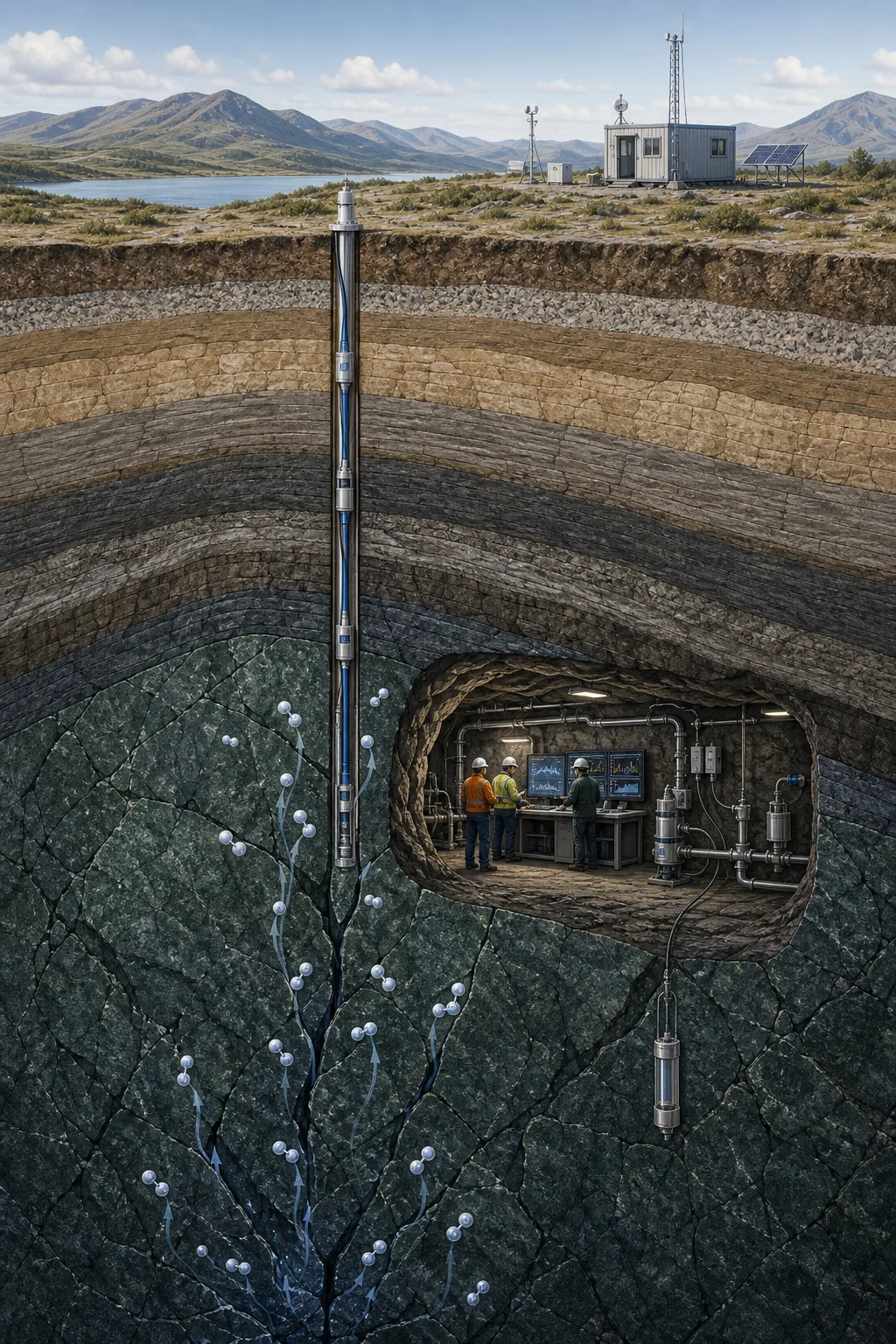
Geologic hydrogen is becoming measurable, not magical
Fresh field data and stimulation experiments make underground hydrogen a cautious good-tech story: promising for hard-to-electrify industry, but still waiting for scale, cost and leakage proof.
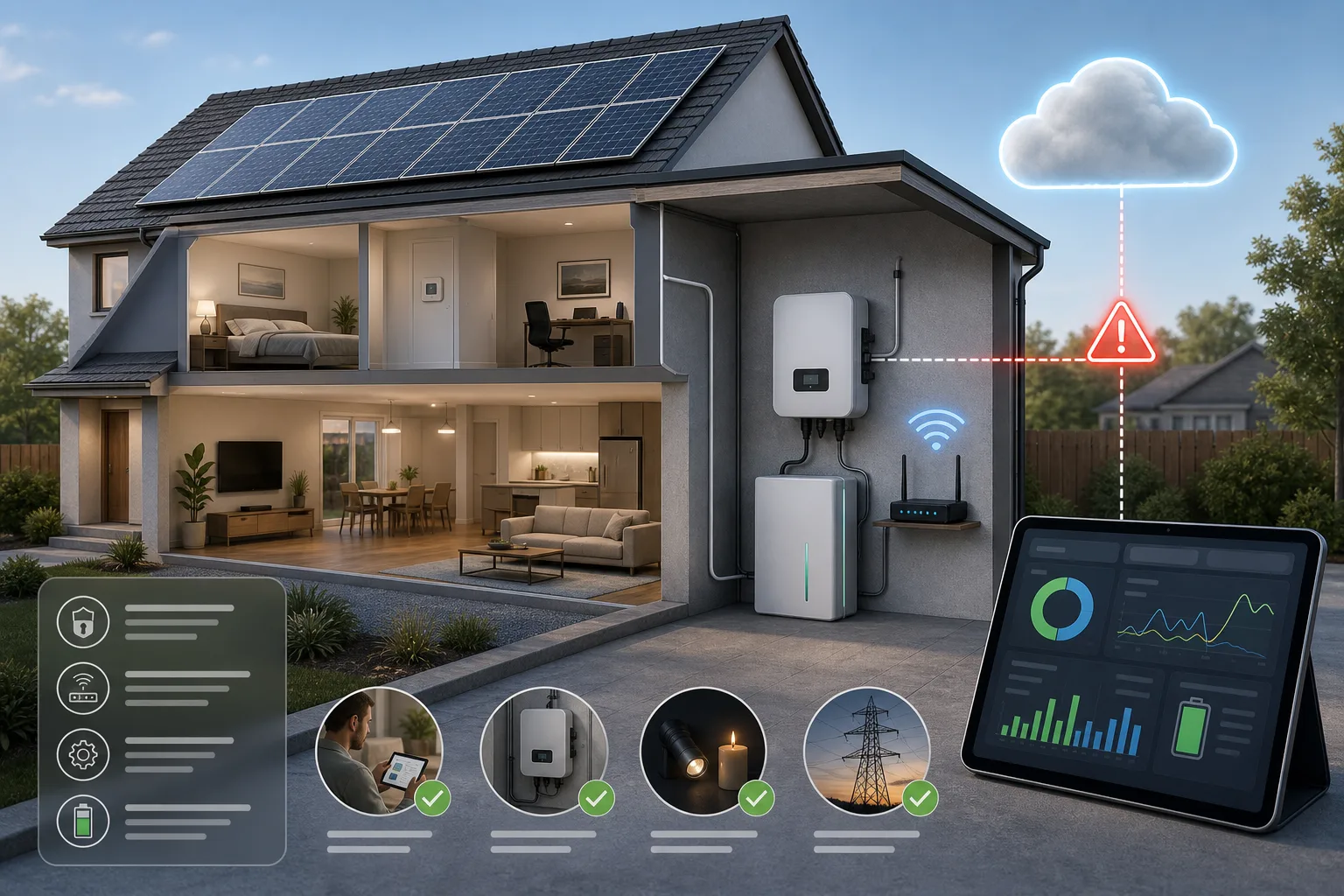
Your solar inverter is now a smart-home cloud question
The FCC inverter decision is not a recall. It is a reminder to ask whether home solar, batteries and backup power still work when the vendor cloud does not.
Solar Cycle 25 已过高点?FT8/JTDX 操作员应先读懂 SWPC 数据
面向 2026 年 8 月 HF 数字模式操作的实用判断:把太阳周期趋势、每日空间天气和本台日志分开。
Comments
Sign in to comment.
No comments yet.