Use the Reverse Beacon Network to Test a Station Before the Next Contest
ARRL’s October 27 contesting session is a useful prompt to treat contest preparation as measurement: use RBN spots, controlled CQs, and a simple log to separate propagation, coverage, and station faults.
Why contest preparation needs a measurement step
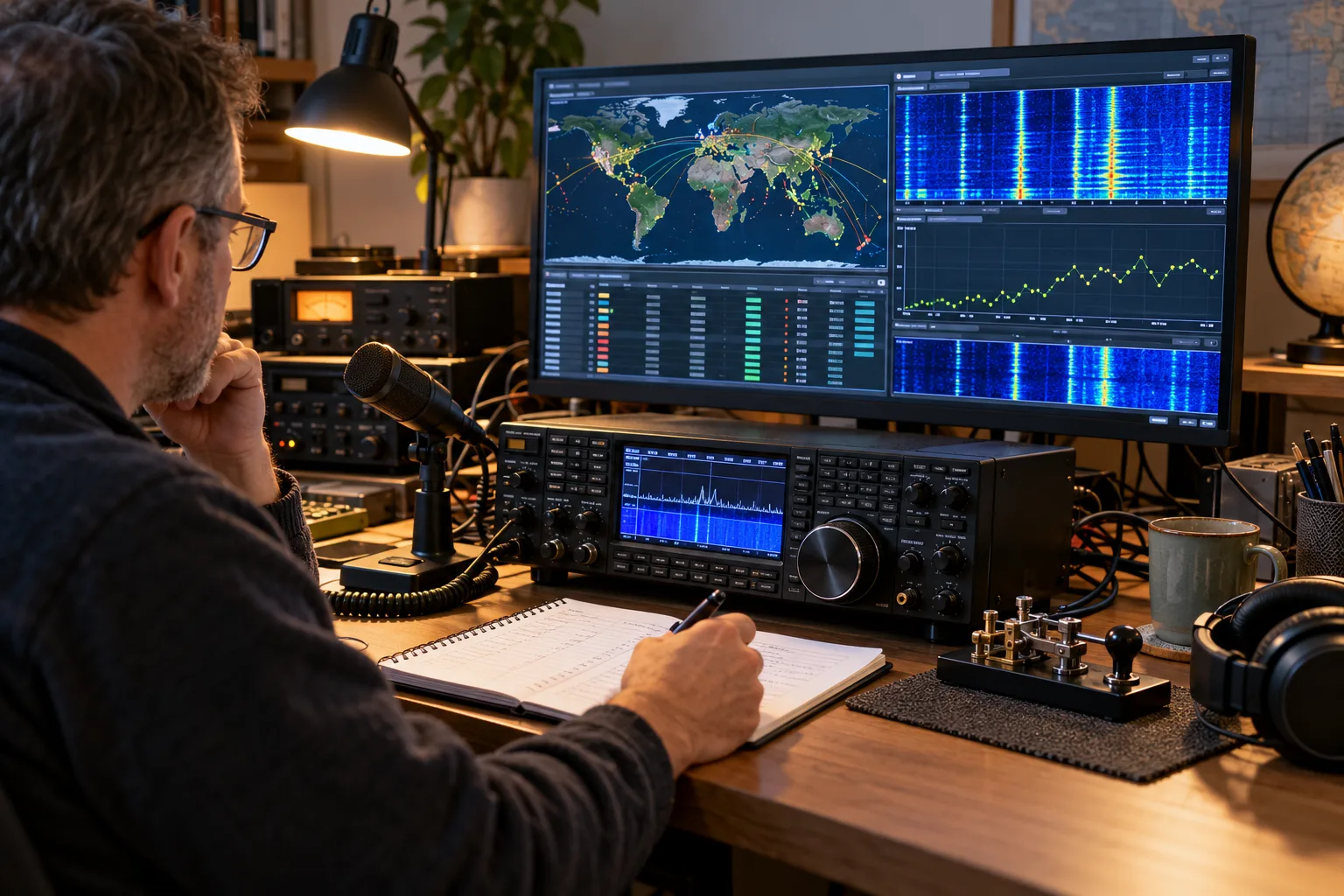
ARRL’s October 27, 2026 On the Air Live session on contesting is a useful prompt to look at preparation as more than a checklist of frequencies, software, and spare cables. Before the next contest, an operator can ask a narrower and more practical question: if the station performs poorly, what evidence will show whether the cause was propagation, antenna coverage, or the station itself? That question matters because a contest result is a mixture of conditions. A quiet band, an unfavorable path, a weak direction, an untested antenna, an offset signal, or an operating problem can all appear in the log as the same thing: fewer contacts than expected.
The first step is therefore to create a repeatable measurement point before the event. The Reverse Beacon Network (RBN) can help by showing whether automated receiving stations decode a controlled transmission, but the useful result is a pattern rather than a verdict. A single loud report may reflect one favorable path. A missing report may reflect the receiving network’s coverage, the momentary state of the band, or the limits of automated decoding. Neither observation, by itself, proves that the station is healthy or faulty.
That distinction is especially important when contest preparation is driven by the calendar. ARRL’s contest calendar places operating events in a schedule, while the October 27 session provides a timely reason to review the station before entering one. The calendar tells an operator when an opportunity is approaching; it does not tell them whether an antenna covers the intended bands effectively or whether a transmitted signal is being heard beyond the nearest receiving site. Those are testable questions, but they need to be separated from the excitement and uncertainty of the contest itself.
A useful pre-contest check begins with a fixed set of conditions. Choose a band, a power level, a mode, and an antenna, then make a short, properly identified test transmission during a quiet interval. Record the UTC time, frequency, mode, power, antenna, and the receiving stations that report it. Repeat the same kind of test on another band or at another time. The point is not to manufacture a flattering signal report; it is to make the observations comparable. If several distant receiving stations report a signal on one band and fewer do so on another, that is evidence about coverage under those conditions. It is not a complete measurement of the antenna, and it is not a promise about contest performance.
This approach also prevents a common diagnostic mistake: treating the last contact, or the absence of one, as a component test. A missed multiplier can be caused by many things that have nothing to do with a damaged feed line. Conversely, a strong contact does not rule out a frequency error, an unstable setup, or a band on which the station is reaching only a limited set of paths. A short log of controlled tests gives the operator something better than memory after the contest: a record that can be compared when the band changes, when the antenna changes, or when the station is operated under similar conditions again.
The goal is modest but valuable. RBN observations can help distinguish a broad propagation change from a problem that follows one band, antenna, or configuration. They can also show when the available evidence is too thin to support a conclusion. Treating the test as measurement keeps the operator from over-interpreting one SNR value or one missing spot, and it creates a clearer handoff to the next diagnostic step: understanding exactly what an RBN spot reports, and what it cannot report.
What an RBN spot actually tells you
The Reverse Beacon Network (RBN) is best understood as a distributed listening system, not as one receiver with a single verdict about your station. Volunteer receiving stations listen for automatically decodable transmissions and publish reports. A spot can identify the transmitting frequency, reception time, mode, receiving station, and a signal-strength value. Together, those fields provide a small, time-stamped piece of evidence: a particular receiver decoded what your station sent under specific conditions.
That distinction matters when the goal is station diagnosis. A spot confirms a successful decode at one receiver; it does not certify that the antenna works equally well in every direction, that the transmitter is clean across the band, or that a human listener would judge the signal in exactly the same way. The report is useful because it is specific, but it remains a measurement made by one receiving site. Its value increases when it is compared with several reports from the same test and with results from another band or time.
RBN’s live-spots interface lets an operator filter the stream instead of treating every report as relevant. Frequency, band, mode, callsign, and receiving-station filters help narrow the view to the transmission being checked. That makes the network practical for a controlled test: send a short, identified CW or RTTY signal, then look for reports matching its frequency and time. The purpose is not to collect the biggest possible spot count. It is to identify which reports belong to the test and preserve enough context to interpret them later.
The network’s propagation tools add another layer. RBN provides maps and comparison views for examining spots across locations, bands, and time. Those views can help show whether a pattern is specific to your signal or part of a broader change affecting the band. If many stations are being heard differently at the same time, propagation deserves consideration before the station is blamed. If your test repeatedly produces a similar geographic pattern while other signals remain usable, the result warrants a closer look at antenna coverage, power, frequency accuracy, or the receiving conditions along that path.
Coverage is the first major limitation. RBN reports only what participating receiving stations can hear and decode, and their distribution is uneven. A path may not be represented at all. A missing spot therefore does not prove that your transmission was absent from the band or that the station failed. No suitable receiver may have been listening, the signal may not have reached one strongly enough, the transmission may not have met the decoder’s requirements, or a filter may have hidden the report. Treat “no spot” as “no observation in this network at that moment,” not as a definitive fault diagnosis.
Automatic decoding creates a second boundary. A decoded report is evidence that a receiver and decoder recognized the transmission, but it is not a complete substitute for a human listening test. A person may hear a weak or imperfect signal that an automated decoder does not report. Mode, timing, interference, receiver configuration, and decoder behavior all affect whether a transmission becomes a spot. For the same reason, one SNR value should not be treated as a laboratory-grade rating of the transmitter or antenna.
Signal strength is most useful comparatively. Record reports from multiple receiving stations, along with their locations and the test conditions, and look for a repeatable pattern rather than a winning number. A high value from one nearby receiver may say less about broad coverage than several consistent reports from different directions. A low value on one path may reflect propagation rather than a station defect. Comparing like with like—same mode, band, power, antenna, and a similar transmission—makes the data more informative than comparing isolated numbers gathered under changing conditions.
A useful record is compact but complete: UTC time, band, frequency, mode, power level, antenna, callsign, receiving station, reported strength, and unusual conditions. Keep the relevant live-spot or map view if needed, but do not let the visual density of a map replace the underlying details. The dashboard can reveal a pattern; the log explains what changed when that pattern appeared.
Used this way, an RBN spot answers a narrow question: did a participating receiver decode this particular transmission, and what did it report at that time? Repeated spots, band-to-band comparisons, and the surrounding propagation picture can support a station check. A lone report—or a blank result—cannot carry the whole conclusion. The network is most useful when treated as an instrument with a defined field of view, measurement limits, and a need for controlled comparisons.
A controlled CW or RTTY station check
A useful station check should be repeatable enough to separate a change in your station from a change in the band. Start with one band, one power level, one mode, and one antenna configuration. If several variables change at once, a different set of RBN reports cannot show which change mattered. The aim is not to turn one transmission into a contest-performance claim, but to create comparable observations under documented conditions.
Send a short, clearly identified CQ during a quiet interval, then watch which RBN receiving stations report decoding it. Record the UTC time, frequency, mode, power, antenna, and the callsigns or locations of the spotters shown by the network. A compact log is enough:
| UTC | Band/frequency | Mode | Power | Antenna | Spotters and reported strength | Notes |
|---|---|---|---|---|---|---|
The same approach works for CW or RTTY, provided the transmission follows normal practice for that mode. Keep the message short, identify the station, and confirm that the test remains within the limits applying to your licence, station, band, and jurisdiction. An RBN result is an observation of reception, not permission to transmit outside an authorised allocation or power limit.
Repeat the test without changing everything at once. The clearest comparison is another transmission on a second band while keeping the other conditions as similar as practical. You can also repeat on the same band at a different time, recording that time rather than treating the two observations as equivalent. If you change the antenna, power, or mode, mark the change in the log and treat it as a new test condition. Each row should make clear what was transmitted and under which configuration it was received.
Do not optimise around the loudest single SNR value. The Reverse Beacon Network collects reports from receiving stations, so one number belongs to one receiving location, path, noise environment, and decoding event. Compare several reports when available. A band producing reports from multiple distant spotters may indicate useful coverage at that moment; one nearby report does not establish broad coverage, and no report does not by itself prove that the station failed.
Use the RBN live view and its analysis tools as context for the test. The live display can show the receiving spotters, frequency, mode, signal strength, and timing of spots. Its propagation dashboard aggregates reports by region and can show signal-strength patterns by band and time, while the comparison view helps place several signals side by side. Those views can indicate whether an observation is isolated or part of a broader change, but they cannot replace your own record of UTC, frequency, mode, power, and antenna.
A practical sequence is therefore straightforward: select the test condition, send one short identified CQ, allow time for available reports to appear, and write down what the network shows. Repeat on another band or at another time, then compare the group of reports rather than the best report. If the two tests were made under different propagation conditions, keep that limitation in the notes instead of forcing a definitive verdict.
Keep this ordinary station diagnosis separate from contest assistance. A controlled check can reveal an obvious setup problem or show which band is producing useful reports, but an RBN spot does not determine what assistance is permitted during a particular contest. Before transmitting in a contest or using a spotting-related facility, verify that event’s rules and the applicable licensing requirements. The most useful record is simple: what was sent, when it was sent, from which station configuration, and which reports were actually received.
Turning the results into an operating decision
The useful question after a controlled test is not simply, “What was my best signal report?” It is, “What pattern appeared when the conditions and station settings were reasonably consistent?” A single RBN spot can confirm that a receiving station decoded something from your transmission, but it cannot establish that the band is broadly open, that your antenna is performing well in every direction, or that the same result will be available during the contest. Treat each report as one observation in a small operating experiment.
Several spotters at different distances on the same band provide more useful evidence than one unusually strong report. If those reports arrive within the same test window and remain reasonably consistent in frequency and signal strength, the band is showing practical coverage for your station at that moment. That still does not predict every path, because the RBN’s receiving-station locations and capabilities are uneven. It does, however, give you a better basis for deciding whether that band deserves attention in the operating plan.
A single local spot should be interpreted narrowly. It may show that your signal is reaching a nearby receiver, but it does not prove that distant paths are open or that the antenna has useful coverage toward the areas you want to work. The same caution applies to an absent spot. No report may mean that the transmission was not decoded, that no suitable receiver heard it, that the receiver was busy or unavailable, or that the signal fell outside the network’s effective coverage. Absence of a spot is a prompt for another check, not a diagnosis by itself.
Look for technical patterns as well. A repeated frequency offset can point toward a transmitter, transceiver, keying, or configuration check, especially when the offset appears across multiple receiving stations. An unstable report deserves the same kind of attention: first confirm that the test transmission was consistent, then check whether the variation is also visible in other stations or bands. If only one receiver reports an unusual value, avoid treating it as proof of a station fault. If many stations change at roughly the same time, the more likely explanation may be changing propagation rather than a sudden change in your hardware.
The comparison becomes stronger when you change only one factor at a time. Keep the mode, power, antenna, and message format fixed while moving to another band. Alternatively, remain on one band and repeat later with the same settings. Record the result before making a judgment. Changing the antenna, power, band, and time simultaneously may produce an interesting spot map, but it leaves no reliable way to identify which change caused the difference.
A compact log is enough:
| UTC | Band/frequency | Mode | Power | Antenna | Spotters | Report pattern | Decision |
|---|---|---|---|---|---|---|---|
| time | band and frequency | CW or RTTY | setting | antenna used | stations heard | stable, offset, sparse, or changing | use, retest, or inspect |
Add a short note for anything that could affect interpretation, such as a band change, an antenna switch, an interruption, or a repeated transmission. The purpose is not to create laboratory-grade data. It is to prevent memory from turning one strong report into a general conclusion, or one missing report into an unnecessary repair.
From that record, the operating decision can remain simple. A band with repeatable reports from multiple useful locations may be a reasonable place to call, listen, or allocate contest time. A band with sparse or inconsistent evidence may still produce contacts, but it should not be treated as proven coverage. A recurring offset, unexplained instability, or result that changes sharply after a station adjustment calls for a setup check before the contest. If every band changes together while other stations also appear to rise or disappear, preserve the station configuration and reassess propagation instead of chasing the equipment.
Finally, keep the test separate from the contest itself. Before transmitting, verify the event’s rules, assistance provisions, licensing limits, and the requirements that apply in your jurisdiction. A controlled CQ can be useful bench evidence, but it is not permission to ignore identification, band, mode, power, or operating restrictions. Used with that discipline, RBN data becomes a practical decision aid: it helps distinguish a promising path from a local observation, a propagation change from a station symptom, and a reason to retest from a reason to repair.
Related articles
A Glancing CME Is Due on October 2: How HF Operators Can Test the Path Without Blaming the Antenna
NOAA’s October 2 outlook points to a possible G1 disturbance from the flank of a September 28 CME. Here is a disciplined way to use FT8, WSPR, band reports and your own logs to separate a changing ionosphere from a station problem.
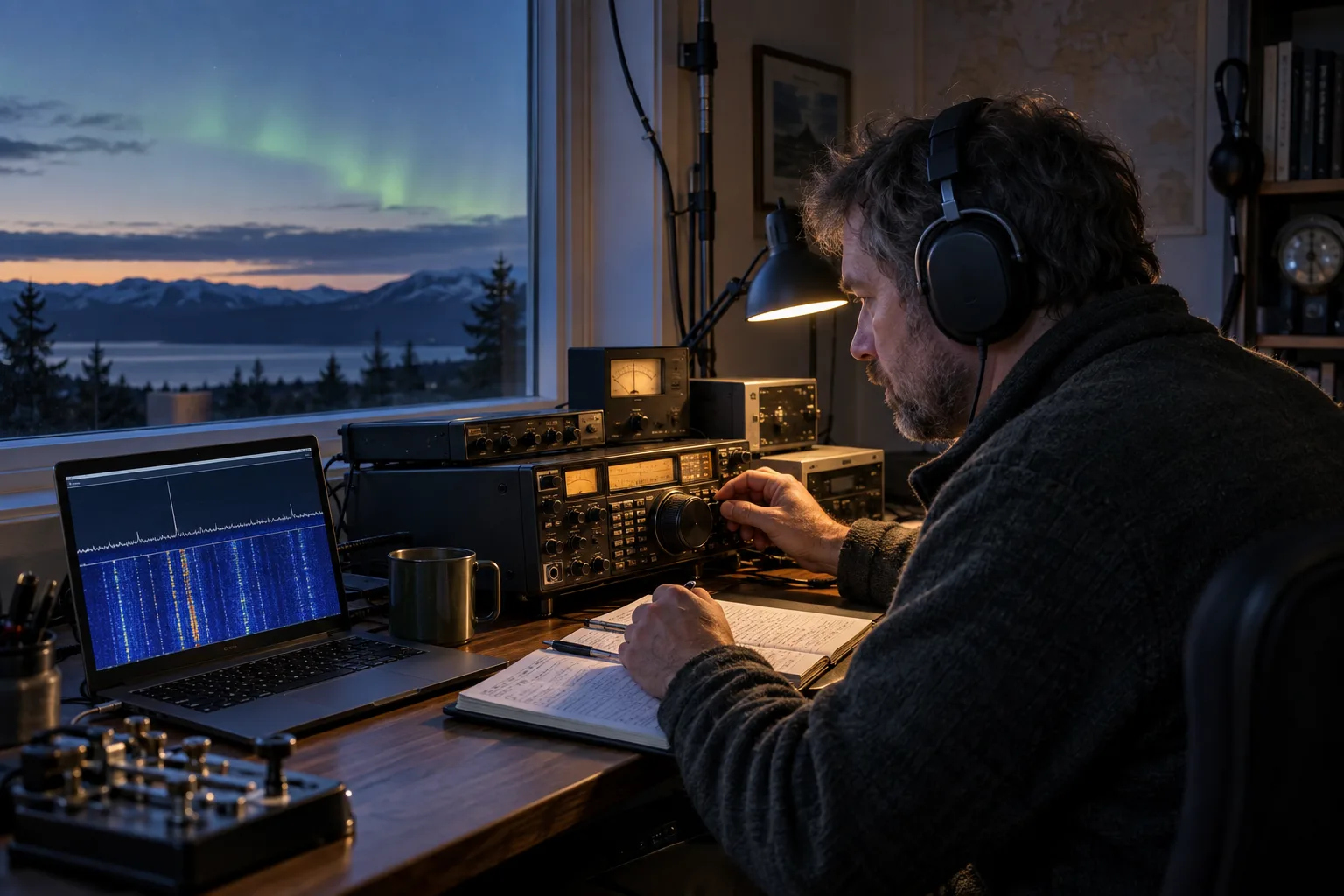
The First JARL World Wide RTTY Contest Is October 17–18: A Practical Setup and Logging Guide
JARL’s new World Wide RTTY Contest inherits the former JARTS weekend but introduces its own rules, exchange, categories, and Cabrillo details. Here is how to prepare a modest station without confusing Baudot RTTY with FT8-style automation.
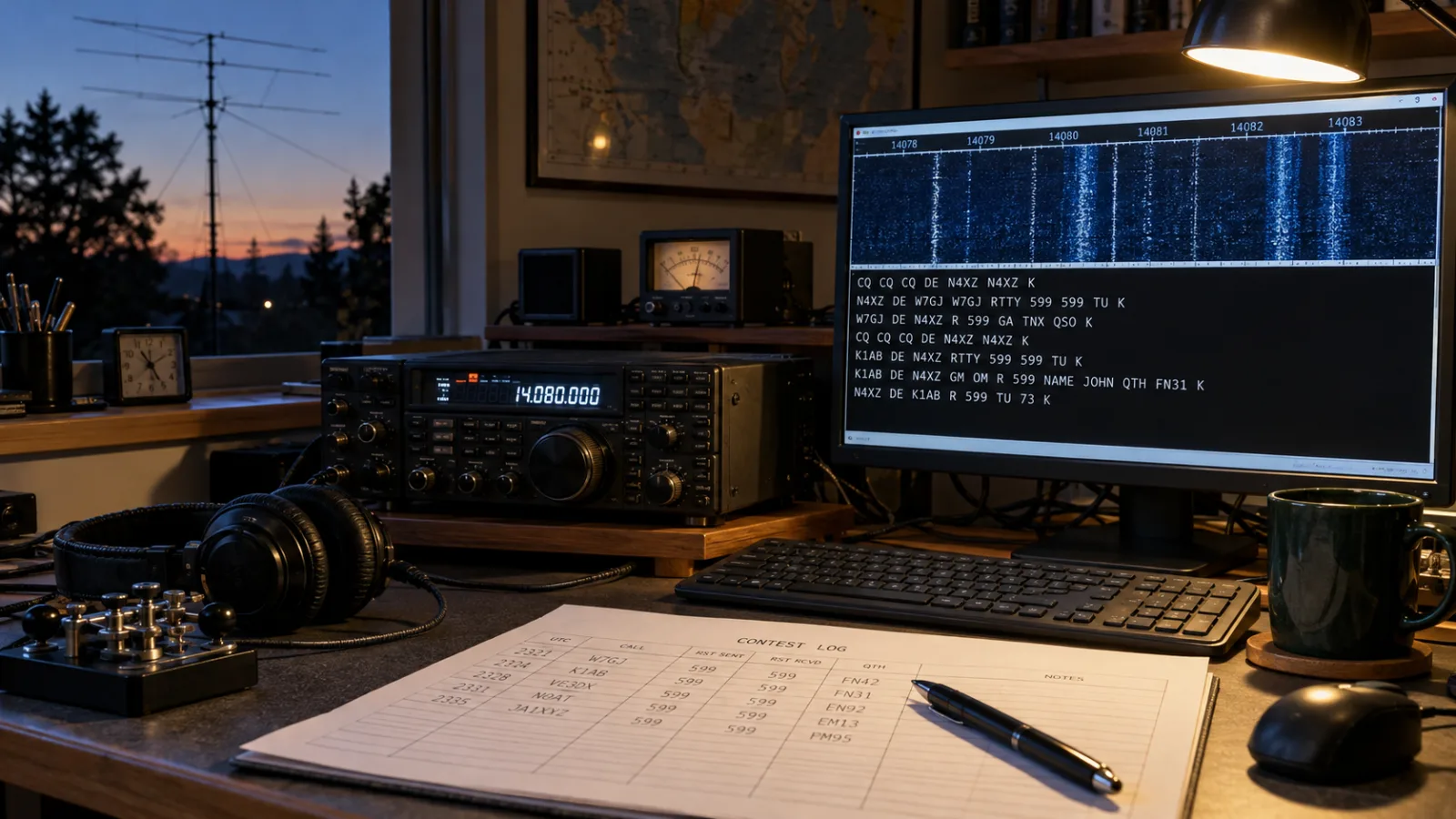
Solar Cycle 25 after the peak: how FT8 and JTDX operators should read SWPC data before blaming the antenna
A practical HF guide for August 2026: separate solar-cycle trend, daily space weather and station evidence before retuning hardware.
A G3 Storm Has Already Hit: How to Use FT8 and WSPR to Measure the October 11 HF Recovery
NOAA recorded G3 geomagnetic activity on October 10 while CME effects continue into October 11–12. Here is a controlled way to use FT8, WSPR and ordinary band checks to separate ionospheric change from station problems.
Comments
Sign in to comment.
No comments yet.