Cloudflare is turning AI bot access into an infrastructure policy
Cloudflare’s new Search, Agent and Training controls show how the web’s old crawler bargain is becoming programmable, payable and more fragile for publishers, SEO teams and AI agent builders.

Cloudflare’s July 2026 AI traffic announcement is easy to misread as another publisher-versus-scraper argument. It is more important than that. The company is trying to turn automated access to the web into a purpose-based policy layer: one set of rules for search indexing, another for real-time agents acting on behalf of users, and another for model training.

That distinction matters because the old web bargain is breaking. For decades, a crawler could read a page because a search engine sent people back. The site received discoverability, referrals, ad impressions, subscriptions or brand awareness. AI answer engines and browser agents make that exchange less obvious. A system can fetch the page, extract the answer, complete a task or ground a response, and the human may never visit the source.
Cloudflare’s answer is not simply “block AI.” In its July 1 post, the company describes three AI-centered uses: Search, Agent and Training. Search collects or indexes content so it can answer questions later. Agent traffic acts, often in real time, on behalf of a user. Training traffic takes content to train or fine-tune models. From September 15, 2026, Cloudflare says new customers and new sites will default to allowing Search but blocking Training and Agent traffic on pages that display ads. Its press release also says existing free customers who do not change their settings by that date will move to those defaults. Customers can change the settings.
The practical consequence is that crawler identity is no longer enough. The question becomes: what is this bot doing here?
The old deal: crawl now, send traffic later
The public web grew around a rough compromise. Sites published pages. Crawlers indexed them. Search engines ranked them. Users clicked. The system was imperfect, but the incentives were at least legible. A publisher could complain about snippets, SEO manipulation or scraping, yet still understand why being indexed mattered.
AI search and agentic browsing complicate that contract. A traditional search result is a doorway. An AI answer can be the destination. A browser agent can read several pages, compare prices, summarize documentation, fill a form or extract a data point without bringing a person to each page. That may be good for the user. It may also erase the economic signal that funded the page in the first place.
Pew Research Center’s 2025 Google study explains why publishers are nervous. In a U.S. panel, Pew found that users clicked a traditional result in 8% of visits when a Google AI summary appeared, compared with 15% when no AI summary appeared. Links inside the summary were clicked in only 1% of visits. That is one study, limited to Google and a specific period, not a universal law of AI search. But it supports the intuition behind the conflict: answers can reduce outbound attention.
Cloudflare is positioned unusually close to the pressure point. The company says more than 20% of the web sits behind its network. That does not mean Cloudflare controls the internet, but it does mean many requests pass through an edge layer where policy can be applied before a publisher’s origin server ever sees the bot.
Search, Agent, Training: why the categories matter
Search is the easiest category to defend. A crawler indexes content and, in the best case, produces discoverability. Cloudflare’s July post says Search should either send referral traffic or support equitable compensation. That leaves room for traditional search, AI search and paid use models, but it treats “indexing for people to find things” as different from “absorbing content into a model.”
Agent is the more awkward category. Cloudflare describes agent traffic as automation acting on a person’s behalf, often in real time. That can include chat fetch bots and browser-use agents such as a system driving Chrome to complete a task. This is where the future web gets messy. If a user asks an agent to book a flight, compare SaaS pricing or read a support page, the request is user-intended. But to the site, it may look like another bot consuming the page without a normal ad impression, analytics session or purchase path.
Training is the category publishers most clearly want to control. It is not a one-off answer or a user task. It is content being collected to improve a model. Cloudflare frames this as material being absorbed into model architecture. Whether that is the best philosophical description is debatable, but operationally the distinction is useful: many site owners are more willing to be indexed than to have their archives used as free training data.
The new taxonomy also pressures AI companies to separate their crawlers. Cloudflare explicitly calls out mixed-purpose crawlers and says automation should be split by use. If the same crawler is used for search and training, Cloudflare says customers who block Training may cause that crawler to be blocked according to the most restrictive behavior. This is why the story matters for infrastructure teams: a user-agent string that once meant “large search platform” may now be too vague.
The September default is narrower than the headline, but still big
The strongest version of the claim would be wrong: Cloudflare is not saying every AI bot will be blocked across every Cloudflare site. The default is tied to pages that display ads. Search remains allowed by default. Customers can change their settings. The September 15 date is about new customers, new sites for existing customers, and existing free customers that have not adjusted settings, according to Cloudflare’s press release and independent coverage from TechCrunch and Engadget.
That narrowness is important. Cloudflare is using ads as a signal that a page was meant to monetize human attention. If an AI agent reads the page and answers the user elsewhere, the site may lose that monetization event. Blocking Agent and Training on ad pages is Cloudflare’s attempt to protect that economic intent while still allowing Search.
There is an unresolved technical question: how exactly will Cloudflare determine whether a page displays ads? The public materials describe the policy but do not provide a full technical specification for ad detection, override signals or false-positive handling. That matters. Sites have many monetization models: display ads, native ads, affiliate blocks, sponsorships, paywalls, first-party product pages and documentation that indirectly sells a service. A simple ad signal may be useful, but it is not the whole web economy.
For teams using Cloudflare, the immediate action is not ideological. It is operational: audit the dashboard before September, especially if the site is on a free plan, and decide whether the default matches the business. A documentation site, a marketing site and a news site may want different rules.
Pay Per Crawl was the first experiment; Pay Per Use is the more interesting one
Cloudflare’s 2025 Pay Per Crawl private beta was a blunt but significant experiment. A site owner could allow a crawler, block it, or require payment. If payment was required, the crawler could receive HTTP 402 Payment Required with a price header, then retry with willingness to pay. Cloudflare acted as Merchant of Record. The model used Web Bot Auth so crawlers could prove identity with signed requests rather than merely claiming a user-agent name.
The 402 detail is almost poetic. HTTP has long had a reserved “Payment Required” status, but browsers do not have a standard user-facing 402 payment flow. MDN notes that browsers generally treat it as a generic 4xx error. Cloudflare is not creating a normal browser paywall. It is testing machine-to-machine payment negotiation for crawlers.
But per-crawl pricing is a rough proxy. A request for a page that never appears in a user answer is not worth the same as a paragraph that becomes the central source for a high-value query. Cloudflare’s July 2026 “Making AI search smarter” post moves the idea toward Pay Per Use. The named examples are Ceramic.ai and You.com. Ceramic is described as a pay-per-query model in which publishers can be paid when their content appears in AI search results, with reporting on queries, snippets and rankings. You.com is described as enabling agents to pay on demand for specific premium content.
That does not prove a mature market exists. It proves the direction of travel: crawler economics are moving from “can I fetch this URL?” toward “what did this content do for the user, and who should be paid when it did?”
Bot identity becomes infrastructure, not politeness
Robots.txt is still relevant, but it is not enough. RFC 9309 standardizes the Robots Exclusion Protocol, and it remains a familiar way to publish crawler rules. The problem is that robots.txt is voluntary. It is not authentication. It cannot stop a bad actor that ignores it or spoofs a better-known bot.
Cloudflare’s Content Signals Policy extends robots.txt with machine-readable preferences such as search, ai-input and ai-train. That helps express intent: search allowed, AI training disallowed, real-time AI input perhaps left undecided. In July, Cloudflare added a use field, such as using content as reference. But Content Signals are preferences, not enforcement by themselves. They become meaningful when combined with edge controls, WAF rules, bot management and commercial agreements.
This is why Web Bot Auth matters. Cloudflare’s model depends on crawlers signing requests using HTTP Message Signatures and Ed25519 identities. A registered crawler can prove it is the crawler it claims to be. Cloudflare can then classify it, apply policy and, in Pay Per Crawl scenarios, charge or deny access. The full RFC 9421 ecosystem is broader than Cloudflare’s implementation, but the principle is clear: bot identity is becoming cryptographic.
For crawler developers, this is a cultural shift. “We have a user agent and obey robots.txt” may no longer be enough for premium sites. The emerging checklist is longer: separate crawlers by purpose, sign requests, publish identity metadata, respect Content Signals, expose contact information, handle 402/payment flows, and avoid mixing search, agent and training behavior in one opaque pipeline.
What publishers gain, and what they risk
Publishers gain leverage. A small site cannot negotiate individually with every AI company. If an edge provider offers toggles for Search, Agent and Training, the publisher gets a practical switchboard. It can remain discoverable while saying no to training. It can test paid access. It can block unsigned or mixed-use automation. It can ask whether the value of an AI answer is being shared.
The risk is that the open web becomes more fragmented. If every major edge platform, publisher group and AI vendor defines its own crawler classes, payment headers, licensing signals and exceptions, small developers may face a maze. The largest AI and search companies will negotiate. Small agent startups, research tools, accessibility tools, independent search engines and useful personal automations may be caught in policies designed for industrial-scale extraction.
There is also a gatekeeper problem. Cloudflare is solving a real problem, but it is also becoming an arbiter of intent. If Cloudflare decides a bot is Training rather than Search, or Agent rather than user-driven browsing, that classification can determine access to a large part of the web. Enterprise customers may see detailed BotBase classifications. Free customers may get powerful defaults but less context. False positives and appeals will matter.
This is not a reason to reject the idea. It is a reason to treat it as infrastructure policy, not a simple feature launch.
What changes for SEO and answer optimization
SEO teams used to ask: can Googlebot crawl the page, is the sitemap correct, is the canonical URL right, and does the page satisfy search intent? That world still exists. But it now sits next to a newer set of questions: should AI answer engines be allowed to use the content, should they cite it, should they pay, and should real-time agents be treated differently from indexing crawlers?
Cloudflare’s Ceramic example points toward new reporting. A publisher may want to know which queries surfaced its content, which snippet was used, and where it appeared in an AI result. That looks less like classic rank tracking and more like licensing analytics. Answer optimization becomes partly editorial, partly technical and partly contractual.
The hard part is discoverability. Blocking too much can protect content while making it invisible to systems that users increasingly rely on. Allowing too much can preserve visibility while weakening monetization. There is no universal answer. A SaaS documentation site may want broad AI access because better answers reduce support tickets and drive product adoption. A news publisher may want strict controls because summaries substitute for visits. A marketplace may allow search but block agents that scrape prices without participating in its commercial rules.
The old binary of “index or noindex” is becoming a matrix.
What changes for AI agents and browser automation
Agent developers should pay attention because this policy targets a category that did not exist in mainstream web governance a few years ago. A browser agent is not quite a crawler, not quite a human and not quite an API client. It may carry a real user’s intent, but it can also scale like automation.
A helpful agent that summarizes a support article for a paying customer may be welcomed by one site and blocked by another. A shopping agent that compares prices may be seen as user empowerment by consumers and margin leakage by merchants. An enterprise agent that reads internal vendor portals may be legitimate for the customer but hard to distinguish from scraping if it arrives through headless Chrome without signed identity.
The engineering response is to make purpose visible. If a system has separate search indexing, real-time retrieval, user-agent browsing and training pipelines, those should not all use one ambiguous crawler. Logs should distinguish them. Headers and signatures should identify them. Product teams should budget for paid access where content owners require it. Legal and procurement teams should know which parts of the product depend on scraping rather than APIs or licensed data.
This will be annoying. It may also make the agent ecosystem healthier. The more agents are expected to act on behalf of users, the more sites will demand a way to tell a legitimate user-delegated action from a model-training vacuum cleaner.
What infrastructure teams should do now
For Cloudflare customers, the first step is inventory. Which zones are on Cloudflare? Which pages display ads? Which pages are documentation, marketing, support, community, pricing, product data or logged-in content? Which of those pages should be visible to search, AI answers, real-time agents or training crawlers?
Then review the controls: AI traffic settings, Bot Management, WAF rules, verified bot settings, robots.txt, Content Signals Policy, sitemap strategy and logs. If the site uses managed robots.txt, understand what Cloudflare sets by default and what remains undecided. If the company relies on Cloudflare free plans, review the September 15 default change and decide whether to opt out or customize.
Next, inspect dependencies in the opposite direction. Does your own product scrape the web? Does a data-enrichment feature depend on pages that may soon block Agent or Training traffic? Does your AI assistant fetch pages in real time? Are you using a single crawler identity for indexing, retrieval and training? If so, you may be exactly the kind of mixed-purpose bot Cloudflare is trying to push apart.
Finally, prepare fallbacks. Use official APIs where they exist. License high-value data where scraping is a business dependency. Cache responsibly. Respect robots and Content Signals. Sign bot requests if the ecosystem supports it. Build user-visible failure modes when a site blocks an agent. A good product should not pretend the entire web is an unmetered database.
The open web becomes more programmable, and more contractual
The most important shift is not a single Cloudflare toggle. It is the move from informal norms to programmable access policy. The web is gaining more machine-readable ways to say: search may index this, AI input may use this, training may not, agents may need payment, signed crawlers get different treatment from unsigned ones.
That can protect creators and publishers. It can also harden the web into a patchwork of private rules. The outcome depends on details: transparency, appeal paths, open standards, reasonable defaults, fair pricing and whether smaller sites and smaller AI developers can participate without being crushed by paperwork.
Cloudflare’s announcement is therefore both a warning and a preview. AI agents will not live only by model capability. They will live by access rules at the edge of the web. The next competitive advantage may not be a bigger context window. It may be knowing which doors the agent is allowed to open, what it must sign, and when it has to pay.
Related articles
Cloudflare CASB automatic remediation turns SaaS posture findings into production change
Cloudflare CASB can now revoke risky Microsoft 365 and Google Workspace sharing and send webhooks automatically. The useful question is not whether to turn it on, but how to keep the automation from becoming an unreviewed write path into SaaS data.

Cloudflare Web Analytics backlash: when CDN defaults become production changes
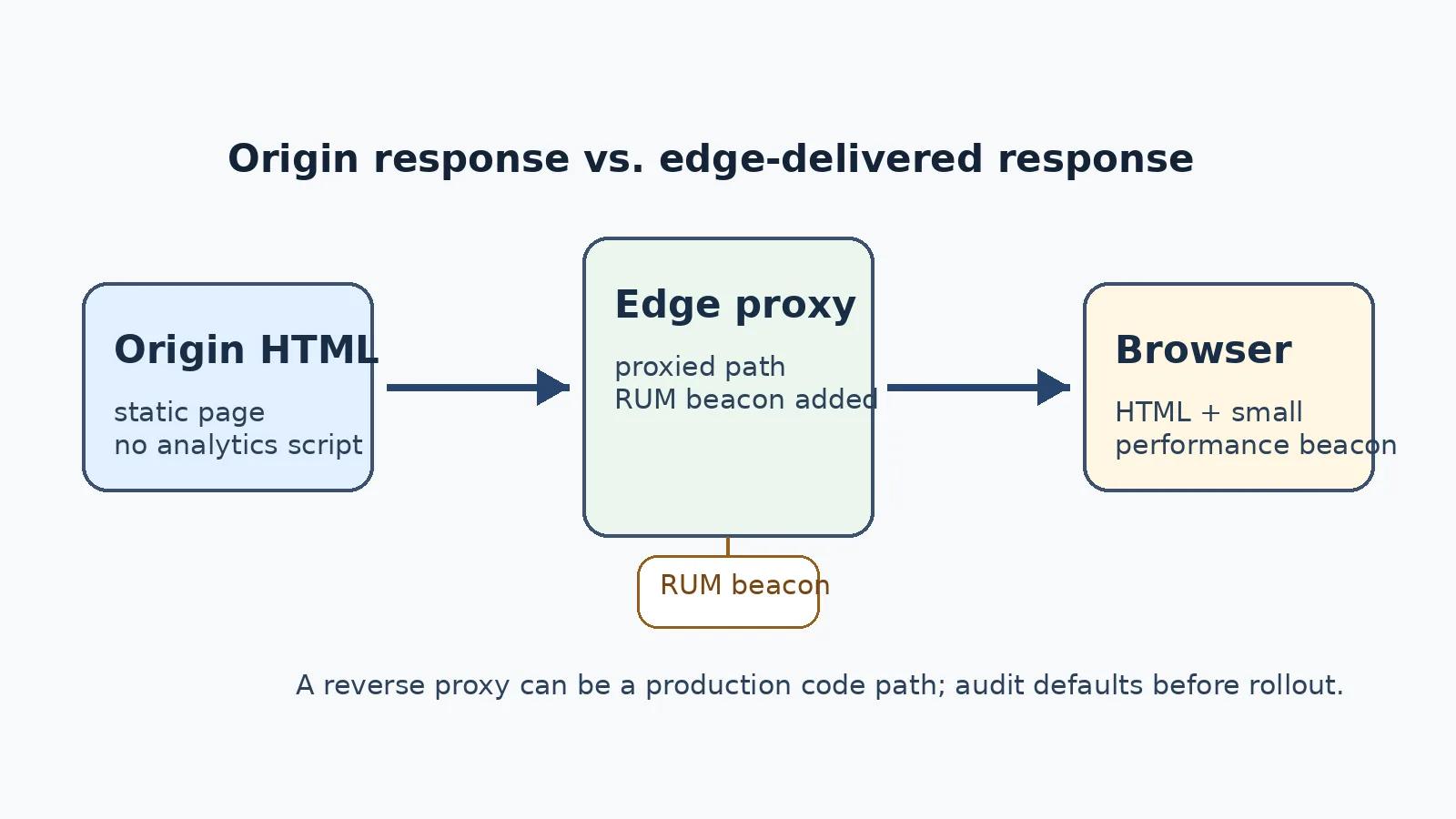
A Cloudflare RUM debate shows why teams should audit edge-provider defaults as carefully as application releases.

Cloudflare OS is the AI workspace question enterprises cannot avoid
Cloudflare’s new agent workspace is less interesting as a product launch than as a blueprint for governed AI work: permissions, sandboxes, Gatekeepers, audit logs and app sprawl.

OpenAI’s Agents API: What Changes for Teams Building Long-Running AI Workflows
OpenAI’s public-beta Agents API packages the Codex harness, persistent sessions, tool orchestration, subagents, and managed or self-hosted sandboxes. The practical question is not whether it can run an agent, but whether its boundaries fit your workflow, budget, and data controls.

Comments
Sign in to comment.
No comments yet.