Why Do You Need GPS Tracking—and Who Actually Benefits From It?
GPS tracking is useful far beyond logistics. See how families, caregivers, vehicle owners, couriers, farms, insurers, and event organizers can use location data responsibly.
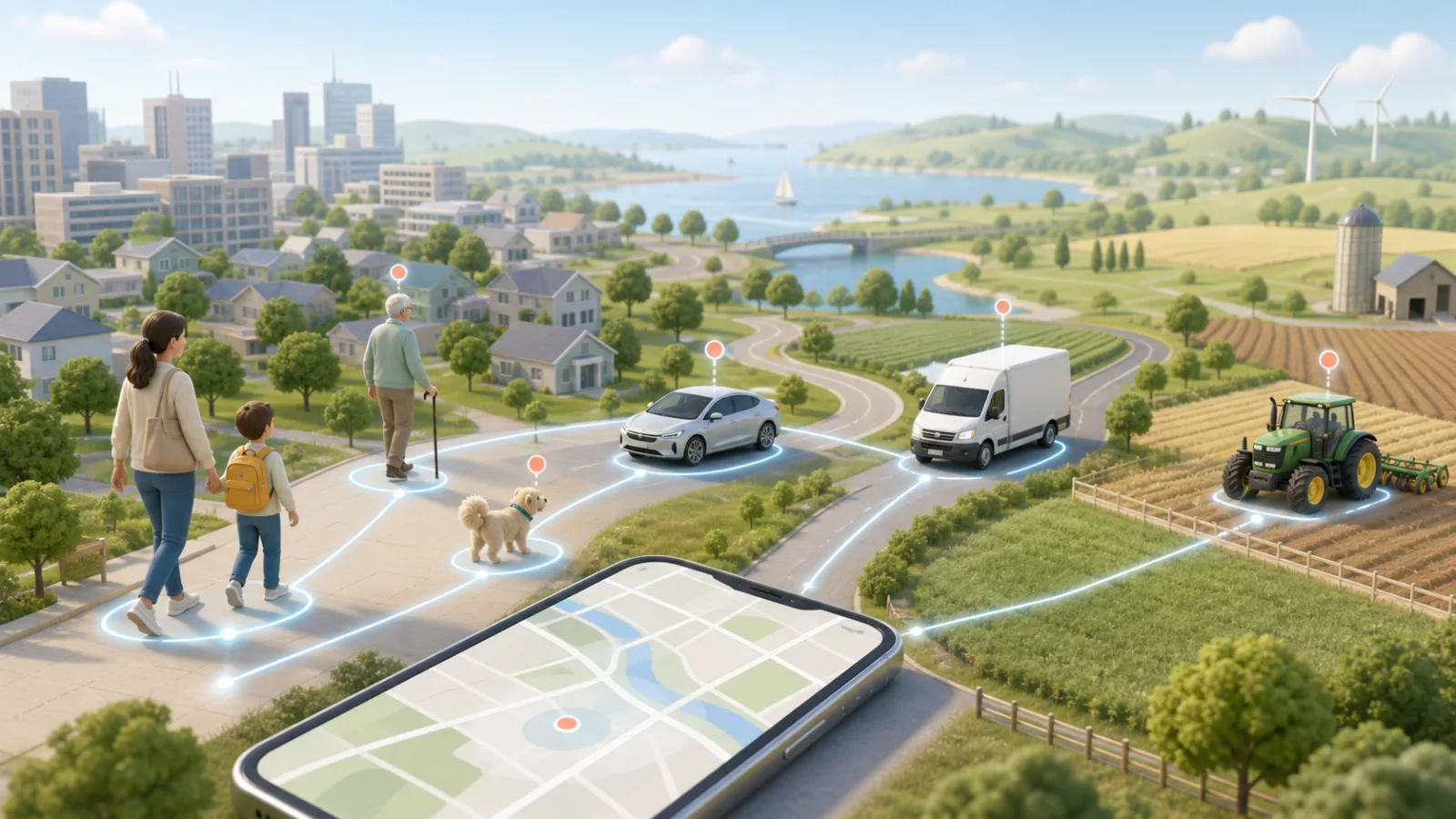
Most people associate GPS tracking with delivery fleets and logistics companies. In reality, it can be useful anywhere people, vehicles, animals, or equipment move—and where knowing their location helps someone make a better decision.
Let’s look at what GPS tracking actually does and who benefits from it.
What Is GPS Tracking?
GPS tracking is a system that records and shares the location of a device. That device might be:
- a dedicated hardware GPS tracker;
- a smartphone or tablet with a tracking app installed.
A modern tracking platform can do more than place a dot on a map. Depending on the device and platform, it may also provide route history, reports, analytics, different tracking modes, and controlled access for other users.
In other words, the value is not simply knowing where something is. It is having the context needed to understand movement, coordinate people, and respond when plans change.
For Individuals and Families
GPS tracking is not only a business tool. In everyday life, it can help people stay connected with what matters to them. Common examples include tracking—with appropriate consent and respect for privacy:
- children during a trip or activity;
- older relatives or people who need care;
- pets;
- friends or family members sharing a journey;
- a personal car, motorcycle, bicycle, or other valuable asset.
The practical benefit is peace of mind. If someone is delayed, gets lost, or needs assistance, current location information can make it easier to react quickly.
GPS tracking should always be used transparently and lawfully. People should know when location sharing is active, who can see the data, and why it is being collected.
For Businesses
For organizations, GPS tracking turns movement into operational information. It is widely relevant to:
- courier and delivery services;
- logistics and fleet operations;
- agriculture;
- taxi and passenger transport;
- security services;
- insurance;
- sports and outdoor event management.
The goal is not to watch a map all day. It is to answer practical questions: Where is the nearest vehicle? Has a delivery reached its destination? Did equipment follow the planned route? Does a participant need assistance?
What Problems Can GPS Tracking Solve?
Better coordination
Dispatchers can see where vehicles or mobile teams are and assign the nearest available resource. Families can coordinate arrivals without repeated calls or messages.
Faster response
When a route changes unexpectedly or a tracked device stops moving, location data can help users investigate and respond sooner. Tracking does not replace emergency services, but it can provide useful context.
Clearer operations
Route history and reports can help businesses review completed work, understand travel patterns, and compare planned activity with actual movement.
More accountable workflows
When tracking is introduced with clear policies and employee awareness, it can help confirm visits, deliveries, routes, and task completion without relying only on verbal updates.
Industry-Specific Examples
Agriculture
Farms can use GPS tracking to monitor machinery, vehicles, or livestock fitted with suitable tracking devices. This can support coordination across large areas and help locate equipment when it is needed.
Insurance
With the driver’s informed consent and a compatible device, location and movement data can contribute to usage-based analysis and a clearer picture of how a vehicle is operated. The exact use depends on the insurer, policy, local law, and available data.
Running and Orienteering Events
Organizers can track participants, monitor progress between checkpoints, and identify unusual delays. This is especially useful on long or remote routes where the field of participants is spread over a large area.
Delivery and Field Service
A dispatcher can follow active routes, coordinate changes, and give customers more accurate updates. Historical data can also help review recurring delays and improve future planning.
Do You Actually Need GPS Tracking?
GPS tracking may be worthwhile if you need to:
- improve safety or coordination;
- monitor a vehicle, device, animal, or valuable asset;
- manage people or equipment that move between locations;
- review route history or operational activity;
- respond faster when something does not go as planned.
It is less useful when location data will not lead to any decision or action. Before choosing a solution, define what you want to track, who needs access, how often the location should update, and how the data will be used.
Start With a Real Use Case
The best way to evaluate GPS tracking is to begin with one specific problem—not a long feature list. Choose a person, vehicle, pet, or workflow that would genuinely benefit from better location visibility, then test whether tracking makes the situation easier to manage.
Explore LiveGPSTracks and see how real-time GPS monitoring can fit your personal or business needs.
Related articles
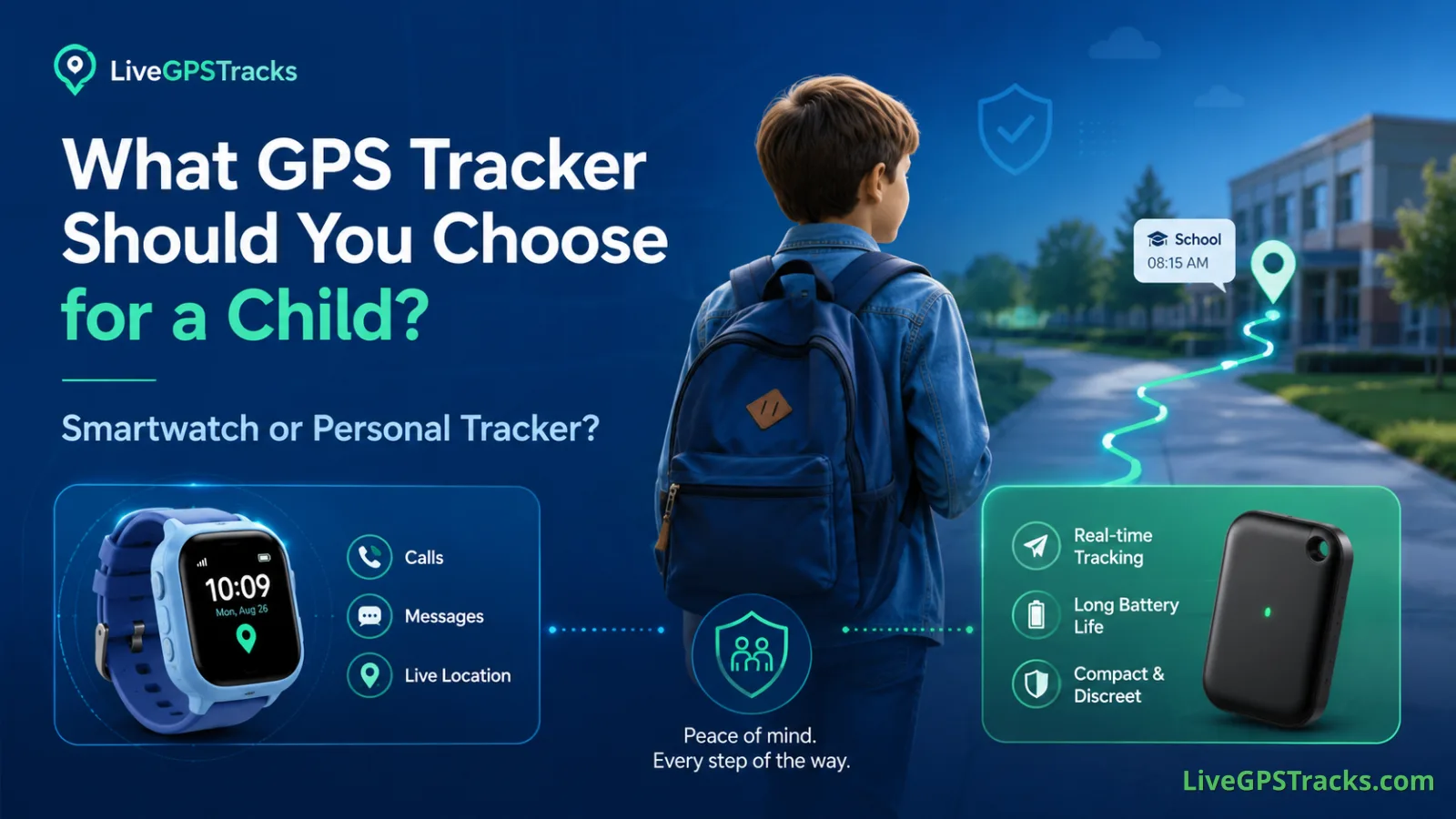
What GPS Tracker Should You Choose for a Child? Smartwatch or Personal Tracker?
Choosing a GPS tracker for a child? We compare kids’ smartwatches and personal trackers based on how they actually work day to day: GPS accuracy, battery life, school use, and route tracking.
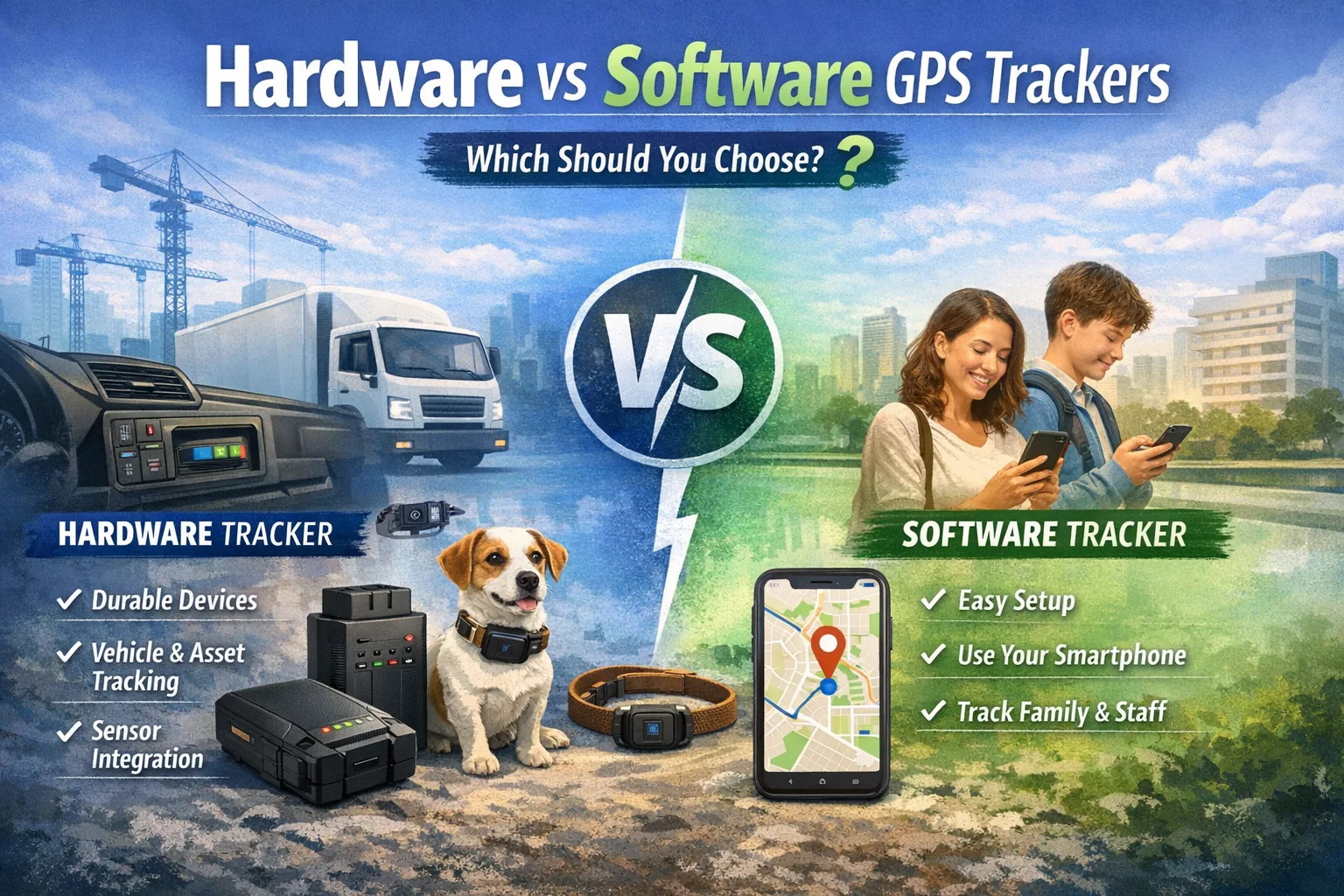
Hardware vs Software GPS Trackers: Which One Should You Choose?
Choosing between a GPS tracking app and a dedicated GPS device? Learn the key differences, advantages, and limitations of software and hardware trackers, and discover which solution is best for personal tracking, vehicles, fleets, pets, or business use.
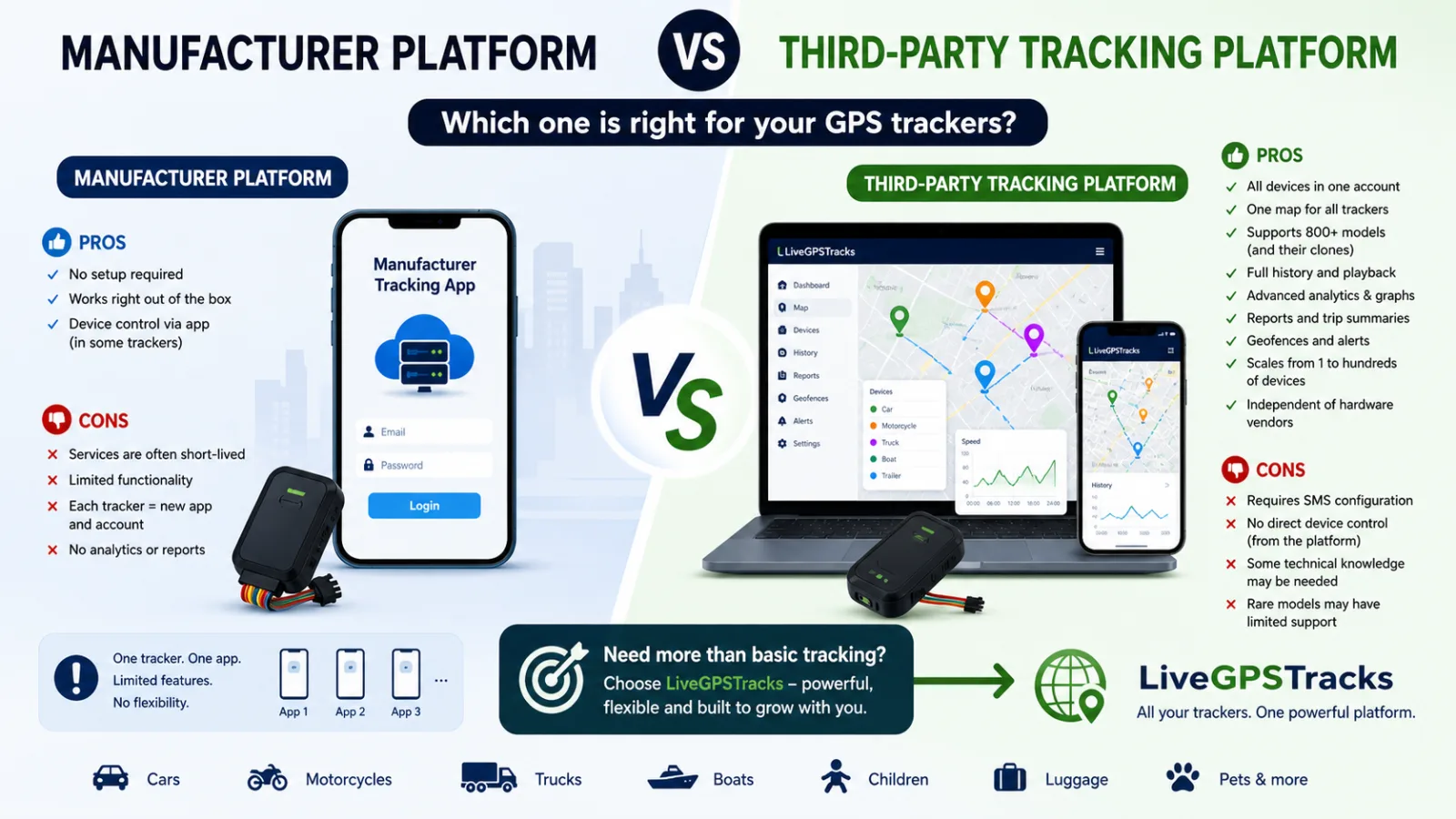
Manufacturer Server vs Third-Party GPS Tracking Platform
Should you use your GPS tracker's default app or a third-party platform? Compare setup, device support, analytics, scalability, and long-term flexibility.
How to Set Up a GPS Tracker: From SIM Card to Your First Location on the Map
Learn how to set up a GPS tracker from start to finish. This complete guide walks you through SIM card preparation, SMS commands, APN settings, server and port configuration, testing, and connecting your device to LiveGPSTracks for real-time GPS monitoring.
Comments
Sign in to comment.
No comments yet.