The cat wants the sink, not the bowl: water-station fixes and when to worry
A practical reset for bowl placement, fountain choices, cleaning habits and the red flags that belong with a veterinarian, not a shopping cart.

A cat that ignores a full bowl and waits beside the bathroom tap is not necessarily being difficult. The choice can be about location, smell, sound, bowl shape, social access or simple freshness. It can also be the first sign that drinking and urination have changed. The safe owner approach is to improve the water station without treating a new fountain as a medical answer.
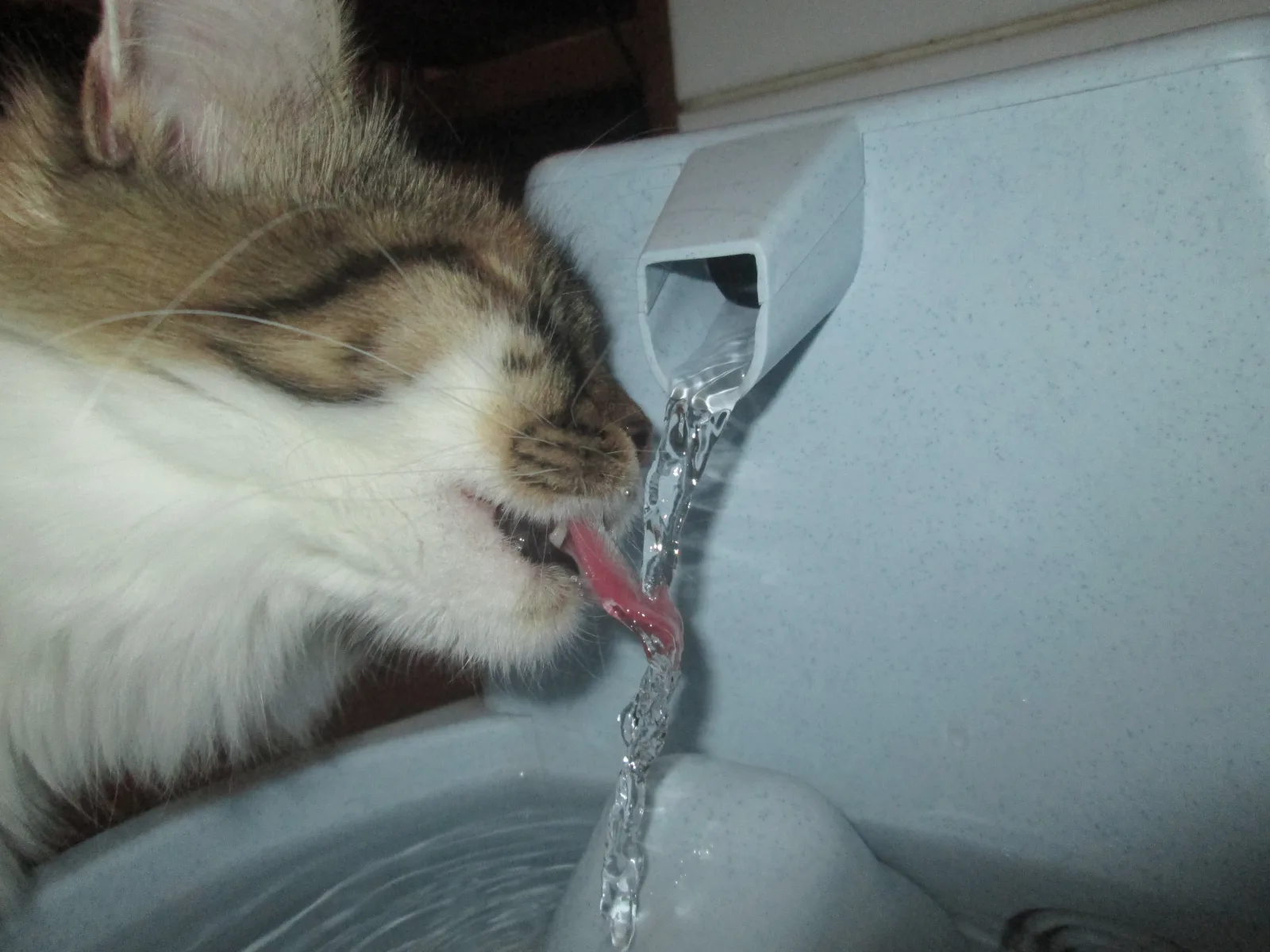
Photo: TrainSimFan / Wikimedia Commons, CC BY-SA 4.0. The image is used as a real, non-distressing example of a cat drinking from a water bowl; Publicasta stores the uploaded WebP copy.
Cats should have fresh, clean water available at all times, and the ASPCA’s general cat-care guidance also puts daily washing and refilling of water bowls in the ordinary-care category. Cornell’s Feline Health Center adds the important boundary: diseases such as chronic kidney disease can make a cat urinate larger volumes and drink more, and diagnosis belongs with veterinary examination, blood work and urinalysis. Those two ideas can sit together: make water easier to use, but do not explain away sudden thirst.
Owner discussions on Reddit, Pets Stack Exchange and product-review pages keep circling the same practical questions: why does the cat ask for running water, why did the new fountain fail, why is a glass on the desk more attractive than a bowl, and when does extra drinking stop being a quirk? Those discussions are useful as a map of real household problems, while veterinary and welfare sources should anchor the health cautions.
Start with the room, not the gadget
The most common water-bowl failure is placement. A bowl beside dry food, a litter box, a washing machine, a hallway or a dog bed can be technically available but unattractive. Some cats prefer not to drink where crumbs fall into the water. Others avoid a corner where a dog can loom over them, where children rush past, or where a pump, boiler or refrigerator starts without warning.
Run a simple map of the home. Put one water point in a quiet social room, another near a route the cat already uses, and a third only if the house is large, multi-level or shared with other pets. The goal is not to decorate the house with bowls; it is to remove the hidden choice between thirst and discomfort. If one cat guards a doorway or a dog investigates the bowl, duplicate stations matter more than buying a premium fountain.
Distance from the litter box matters because many cats dislike drinking where elimination smells collect. Distance from food can matter too. The old habit of placing food and water together is convenient for people, but it may not match the cat’s preference for cleaner, less contaminated water. Move the water a few feet or to another wall before assuming the cat needs a product upgrade.
Change one variable at a time. If the bowl moves, keep the bowl itself the same for several days. If the bowl changes, keep the location familiar. When owners replace the bowl, move it, add a fountain, switch water temperature and change cleaning products in one afternoon, they lose the chance to learn what the cat was actually avoiding.
Bowl shape can change the whole experience
A deep, narrow dish may leave a cat’s whiskers brushing the sides at every sip. Not every cat reacts strongly to this, and “whisker fatigue” is often marketed too dramatically, but many owners do see better use of wide, shallow dishes. The practical test is cheap: offer a stable saucer-style bowl with low sides and watch whether the cat drinks more calmly.
Material is less about magic and more about cleaning. Glass, ceramic and stainless steel usually rinse well and do not hold odor as easily as scratched plastic. Plastic can still work if it is food-safe, smooth and cleaned thoroughly, but old scratches can trap film and smell. If the cat paws at the dish, flips it or drinks from the edge, a heavier base and a non-slip mat may solve more than a new filter will.
Reflections and noise also matter. A shiny metal bowl under bright light can throw moving reflections. A lightweight dish can scrape the floor. A bowl near a heating vent may collect dust and warm quickly. These are small details from a human point of view, yet drinking is a face-in-the-bowl activity for a cat, so small sensory annoyances can become a daily refusal.
Try room-temperature water, then slightly cool water if the cat seems to prefer a fresh glass. Avoid adding flavorings, supplements or homemade medical solutions unless a veterinarian has told you to do so for your own cat. The owner job here is access and cleanliness, not treatment.
Freshness is more than refilling the top inch
A bowl can look full and still smell wrong. Saliva, hair, dust, food crumbs and a thin biofilm can collect on the sides. Topping up the bowl without washing it leaves yesterday’s film in place. Daily washing with hot water and thorough rinsing is a better baseline than buying a device and assuming the water is now self-cleaning.
Soap residue deserves attention. If a cat rejects a freshly washed dish, the problem may be perfume, detergent left in a seam, or a sponge that also handles strong kitchen odors. Use a clean brush or sponge for pet bowls, rinse until there is no slick feel, and let the dish dry or refill it with fresh water. In many homes this plain cleaning reset is the entire fix.
Fountains need the same honesty. Moving water can encourage some cats, but a fountain is a small appliance that grows biofilm if neglected. The pump housing, intake screen, corners, filter tray and spout all need cleaning. A filter does not cancel the need to scrub the parts that touch water, and replacement filters do not help if the pump chamber is dirty.
If the cat drinks only from the sink, part of the attraction may be freshness and sound. Offer a bowl filled at the same time each morning and evening, in a better location, before deciding that constant running water is required. Some cats simply like the owner ritual: the tap turns on, the person stays nearby, and the water feels newly presented.
When a fountain helps, and when it becomes clutter
Current product reviews from outlets such as Wirecutter, WIRED, The Spruce Pets, CNET and Business Insider tend to judge pet fountains by cleaning burden, pump noise, filter availability, stability, capacity and whether animals actually use them. Those are sensible criteria because the best fountain is not the one with the most features; it is the one the owner can clean and the cat will approach.
Choose a fountain that comes apart without a puzzle. Look for a pump that can be removed, a spout or tray that can be scrubbed, replacement filters that are easy to buy, and a shape that does not hide slime in decorative grooves. Dishwasher-safe parts can help, but read the manufacturer’s instructions because pumps and some filters should not go through a dishwasher.
Noise is a real behavior issue. A barely audible hum to a person can be a reason for a cautious cat to keep distance. Put the fountain on a stable surface, fill it to the correct level, and listen for rattling. If the cat avoids it, try turning the pump off and leaving water in the basin for a day. Interest in the still basin but not the running pump points to sound, vibration or splash rather than dislike of the location alone.
Capacity should match the household. A tiny fountain may look neat but run low quickly in a warm room or multi-pet home, making the pump louder and the water less appealing. A very large fountain may be harder to lift, empty and scrub. Ordinary owners should choose the size they will truly clean on schedule, not the size that looks most impressive in a review photograph.
Materials have tradeoffs. Stainless steel can be durable and easy to sanitize, ceramic can be stable and attractive, and good-quality plastic can be light and inexpensive. None of them cures kidney disease, diabetes, urinary problems or dehydration. Product language that implies a fountain is a health treatment should be treated with caution unless your veterinarian is giving advice for your own animal.
A one-week water-station reset
Day one is observation. Do not chase the cat around with bowls. Note where the cat asks for water, whether drinking seems tied to your presence, whether urine clumps in the litter box look larger than usual, and whether appetite, energy or grooming have changed. If the change is sudden, dramatic or paired with illness signs, skip the experiment and call the veterinarian.
Day two is cleaning. Wash every bowl, mat and fountain part that touches water. Rinse carefully, replace old filters if you already use a fountain, and remove any slimy film from pump parts. Throw out cracked or heavily scratched plastic bowls. Refill with fresh water and put the station back without other changes so you can see whether cleanliness alone matters.
Day three is placement. Move one bowl away from food, litter, noisy appliances and pet traffic. Add a second water point in a quiet route the cat uses naturally. In a multi-cat home, put the second station where one cat cannot block both at once. Keep the old station for the transition unless it is clearly dirty or unsafe.
Day four is bowl testing. Offer a wide, shallow ceramic, glass or stainless bowl with a stable base. If the cat prefers a human glass, copy the useful features safely: clean water, a raised surface, distance from food and a narrow social ritual, not an unstable glass that can break. If the cat paws at the water, a wider surface and heavier dish may reduce splashing.
Day five is fountain testing, only if a fountain is part of the plan. Place it beside, not instead of, a trusted bowl. Let the cat investigate without pressure. Some cats need several days to accept the sound. Some never prefer it. A fountain that the cat ignores while using a clean bowl is not a failure of care; it is information.
Day six is review. Which station lost the most water? Which one stayed clean? Did the cat drink when relaxed or only when you turned on a tap? Did litter-box output look normal for that individual cat? The answer should guide the final setup. Keep the two best options and remove confusing extras once the cat has shown a stable preference.
Day seven is maintenance planning. Decide who washes bowls, when fountain parts are scrubbed, where spare filters are stored, and how water levels are checked during travel, hot weather or busy weeks. A reliable simple bowl beats an elegant fountain that becomes dirty because nobody wants to take it apart.
Separate behavior clues from medical warning signs
Behavior/setup clues usually point to a specific object or location. The cat drinks from the sink when invited, rejects one bowl but uses another, paws at a sliding dish, avoids the fountain while the pump runs, or starts using a newly placed bowl in a quiet room. These clues justify owner experiments with access, cleaning and design.
Medical concern looks broader. A sudden marked increase in thirst, much larger urine clumps, accidents outside the litter box, straining, crying, blood in urine, weight loss, poor appetite, vomiting, lethargy, weakness, bad breath, unkempt coat or any sudden persistent behavior change should not be treated as a bowl preference. Older cats especially deserve prompt veterinary attention when drinking and urination change together.
Cornell’s explanation of chronic kidney disease is a useful example of why owners need this boundary: as kidneys lose concentrating ability, a cat may produce more urine and drink more to compensate, but confirming the cause requires veterinary tests. Other conditions can also affect thirst and urination. The owner cannot sort them safely by buying a fountain or watching a single afternoon of behavior.
Emergency-style red flags belong outside a home water-station experiment. Seek veterinary care urgently for breathing trouble, suspected poisoning, injury, collapse, severe weakness, pain, repeated vomiting, inability to urinate, blood in urine, refusal to eat or drink, or a cat that seems seriously unwell. This article cannot triage an individual animal; it can only mark the line where professional care is the safer next step.
What to buy, if you buy anything
Buy the simplest item that solves the observed problem. If the issue is a narrow bowl, buy a wide shallow dish. If the issue is a dog hovering nearby, buy a second station or move the water up to a cat-safe surface. If the issue is stale water and the owner will not realistically clean pump parts, a fountain may add work without improving care.
A good fountain has a stable base, quiet pump, accessible replacement filters, parts you can see and scrub, a capacity that fits your household, and a design your cat can approach without leaning into a splashy stream. Keep at least one ordinary bowl available until the fountain is clearly accepted and maintained. During power cuts, pump failure or travel, the bowl is the backup that prevents a product problem from becoming an access problem.
Do not use a product purchase to postpone a veterinary call. If the cat is suddenly drinking far more, urinating far more, losing weight, vomiting, hiding, straining or acting unlike itself, the correct purchase is not a more expensive fountain. The correct next step is veterinary advice, with notes about what changed and when.
The best water setup is boring in the right way: clean bowls, sensible locations, optional fountain parts that are easy to wash, and enough stations that no pet has to negotiate for access. When that foundation is in place, a cat’s preference for the sink becomes easier to interpret. It may be habit, freshness or sound; if it is illness, the wider pattern will be harder to miss.
Related articles
The cat scratches the sofa: choose the right post, place it well and know when to worry
A practical owner guide to normal feline scratching, furniture protection, humane redirection and the red flags that belong with a veterinarian rather than another gadget.

Cat carrier panic: make the box familiar before vet day
A practical guide to safer carrier choice, calmer familiarization and the red flags that call for veterinary advice.
Your smart pet feeder needs a backup plan, not just an app
Automatic feeders can make daily meals easier, but owners should test what happens when the app, Wi‑Fi, power or food flow fails.
Self-cleaning litter boxes: convenience for owners, comfort checks for cats
An automatic litter box can be useful, but only when the cat still has a safe, roomy, predictable place to eliminate.
Comments
Sign in to comment.
No comments yet.