A Stronger Pet Bond Can Support Better Preventive Care—If You Build the Routine Around the Animal
A new survey links stronger human–animal bonds with having a veterinarian and keeping up with preventive care. The useful lesson is not to handle pets constantly, but to make observation, low-pressure cooperation and routine appointments easier.

The useful finding is about routines, not sentiment
A new 2026 survey on the human–animal bond has attracted attention because it connects stronger reported bonds with a greater likelihood of having a veterinarian and keeping up with preventive care. That is an interesting association, but it is easy to turn it into a slogan: love your pet more and health care will take care of itself.
Real life is less tidy. A pet can be deeply loved while still missing appointments because of cost, transport, fear, work schedules or a shortage of available clinics. Another animal may receive frequent attention but become distressed by constant handling. The practical lesson is narrower and more useful: a good relationship can make everyday observation and cooperative care easier, but only when the routine respects the animal’s signals and the household’s limits.
For ordinary owners, the goal is not to prove how close they are to a dog or cat. It is to create a calm system in which changes are noticed early, basic care is less of a struggle, and veterinary visits remain possible when they are needed.
What the new survey actually says
The Human Animal Bond Research Institute’s 2026 benchmark survey, reported by Veterinary Practice News, found that 98 percent of surveyed pet owners said they had experienced at least one health benefit from pet ownership. It also reported that people who described stronger bonds were more likely to say they had a veterinarian and were more likely to report keeping up with preventive care such as vaccinations.
Those figures describe relationships between answers; they do not prove that affection caused better care. People who have more stable housing, more time, more money or easier access to veterinary services may also find it easier to maintain a close relationship with an animal. The survey is useful as a prompt to think about care habits, not as evidence that emotional closeness prevents illness.
The same caution applies to claims about health benefits for people. A pet may provide companionship, structure, motivation to go outside or comfort during difficult periods. Those benefits can be meaningful. They should not be used to dismiss the work involved in caring for the animal, or to suggest that a pet is a replacement for medical, psychological or social support.
The owner-side question is therefore simple: can the bond be turned into a predictable care routine that helps both sides? Often, yes. The routine begins with observation rather than control.
Start with a baseline you can recognize
Preventive care works better when an owner knows what is normal for that particular animal. “Normal” is not a perfect number on a chart. It is a pattern: how the pet usually eats, sleeps, moves, toilets, plays, rests and responds to familiar people.
A baseline can be written in a few lines. Note the usual appetite, water habits, energy, preferred sleeping places, mobility on ordinary surfaces and tolerance for routine grooming. For cats, include litter-box habits and whether the animal normally hides, seeks company or changes location during the day. For dogs, note the ordinary pace of walks, interest in sniffing, willingness to get up and recovery after activity.
Do not turn this into constant surveillance. A quick daily impression is often more useful than a complicated spreadsheet that nobody maintains. A short note can answer three questions:
- What is different today?
- Has the change lasted, returned or become more noticeable?
- Is the pet otherwise comfortable and functioning normally?
The point is not to diagnose from the kitchen. It is to notice when a veterinary conversation may be sensible and to give the veterinarian a clearer history.
Use the bond to teach cooperation, not obedience to every touch
Dogs and cats do not owe us unlimited access to their bodies because they live with us. A pet can trust an owner and still dislike having paws touched, ears examined, nails clipped, teeth brushed or a carrier brought into the room. Forcing the issue can make future care harder.
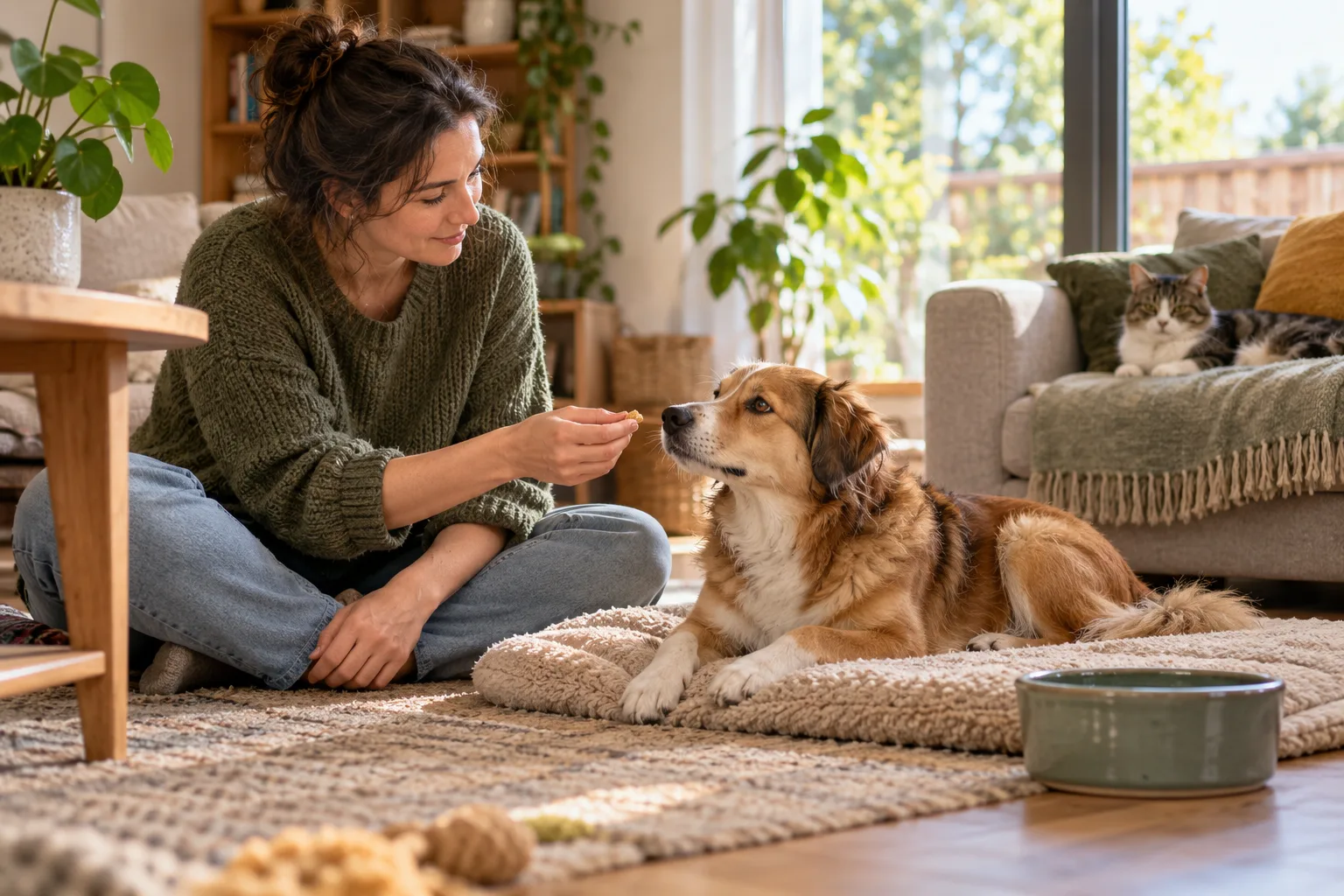
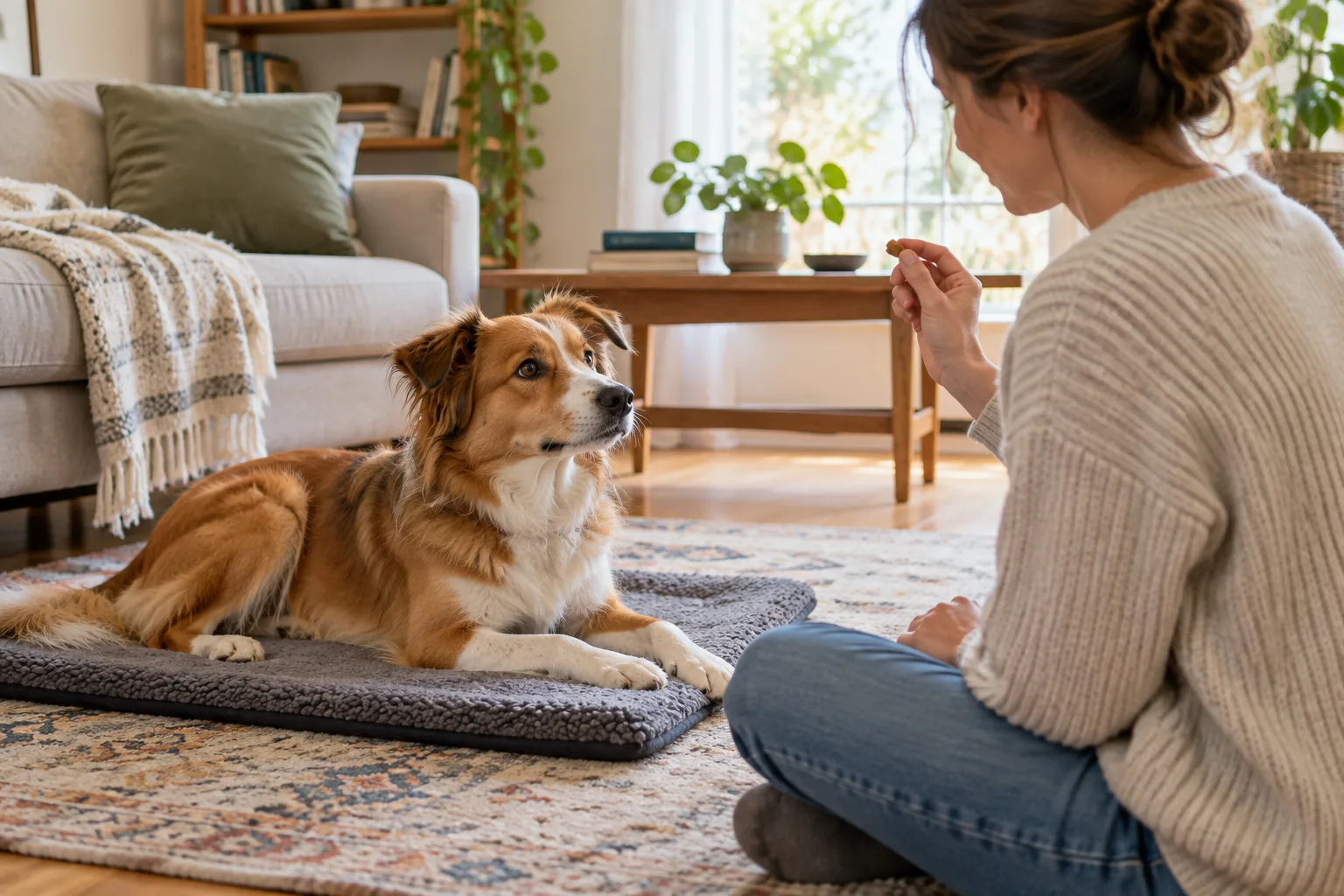
Cooperative care means breaking a task into small pieces and allowing the animal to stop before it becomes frightened or defensive. With a dog, that might mean briefly touching the shoulder, pausing, and pairing the calm moment with something the dog values. Later, the owner may move toward a paw or lift an ear for a second. With a cat, the first step may be leaving a brush nearby, rewarding calm proximity and stopping well before the cat tries to escape.
The details depend on the individual animal. The principles are consistent:
- Keep sessions short enough that the pet can succeed.
- Change one part of the task at a time.
- Stop when body language shows rising discomfort.
- Repeat easy steps before adding difficulty.
- Use rewards that are safe and appropriate for that pet.
A reward is not a bribe that invalidates the relationship. It is information: the animal learns that a brief, predictable experience can end safely. If the pet is already painful, panicked or unusually reactive, training alone is not the answer; contact a veterinarian to discuss the change.
Learn the early signs of “not today”
Owners often notice a dramatic reaction but miss the quieter signals that came first. A dog may turn its head away, lick its lips, freeze, move slowly, tuck its tail or avoid eye contact. A cat may rotate its ears, tense its body, swish its tail, crouch, hide its face or move away. None of these signs should be treated as a challenge to overcome.
The same behavior can have more than one explanation. A cat that suddenly resists brushing may be stressed, may have learned that brushing predicts an unpleasant event, or may be uncomfortable when a particular area is touched. A dog that stops accepting a harness may be worried about the equipment, or may be experiencing pain. Behavior tips are appropriate for mild reluctance in an otherwise well animal; sudden or persistent changes deserve veterinary attention.
Learning these signals improves the bond because it gives the pet a way to communicate before the situation escalates. It also improves care efficiency. An owner who stops at the first signs of discomfort is more likely to preserve cooperation for the next attempt.
Make preventive appointments easier to keep
A relationship at home cannot replace veterinary care. It can, however, reduce some of the friction around arranging it. Keep the clinic’s phone number and the pet’s basic records in one place. Save vaccination dates, previous test results, insurance information if applicable, medication records provided by the veterinarian, and the pet’s identification details.
At a routine visit, ask what should be monitored between appointments and which changes should prompt an earlier call. The answer will vary by species, age, previous history and the clinician’s examination. Avoid building a universal schedule from social-media posts or from a different animal’s care plan.
For a fearful pet, ask the clinic about practical accommodations. These might include waiting in the car, using a quieter appointment time, bringing a familiar mat, or discussing low-stress handling. The clinic can explain what it can offer. Do not give calming products or medication unless a veterinarian has advised you about that particular animal.
Transport is part of preventive care too. A carrier that appears only on appointment day can become a powerful warning signal for a cat. A dog that associates the car only with stressful destinations may resist loading. Leaving equipment accessible at home, pairing it with neutral or pleasant experiences and practicing very short steps can make the actual trip less difficult. If the pet panics, ask the veterinary team for a plan rather than escalating the restraint yourself.
The bond should not become overprotection
Strong attachment can create a different problem: interpreting every small variation as an emergency, changing food repeatedly, buying unnecessary products or seeking reassurance from an endless stream of online advice. Anxiety can look like vigilance, but it does not always improve care.
A sensible approach separates observation from action. Notice the change, record the timing, check whether the pet is comfortable and functioning, and contact a veterinary professional when the change persists, recurs or comes with concerning signs. Do not punish yourself for failing to detect an invisible problem. Preventive care is a series of reasonable decisions, not a promise that an owner can prevent every illness.
It is also unhelpful to compare pets. One dog may enjoy being handled and another may prefer distance. One cat may greet visitors while another stays under the bed. A quieter relationship is not automatically a weaker bond. Trust can look like a pet choosing to rest nearby, returning after a short pause, or accepting a small part of a care routine without fear.
When affection should lead to a veterinary call
Seek veterinary advice for a sudden behavior change, persistent loss of appetite or drinking changes, breathing trouble, collapse, severe pain, suspected poisoning, significant injury, repeated vomiting or diarrhea, marked weakness, or a pet that is not eating or drinking. These are not situations for testing a new handling technique or waiting for a better online explanation.
A change in grooming, litter-box use, mobility, vocalization, sleep or social behavior can also be important when it is new and persistent. The behavior itself does not identify the cause. Pain, illness, fear, environmental change and learning history can overlap, and only a veterinary assessment can determine what needs to happen next.
If the animal is in immediate danger, contact an emergency veterinary service. Do not give human medication, use leftover prescriptions or delay care because the pet still has moments of affection or play.
A low-pressure weekly care check
A useful routine can fit into ordinary life. Once or twice a week, when the pet is relaxed, observe without turning the moment into an examination. Is movement broadly normal? Is appetite typical? Is the coat or skin changed? Is the pet using its usual resting and toileting areas? Does it respond in its normal way to familiar activities?
Then choose one cooperative-care skill to practice for less than a minute. It might be standing on a mat, entering a carrier, accepting a brief brush stroke or allowing a paw to be touched. End while the animal is still comfortable. The exercise is successful even if progress is measured in seconds.
Keep a note of what worked. Was the room quiet? Was the pet tired or alert? Did the owner move too quickly? Small observations help reveal patterns and prevent the household from repeating the same difficult setup.
This approach also protects the relationship from becoming a sequence of demands. Shared routines should include play, rest, exploration and choice—not only grooming, medication, transport and inspection.
What the survey’s message should be
The strongest practical interpretation of the new survey is not that love guarantees preventive care. It is that a respectful bond can support the habits that make care possible: noticing the animal’s normal pattern, responding when it changes, preparing for appointments, and teaching small skills without forcing contact.
Access still matters. Some owners need lower-cost clinics, transport help, payment information, community services or flexible appointment times. If cost or logistics are blocking care, tell the veterinary practice directly and ask what options exist locally. Shame makes delays more likely; an honest conversation may reveal a workable next step.
A pet does not need to be constantly touched, dressed, photographed or entertained to be well cared for. The best sign of a useful bond is quieter: the owner knows the animal’s ordinary behavior, the animal has ways to opt out of low-value handling, and both can move through necessary care with as little fear as practical. That is a realistic foundation for prevention, even when the household cannot make every part of pet ownership easy.
Related articles
No-pull harness or better training? What actually helps a dog that drags on the leash
A practical owner’s guide to leash-pulling, harness choice, calm training habits and the red flags that belong with a veterinarian, not a stronger piece of gear.

Why Calm Comes Before Commands: A Practical Foundation for Teaching Dogs to Settle
A dog that can sit on cue may still be unable to cope with guests, a busy pavement or a waiting room. Teaching calm, engagement and simple learning mechanics gives everyday training a stronger foundation.
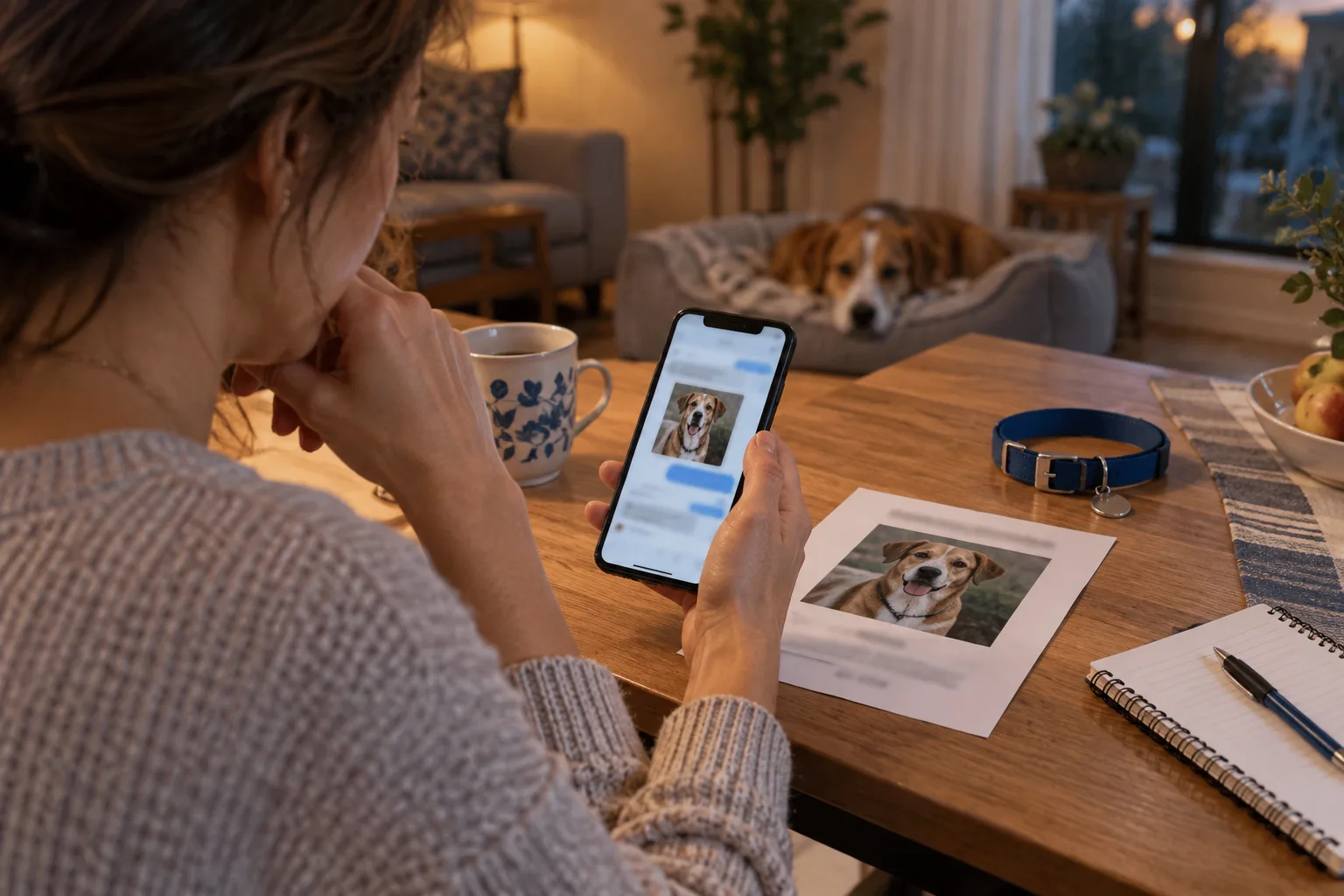
An AI Image Is Not Proof: How to Handle a Message Claiming Someone Found Your Lost Pet
A new wave of lost-pet scams uses stolen details, urgent payment demands and AI-generated images. Here is a calm verification plan that protects your money, accounts and search effort without dismissing a genuine finder.
The distracted dog walk: how to protect wildlife, livestock and your dog without ruining the outing
A new University of Surrey study links missed dog waste, wildlife disturbance and livestock encounters to divided attention. Here is a practical way to make walks safer, calmer and easier to manage.

Comments
Sign in to comment.
No comments yet.