Should You Buy the Acer Predator Atlas 8? The $1,300 Handheld Has a Performance-First Problem
Acer’s first officially sold US gaming handheld launches with Intel’s Arc G3 Extreme, an 8-inch 120Hz screen, and an 80Wh battery. The real question is whether its premium performance outweighs Windows handheld compromises and a narrow launch configuration.

What the US launch actually includes
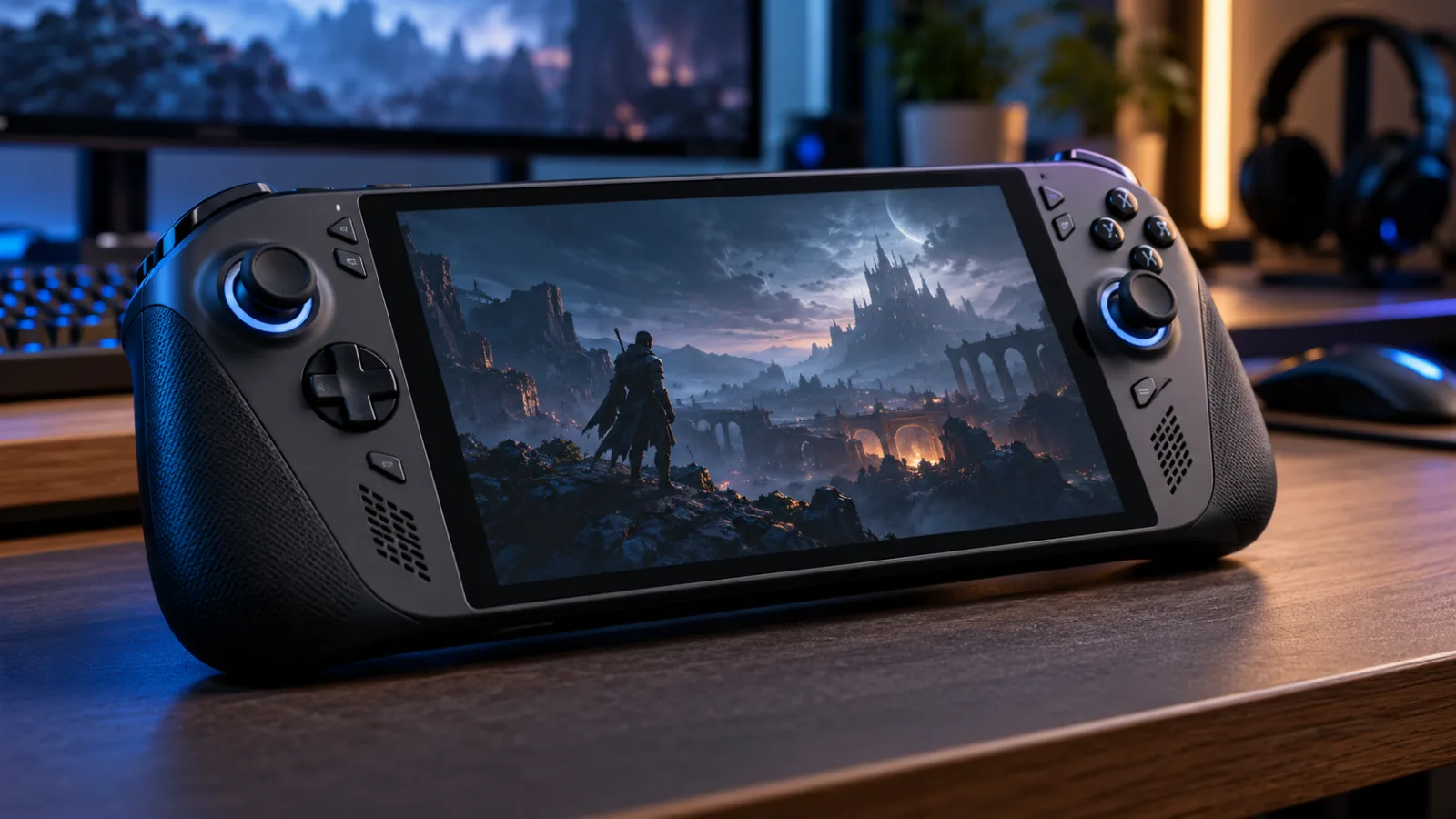
The Acer Predator Atlas 8 launches in the US on November 1, exclusively through Best Buy, at $1,299.99. That establishes the most important fact about the release: this is a premium handheld with a premium price, and the US buyer is not being offered a broad menu of configurations. Acer’s first gaming handheld to officially go on sale in the US arrives as a single launch model, so there is no cheaper version to make the entry point easier or a more modest configuration for buyers who would rather trade some graphics capacity for a lower cost.
That single configuration is also the reason the Atlas 8 has attracted attention. The US model uses Intel’s Arc G3 Extreme platform and Arc B390 graphics, with 24GB of LPDDR5x memory and 512GB of storage. On paper, that is a performance-focused specification rather than a compromise built around the lowest possible price. It gives Acer a clear sales argument: the Atlas 8 is intended to bring more graphics headroom to a handheld PC, while leaving enough memory for modern Windows gaming and multitasking. But the same fixed configuration makes the purchase less flexible. Buyers cannot choose a different memory capacity, storage tier, or lower-power option at launch; they are deciding whether the entire package is worth $1,299.99.
The display is a substantial part of that package. Acer equips the handheld with an 8-inch IPS touchscreen running at 1920×1200 and 120Hz. The screen uses a 16:10 aspect ratio, and the launch model supports variable refresh rate. An 8-inch panel gives the Atlas 8 more room than smaller handhelds, which can matter for interface-heavy PC games and for anyone who finds compact displays restrictive. The 120Hz refresh rate and VRR support are likewise useful capabilities, but they should be read accurately: they describe what the panel can support, not a guarantee that demanding games will reach 120 frames per second. Actual results will depend on the game, its settings, and the workload placed on the Arc graphics hardware.
The connectivity and operating system reinforce the device’s identity as a Windows gaming PC in handheld form. The Atlas 8 runs Windows 11 and includes Wi‑Fi 7, Bluetooth 5.4, and a microSD slot. Windows gives the system access to a wide PC software environment rather than tying it to one storefront, while the microSD reader provides a way to expand beyond the included 512GB of storage. Those features are practical for a portable game library, but they also mean that the Atlas 8 carries the ordinary flexibility and complexity of Windows. It is not being presented as a closed console with one streamlined interface; it is a full Windows device that happens to have integrated controls and a handheld chassis.
The controls are similarly ambitious. The launch model includes dual-mode triggers and TMR joysticks, along with support for high-bandwidth docking. The trigger system is designed to accommodate different kinds of games, while the TMR sticks are part of Acer’s effort to give the handheld a more advanced control setup. Docking support broadens the use case beyond playing directly from the built-in screen: the Atlas 8 can also be considered as a small PC that may join a larger display and accessory setup. Those features help explain why the product is priced above the most familiar mainstream handheld categories, but specifications alone do not establish whether the controls feel comfortable or whether the software experience is polished.
It is also important to separate Acer’s product information from the retailer’s availability details. Acer’s announcement describes the platform, screen, controls, connectivity, and Windows software. Best Buy’s listing and reporting establish the US launch date, exclusivity, and $1,299.99 price. Reports that the first round of preorders sold out show strong early interest, but a sold-out preorder window does not by itself prove sustained availability, superior real-world performance, or good value. It is evidence that the initial allocation drew attention, not a substitute for testing the machine in ordinary use.
So the US launch is unusually easy to summarize and unusually difficult to judge from the specification sheet alone. Acer is selling one high-end configuration built around Intel Arc G3 Extreme and Arc B390 graphics, a large 8-inch 120Hz touchscreen, 24GB of memory, 512GB of storage, Windows 11, and a modern set of wireless and expansion features. The product’s premise is clear: pay more for a performance-first Windows handheld with more screen and more graphics ambition. Whether that premise makes sense depends on how much value a buyer places on that specific hardware combination, because the launch does not provide a cheaper model or a wider range of choices to soften the decision.
Where the Atlas 8 has a real hardware advantage
The Atlas 8’s strongest argument is not that it resembles a conventional lightweight gaming handheld. It is that Acer has built the Extreme configuration around graphics headroom, a larger display, and the kind of hardware flexibility that matters when a handheld is expected to run demanding PC games. The 80Wh battery is a substantial part of that design, but its capacity should not be mistaken for a guaranteed runtime figure. A larger battery gives the system more energy to work with; it does not, by itself, establish how long the Atlas 8 will last under a demanding game, at a high refresh rate, or with the graphics hardware operating near its limits.
That distinction is important because the Atlas 8 is using Intel’s Arc G3 platform at a moment when graphics capability is the central reason to consider it. Acer and Intel position the Arc G3 Extreme around stronger PC gaming performance, including support for Intel’s XeSS upscaling technology. XeSS can be useful when a game supports it, because rendering at a lower internal resolution and reconstructing the image can create more room for performance. It is still a feature that depends on software support and on the quality of the implementation in each game, so the platform’s promise is better understood as additional flexibility rather than a universal performance guarantee.
The graphics pitch becomes more persuasive for buyers interested in demanding games or visual effects that are difficult for compact hardware. The Arc B390 graphics configuration gives the Atlas 8 a clear performance-first identity, and the preview context around Intel’s Arc G3 suggests that ray tracing is part of the platform’s intended appeal. That does not mean every demanding title will run at the same settings or frame rate, and specifications alone cannot settle questions about thermals, power limits, or sustained performance. It does mean the Atlas 8 is aimed at people who would rather have more graphics headroom available than accept the compromises associated with a lower-power design.
The screen reinforces that choice. An 8-inch 1920×1200 IPS touchscreen is physically larger than the displays commonly associated with handheld PCs, giving games, menus, and desktop applications more space. Its 120Hz variable-refresh capability is particularly relevant to a performance-focused system: the refresh rate can respond more naturally to changing frame output than a fixed-refresh panel, helping the display feel smoother when performance is not perfectly locked. Variable refresh cannot create additional frames, but it can make uneven frame delivery less distracting. For demanding PC games, that may be more valuable than chasing a fixed 120 frames per second that the hardware cannot consistently sustain.
The controls also show that Acer is trying to make the device more than a portable screen attached to a PC. Dual-mode triggers are intended to accommodate different control styles, while TMR sticks are a more advanced approach to analog-stick sensing than the basic hardware found on many controllers. Those details matter most to players who spend long sessions with action games, shooters, racing games, or other titles where trigger response and stick precision are noticeable. They are not a substitute for good software tuning or comfortable ergonomics, but they strengthen the case for treating the Atlas 8 as a serious gaming machine rather than merely a Windows tablet with controls attached.
Docking support broadens the same idea. A handheld that can move to a larger display, keyboard, mouse, or other desktop-style setup has a use beyond playing on the built-in screen. That is useful for someone who wants one Windows gaming PC that can travel and then become a more conventional workstation or living-room system. It also makes the larger battery and higher-performance graphics configuration easier to justify: the Atlas 8 can serve as a portable gaming device when needed while retaining the connectivity concept of a PC when docked.
Taken together, these features define a specific advantage rather than a universal one. The Atlas 8 may appeal to buyers who prioritize a larger 8-inch display, a high-refresh variable-refresh panel, Intel’s Arc G3 and XeSS ecosystem, and the possibility of better performance in demanding games or ray-traced workloads. The 80Wh battery supports that ambition, but it does not remove the need for independent endurance testing. Likewise, the controls and docking support add capability, but they do not automatically make the device light, quiet, or as simple to use as a dedicated console. Its hardware advantage is therefore best understood as extra room for ambitious PC gaming—valuable if that is what you want, and less compelling if portability or efficiency is the primary goal.
The costs hidden behind the $1,300 headline
The most important compromise is that the Predator Atlas 8 is still a Windows gaming PC in handheld form. That matters because the experience is shaped by Windows 11 as much as by Acer’s hardware. A large, high-resolution display and powerful graphics configuration can make demanding PC games more attractive, but they do not turn the device into a console-like appliance. Windows brings the flexibility of a PC, while also leaving the owner to deal with the practical friction that handheld consoles tend to hide: desktop-style navigation, launchers, updates, settings, and game-specific behavior. The Atlas 8 may be capable of replacing more than one gaming device for the right buyer, but it does not erase the management that comes with a full Windows machine.
That distinction becomes harder to ignore at $1,299.99. The price places the Atlas 8 well above the mainstream handheld category, where buyers generally accept compromises in display size or graphics headroom in exchange for a lower entry cost and a simpler value proposition. Acer is asking customers to pay for a performance-first design, not merely for a portable screen. That can be rational for someone who wants a large handheld display and expects to play demanding PC games, but it narrows the audience sharply. A buyer who mainly wants an inexpensive way to play an existing library may find that the Atlas 8’s premium is difficult to justify, especially when a less expensive AMD-based handheld or a Steam Deck-style device already covers the basic use case.
The launch configuration also limits how much of that decision can be customized. In the US, the model being sold combines Intel’s Arc G3 Extreme platform with 24GB of LPDDR5x memory and 512GB of storage. That is a straightforward specification for Acer to sell, but it leaves little room for a buyer to choose a lower-cost memory or storage combination, or to trade some performance for a lower-power configuration. The fixed configuration therefore makes the price easier to understand and harder to escape: if the Atlas 8’s particular balance of graphics capability, memory, and storage is not what you need, there is no broader launch range to make the purchase fit more closely.
Storage is especially practical rather than glamorous. A 512GB drive can be workable for a rotating selection of games, but a modern Windows gaming library can make that capacity feel restrictive, particularly when the system itself and game launchers occupy part of the available space. The microSD slot gives the handheld an expansion route, yet removable storage is not the same as having a larger internal drive for every installation. The result is another trade-off hidden behind the headline specification: the Atlas 8 may offer substantial graphics ambition, but the owner still has to manage what stays installed and where it runs.
There is also a first-generation question that specifications cannot settle. Intel’s Arc G3 Extreme and XeSS positioning make the Atlas 8 interesting, but a new graphics platform needs time in the hands of reviewers and players before its real behavior is clear across different games. Compatibility is not a single yes-or-no attribute on Windows. It can depend on a game’s launcher, anti-cheat system, graphics API, driver maturity, upscaling support, and the performance target chosen by the player. A product can be technically powerful and still require more troubleshooting than a mature handheld ecosystem. Until independent testing covers a broad set of games, buyers should treat advertised capability as potential rather than as a guarantee of consistently smooth results.
The same caution applies to the controls and the system around them. Acer lists TMR sticks and dual-mode triggers, but a specification does not tell us whether the sticks feel precise over long sessions, whether the triggers suit different genres, or how reliably controller input behaves when a game, launcher, and Windows interface are all involved. Those details are central on a handheld because the controls are the primary way to interact with the machine. They also cannot be inferred from the screen resolution or graphics architecture. Early hands-on impressions can identify the design’s intent, but they are not a substitute for longer-term testing of ergonomics, input consistency, and software updates.
Weight and acoustics are further unknowns for anyone considering the Atlas 8 as an everyday portable. The device’s 80Wh battery and performance-oriented hardware suggest that Acer is prioritizing endurance capacity and graphics headroom over an especially light design, but battery capacity alone does not establish how long it will last in a particular game. Power draw changes with frame-rate targets, display refresh rate, brightness, graphics settings, upscaling, and whether the system is connected to a dock or external display. The same uncertainty applies to fan noise: a powerful Windows handheld may need active cooling under sustained load, yet the meaningful question is how loud it becomes in actual play and how that sound changes across power modes.
Community discussion can be useful for identifying the questions owners are asking, but anecdotal reports should not be treated as established test results. Individual impressions may reflect different games, firmware versions, power limits, ambient temperatures, or expectations about what a handheld should feel like. Reports about battery life, controller behavior, fan noise, or compatibility are therefore signals for further testing rather than proof of a universal experience. That distinction is important here because the Atlas 8’s central appeal depends on a new platform and a narrow launch configuration. The price buys an ambitious set of hardware choices, but it also asks the buyer to accept more uncertainty than they would with a longer-established handheld category.
Who should buy now, and who should wait
The Acer Predator Atlas 8 makes sense as an immediate purchase only for a specific kind of buyer. You have to want an 8-inch Windows handheld, be willing to pay $1,299.99 for the launch configuration, and care more about graphics headroom than about keeping the device light, quiet, inexpensive, or console-simple. The appeal is not merely the novelty of Acer entering the US handheld market. It is the prospect of carrying a relatively uncompromising PC gaming system built around Intel’s Arc G3 Extreme platform, with a large 120Hz display, 24GB of memory, and an 80Wh battery in the Extreme configuration. Those priorities are coherent, but they are also demanding ones.
That makes the Atlas 8 a better fit for someone who already understands the compromises of Windows handheld gaming. If your library includes demanding PC games and you are prepared to manage launchers, settings, updates, controller behavior, and occasional compatibility issues, the hardware may be compelling enough to justify the premium. The same is true if you expect to use the Atlas 8 at a desk or with a larger display. Docking support gives the device a role beyond handheld play, and the extra screen size can make it more useful for games and general Windows tasks than a smaller portable system. In that scenario, the Atlas 8 is best viewed as a high-performance portable PC that can also function as a docked machine, rather than as a dedicated console replacement.
The decision is harder if portability is the main reason you are shopping. An 8-inch display is an advantage for visibility and immersion, but it does not automatically make the device comfortable to carry for long periods. The Atlas 8 is a performance-first Windows computer with gaming controls, not a lightweight appliance designed around the simplest possible pick-up-and-play experience. Its premium hardware may provide the headroom that demanding games require, yet that benefit comes with questions about fan noise, heat, controller behavior, and real battery endurance that specifications alone cannot answer. The 80Wh capacity is notable, but it is not a promise of a particular runtime, especially when the system is asked to drive demanding games and a high-refresh display.
Waiting is the more sensible choice for anyone whose priorities are quiet operation, predictable endurance, polished ergonomics, or strong value. Independent testing should establish how the Arc G3 Extreme configuration behaves in sustained play, how consistently games support its graphics features, how loud the cooling system becomes, and whether the large battery translates into useful time away from a charger. It should also clarify the everyday software experience: Windows handheld usability, game compatibility, suspend-and-resume behavior, and the reliability of the controls across different titles. Early community discussion can identify potential issues, but anecdotal reports should not be treated as settled test results.
There is also little flexibility in the US launch configuration. Buyers are not choosing among a broad range of memory, storage, or lower-power variants; they are deciding whether the single available package matches their needs. That matters because established AMD handhelds and the Steam Deck represent broader, more familiar categories. They may appeal to buyers who want a known software and hardware experience, a different balance between performance and efficiency, or a more straightforward handheld routine. The comparison should be made at the level of priorities rather than unsupported performance rankings: the Atlas 8 is aimed at buyers who specifically want its larger display and Intel graphics configuration, while established alternatives may be easier to justify for people who value maturity, simplicity, or cost control.
A practical rule follows. Buy the Atlas 8 now if you specifically want the 8-inch format, need the strongest Intel configuration offered at launch, plan to play demanding PC games, and accept that the device is a premium Windows PC with handheld controls. Consider it especially carefully if docking is part of your setup, since that can help the system serve more than one role. In every case, the purchase should be intentional rather than driven by the headline specifications alone.
Wait if you are hoping for a small, quiet console that simply resumes games and lasts predictably on battery. Wait as well if the $1,299.99 price leaves no room for uncertainty about first-generation software, thermals, ergonomics, or compatibility. The Predator Atlas 8 has a clear point of view: maximize the performance and screen experience, then ask the buyer to accept the consequences. For the right enthusiast, that trade-off may be worthwhile. For everyone else, independent testing and a wider choice of configurations will make the decision much easier—and may show that a more established AMD handheld or Steam Deck-style option better matches the way they actually play.
Related articles
Should you buy a Windows laptop if you plan to install Linux?
The Windows license refund debate is back, but the smart purchase depends on local policy, hardware compatibility and how much your time is worth.

Should You Buy a Googlebook? Preorder Only If Android Continuity Matters More Than Proven Laptop Compatibility
Googlebook is a $899-and-up Android-based laptop with premium hardware, Gemini integration, and a year of bundled services. Its phone continuity is promising, but the first generation still leaves important questions about apps, processors, subscriptions, and long-term support.
Should You Buy the PocketBook Q? Wait for Real-World Tests
PocketBook’s €199 phone-shaped e-reader looks thoughtfully focused, but its narrow display, app limits and untested performance make waiting the prudent choice.

Should You Buy the Apple Watch Series 12? The Health Sensors Are New, but the Upgrade Case Is Narrow
Apple’s Series 12 adds higher-frequency heart sensing and a readiness score, but its everyday case remains familiar. Here is who should buy now, who should wait, and when an older or cheaper Apple Watch makes more sense.

Comments
Sign in to comment.
No comments yet.