Should you keep YouTube Premium after the latest price hike?
The new bill is a reason to calculate, not just complain. YouTube Premium still makes sense for some households, but Premium Lite, a family plan, a separate music service or cancellation can be smarter depending on what you actually use.

A YouTube Premium price increase is annoying because it touches a habit, not a luxury you open once a month. Many people watch YouTube more than Netflix, Disney+ or any single news site. They use it on the TV, in the kitchen, at the gym, during study breaks, on a commute and sometimes as the household’s default music app. That is why the subscription can be both easy to justify and easy to resent.
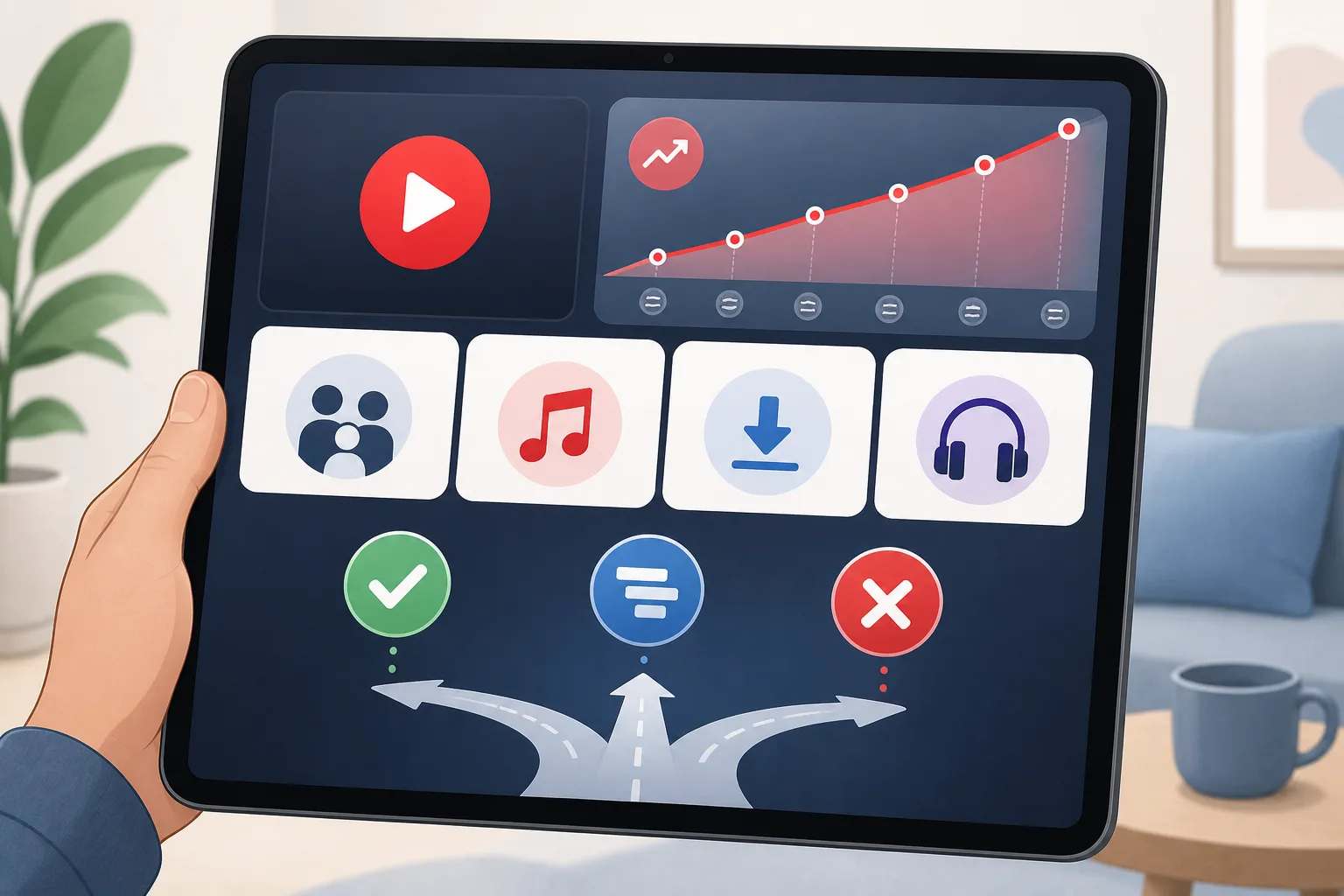
The latest international wave of price increases, reported by 9to5Google on August 21, gives subscribers a useful moment to recalculate. The examples in the report are not one universal price: parts of Europe move from €13.99 to €15.99, Finland from €14.99 to €16.99, Romania from RON 29.00 to RON 32.00, and Singapore from $13.98 to $15.98 for an individual plan, with the family plan rising from $27.98 to $31.98. Affected users are told the new price starts with the next billing date on or after September 23, 2026.
The right question is not “Do you like YouTube?” Most people do, or at least use it constantly. The right question is whether the bundle still earns its place in your monthly budget after the new price. YouTube Premium is not one product. It is ad-free YouTube, YouTube Music Premium, background playback, downloads, family sharing, student pricing in some markets, and occasional regional perks such as the announced Peacock access for some U.S. full Premium subscribers. If you use all of that, the subscription can still be a strong buy. If you only use one piece, the new price may be too high.
What changed now
The price hike is not a single global switch. It is a regional wave. 9to5Google says Google has started notifying users in Europe, Finland, Romania, Singapore and other markets after an earlier U.S. increase this year. Android Authority and other consumer-tech outlets have also tracked the same pattern. Reddit threads cited by 9to5Google show why the story spread quickly: people are not merely seeing a number go up, they are deciding whether a daily habit still feels fair.
That emotional layer matters. A music service that raises price can still feel like a library. A video subscription that raises price can still feel like a show bundle. YouTube Premium often feels different because its most visible paid benefit is the removal of friction from a service that also has a free version. The subscriber is not only buying more content; they are buying fewer interruptions, background playback that many people consider basic app behavior, and downloads for a platform they already helped make valuable with attention and data.
This does not make the subscription bad. It makes the value calculation personal. A family that uses YouTube on the living-room TV every night and has replaced Spotify with YouTube Music is in a different position from a single user who watches a few videos at lunch and already pays for Apple Music.
What YouTube Premium actually buys
Full YouTube Premium usually includes ad-free viewing on YouTube, background play, offline downloads and YouTube Music Premium. Those benefits are not equal. For some people, ad removal is ninety percent of the value. For others, YouTube Music is the real product and ad-free video is a bonus. For commuters and frequent travelers, downloads and background play can matter more than the monthly price suggests.
Premium Lite changes the calculation. Google’s support pages now list Premium Lite separately in many markets, and 9to5Google has reported that YouTube is teasing further expansion. Lite is the plan to consider if ads are the pain but you do not need YouTube Music, downloads or the full feature bundle. The catch is that Lite details can differ by market and can change over time, so it is not enough to know that the plan exists. Check what your local Lite plan removes, what it keeps, and whether it covers the devices where you actually watch.
Family plans are often the best value, but only when they are legitimate household plans. Google’s help page says family members must live at the same residential address and that an electronic check-in confirms this every 30 days. If your “family” is really friends in different homes, do not treat the plan as stable budgeting. It may work until it does not, and the correct comparison is not the split price you hope for but the price you can keep without account friction.
Student plans can be excellent if available, but eligibility rules matter. If you qualify, the decision is usually easier: heavy YouTube use plus student pricing is one of the strongest cases for keeping Premium. If eligibility is about to expire, calculate the full price now rather than being surprised later.
Calculate the real annual cost
The monthly increase sounds small until it becomes an annual number. A move from €13.99 to €15.99 is not “just two euros”; it is roughly €24 more per year and about €192 per year total for one subscription. In Singapore, $15.98 per month is almost $192 per year. A family plan at $31.98 per month is about $384 per year before any local taxes or platform billing differences.
Now compare that with what Premium replaces. If YouTube Music is your main music service and it lets you cancel Spotify or Apple Music, Premium’s effective price is lower. If YouTube is your main video platform and you watch daily on a TV where ads are especially disruptive, the value is higher. If you mostly watch embedded clips, occasional tutorials and the odd music video while still paying for another music service, the subscription is weaker.
A useful quick test is the “three buckets” method. First, estimate your ad-free video value: how many hours a month do you watch YouTube on devices where ads bother you? Second, estimate your music value: would you really cancel another music service, or is YouTube Music just bundled clutter? Third, estimate your convenience value: do you use background play, downloads, travel viewing, children’s viewing or family sharing every week? If two or three buckets are strong, keep it. If only one bucket is strong, look at Lite or cancellation.
Keep full Premium if YouTube is already your main media service
The strongest case for keeping YouTube Premium is heavy daily use. If YouTube is your main video platform, your default how-to library, your TV background, your exercise companion and your music app, the subscription is not competing only with Netflix. It is competing with several services at once. In that situation, even a higher price can be rational.
Full Premium is also easier to justify if you use YouTube Music as your primary music app. Many subscribers forget to count that correctly. If Premium replaces a separate music subscription, the incremental cost of ad-free YouTube may be modest. If it does not replace anything, the math changes.
Families can still get strong value, especially if several household members use YouTube every day and the plan is within Google’s address rules. Parents may also value fewer ad interruptions for children, though Premium should not be treated as a complete safety or content-quality solution. It reduces ads; it does not replace parental controls, YouTube Kids settings or judgment about what children watch.
Travelers, commuters and people who listen while the phone screen is off also have a real case. Background play and downloads are not flashy features, but they change everyday use. If you save lectures, music sets, workouts or long explainers before flights and train rides, Premium may still be cheaper than the irritation it removes.
Downgrade to Premium Lite if ads are the only problem
Premium Lite is the obvious middle option for people who mostly want fewer ads but do not care about YouTube Music. It can be the correct choice if you watch videos, not music; if you do not download; if background play is not central; and if the local Lite price is meaningfully lower than full Premium.
The danger is assuming Lite is “Premium, but cheaper.” It is not. It is a narrower product. If you rely on YouTube Music in the car, downloads on flights or background playback during work, Lite may feel like paying and still losing the feature you cared about. If your household has mixed needs, one person may prefer Lite while another still needs full Premium. Check the exact local feature list before switching.
Lite is also a useful emotional test. If you feel angry at the full subscription because you are paying mainly to escape ads, Lite may restore the price-value balance. If Lite is unavailable in your country, too close in price, or missing the device coverage you need, it is less helpful.
Cancel if the subscription is mostly irritation insurance
Cancel or pause if you watch casually, already pay for another music service, rarely use downloads, and do not share a legitimate family plan. A subscription that exists only because the free product became irritating is vulnerable to price hikes. At some point, the honest answer is that you dislike ads but do not value the bundle enough to keep paying.
Also cancel if you subscribed during a trial and stopped noticing the charge. This is common with subscriptions that solve friction silently. Remove Premium for a month and see what actually breaks. If you immediately miss background play, the living-room TV becomes unbearable and YouTube Music was your real music library, you have your answer. If nothing important changes, the subscription was inertia.
Check the billing route too. In some markets and periods, subscribing through an app-store route can cost more than subscribing directly on the web because of platform fees or pricing differences. Do not assume this without checking your current country and account, but do check. Saving money by changing billing route is different from using VPN or region tricks, which can violate policies, break payment stability and create account risk.
What about alternatives?
The simplest alternative is free YouTube with ads. That is not pleasant for everyone, but it is the baseline. Try it for a week before declaring Premium essential. The second alternative is Premium Lite, if available. The third is keeping a separate music service and treating YouTube as occasional video. The fourth is shifting money toward creator memberships, Patreon or direct support for a few channels you truly value, though that does not remove platform ads across YouTube.
Be careful with advice that centers on ad blockers or location circumvention. Many users know those options exist, but they are not stable purchase advice. They can conflict with platform rules, fail on TVs and mobile apps, or create a constant maintenance chore. A buyer’s decision should be based on what you can comfortably keep using, not on a workaround that turns entertainment into technical upkeep.
You should also compare YouTube with other subscriptions by hours used, not by brand prestige. A $16 video subscription you use thirty hours a month may be better value than a $10 streaming service you open twice. But a $16 subscription you resent and barely use is worse than both.
The decision matrix
Keep full YouTube Premium if at least two of these are true: you watch YouTube almost daily; you use YouTube Music as your main music service; several people in the same household use a legitimate family plan; you rely on downloads or background play; your children’s viewing experience is meaningfully better with fewer ads; or a regional perk such as Peacock genuinely replaces another paid service for you.
Switch to Premium Lite if ads are the main pain, Lite is available in your country, the price gap is meaningful, and you do not need YouTube Music, downloads or full background-play benefits. Treat Lite as a purchase of calmer video watching, not as a music bundle.
Cancel or pause if YouTube is casual, another music app already wins, you do not use offline or background features, family sharing is not legitimate, or the subscription feels like a tax on irritation rather than a service you appreciate. Pausing for one billing cycle is often the cleanest test.
Wait if you have not yet received a price-change email, if your region’s Lite details are unclear, or if a promised perk is still “coming” rather than live. Do not pay today for a future bundle unless the current bundle is already worth the price.
Verdict
YouTube Premium remains worth buying for heavy users and real households because no other subscription removes as much daily friction from YouTube while also including a music service. It is not automatically overpriced just because the price rose.
But the new price makes lazy subscribing harder to defend. If you do not use the full bundle, full Premium is no longer the default answer. Lite, a family plan, a music-only alternative or cancellation may be the smarter purchase. The practical rule is simple: pay for Premium only if it replaces enough ads, music, travel friction or household conflict to justify the annual bill. If it only buys relief from annoyance, make YouTube prove it again for one month before renewing.
Related articles
Should You Buy a Googlebook? Preorder Only If Android Continuity Matters More Than Proven Laptop Compatibility
Googlebook is a $899-and-up Android-based laptop with premium hardware, Gemini integration, and a year of bundled services. Its phone continuity is promising, but the first generation still leaves important questions about apps, processors, subscriptions, and long-term support.
Should You Buy Amazon’s New Fire TV Stick 4K? The Remote Is the Upgrade, but Vega OS Changes the Deal
Amazon’s new $59.99 Fire TV Stick 4K is quicker, easier to power, and bundled with a redesigned remote. The real buying question is whether you want those conveniences badly enough to give up the flexibility of older Fire TV models.
Should you keep Peacock after the 2026 price hike?
Peacock’s new prices make the old “just keep it” habit harder to defend. Keep it for regular sports and NBC/Bravo viewing; cancel or subscribe seasonally if you only open it for one show.
Should you use Apple Upgrade or buy your next iPhone? Read the lease first
Apple’s new Klarna-backed program lowers the monthly number, but it changes the ownership question. It works for frequent upgraders, not long-term owners.
Comments
Sign in to comment.
No comments yet.