AI coding agents need capacity planning, not surprise quota resets
Codex and Claude Code are becoming engineering infrastructure, but context cuts, 5-hour windows and random resets make teams rethink how they budget and schedule AI-assisted work.

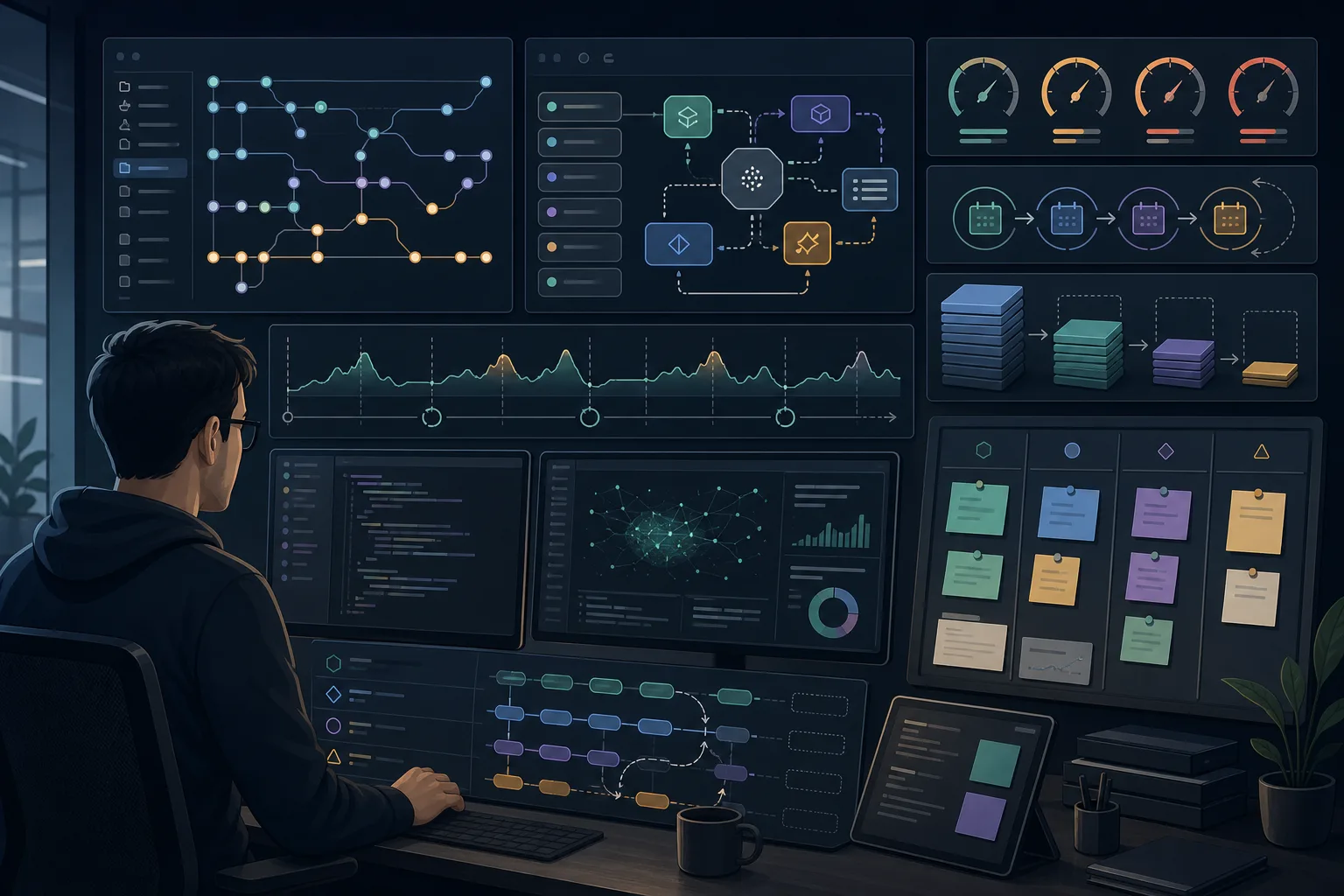
AI coding agents have crossed a line that product teams should take seriously. They are no longer just clever demos sitting beside the editor. Developers now use Codex, Claude Code and similar tools to review pull requests, explore unfamiliar repositories, run refactors, write tests, summarize logs and keep multi-step tasks moving while they do something else. That is useful. It also means a coding agent's quota screen, context window and reset policy can suddenly affect the way a team plans engineering work.
The last few days made that visible. A GitHub diff in the OpenAI Codex repository showed bundled model metadata changing some context-window values from 372,000 tokens to 272,000 tokens. Hacker News turned the change into a debate about large repositories, compaction and whether important runtime details should be discovered from pull requests and X replies. At nearly the same time, Codex Resets, a small tracker for usage-limit reset announcements, became a social artifact of the moment. Max Woolf's July 18 post put words around the discomfort: frequent quota resets feel generous, but they also make users build habits around capacity that may not be there next week.
This is not only an OpenAI story. Anthropic's Claude Code support page says its May-August 2026 promotion increases weekly usage limits by 50% for eligible Pro, Max, Team and legacy seat-based Enterprise users, while leaving 5-hour limits unchanged. Hacker News discussions around Claude Code show the same frustration: timed windows, changing availability, model access uncertainty and the awkward feeling that a serious work session now depends on a subscription rule nobody on the team controls.
The practical lesson is simple: AI-assisted engineering is becoming infrastructure, but many of the products still behave like promotional consumer services. That mismatch is the risk.
What changed this week
The first visible trigger was the Codex context-window discussion. The GitHub pull request did not read like a marketing announcement. It was a metadata update. But the diff mattered because developers who rely on long sessions care about the amount of repository state an agent can carry before it compacts or forgets. In several places, the diff changed context_window and max_context_window from 372000 to 272000. Some other entries still showed 1,000,000 as a maximum value, which is one reason the discussion became confusing rather than clean.
The number itself is not the whole story. A 272k-token window is still large by the standards of ordinary chat. For a coding agent, though, the useful context includes system instructions, tool schemas, repository files, search output, error logs, test output, previous edits, review comments and the user's actual request. A large monorepo, a noisy terminal session or a long debugging trail can eat space quickly. Compaction helps, but compaction is not free memory. It is a lossy summary. It can preserve the broad plan and still drop the detail that makes the next edit correct.
The second trigger was quota behavior. Codex Resets reported 35 reset announcements at the time it was checked, with an average interval of 8.9 days and a recent history of resets tied to active-user milestones, reliability issues, banked resets and temporary removal of a 5-hour limit. Max Woolf counted six direct Codex weekly quota resets in the first two weeks of July, plus banked resets on July 12 and July 13. His argument was not that free capacity is bad. It was that random generosity creates strange incentives. Users start watching the quota instead of the work.
The third trigger was local-machine trust. A Reddit thread claimed Codex was wearing out devices; Hacker News commenters were skeptical of broad claims, but pointed to GitHub issues with more concrete data. One closed issue described excessive writes to a local SQLite feedback log and listed fixes that could avoid most of the logging. Another issue concerned macOS syspolicyd and trustd CPU and memory runaway. The fair conclusion is not that Codex damages machines by default. It is that desktop agents need local observability, because they are not only cloud workloads. They run on developer laptops, touch files and may interact with operating-system security services.
Why vendors use quotas, resets and compaction
It is easy to mock quotas until you run the service. Frontier inference is expensive and spiky. Coding agents are especially hard to price because they do not only answer one prompt. They call tools, read files, run tests, retry, ask for more context, produce long patches and sometimes spend many turns on a task that ends with no accepted code. A $20, $100 or $200 subscription can become a loss-making account if a small group of power users pours an entire monthly allowance into a few long weekends.
Five-hour windows smooth demand. Weekly quotas prevent month-long dumping. Compaction reduces memory cost and latency. Reset gifts compensate users after incidents and keep adoption hot in a competitive market. None of that is irrational. Anthropic's support article is unusually clear on one point: a promotion can increase weekly Claude Code usage by 50% while the 5-hour window remains unchanged. That distinction matters, because weekly supply and burst capacity are different constraints.
The problem is not that limits exist. Limits should exist. The problem is when limits are discovered socially, changed quietly or communicated through scattered employee posts rather than stable product documentation, admin dashboards and usage APIs. A tool can be generous and still be operationally unpredictable.
Why developers get angry even when the reset is free
A reset looks like a gift. For a solo user, it often is. If you were about to run out, a reset means another refactor, another code review, another experiment. That is why people celebrate them.
The anger comes from planning. Once a tool becomes part of daily work, the question changes from "how much free compute did I get?" to "can I rely on this capacity when a release is due?" Random resets create a quota treadmill. Users may delay work because a reset might arrive. They may rush work because unused quota feels wasted. They may start overnight agent jobs not because those jobs are the highest priority, but because a banked reset is expiring. Teams can end up treating subsidized capacity as normal capacity, then discover that the normal workflow is unaffordable or unavailable when the promotion ends.
That is not a moral failure by users. It is basic behavior design. If a service repeatedly gives unpredictable extra capacity, power users will learn to watch for it. If that service is also a development tool, the behavior leaks into engineering planning.
Context windows are a reliability feature, not just a spec
A context-window number looks like a spec-sheet item, but for coding agents it behaves like a reliability boundary. When the agent has enough relevant context, it can connect a failing test to a previous edit, remember why a file was not touched, keep architectural constraints in mind and avoid redoing a search. When the session compacts too early or too aggressively, the agent may still sound confident while losing the thread.
This does not mean every team needs a million-token window. More context can raise cost and latency. Large context can also make agents lazy, because they stuff too much irrelevant material into the prompt instead of retrieving what matters. A smaller window with good retrieval and explicit project notes may beat a huge window filled with logs.
But teams need stable expectations. If a vendor changes effective context behavior, serious users need to know what changed, which plans and models are affected, whether compaction thresholds moved, and how to design around the new limit. Hidden context changes are hard to absorb because they show up as degraded work: a missed constraint, a repeated mistake, a patch that forgot an earlier decision.
For large repositories, context hygiene should become a team practice. Keep AGENTS.md, build instructions and project maps short. Split tasks into reviewable units. Clear sessions intentionally. Store decisions in files the agent can reread, not in chat scrollback alone. Treat compaction as a handoff, not as perfect memory.
Subscriptions and APIs solve different problems
Subscriptions are excellent for exploration. They make it easy for developers to try agents, run small tasks, learn prompt habits and find which workflows deserve automation. They are poor as the only capacity plan for a team that depends on agents to deliver work.
API billing is less emotionally pleasant because every token has a price. It is often better for production. A platform team can set budgets, log spend per repository, compare providers, route low-risk tasks to cheaper models and reserve expensive models for tasks where quality matters. It can also enforce data policies and track accepted outputs rather than raw usage.
The mistake is treating a subscription price as the cost of AI-assisted development. The real cost includes retries, review time, failed patches, context rebuilds, waiting for quota, abandoned sessions, local machine overhead, security review and the work of keeping project instructions clean. A cheap agent that needs three attempts may cost more than an expensive agent that gets the accepted patch in one pass. A reset that makes a task free today may hide the cost of repeating that workflow next month.
Teams should measure cost per accepted outcome: merged test, accepted review comment, migrated module, fixed bug, summarized incident, generated docs page. Token cost matters, but it is not the final unit of work.
Local agents need local observability
Desktop agents change the trust model. A browser chatbot can be closed. A terminal or desktop coding agent can read the repository, create files, run commands, install packages and keep state. If the agent also writes logs, monitors files or triggers operating-system security checks, users need visibility into that behavior.
The recent device-wear discussion is a good example of how to handle claims carefully. Some broad Reddit claims were speculative. The GitHub issue about SQLite feedback logs, however, had measurable file paths and described fixes. The macOS syspolicyd and trustd issue names a narrower failure mode. That is exactly the difference teams should demand from vendors: not vague reassurance, but diagnostics. Show local disk writes. Show background processes. Show cache locations. Explain telemetry retention. Provide switches for heavy logging. Make GUI and TUI behavior clear.
If coding agents become part of the standard developer environment, they should be observable like developer infrastructure, not mysterious like a consumer app.
A practical operating model for teams
Teams adopting AI coding agents should separate experimentation from dependable capacity.
For exploration, subscriptions are fine. Let developers learn where Codex, Claude Code, Cursor, Copilot or other agents help. Encourage experiments, but label them experiments. Do not plan a sprint around a promotional quota boost.
For recurring work, define task classes. A small bug fix, test generation, documentation update, dependency migration, repo-wide refactor and security-sensitive code review do not need the same model, context size or approval rule. Low-risk, repetitive tasks can use cheaper agents or lower reasoning effort. High-risk code, migrations and security review should use better models, smaller scopes and human approval.
For long sessions, create context budgets. Start with a clean task brief. Provide only the relevant files. Ask the agent to write a short handoff before compaction or before stopping. Save decisions in the repository or issue tracker. If the agent must inspect a large codebase, make it produce a map first, then use that map instead of repeatedly stuffing the same files into the session.
For costs, track accepted outcomes. Log model, tool, runtime, quota consumed, retries, human review time and whether the output was merged. After a month, compare agents by completed work, not by vibes or benchmarks.
For resilience, maintain fallback paths. If one vendor's weekly limit hits, the team should know whether to switch to API billing, route through another model, fall back to a simpler tool or pause the agent workflow. The fallback should be boring. If the fallback is improvised during a release crunch, the team has not operationalized AI assistance.
What to ask vendors before standardizing
A serious coding-agent vendor should be able to answer practical questions.
What are the current context limits by model and plan? How are compaction thresholds chosen? Where are context and quota changes documented? Is there an admin usage API? Can teams receive quota webhooks before hitting limits? Can a workspace set internal caps per user, repository or project? What happens to data, logs and local files? Which actions require human approval? Can the desktop app show disk, CPU, network and cache behavior? Are GUI and CLI limits the same? Can enterprise customers buy predictable capacity instead of hoping for resets?
These are not procurement trivia. They decide whether a tool can move from individual enthusiasm to team infrastructure.
The calm conclusion
AI coding agents are going to stay. They are already too useful to dismiss. But the way teams buy and operate them needs to mature quickly.
A reset is nice. A bigger context window is nice. A promotion is nice. None of those is a capacity plan. The mature version of AI-assisted engineering treats agents like infrastructure: observable, budgeted, replaceable, governed and documented. Teams that do this will still benefit from promotions and better models, but they will not let a surprise quota reset or a quiet context-window change decide whether the week's engineering work gets done.
Related articles
Debian’s AI vote makes humans responsible for generated code
Debian chose responsible use over a ban, offering a practical model for teams that need AI help without lowering review, security or licensing standards.
The Automated Research Intern Has Arrived. The Bottleneck Is Now Evidence
OpenAI says its research teams are already using more agent effort than human labor in aggregate. The practical lesson for research and engineering leaders is not to hand over discovery, but to redesign how ideas are tested, recorded, and rejected.
Anthropic’s revenue surge is a practical warning about AI model economics
The argument around Claude is bigger than IPO hype: teams buying AI now need to measure cost per useful task, switching risk and where premium models actually earn their price.
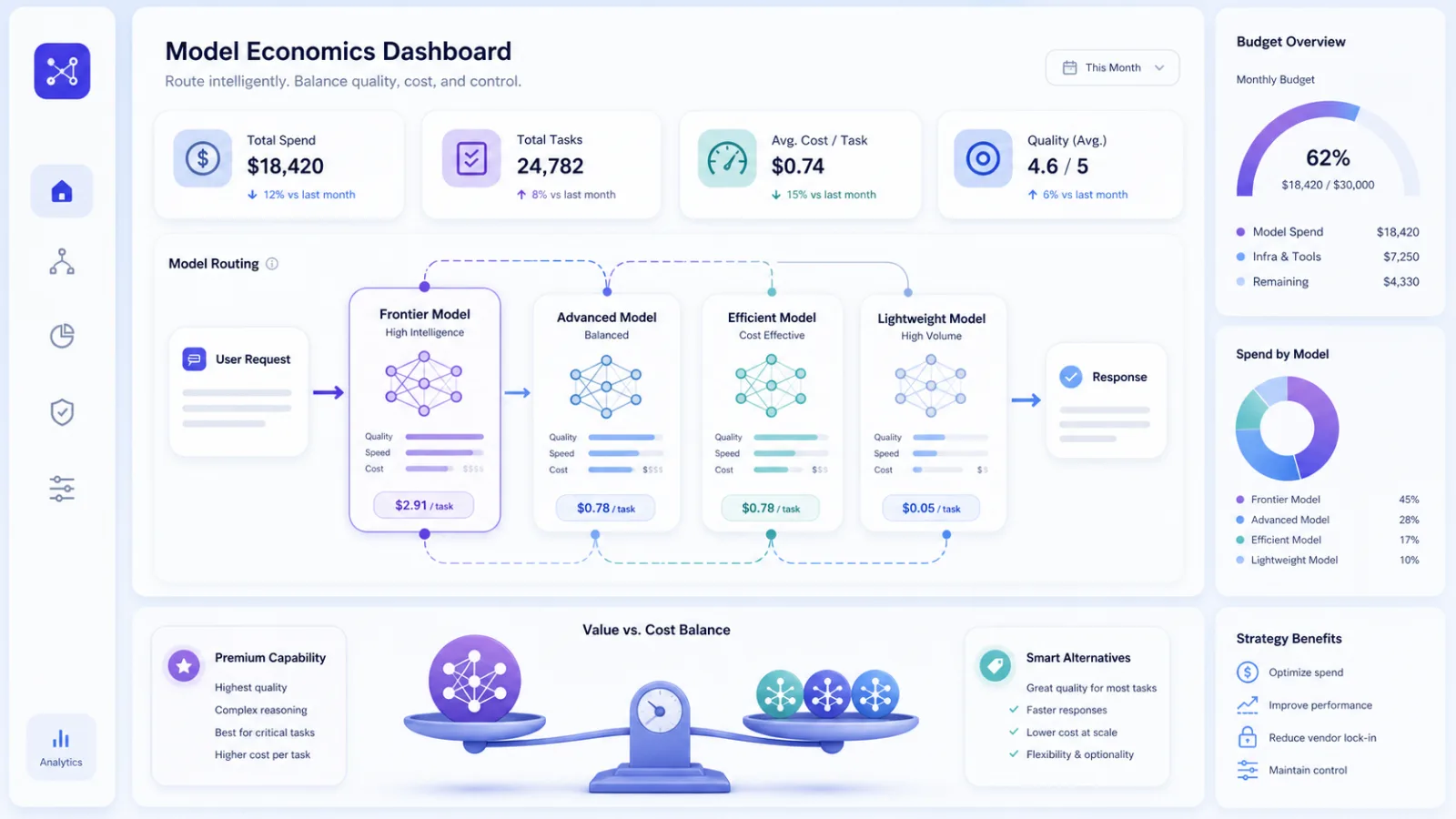
Muse Spark Open Makes Local Frontier AI More Plausible. The Hardware Still Decides Whether It Is Practical
Meta’s Muse Spark Open and Nvidia’s RTX Spark PCs make local frontier-model experiments easier to imagine. For most teams, the useful question is not whether a model fits on a desk, but whether the workflow, software stack, cost and maintenance justify keeping it there.

Comments
Sign in to comment.
No comments yet.