AI coding agents are useful now. That is why they need security rules
GhostApproval, Friendly Fire and Ghostcommit show that coding agents have become privileged automation, not just smarter autocomplete.

AI coding agents have crossed the awkward line from experiment to workplace tool. That is the good news and the problem. A tool that can read a repository, edit files, run commands, follow project instructions and review pull requests is no longer autocomplete. It is privileged automation sitting on a developer machine.
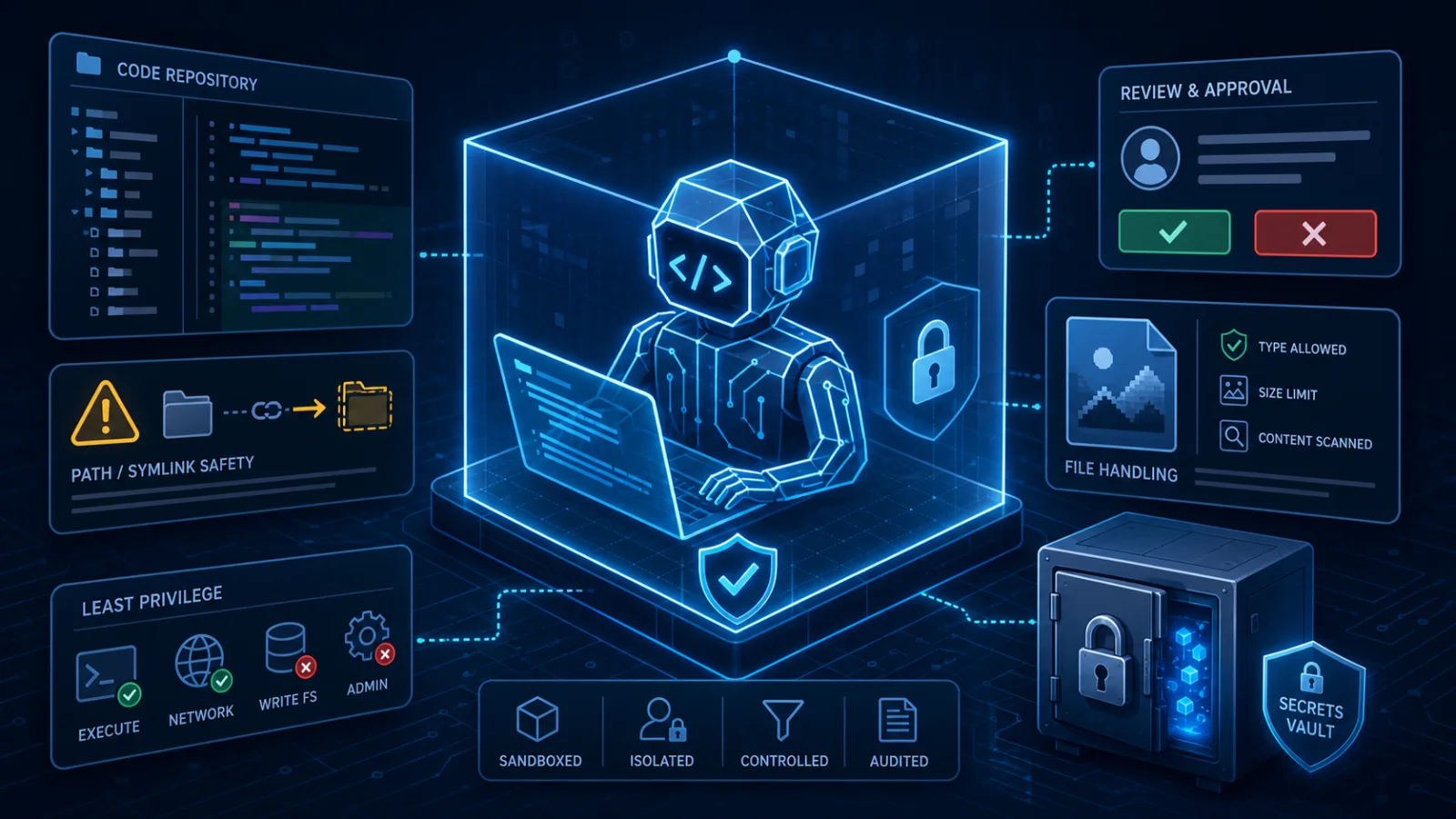
That makes the past two weeks worth taking seriously. A new arXiv paper on Microsoft's early 2026 rollout of command-line coding agents reports that adopters merged roughly 24% more pull requests than they otherwise would have, while warning that token spend can run into millions of dollars at organizational scale. At almost the same time, Wiz, AI Now Institute and ASSET Research Group disclosed three different ways AI coding agents and AI-assisted review can become risky when they touch untrusted repositories.
The lesson is not that teams should stop using agents. The practical lesson is harsher: if agents are useful enough to deploy, they are powerful enough to govern. Treat them less like chatbots and more like CI runners, contractors and privileged IDE extensions.
What changed
Autocomplete suggested a line. The developer stayed in charge of the file, the shell and the commit. Modern coding agents do more. They read AGENTS.md or similar instruction files, scan a whole workspace, call tools, edit code, run tests, inspect images or documents, open terminals and sometimes operate inside pull request or code review workflows.
That is why ordinary software security assumptions break down. A malicious repository is no longer just code waiting to be reviewed. It can become an instruction environment for the agent. A harmless-looking approval prompt may not show the true path being changed. An image can carry instructions that a text reviewer never sees. A defensive audit can become the path that gives untrusted code influence over a tool with local access.
This is not science fiction. It is the same old security story with a new interface: if a system can read secrets, write files and execute commands, attackers will look for ways to steer it.
Productivity is real enough to raise the stakes
The adoption argument is not weak. The arXiv paper "Adoption and Impact of Command-Line AI Coding Agents" studies Microsoft's early 2026 rollout of Claude Code and GitHub Copilot CLI across tens of thousands of engineers. The abstract says first use spread mainly through social networks, retention correlated more with coding activity than demographics, and adopters merged roughly 24% more pull requests than they would have otherwise.
The paper also says the authors use merged pull requests as a proxy for output, not as proof of business value. That caveat matters. More PRs can mean real throughput, smaller batches, different review behavior, or noisier work. Still, the signal is strong enough for platform teams to care. CLI agents are not just toys for demos.
The same abstract contains the other half of the rollout problem: token spend can reach millions of dollars annually. That belongs in the same conversation as security. Organizations adopting agents now need two control planes at once: one for money and one for risk.
GhostApproval shows why approval is not enough
Wiz Research published GhostApproval on July 8. The finding is simple in spirit and ugly in practice: a malicious repository can use symbolic links so an AI coding assistant writes outside the intended workspace, while the approval interface shows something that looks like a harmless local path.
Wiz says the pattern affected six tools it tested: Amazon Q Developer, Anthropic Claude Code, Augment, Cursor, Google Antigravity and Windsurf. The primitive is old, symlink following, classified as CWE-61. The newer part is the trust boundary: in several cases the assistant or harness understood more than the user interface revealed. Wiz also frames that as UI misrepresentation of critical information, CWE-451.
The vendor responses differed. Wiz reported that AWS, Cursor and Google fixed promptly, Augment and Windsurf were still in progress at publication, and Anthropic rejected the report as outside its threat model. NVD pages for CVE-2026-12958 and CVE-2026-50549 were visible during research; the AWS entry describes missing symlink validation in Language Servers for AWS and says users should upgrade to 1.69.0 or higher, while the Cursor entry says the issue is fixed in 3.0.
For teams, the point is not to memorize CVE numbers. The point is that "the user approved it" is not a complete safety model if the user cannot see the canonical path, real target, privilege boundary and side effects.
A safer approval dialog should show the resolved path, not only the path the repository presents. It should flag writes outside the workspace. It should treat symlinks as security-relevant. It should make dangerous file locations obvious before the agent touches them.
Friendly Fire turns defensive review into attack surface
AI Now Institute published Friendly Fire the same day. Its researchers describe a proof of concept for remote code execution against Claude Code CLI and OpenAI Codex CLI when those tools are used to assess the security of open-source or third-party libraries. Their claim is narrow but important: the attack uses prompt injections spread across source code and targets out-of-the-box auto-mode or auto-review style workflows, without needing plugins, MCP servers or configuration files.
The article should not be read as evidence of mass exploitation in the wild. It is a research disclosure and proof of concept. But the scenario is exactly the one many teams are tempted to use: "let the agent audit this dependency" or "let the agent review this unknown library before we adopt it."
That is risky because defensive agents are deliberately pointed at hostile material. A human security reviewer expects hostile material. The agent may treat it as project context, instruction text or task guidance. If the tool can run commands, write files or access network resources, the line between analysis and execution gets thin.
The practical mitigation is boring and necessary. Run untrusted reviews in disposable environments. No real SSH keys. No cloud credentials. No package publish tokens. No production network access. No auto-approve. No agent mode that can execute arbitrary commands just because the target repository suggested it.
Ghostcommit moves prompt injection into artifacts reviewers skip
BleepingComputer covered Ghostcommit on July 11, based on work by the University of Missouri-Kansas City's ASSET Research Group. The researchers put malicious instructions inside a PNG referenced by an AGENTS.md file. Text-based reviewers and some AI review tools do not inspect the image. Later, a coding agent that reads the repository instructions can follow the image text and leak secrets in a form that looks like harmless source data.
ASSET's own disclosure says it surveyed 6,480 pull requests across the 300 most active public repositories over the previous 90 days and found that 73% of merged PRs reached the default branch with no substantive human review and no bot review at all. That statistic is startling, but the more useful finding is the review gap: images, documentation, generated files and repository instruction files can influence agents even when humans treat them as low-risk artifacts.
BleepingComputer reports that CodeRabbit's default configuration excluded image files from review and that Bugbot returned no findings in the described test. It also reports that Cursor driving Claude Sonnet leaked .env contents in one end-to-end run, while Claude Code refused in the researchers' tests. That distinction matters. The model is not the whole product. The harness, defaults, tools and review policy can decide the outcome.
This is why "we use a safe model" is not enough. The product boundary includes the wrapper, file access rules, image handling, tool calls, project instructions, approval UI and logs.
The Claude Code trust debate is a warning sign
The Claude Code backdoor and fingerprinting controversy sits in a different category. Reuters reported that Alibaba planned to ban Claude Code at work over alleged backdoor risks, and China later issued a warning. A GitHub issue in the anthropics/claude-code repository accused Claude Code of hidden environment fingerprinting. The issue was closed, and some claims remain contested or hard to verify from public evidence.
A responsible article should not turn allegations into proven facts. The important enterprise signal is broader: companies are now treating AI coding tools as privileged supply-chain software. That is rational. These tools can see private repositories, local paths, shell environment, package registries and sometimes credentials. They may send context to hosted services. They may change behavior across versions. They may be governed by policies that are less mature than the rest of a company's developer tooling.
Even if a specific allegation turns out to be overstated, the procurement question remains. Who can inspect the tool? What data leaves the machine? Which model receives which repository context? Can usage be logged? Can versions be pinned? Can risky features be disabled centrally? Can an enterprise run local or isolated modes for sensitive projects?
Human-in-the-loop needs an upgrade
Human review still matters. It is just not enough as a slogan.
A human cannot approve safely if the interface hides the resolved path. A human cannot review an image prompt if the reviewer never opens images. A human cannot supervise an agent loop if the tool can execute commands for minutes while burying the important step in a long transcript. A human cannot manage risk if every developer has different plugins, MCP servers, shell permissions and secrets in the same workspace.
The right model is layered control. The human makes decisions, but the system narrows what can happen before the decision is needed. Approval becomes one part of containment, not the containment itself.
That means canonical path checks. Workspace isolation. Tool allowlists. Network egress limits. Secret scanning. Artifact-aware review. Logs that show what the agent read, wrote and executed. Budget limits. Defaults that assume repositories can be malicious.
What teams should do now
Start with a simple rule: never run an agent on an untrusted repository from your everyday developer environment. Use a disposable container, virtual machine or cloud workspace. Mount only the files required for the task. Use test credentials, not real tokens. Block or log network access unless the task requires it.
Separate secrets from agent workspaces. Do not keep production .env files, cloud keys, package publish tokens or SSH keys in reach of a tool that is reading untrusted files. If the agent needs credentials for a task, issue narrow, temporary credentials and revoke them after the session.
Disable auto-approve for risky tasks. Auto mode may be convenient for local refactors in a trusted repository. It is a bad default for third-party code, supply-chain review, pull requests from unknown contributors or anything that can touch deployment paths.
Inspect symlinks and resolved paths. A policy that says "do not write outside the workspace" should be enforced by the harness, not left to the model. Tools should show canonical paths before writes. Teams should test their own agents with benign symlink scenarios before trusting them.
Review non-code artifacts. AGENTS.md, README files, docs, images, SVGs, generated metadata, scripts and build files can all carry instructions. If an agent reads it, the review process should treat it as relevant.
Limit tools and context. The agent does not need every MCP server, every cloud CLI, every browser session and the whole filesystem for a small bug fix. Give it the smallest toolset that can complete the job.
Log agent actions. Store prompts, tool calls, file diffs, shell commands, network requests and model choices where security and platform teams can inspect them. If a bad change lands, you need an audit trail that is better than "the agent did it."
Control spend. The Microsoft adoption paper's cost warning and the Copilot billing backlash point in the same direction: agents are compute. Give teams budgets, dashboards and model policies before usage becomes invisible infrastructure.
What vendors need to fix
Vendors should stop treating approval as a magic shield. Approval prompts need canonical paths, diff context, permission changes, network actions and file locations that a normal developer can understand under pressure.
Agents should default to sandboxed writes, especially when opening repositories from unknown sources. If a tool rejects a report as outside its threat model, it should say plainly what the threat model is and what customers must do to stay inside it.
Review tools should inspect the artifacts agents will later read. If AGENTS.md points at a PNG, the review system should either analyze the PNG or flag that the pull request contains unreviewed agent-visible instructions.
Enterprises need central policy. Admins should be able to disable auto-run modes, restrict models, block network access, manage MCP servers, enforce secret isolation, pin versions and export audit logs. A mature AI coding platform should make safe use easier than unsafe use.
Adoption decision
Use agents on trusted repositories where the payoff is clear and the environment is controlled. They are good at repetitive edits, test generation, migration chores, documentation updates and focused refactors when a developer reviews the diff.
Limit them on high-value repositories until you have isolation, logging and approval controls. The more sensitive the code, the less you should rely on a developer's laptop as the sandbox.
Do not point a fully privileged agent at untrusted dependencies or pull requests. If you want AI help for that, run it like malware analysis: isolated environment, no secrets, no broad network, no persistent credentials.
For buyers, evaluate the whole product, not only the model. A benchmark score does not tell you whether the tool follows symlinks safely, reveals paths honestly, respects workspace boundaries, logs actions or handles image instructions.
The next phase of AI practice is not more prompts. It is operational discipline around agents that can act. The teams that get value from coding agents will be the ones that treat them as real automation, with the same suspicion and controls they already apply to CI, deployment scripts and third-party code.
Related articles
AI coding agents are useful. That is why teams need a policy for expertise
The real risk is not that developers use AI, but that companies measure speed while letting review, training and system understanding fall behind.

AI agents need trust boundaries before they get a shell
Friendly Fire shows why companies should treat autonomous coding agents as privileged automation, not just smarter chat tools.
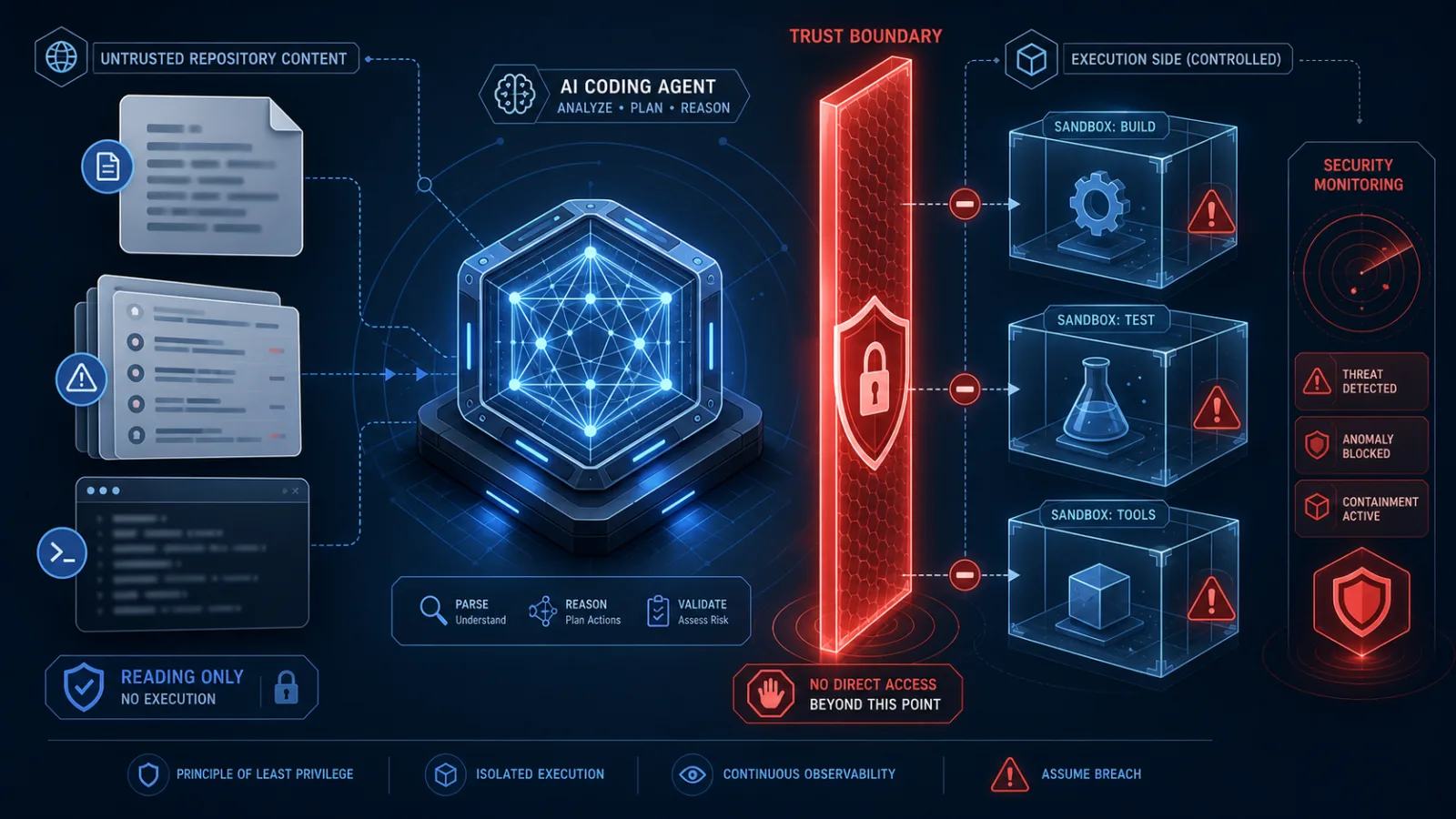
Claude Code's hidden check is a trust test for AI coding agents
A hidden Claude Code detection experiment shows why terminal AI agents need the controls of software supply chain tools, not the trust model of chatbots.
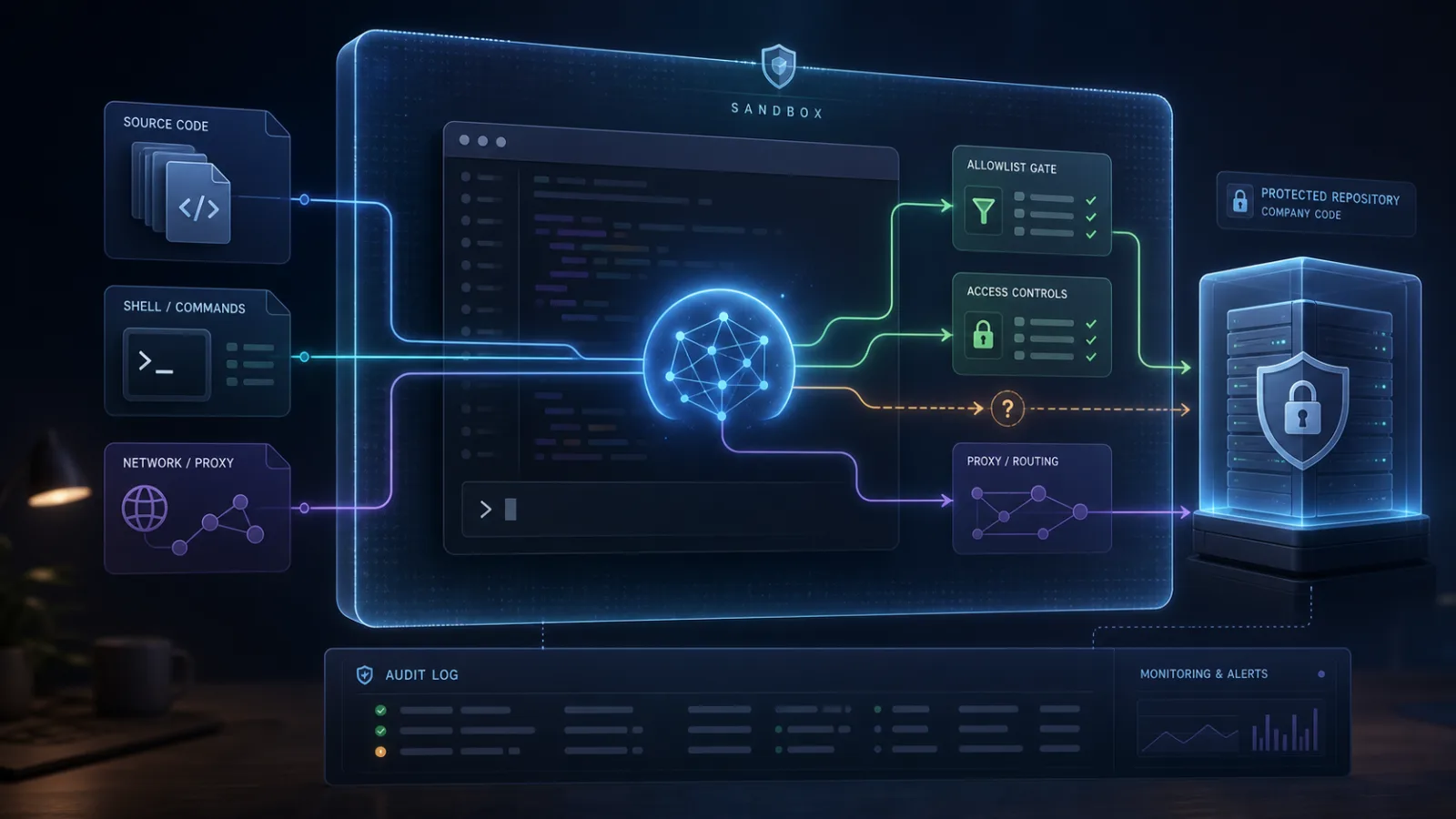
AI coding agents need capacity planning, not surprise quota resets
Codex and Claude Code are becoming engineering infrastructure, but context cuts, 5-hour windows and random resets make teams rethink how they budget and schedule AI-assisted work.
Comments
Sign in to comment.
No comments yet.