Debian’s AI vote is a policy template, not a free pass for generated code
The project’s new rule is practical: AI may help, but the human contributor still owns quality, licensing, security and maintenance.

Debian’s vote on generative AI is useful precisely because it is not a slogan. The project did not ban AI tools. It did not bless them as a shortcut either. After a General Resolution on “LLM usage in Debian,” the winning option was “Responsible Use of Generative AI”: contributors may use generative tools, but the contribution is still judged by Debian’s normal standards, and the human contributor remains responsible for quality, correctness, maintainability, security and legal cleanliness.
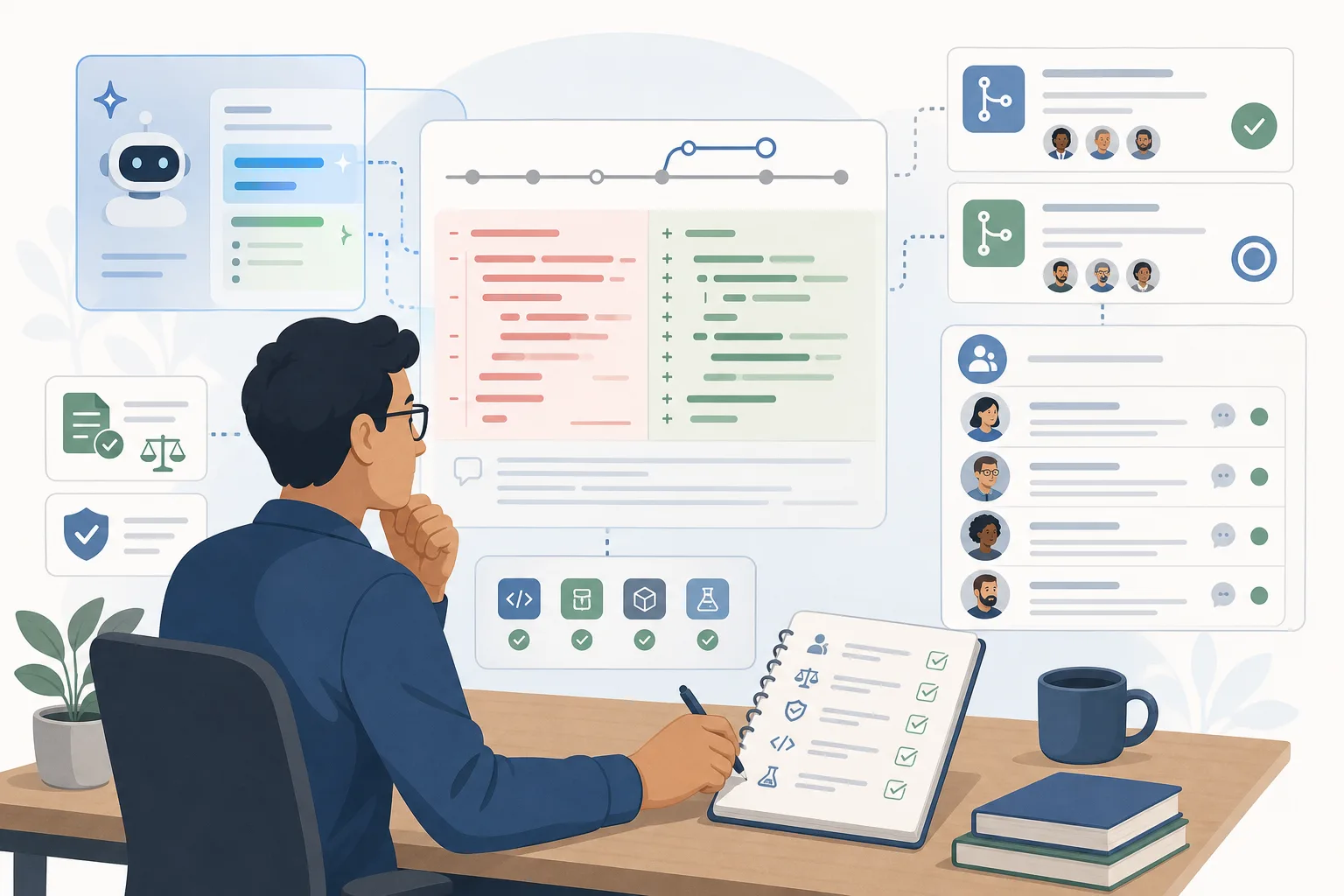
That sounds modest. In practice, it is one of the most important AI-adoption patterns now facing software teams. Debian is not a startup demo or a vendor launch page. It is a large volunteer-driven infrastructure project whose packages sit under servers, desktops, containers, embedded devices and downstream distributions. When a project like Debian chooses accountability over either prohibition or hype, it gives companies and open-source maintainers a realistic policy template.
The official vote page says the discussion period ran from July 23 to August 13, 2026, and voting ran from August 15 through August 28 UTC. The result was published on August 29. The current developer count listed for the vote was 1,045, the quorum threshold was about 48.49, and the winning choice was Option 5. The text says Debian “neither endorses nor prohibits” generative AI in development, maintenance, documentation, packaging and other project media.
The important line is not the permission. It is the responsibility clause. The winning text says that using an AI tool does not diminish a contributor’s responsibility. Contributors are expected to understand, review, test and, where appropriate, modify AI-assisted output before incorporating it. Blindly accepting or uploading generated material without appropriate human review is inconsistent with Debian’s established development practices.
Why this is bigger than Debian
Many teams have already moved past the question “can developers use AI?” They use GitHub Copilot, Cursor, Claude Code, Codex, ChatGPT, local coding models or internal assistants because the tools are available and sometimes genuinely useful. The harder question is what happens after the first productivity bump. Who owns the diff? Who verifies the license risk? Who pays the review cost? Who responds when a generated fix is subtly wrong six months later?
Debian’s decision matters because it treats generative AI as a workflow and governance problem, not a moral identity label. The policy does not try to detect whether a patch was written by a human or a model. It asks whether the person submitting the work can stand behind it. That is more enforceable than a purity test and more honest than pretending generated code has no special risks.
This is the same problem businesses face. A manager can buy an AI coding assistant, but the tool does not own production incidents. A developer can ask a model for a migration, but the model does not carry the pager. A documentation team can generate a page quickly, but users still suffer if the page is wrong. The organisation needs rules that make human ownership visible before AI output enters shared systems.
What Debian actually allowed
The winning Debian text is careful. It says the project neither endorses nor prohibits generative AI tools as a class. Contributions must meet the same standards as any other work. That includes quality, correctness, maintainability, compliance with the Debian Free Software Guidelines, and legal requirements. The tool used to prepare a contribution is secondary to whether the contribution is good, understandable and supportable.
Disclosure is encouraged but not required. That is a pragmatic compromise. Mandatory disclosure can help reviewers understand how a change was produced, but it can also become unenforceable, adversarial or easy to game. Debian’s choice keeps disclosure as a social norm while making reviewability and accountability the hard requirement.
The policy also explicitly warns contributors not to disclose confidential information, private communications, embargoed security bugs, cryptographic keys, credentials or non-public project information to third-party AI services unless authorised. That single paragraph is valuable for any company writing an AI policy. The most immediate risk is often not copyright theory; it is someone pasting private logs, secrets or customer data into a hosted tool because the tool is convenient.
Large-scale or automated actions get a separate warning. Mass bug filing, mass patch submission, large code modifications and automated changes affecting many packages or contributors require prior discussion and consensus, human oversight and accountability. This is the right boundary. One carefully reviewed AI-assisted patch is not the same risk as an agent opening hundreds of low-context changes across a repository.
The vote was not simply pro-AI versus anti-AI
The Debian ballot included a spectrum of options. Some would have rejected or restricted LLM-generated contributions much more strongly. Others tried to frame project work as created by humans. Some focused on caution, disclosure, legal uncertainty or environmental concerns. The winning outcome was not a declaration that all fears are silly. It was a decision that a hard ban is not the most workable control.
That distinction is easy to lose in headlines. “Debian allows AI” sounds like a green light for generated code. The actual decision is closer to: Debian will not ban the tool, but the person submitting the result must understand it, test it and remain accountable. Maintainers can still reject bad work for ordinary reasons: it is wrong, untested, unmaintainable, legally unclear, too large, poorly explained or not worth the review burden.
LWN’s coverage and the Hacker News discussion show why the issue is emotionally loaded. Some developers see bans as unenforceable witch hunts. Others worry that open-source maintainers will be flooded with walls of generated text, patches to already-solved problems, fake confidence, shallow bug reports and contributors who cannot answer questions about their own diff. Both concerns can be true at once.
Review is becoming the bottleneck
Generative AI changes the economics of contribution. Writing a patch, issue, explanation or documentation update gets cheaper. Reviewing it does not get cheaper in the same way. A maintainer still has to understand the change, test the claim, check the design, catch edge cases, scan licensing and decide whether the project should carry the result over time.
This is why “AI slop” is not only an aesthetic complaint. It is a cost-shifting problem. If a contributor submits generated work they do not understand, the reviewer becomes the first real engineer in the loop. The apparent productivity gain for the submitter becomes unpaid triage, education and cleanup for the maintainer.
The best AI-assisted contributions therefore look boring. They are small. They explain the problem. They include tests or reproducible checks. They avoid rewriting unrelated code. They do not bury the maintainer under a long generated essay. The author can answer follow-up questions without asking the model to invent a defence. In other words, AI can help prepare the work, but it cannot be the maintainer-facing substitute for understanding.
Companies should recognise the same pattern internally. If AI lets one team create more tickets, pull requests, documents and automation than downstream reviewers can absorb, the organisation has not gained productivity. It has moved work into queues. The metric to watch is not lines generated or tasks opened; it is reviewed, merged, maintained and supportable work.
Legal and licensing risk stays with humans
Debian’s winning text acknowledges unresolved questions around copyright, authorship, licensing and possible reproduction of training material. It does not try to solve them through one project vote. That restraint is sensible. The law and vendor promises are still evolving, and different jurisdictions may treat generated output differently.
For practical policy, the lesson is simple: do not let “the model wrote it” become a provenance answer. A contributor should be able to explain where a design came from, what sources were consulted, what license assumptions apply and why the result is compatible with the project. If a model suggests a block of code, the human still needs to check that it is not copied from an incompatible source and that it fits the project’s license expectations.
Businesses can turn this into controls. Require approved tools for company code. Keep secrets and customer data out of unapproved services. Use license scanning, but do not pretend scanning replaces judgment. Ask developers to document substantial AI assistance when it affects provenance, architecture or security review. Make the commit author responsible for the change, not for the keystrokes.
Security risk is not hypothetical
The security part of Debian’s policy is also practical. Contributors are warned not to send embargoed bugs, cryptographic keys, credentials or private project information to third-party AI services. That is not paranoia. Coding assistants are often used exactly where sensitive context exists: build logs, crash dumps, internal repositories, customer incidents, secrets accidentally printed in terminal output and unreleased vulnerability details.
AI tools can also produce plausible but unsafe changes: outdated packaging patterns, permissive defaults, missing validation, insecure shell snippets, broken dependency handling, tests that assert the wrong behaviour or fixes that only silence a warning. A reviewer who sees “AI-assisted” should not automatically reject the work, but should be alert to the same failure modes that make generated output look complete before it is correct.
For teams adopting AI, the minimum rule is data classification. Public documentation and toy examples can go to more tools than private incident logs. Embargoed security issues, credentials, legal documents and customer data should require approved environments or stay out of external models entirely. If that sounds slow, compare it with the cost of leaking a key or vulnerability report through a convenience prompt.
A policy template for maintainers
Open-source maintainers do not need to litigate the metaphysics of authorship every time a suspicious pull request appears. They can set contribution rules that apply whether the work was written by a person, a model or both.
A useful rule set starts with ownership. The submitter must understand the change and be able to answer questions. If they cannot, the maintainer can close the contribution as unsupported. The rule is not “AI is forbidden.” The rule is “do not submit work you cannot explain.”
Second, keep the unit of review small. AI makes it tempting to send large refactors, generated rewrites or documentation bundles. Maintainers should require narrow patches, clear rationale, reproducible tests and separation between mechanical cleanup and behavioural changes. Bulk submissions should require prior agreement.
Third, make disclosure useful rather than performative. A short note such as “AI assisted the initial draft; I reviewed the diff, ran these tests and adjusted these parts” is more helpful than a moral confession. The point is to help reviewers know where to pay attention.
Fourth, protect private information. Project policies should say plainly that contributors must not paste embargoed security bugs, private email, credentials, keys, unpublished discussions or non-public infrastructure details into unapproved AI services. That rule should be separate from the broader debate about generated code because it is easier to understand and enforce.
A policy template for companies
Companies can adapt Debian’s approach into internal AI rules without copying Debian’s governance. The core principle is that AI can assist, but accountability cannot be delegated to the model.
An internal policy should answer concrete questions. Which tools are approved for source code? Which repositories or data classes are off limits? Must developers disclose substantial AI assistance in pull requests? When are tests mandatory? Who checks licensing and provenance? Are generated tests acceptable if the same model wrote the implementation? What actions require human approval before merge, deploy, email, ticket closure or customer response?
Teams should also watch for review debt. If AI increases the number of changes, managers must invest in review capacity, CI, security scanning, documentation quality and maintainer time. Otherwise the organisation will celebrate output while quietly exhausting the people responsible for correctness.
The best corporate version of Debian’s rule is short: the person who submits the work owns the work. They must understand it, verify it, keep sensitive data out of unsafe tools, and remain available to maintain it. AI assistance is a method, not a transfer of responsibility.
The practical verdict
Debian’s decision is not a victory for careless “vibe coding.” It is a mature refusal to pretend that a ban would be easy or that AI output can be accepted without human judgment. The project chose a policy that is hard to market but easy to reuse: same standards, human responsibility, encouraged disclosure, confidentiality limits, and prior consensus for bulk automation.
For AI Practice readers, the lesson is broader than Linux packaging. Mature AI adoption is not measured by how many prompts a team runs. It is measured by whether the team can safely absorb the output into real workflows. If AI makes writing cheaper but reviewing, licensing, securing and maintaining stay expensive, then policy has to protect the bottleneck.
The useful question is no longer whether AI helped. The useful question is whether a responsible human can explain, test, license, defend and maintain what AI helped produce. Debian has now written that line into one of open source’s most visible governance records. Other projects and companies should do the same before their review queues become the policy.
Related articles
Debian’s AI vote makes humans responsible for generated code
Debian chose responsible use over a ban, offering a practical model for teams that need AI help without lowering review, security or licensing standards.


git-annex and the new dependency question: can open source avoid AI-generated code?
Joey Hess spent about 100 hours trying to keep git-annex buildable without LLM-generated dependencies. The result is not a purity tale, but a practical warning about provenance, maintainability, and trust in modern open-source supply chains.


Snapdragon X2 laptops are finally becoming a real Linux option. What buyers should check before 2027
Qualcomm and Canonical are moving Snapdragon X2 laptops toward certified Linux support, but the announcement does not make every Windows Arm notebook Linux-ready. Here is what changes, what remains unfinished, and who should wait.

Le vote de Debian sur l’IA rend les humains responsables du code généré
Debian choisit l’usage responsable plutôt que l’interdiction: un modèle pour utiliser l’IA sans réduire revue, sécurité ni exigences de licence.
Comments
Sign in to comment.
No comments yet.