Copper Peptides on a Budget: How to Judge GHK-Cu Serums Without Paying for Longevity Hype
Copper peptides are having a major skin-longevity moment, but a high percentage and a futuristic label do not guarantee a better serum. Here is how to read GHK-Cu formulas, compare budget options and set realistic expectations.

Copper peptides have moved from specialist skincare conversations into the mainstream beauty aisle. The ingredient is now appearing beside NAD+, exosomes, growth-factor language and other products sold under the broad promise of "skin longevity." Recent beauty coverage has treated copper tripeptide-1, usually called GHK-Cu, as one of the defining ingredients of that shift. Search-interest reporting has also shown a sharp rise in attention around GHK-Cu and copper peptide products.
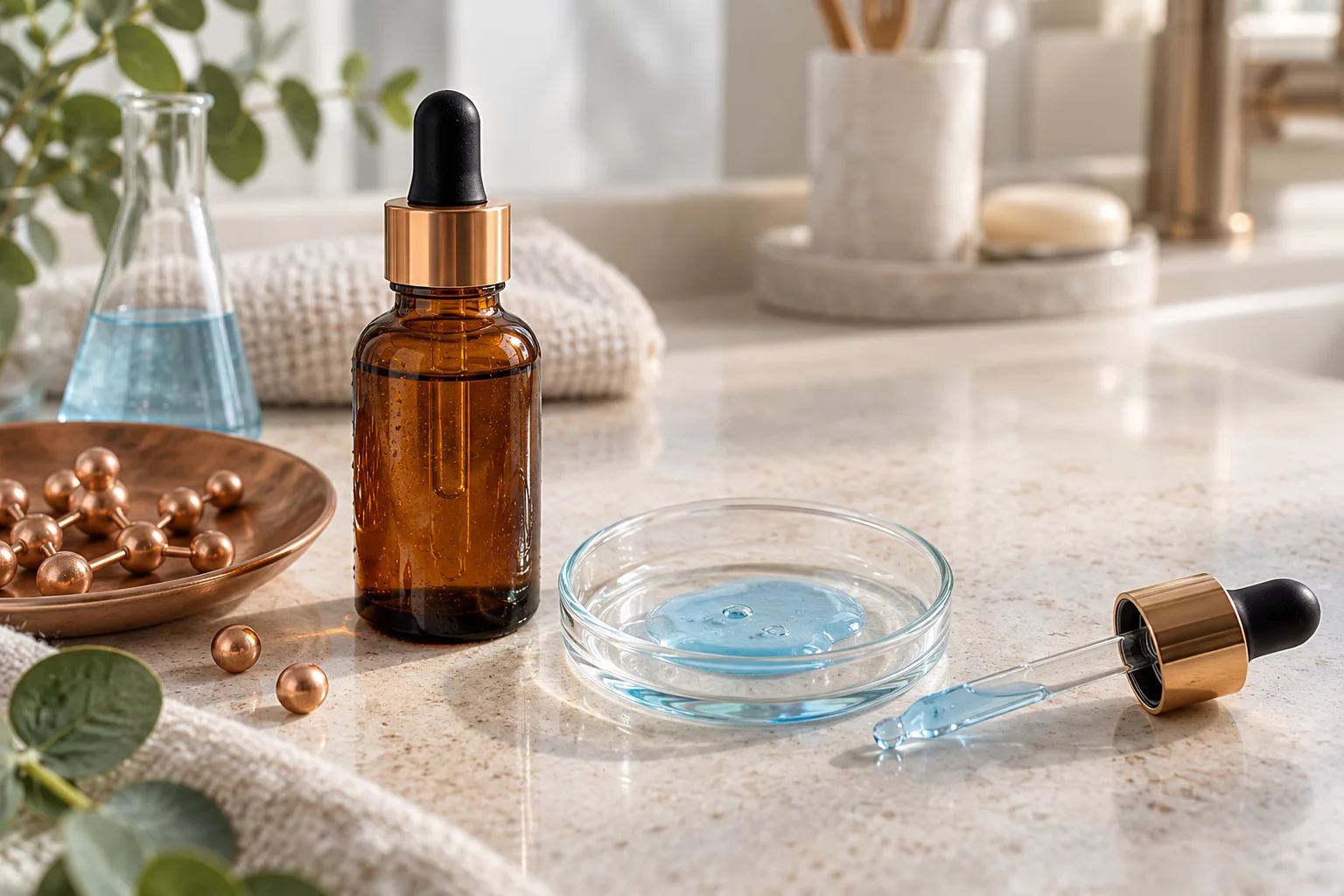
That does not make every copper peptide serum a bad purchase. It does mean the shopping question has changed. The useful question is not whether copper peptides are the newest anti-ageing miracle. It is whether a particular formula gives you a sensible cosmetic benefit for its price, whether the product is stable and comfortable enough to use, and whether the same budget would do more in a sunscreen, cleanser or basic moisturiser.
The short version: copper peptides are a reasonable optional step for people interested in gradual improvements to the look of firmness, texture and overall skin quality. They are not a substitute for sun protection, they are not a treatment for a skin disease, and a high price does not prove that a formula is more effective. The label, packaging, supporting ingredients and your tolerance matter more than the longevity story on the front of the box.
Why copper peptides are suddenly everywhere
The current copper-peptide wave is part of a larger change in beauty language. Brands are increasingly replacing the older promise of "anti-ageing" with terms such as resilience, preservation, cellular energy and longevity. The language sounds more scientific, but it can make an ordinary cosmetic product seem closer to a medical or laboratory intervention than it really is.
A recent beauty-trend report from Rising Trends listed GHK-Cu among the fastest-growing skincare searches, while mainstream coverage has connected the ingredient to the broader 2026 skin-longevity movement. Allure’s reporting on the year’s skincare trends also highlighted copper tripeptide-1 as one of the next-generation peptide ingredients being discussed alongside NAD+ and microbiome-focused formulas. Marie Claire’s 2026 beauty awards coverage placed copper peptides in the same crowded conversation as exosomes and NAD+, showing how quickly the ingredient has become part of prestige skincare’s preferred vocabulary.
There is a more practical reason for the trend. Peptides are easy for brands to add to a serum, cream, eye product or primer. They also support several kinds of marketing language at once: firmness, collagen support, repair, bounce, texture and healthy-looking skin. Those claims can sound interchangeable even though they are not equally established, equally measurable or equally important to every user.
Copper peptides also benefit from a visual advantage. A well-formulated serum can leave skin hydrated and smooth immediately, while any longer-term change is subtle and slow. When the quick cosmetic effect and the long-term ingredient story are presented together, it becomes easy to credit the peptide for everything the formula is doing. Glycerin, silicones, emollients, film-formers and moisturising agents may be responsible for much of the first-day softness.
What GHK-Cu means on an ingredient list
GHK-Cu is a copper-binding peptide. On a cosmetic ingredient list, the name you are most likely to see is copper tripeptide-1. The word "peptide" refers to a short chain of amino acids. The "Cu" indicates that copper is associated with that peptide structure. It is not the same thing as applying metallic copper to your face, and it should not be confused with copper supplements or injectable products discussed in longevity communities.
The ingredient is interesting because peptides can act as signalling or support ingredients in skin-care formulations. Laboratory and cosmetic research has examined copper peptides in relation to processes involved in the appearance of skin repair, collagen and extracellular-matrix support. That is a reasonable basis for a cosmetic product to claim that it helps skin look firmer or more resilient over time. It is not proof that a retail serum can recreate a clinical procedure, rebuild damaged tissue on demand or reverse biological ageing.
Paula’s Choice’s 2026 ingredient review makes an important distinction: copper peptides have promising uses, but studies that show a dramatic result do not necessarily compare GHK-Cu with other peptides, antioxidants or well-designed complete routines. In other words, the existence of encouraging research does not establish that copper peptides are the best peptide, the best active for every person or the best place to spend limited money.
This distinction is especially important because product pages often move between three different claims without saying so. The first is a formula claim: the product contains copper tripeptide-1. The second is a cosmetic claim: the product may improve the look of firmness, texture or hydration with consistent use. The third is a biological claim: the product changes deep repair, cellular ageing or collagen production in a meaningful way. The first may be verified on the label, the second may be plausible and the third usually requires much stronger product-specific evidence than a trend article or ingredient explainer provides.
What a budget copper peptide serum can realistically offer
A sensible expectation is gradual improvement in how skin looks and feels, not a dramatic transformation. Depending on the full formula and how your skin responds, possible cosmetic benefits include a smoother feel, a more conditioned surface, a modestly plumper appearance from hydration and a gradual improvement in the look of fine texture. Some users may also like the way a peptide serum makes a simple routine feel more comfortable and deliberate.
Those outcomes are not unique to GHK-Cu. A plain moisturiser can make skin appear smoother by reducing water loss. Humectants can temporarily increase surface hydration. Occlusive ingredients can soften roughness. Sunscreen can prevent the repeated ultraviolet exposure that contributes to visible signs of premature ageing. A copper peptide serum may be a useful addition, but it should not receive credit for the entire routine.
It is also worth separating prevention of additional visible damage from reversal of existing change. Daily broad-spectrum sunscreen helps reduce ongoing ultraviolet damage, which is one of the most valuable budget decisions in appearance-focused skincare. Copper peptides do not cancel missed sunscreen applications. Likewise, a serum cannot be expected to erase deep lines, replace a procedure or produce the kind of rapid change shown in highly controlled promotional images.
The fairest way to assess the product is to give it enough time while keeping the rest of the routine fairly stable. Take occasional photographs in similar lighting if you want to compare changes, but do not treat a phone camera as a clinical measuring device. Changes in humidity, sleep, menstrual cycle, facial expression, indoor heating and camera processing can all alter how skin appears from one week to the next.
How to read the label before buying
A budget product deserves the same label scrutiny as an expensive one. Start with the ingredient list and packaging rather than the front-of-pack percentage. Look for copper tripeptide-1 or another clearly identified copper peptide. A label that only says "copper complex," "bio-copper technology" or "longevity peptide blend" gives you less information. That does not automatically make the product useless, but it makes a price comparison harder.
Do not assume that a large percentage printed on the package means a large percentage of pure GHK-Cu. Brands may be referring to a blend, a solution supplied by an ingredient manufacturer or a complex containing several materials. The percentage may also be too vague to compare across products. A smaller but clearly identified amount in a well-preserved formula can be a more sensible purchase than a huge headline number that does not explain what is being counted.
Then look at the rest of the formula. A useful budget serum may include humectants such as glycerin, propanediol or hyaluronic-acid ingredients; barrier-supporting materials such as panthenol, beta-glucan or ceramides; and a texture that you can use consistently. If the product contains a long list of exciting actives, ask whether you actually want all of them in one bottle. More ingredients create more opportunities for irritation, pilling, instability or confusion about what caused a reaction.
Packaging matters because some active ingredients are vulnerable to air, light, heat or repeated contamination. An opaque airless pump is generally easier to trust than a clear jar that is opened with wet fingers several times a day, although packaging alone cannot prove stability. Follow the storage instructions, keep the product away from high heat and do not keep using it indefinitely after the texture, smell or colour changes.
Fragrance is not automatically a problem, but it is not a benefit of copper peptides either. If your skin is easily irritated, a fragrance-free formula reduces one avoidable source of trouble. Essential oils and fragrant botanical extracts can make a serum smell luxurious while adding no necessary value to the peptide step. A pleasant sensory experience may be worth paying for if you enjoy it, but it should be counted as a preference rather than evidence of better results.
What deserves the budget first
If money is limited, copper peptides should usually sit below the foundations of a routine. A basic cleanser that does not leave the skin tight, a moisturiser you will use regularly and a broad-spectrum sunscreen are more dependable priorities. The exact products will depend on your skin’s comfort and preferences, but the principle is simple: protect and maintain the surface before adding a specialised serum.
A budget peptide product becomes more reasonable when those basics are already covered. It can be an optional fourth step, not the one product expected to solve every concern. This approach also prevents a common shopping mistake: buying a premium serum because the ingredient sounds advanced while using an uncomfortable cleanser or skipping daytime sun protection.
The same logic applies when comparing copper peptides with other affordable ingredients. If your main goal is hydration, a good moisturiser may be enough. If your main concern is visible uneven tone, a product designed and tested around a suitable brightening ingredient may be more directly relevant. If you want a retinoid, acid or vitamin C product, remember that adding multiple active steps at once makes it difficult to judge tolerance. A copper peptide serum is not automatically the best answer simply because it is the newest product in your feed.
Price should be judged per usable month, not only per bottle. A small, expensive dropper may be used quickly, while a larger budget serum may last longer. On the other hand, a cheap product that pills under moisturiser or makes you skip the routine is not good value. Texture, compatibility with the rest of your products and the amount you can apply comfortably are part of the calculation.
How to introduce it without turning your routine into a test lab
Use one new product at a time. Apply a small amount to a limited area first and observe the skin over the next day or two. A patch test cannot guarantee that your face will never react, but it can reduce the chance of covering a large area with a product that immediately causes discomfort. If you develop persistent burning, swelling, intense itching or a worsening rash, stop using the product and seek professional advice rather than trying to push through it.
Once tolerated, begin with a modest frequency. A few applications per week are enough to learn how the product behaves. You do not need to layer it with every other active on the first night. Apply it to clean, comfortable skin according to the brand’s directions, then use a moisturiser if needed. In the morning, use sunscreen. The exact order can vary with the textures of your products; the goal is a routine you can repeat without irritation or pilling.
Some brands advise separating copper peptides from strong acids, pure vitamin C in low-pH formulations or retinoids. The compatibility rules are not identical across every product, so check the manufacturer’s instructions. Even when two ingredients are chemically compatible, using them together may be too much for your skin. A simple rotation is easier to evaluate than a crowded routine: peptide on one evening, another active on a different evening, and recovery-focused moisturising when the skin feels dry or reactive.
Do not use redness, stinging or peeling as proof that the product is working. Irritation is an unwanted response, not a performance metric. The American Academy of Dermatology notes that masks and cosmetic products cannot replace care for conditions such as acne or eczema and recommends professional input when the skin becomes worse. The same caution applies here: a trendy serum should not become a self-directed treatment plan for a persistent skin problem.
Who should be cautious or skip it
People with a history of contact reactions, very reactive skin or an already-irritated barrier may prefer to postpone a new active until the skin is comfortable. That is not a statement that copper peptides are inherently harsh; it is a practical way to reduce variables when the skin is already unsettled. A formula’s preservatives, fragrance, botanical extracts and other actives may be as relevant as the peptide itself.
If you are pregnant or breastfeeding, have a diagnosed skin condition, are using prescription treatment or are recovering from a procedure, ask a qualified clinician about new active skincare rather than relying on influencer routines. This article does not establish the safety of a particular product for any medical situation. Product labels and regional regulations also differ, so do not treat an online ingredient list as a substitute for personalised advice.
Skip a product if the company will not identify the active, provide basic directions or explain how the percentage is calculated. You do not need a brand to reveal every proprietary detail, but you should be able to understand what you are buying. Be especially careful with products that mix topical skincare claims with promises about injections, supplements, wound healing or cellular rejuvenation. Those are different routes of exposure and different levels of evidence.
The marketing claims that need translation
"Boosts collagen" usually needs to be translated into a more modest cosmetic expectation: the formula may support the appearance of firmer, smoother skin over time. It does not mean a bottle has been shown to rebuild collagen to the same degree as a professional treatment, and it does not tell you how long any result may take.
"Repairs skin" is another broad phrase. In a cosmetic context it may mean that the skin looks less dry, feels more comfortable or appears more even. It should not be read as a promise to heal a wound, cure inflammation or treat a diagnosed condition.
"Cellular longevity" often borrows language from laboratory biology. That language can be interesting, but a mechanism in a cell study is not the same as a proven visible result from a retail serum. Ask whether the brand has product-specific human testing, what outcome was measured and whether the comparison was against a placebo, an ordinary moisturiser or nothing at all. If those details are absent, treat the claim as a hypothesis or marketing framing rather than a settled result.
"Professional strength" is not a scientific standard. It may refer to concentration, packaging, a brand’s intended audience or simply a premium positioning strategy. It does not tell you that the product is safer, better absorbed or more effective.
A practical comparison checklist
Before buying, answer these questions:
- Is copper tripeptide-1 or another specific copper peptide named clearly in the ingredient list?
- Is the product in packaging that limits unnecessary air, light and finger contact?
- Does the formula include useful supporting ingredients, or is most of the price paying for a story?
- Is it fragrance-free if your skin tends to react to fragranced products?
- Can you afford to use it consistently for several weeks or months?
- Does it fit with the products you already use, or will it force you to replace half your routine?
- Does the brand provide directions, storage advice and a realistic cosmetic claim?
- Would the same money be better spent on sunscreen, moisturiser or a product aimed more directly at your main concern?
This checklist is more useful than ranking products by the highest peptide percentage. It also helps compare a $15 serum with a $90 serum without assuming that the cheaper one is automatically a bargain or the expensive one is automatically superior.
What a fair result looks like
A fair trial is uneventful. The product feels comfortable, does not cause persistent irritation, works with the rest of your routine and may gradually improve the look or feel of the skin. It may not create a dramatic before-and-after image. That is normal for a cosmetic ingredient whose plausible benefit is incremental.
If you stop after two uses because there is no overnight change, you have not tested the long-term claim. If you keep using it despite burning because a creator promised a purge, you are giving the marketing more authority than your skin. The useful middle ground is patient but sceptical: use the product consistently, keep expectations modest and stop when the skin is clearly unhappy.
Copper peptides can earn a place in a budget routine, but they do not need to become the centre of it. The best-value purchase is often the product that is clearly labelled, sensibly packaged, comfortable enough to use and priced low enough that you do not resent finishing the bottle. The ingredient may support a healthier-looking complexion over time; it does not turn a basic serum into a laboratory treatment.
The broader lesson is useful beyond GHK-Cu. When a beauty trend arrives wrapped in words such as longevity, regenerative, cellular or professional, separate the identifiable ingredient from the larger promise. Check what the product can reasonably do on the surface of the skin, compare it with simpler options and spend first on the habits that protect your budget as well as your skin.
Related articles

Should you buy Sennheiser MOMENTUM True Wireless 5 before the reviews?
Sennheiser’s new $299.95 earbuds make a rare promise: user-replaceable batteries in the buds and case. That could change the ownership math, but most buyers should wait for reviews and battery-part details before paying launch price.


USB-C is standardized, so why do identical-looking cables still fail?
The plug is universal, but the capabilities are not. Charging, data, video, USB4, Thunderbolt and e-marker support can all differ behind the same USB-C shape.


USB-C soldering irons from marketplaces: clever repair tool or unsafe starter kit?
A practical buyer check for Pinecil-style portable soldering irons, power supplies, tips, stands and safety before ordering a cheap kit.

Sandia’s ETCRAM points to a quieter way to cut energy in sensor computing
Sandia researchers have demonstrated an analog memory that stores far more precise states across a wider range than earlier devices. The useful idea is not a faster server, but less raw sensor data moving between chips.

Comments
Sign in to comment.
No comments yet.