The Skin-Barrier Reset Is Trending: How to Build a Useful Budget Routine Without Buying Every Repair Product
Barrier care is having a moment, but the most useful version is less glamorous: a gentle cleanser, a well-chosen moisturizer, sensible sunscreen and fewer experiments. Here is how to read the labels, compare prices and know when a viral repair claim is doing too much work.

A new skincare trend is gathering momentum around a fairly unexciting idea: stop making the outer layer of the skin work so hard. Recent beauty coverage and retailer trend reporting describe a shift from constant exfoliation and aggressive “active” routines toward products marketed for barrier support, hydration and tolerance. Reddit discussions are making a related point in plainer language: a routine does not become more effective because it has more steps or because the newest bottle has a laboratory-sounding name.

That shift is worth examining, especially if your budget is limited. “Skin barrier” is now printed on cleansers, serums, creams, masks and even makeup. Some of those products can be sensible purchases. Others mainly repackage ordinary moisturizing ingredients with a more urgent story. A cheaper routine can often deliver the practical benefits people are seeking, provided you judge the formula and the way you use it rather than the prestige of the brand.
This is general cosmetic guidance, not a diagnosis or treatment plan. Persistent rash, painful cracking, swelling, significant burning or any skin problem that keeps returning deserves professional assessment.
Why barrier care is the beauty conversation now
The skin’s outermost layer, the stratum corneum, helps limit water loss and protects against the outside environment. It is made of cells and a lipid-rich material between them. DermNet describes damage to this barrier as being associated with greater water loss and increased sensitivity to irritants and allergens. That is the useful meaning behind the phrase “barrier support”: helping the surface retain water and reducing avoidable irritation.
The trend is not appearing in a vacuum. After several years of viral routines built around frequent acids, strong retinoid marketing, scrubs and product layering, many shoppers are now looking for products that feel comfortable and predictable. A September 2026 trend report from LOOKFANTASTIC, summarized by trade publication DIARY directory, placed “Skin Barrier 2.0” among rising concerns and described an emphasis on defending the barrier, not just repairing it after overuse. Vogue Business’s beauty trend tracker also pointed to sustained interest in sensitive-skin care, affordable body care and ingredient-led searches.
Those signals show consumer attention, not proof that every barrier product works better than a basic moisturizer. Trend data can tell us what people are searching for. It cannot tell us that a serum is necessary, that one branded complex is superior, or that a cosmetic can correct a medical condition. The sensible conclusion is narrower: shoppers are asking for gentler routines, so the label deserves more scrutiny than the trend name.
What a budget barrier routine actually needs
For most people, barrier-focused care can be organized around four functions rather than a fixed number of products: cleanse when needed, add water-binding ingredients, reduce water loss, and protect exposed skin from ultraviolet radiation. One product may cover more than one function.
A gentle cleanser removes sweat, sunscreen, makeup and excess oil. It does not need to leave the face feeling squeaky, tight or hot. A moisturizer then combines some mix of humectants, emollients and occlusives. Humectants such as glycerin attract and hold water in the outer layer. Emollients smooth the spaces between rough-feeling cells. Occlusives form a more water-resistant surface film that slows evaporation.
The sunscreen category has a different job. A daily broad-spectrum sunscreen is primarily about ultraviolet protection, not about making a damaged barrier “heal.” If your budget forces a choice, a sunscreen you will apply consistently is more useful than an expensive barrier serum that sits unused in a drawer. Sunscreen should be selected according to the directions and local product labeling; it is not interchangeable with a moisturizer that merely contains a small amount of UV-filtering ingredient.
At night, many people need only cleanser and moisturizer, or moisturizer alone if cleansing is unnecessary. In the morning, a basic sequence might be moisturizer if needed and sunscreen. Makeup, a hydrating mist, a toner or an essence can be preferences, but they are not automatically missing pieces.
How to read the label without chasing a hero ingredient
Ingredient lists are useful, but they are not a complete ranking of product quality. In the United States, cosmetic ingredients are generally listed in descending order of predominance, with some flexibility for ingredients present at one percent or less. The FDA also notes that cosmetics are not generally pre-approved before reaching the market, and that companies remain responsible for product safety and truthful labeling.
Start with the whole formula. A cream that contains glycerin, fatty alcohols, oils, silicones or petrolatum may be a perfectly reasonable moisturizer even if it does not advertise a fashionable “barrier complex.” Ceramides can be valuable because they resemble lipids found in the outer skin, and niacinamide can support hydration and barrier function in suitable formulas. But the presence of a named ingredient does not tell you its concentration, the delivery system, the stability of the product, or whether your skin will tolerate the rest of the formula.
A useful label check asks five questions:
- Is the product designed for the area you want to use it on? A rich hand cream may be excellent for hands but feel unpleasant or congesting on the face.
- Does the texture match your real habits? A light lotion that you apply regularly may be more useful than an ointment you avoid because it feels greasy.
- Does the formula contain fragrance or essential oils that you already know bother you? “Natural” does not mean non-irritating.
- Is the product making a cosmetic promise, or implying treatment of a disease? Words such as “soothes” and “moisturizes” are different from claims to cure dermatitis or rebuild tissue.
- What is the cost per usable amount? Compare price per 100 milliliters or grams, not just the sticker price or the number of ingredients on the front.
The term “fragrance-free” is more specific than “unscented.” An unscented product may use masking fragrance to reduce the smell of its raw materials. If you are trying to simplify a routine because products sting or irritate you, fragrance-free is usually the clearer filter. It is not a guarantee that a formula will suit everyone, because preservatives and other ingredients can still trigger a reaction.
The budget comparison: what deserves the money
A practical way to shop is to divide spending by the product’s exposure time and the job it performs. A rinse-off cleanser has limited contact time, so paying several times more for a similar cleansing base may not be the best use of money. A leave-on moisturizer is more dependent on texture and formula, but the expensive option still needs to outperform a basic cream in a way you can actually feel or sustain.
Sunscreen can justify a higher price when the difference improves comfort, finish, eye tolerance or willingness to apply enough. Those are meaningful differences because they affect adherence. They are not the same as saying a luxury sunscreen gives the skin a special repair effect.
Serums are where “barrier” marketing can become expensive. A serum may add a pleasant layer of hydration, but if your moisturizer already contains humectants and emollients, the serum may be optional. If a product is promoted as a “repair ampoule,” look for a concrete reason to buy it: perhaps you want a lighter texture under makeup, or a particular ingredient that you cannot find in your moisturizer. “Advanced,” “clinical,” “probiotic,” “biomimetic” and “professional” are descriptions to investigate, not evidence of superiority by themselves.
The same logic applies to masks and overnight wraps. They can temporarily make skin feel softer because they add water and reduce evaporation. That sensory result can be enjoyable. It does not prove that the product has permanently changed the skin or that it is needed every night. A plain moisturizer under a comfortable occlusive layer may produce a similar short-term effect for less money, although the texture and tolerability will differ.
Ingredients that make sense, and claims that stretch
Glycerin is a familiar humectant with a straightforward purpose: it helps attract water to the outer layer. It appears in inexpensive products because it is not a luxury ingredient. If a budget lotion feels comfortable and reduces tightness, there is no reason to dismiss it because the front label does not mention a more fashionable molecule.
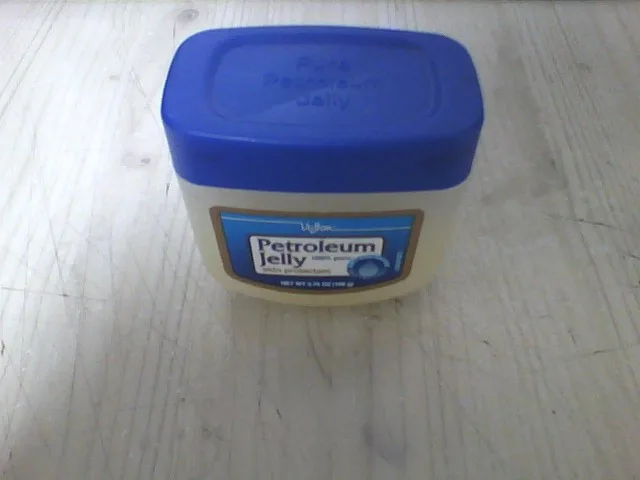
Petrolatum is an occlusive ingredient that slows water loss. It is often treated as boring, which is exactly why it can be overlooked in a trend-driven market. It may be too greasy for some faces, and DermNet notes that heavy occlusive products can aggravate acne for some users. That is a reason to adjust placement and texture, not a reason to treat every occlusive as bad.
Ceramides are lipids associated with the stratum corneum, and many moisturizers use synthetic ceramides in an attempt to support the skin’s lipid structure. Their usefulness depends on the finished product, not on the word “ceramide” appearing in large type. A cream with one ceramide near the end of a long list is not automatically equivalent to a carefully formulated product with a documented lipid system. It is also not automatically useless.
Niacinamide, or vitamin B3, is used in many moisturizers and serums. DermNet lists it among ingredients used in barrier products and notes its relationship to reducing transepidermal water loss and supporting hydration. Higher percentages are not automatically better. Some people find concentrated niacinamide formulas irritating, especially when combined with several other actives.
Hyaluronic acid is another humectant rather than a magic “filler” in a bottle. It can improve the feel of hydration in a well-formulated product, but a separate hyaluronic acid serum is not mandatory if glycerin or other humectants are already present in your moisturizer. Applying moisturizer to slightly damp skin can help reduce the tight, dry feeling that leads people to keep adding layers.
Panthenol, colloidal oatmeal and shea butter may also make sense in a moisturizer depending on the formula and individual tolerance. The important distinction is between a plausible cosmetic function and a sweeping result. A product can soften and reduce the sensation of dryness without treating eczema, rosacea, acne or an allergy. The FDA distinguishes ordinary cosmetic claims from claims that imply treating or preventing disease.
Why “skin cycling” can quietly become over-shopping
A routine organized by a calendar can sound disciplined: an exfoliation night, a retinoid night, a recovery night, then a repeat. But the schedule is not automatically gentle. If several products cause dryness or stinging, assigning each one a different evening does not remove the total burden. It can also create a shopping list of cleanser, toner, acid, retinoid, recovery serum, sleeping mask and multiple moisturizers.
A barrier reset should be judged by symptoms and tolerance, not by how minimal it looks on social media. For a short period, someone may choose to pause newly added exfoliants, scrubs, fragranced products or other products that clearly sting, while keeping ordinary cleansing, moisturizing and sun protection that they tolerate. This is not a universal treatment protocol, and it should not replace care for a diagnosed or persistent condition.
The common mistake is to respond to irritation with more products. A cooling mist, a soothing serum and a repair mask may each feel comforting, yet every extra formula adds another preservative, fragrance component, botanical or active that could be the source of trouble. Simplifying makes it easier to identify what your skin tolerates and what your wallet is actually paying for.
Patch testing and introducing a product
Patch testing is not a perfect prediction of how a product will behave on the whole face, but it is a sensible risk-reduction step for a new leave-on formula. Apply a small amount to a limited area according to the product’s directions and observe it over time rather than immediately adding it to an entire routine. If there is significant burning, swelling, hives or worsening irritation, wash it off and stop using it. Seek prompt professional help for severe or rapidly developing reactions.
Introduce one major change at a time. If you start a new cleanser, serum, exfoliant and moisturizer together, a reaction leaves you with no clear answer. It also makes positive results difficult to attribute. Give a product enough time for you to judge basic tolerance and daily usefulness, while remembering that a cosmetic will not necessarily produce dramatic visible change.
Do not apply a thick occlusive product to broken or weeping skin unless a professional has told you to do so. Be extra cautious with acids, retinoids, strong fragrance, essential oils and high-strength active products if you are already experiencing irritation. During pregnancy or while managing a diagnosed skin condition, ask a qualified clinician or pharmacist about ingredients and product choices rather than relying on a viral routine.
Who should skip the trend
You can skip “barrier repair” shopping entirely if your current cleanser and moisturizer are comfortable, affordable and doing what you need. A label does not create a deficiency. If your skin is oily, you may prefer a lighter lotion or gel-cream; if it is dry, a cream or ointment may feel more effective. Those are texture decisions, not diagnoses.
Be cautious with rich face balms if you know heavy products cause congestion or discomfort. Be cautious with heavily scented products if fragrance has caused problems before. Be cautious with formulas that contain exfoliating acids when the product is positioned as both a barrier moisturizer and an exfoliating treatment; “gentle” is a marketing description, not a guarantee.
If skin is persistently red, itchy, painful, cracking, bleeding, swollen or stinging, do not keep cycling through viral products in search of the perfect repair serum. The American Academy of Dermatology advises seeking dermatology care when excessive dryness becomes painful, cracked, bleeding, stinging or very irritating. A professional can help distinguish ordinary dryness from a condition that needs medical attention.
A low-cost shopping method
Set a small trial budget before opening a shopping app. Choose one cleanser only if your current one is harsh or unsuitable, one leave-on moisturizer, and sunscreen if you do not already have a product you can use consistently. Read the full ingredient list and purchase the smallest sensible size when possible.
Then use the products in a stable routine for long enough to answer practical questions: Does the cleanser leave the skin comfortable? Can you apply enough moisturizer without avoiding it? Does sunscreen sting your eyes or pill under makeup? Is the package easy to use, and can you replace it locally at a similar price? These questions matter more than whether the product appears in a “barrier essentials” video.
Keep the receipt and record the date you started the product. That small habit helps with both budgeting and troubleshooting. If a product causes trouble, you can identify it. If it works, you can compare the cost per month instead of being persuaded by a dramatic launch price.
The best budget alternative to a premium barrier product is usually not an imitation of its packaging. It is a formula that performs the same basic function at a price you can sustain: a gentle cleanser, a moisturizer with useful humectants and emollients, an occlusive texture when appropriate, and reliable UV protection. If a trend encourages you to use fewer irritating products and pay attention to labels, it has something valuable to offer. If it tells you that every ordinary moisturizer is obsolete, the trend is selling a problem along with the solution.
The useful takeaway
“Barrier care” is a reasonable organizing idea, but it is not a product category you must fill with expensive bottles. The trend’s strongest advice is behavioral: cleanse gently, moisturize consistently, avoid piling on irritating actives, and choose products by formula, comfort and repeatable cost.
A viral ingredient can be interesting without being essential. A plain cream can be effective without looking futuristic. And a routine that leaves enough money for the products you will actually keep using is often better designed than one built around the most persuasive claims on the shelf.
Related articles
PDRN “salmon DNA” serums: smart budget skin care or expensive repair hype?
A practical label-reading guide to the 2026 PDRN trend, with the science kept separate from cosmetic marketing and budget priorities.

Beef tallow for your face: budget moisturizer or overpriced viral balm?
A practical ingredient check for anyone tempted by tallow balm, with cheaper occlusive and moisturizer comparisons before you spend.
Hypochlorous-acid face sprays are everywhere: how to choose the budget bottle without buying the hype
A practical ingredient and price check for HOCl mists, with conservative safety limits and no medical promises.

Glycolic acid as deodorant: budget hack or underarm irritation waiting to happen?
A practical budget check on when the viral underarm acid trick may help odor, when it cannot replace antiperspirant, and who should skip it.
Comments
Sign in to comment.
No comments yet.