Norse Atlantic’s Bankruptcy: How Budget Travellers Should Rebook and Recover Money
Norse Atlantic has cancelled all flights after its Norwegian operating company filed for bankruptcy. This practical guide will explain what affected passengers should do first, how to compare replacement routes, and which refund or insurance channels may apply.

What happened to Norse Atlantic and which bookings are affected
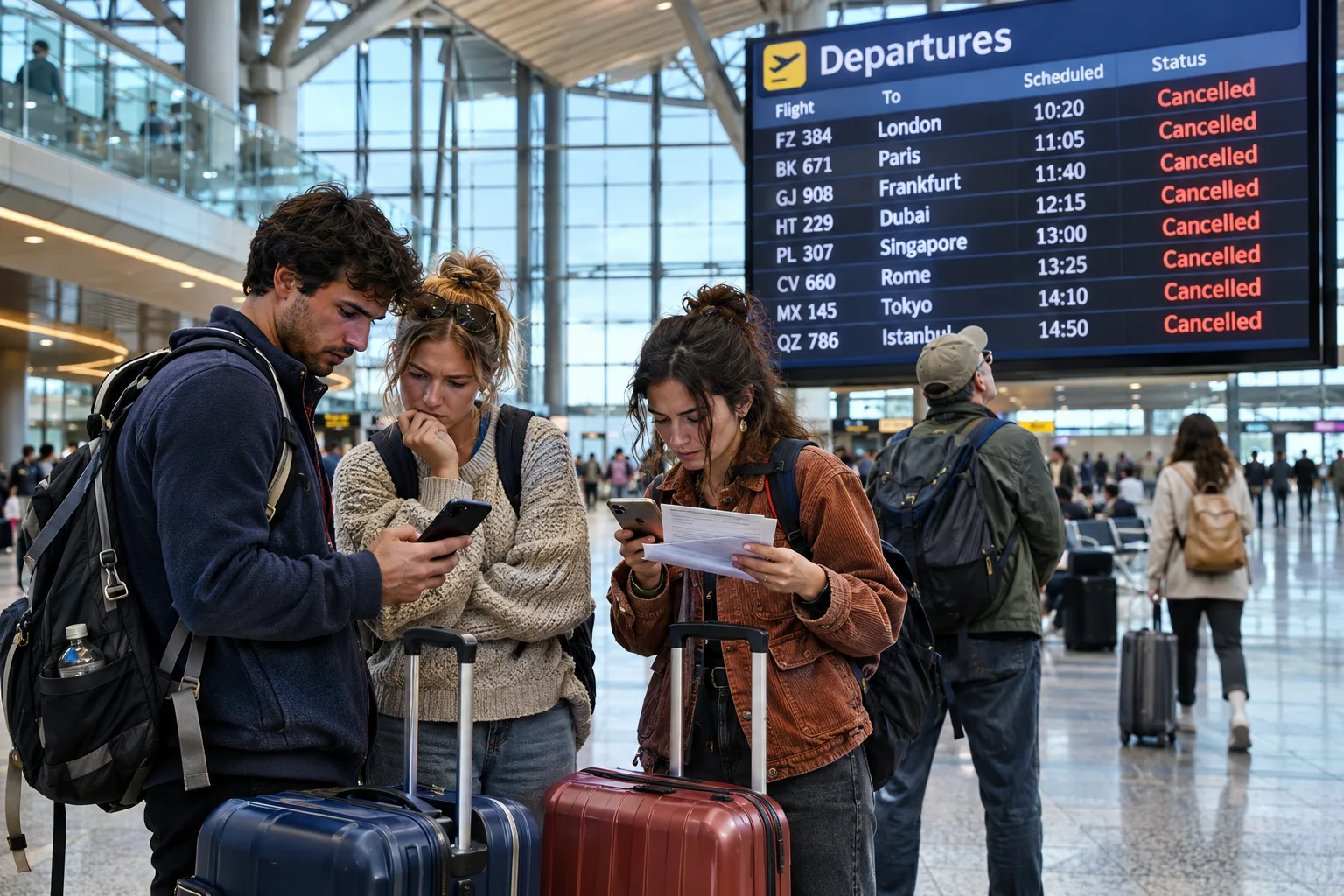
Norse Atlantic has cancelled all flights and discontinued ticket sales after its Norwegian operating subsidiary, Norse Atlantic Airways AS, filed for bankruptcy on 27 November 2026. The company said its board had concluded that there was no longer a basis for that subsidiary to continue operating and had submitted a bankruptcy petition to the Agder District Court. A bankruptcy trustee is expected to manage the next stage of that process. Norse Atlantic ASA, the listed parent company, said it and other group companies were not part of the bankruptcy filing, while also stating that all Norse flights were cancelled and that ticket sales had stopped. (Norse Atlantic announcement)
For passengers who were expecting to fly from the UK, the immediate position is clear: the UK Civil Aviation Authority says Norse Atlantic UK has cancelled every scheduled service it operated from Gatwick to Bangkok, Cape Town, Orlando and Phuket. The regulator’s statement was published on 27 November and directs customers to Norse and CAA channels for further information. It also gives a direct warning that passengers should not go to the airport for a cancelled Norse flight. In practical terms, a booking confirmation or an unchanged itinerary should not be treated as evidence that the flight will operate. (UK Civil Aviation Authority statement)
That warning matters because the disruption is broader than a routine timetable change. Under normal cancellation guidance, an airline may be expected to offer a replacement flight or a refund, and passengers may sometimes be told to keep reasonable receipts when they have to make arrangements themselves. The CAA’s general passenger guidance says that, where a flight is cancelled, the airline must provide a new flight or a full refund; it also says passengers should keep costs down and retain full receipts if they are instructed to arrange alternative transport or accommodation. Those general rights explain what passengers would ordinarily look for, but the insolvency process makes the practical route to recovery more uncertain and means that the booking channel becomes especially important. (CAA passenger-rights guidance)
Not every journey sold under the Norse name will have the same recovery route. A passenger who bought directly from Norse has a different evidence trail from someone who used a travel agent, online intermediary or another airline’s charter arrangement. The CAA says passengers who booked through a third party or travel agent should contact that seller first. It separately says that people affected by charter operations should contact the airline or travel agent that sold the ticket. That distinction should be checked before assuming that a direct airline claim, a package-holiday claim or a card-provider claim is the right first step. (CAA statement on direct, third-party and charter bookings)
Package bookings also need to be treated separately from flight-only tickets. If the Norse flight was one element of a package holiday, the organiser may be responsible for rearranging the flight or dealing with a cancellation of the wider holiday. The CAA’s passenger guidance says that a tour operator must rearrange a package flight; if the holiday cannot be rearranged or is significantly changed, the traveller may be able to cancel and receive a refund, although cancelling the flight can also affect the rest of the package. ATOL protection is tied to the way air travel is sold and organised, so passengers should check the booking confirmation, the name of the organiser and any ATOL certificate rather than assuming that every Norse ticket has the same protection. (CAA ATOL guidance)
The immediate task is therefore to identify exactly what was purchased and who took the payment. Save the booking reference, ticket or confirmation email, cancellation message, payment record and any notice shown in the Norse account or app. Record whether the itinerary was a direct booking, a third-party ticket, a charter booking or part of a package. For a journey departing from Gatwick to Bangkok, Cape Town, Orlando or Phuket, the CAA’s cancellation notice is the starting point; for another itinerary, the passenger should verify the operating carrier and seller before relying on the same assumptions. The next sections set out how to protect an imminent trip, compare replacement routes and pursue the appropriate refund or insurance channel without treating uncertain recovery as guaranteed.
The first 24 hours: protect the trip before chasing the refund
If you are already abroad, treat this first as a travel-continuity problem and only then as a refund dispute. Open the booking confirmation, cancellation message and any airline account page connected with the reservation. Save them as PDFs or screenshots, including the booking reference, passenger names, route, scheduled dates, fare paid and any notice saying that the flight will not operate. Keep copies somewhere you can access without relying on the airline’s website. The UK Civil Aviation Authority says that affected Norse Atlantic UK flights from Gatwick to Bangkok, Cape Town, Orlando and Phuket have been cancelled, and passengers should not go to the airport for a cancelled flight. That makes the cancellation evidence especially important if the booking page later becomes unavailable.
Create a simple record of every cost and every contact. Save emails, chat transcripts, call logs, screenshots of failed contact forms and receipts for replacement arrangements. If a hotel, rail ticket, airport transfer or other booking becomes unusable because the flight has been cancelled, retain its cancellation terms and proof of any amount lost. Do not assume that a later claim will be assessed from the original ticket alone: an insurer or payment provider may ask you to show what happened, when you learned about it and what you did next.
Then contact your travel insurer through the emergency or claims route shown in the policy. Ask whether it covers emergency transport, repatriation, additional accommodation, missed connections or other expenses caused by the airline’s failure. Ask what prior authorisation is required, whether there is a spending limit, which receipts are acceptable and whether you must try the airline or another provider first. A policy may distinguish between getting you home when you are stranded and reimbursing a journey that has not yet begun. Record the claim number and the name or reference of the person who gives instructions. If the insurer says to purchase transport, ask for that direction in writing where possible.
Contact the card provider as well, particularly if the ticket was bought directly from Norse. The CAA advises direct-booking passengers who paid by credit card to ask the issuer about possible Section 75 protection; debit-card and charge-card customers should ask about the applicable chargeback rules. Give the provider the booking confirmation, cancellation evidence and exact amount paid, but do not describe recovery as guaranteed. The provider may set its own notification deadlines and evidence requirements, so obtain those instructions before deleting messages or discarding documents. If the ticket was purchased through an agent or another third party, contact that seller first, as the booking route may determine which process is available.
For passengers travelling soon, price replacement transport only after checking the complete journey. Compare the total cost, not just the headline fare: checked-bag charges, seat or cabin restrictions, transport to a different airport, an overnight stay and any fare difference created by changing dates can turn a seemingly cheap option into an expensive rescue. Check whether the replacement departs from Gatwick or another London airport and whether it arrives at the airport you actually need. If a route involves a connection, confirm baggage rules and whether you must collect and recheck bags. Check current passport, visa and transit requirements for every country on the itinerary rather than assuming that a connection is merely an airport change.
Be particularly cautious with separate-ticket self-transfers. Two tickets can look cheaper than a protected connection, but a delay on the first ticket may leave you responsible for the second fare, baggage collection and a new check-in deadline. Allow enough time for immigration, baggage, terminal or airport changes and security; a same-day transfer between different airports can be a fragile plan even when the published flight times appear compatible. Before paying, write down the fallback if the first segment is late and whether you could afford to replace the onward ticket again. If the booking is for a return journey, check both directions: a missed outbound sector can affect the validity of a separate return reservation.
The order matters because Norse has announced that all flights are cancelled and ticket sales discontinued, while its Norwegian operating subsidiary has filed for bankruptcy. Customer-service access may therefore not function normally. Passengers can still preserve their position by documenting the cancellation and notifying the insurer and payment provider, but waiting for a reply from the airline may not be a workable basis for an urgent journey. The CAA’s general flight-disruption guidance says passengers should keep costs down, retain full receipts and, where possible, speak to the airline before making alternative arrangements. If you are stranded, prioritise a safe route home and obtain instructions before incurring costs where the policy or payment process requires it. If you have not yet departed, secure the evidence first, establish which recovery channel applies, and then choose the least risky replacement you can realistically complete.
How to rebook without turning a cheap fare into an expensive rescue
A replacement ticket should be compared as a complete journey, not as a headline fare. For a passenger whose Norse itinerary was due to leave Gatwick, begin with the same route and travel date: Gatwick–Bangkok, Gatwick–Phuket, Gatwick–Cape Town or Gatwick–Orlando. Then widen the search to nearby airports at either end if the saving is large enough to justify the extra ground travel. A fare from another London airport is not automatically cheaper once the train, coach, parking, luggage and time needed to reach it are added. The same applies on arrival: an airport farther from the final destination can turn a low fare into an expensive transfer.
Record the alternatives using the same assumptions. Compare the total price with the baggage allowance you need, payment or seat charges, airport transfers and any overnight stay created by the schedule. If a new itinerary arrives far from the original airport, add the onward rail, coach or taxi cost before deciding. The useful question is not “Which ticket is cheapest?” but “Which complete plan gets me there with the fewest unavoidable extras and the least risk?” That distinction matters particularly after a budget airline failure, because the cheapest visible replacement may stop looking cheap once baggage, ground transport and accommodation are included.
Direct replacement or one stop?
Check a conventional one-ticket itinerary before building a cheaper-looking combination yourself. A single booking with one or more stops may cost more at checkout, but it gives the journey a clearer structure: the operating carriers, connection airports and baggage rules are shown together. It may also reduce the number of separate booking conditions you have to manage if the first flight is delayed. This is not a guarantee that every one-ticket option is suitable. Check the connection time, whether a terminal change is required and whether bags are tagged through to the final destination.
Separate tickets can sometimes reduce the fare, but they also transfer more of the connection risk to the passenger. A self-transfer may require you to leave the secure area, collect checked baggage, pass immigration or customs, check in again and clear security before the next flight. Those steps can apply even when both flights use the same airport. If the first flight is late, the second carrier may treat the missed flight as a separate booking rather than as a protected connection. Allow time for delays, baggage delivery, border formalities, terminal transfers and the carrier’s check-in cut-off. If the connection fails, the cost of buying another ticket may erase the original saving.
The same caution applies to airport changes. An itinerary that lands at one airport and departs from another may look workable on a map while being fragile in practice, especially with checked luggage, traffic, a late arrival or a night-time transfer. Treat the airport change as its own ground journey, with a confirmed transfer method, a realistic price and a fallback plan. A schedule that depends on a tight self-transfer, an unreserved transfer or the last available flight is a rescue itinerary, not a robust bargain.
Route-by-route checks
For Gatwick–Bangkok and Gatwick–Phuket, compare both the destination airport and the onward journey. Bangkok-area options may involve different airports, while a Phuket replacement may route through Bangkok. Once the connection, baggage handling and any overnight accommodation are included, the apparently cheaper choice may no longer be cheaper. Check whether the booking protects the journey through to the final airport or whether you must make a self-transfer before continuing.
For Gatwick–Cape Town, examine the stopover city, the connection length and the baggage arrangement. A longer connection can be preferable to a short one if it avoids a risky terminal change or leaves room for a delayed first sector. If the itinerary is split across tickets, check the transit and entry rules for every connecting country, including the requirements that apply to your nationality and itinerary. Complete those checks before payment: a low-priced route that cannot be used as booked is not a saving.
For Gatwick–Orlando, compare the complete arrival plan rather than focusing only on the transatlantic sector. The replacement may use a different London departure airport, a connection in the United States or a longer ground journey after landing. Confirm the requirements for every country on the itinerary, including the connection rather than only the final destination. Also check whether baggage is tagged through to Orlando or must be collected and rechecked. A connection that involves a formal entry process can take much longer than the flight-search screen suggests, so it should not be paired with a narrow onward window.
A practical booking test
Before buying, write the itinerary in operational terms: departure airport, arrival airport, every connection, whether the tickets are separate, who handles the baggage, how each transfer will be made, whether an overnight stay is needed and the latest point at which you can still make the next flight. Price the ground legs and accommodation, then compare that figure with a more expensive but simpler one-ticket alternative. Keep screenshots of the search results, fare conditions and final confirmation. They cannot guarantee reimbursement, but they create a clear record of the cost and the decision if you later discuss expenses with an insurer, card provider, booking agent or administrator.
The UK Civil Aviation Authority’s passenger guidance says that, where an airline instructs passengers to arrange alternative travel themselves, they should keep costs down and retain full receipts. It also advises passengers to make every effort to speak to the airline first, while recognising that alternative arrangements may become necessary. In Norse’s case, the CAA has stated that all flights were cancelled, so passengers should not travel to the airport for a cancelled flight and should check the latest airline or regulator information before committing to a new plan. The objective is to preserve the trip at a defensible total cost: a nominally cheap ticket that relies on a tight self-transfer, an unplanned airport change or missing baggage and transit costs can become the most expensive option once the journey starts.
Refunds, chargebacks, ATOL and the limits of passenger rights
A cancelled Norse Atlantic flight can create two separate problems: the transport contract has broken down, and recovering the money may now involve a company entering an insolvency process. Treat those as related but distinct tasks. Keep the booking confirmation, payment receipt, cancellation message, any notice about the bankruptcy or flight suspension, and screenshots of attempts to contact Norse. If you buy replacement transport, preserve the receipt and record why it was necessary. This evidence trail will be more useful than a general statement that the trip was disrupted.
For a booking made directly with Norse, start by asking the airline, its published administrator or the current regulator guidance what refund process is available. The UK Civil Aviation Authority’s passenger-rights guidance explains the normal position when a flight is cancelled, but a formal entitlement does not guarantee that an insolvent carrier can pay promptly. A passenger may therefore need to pursue more than one route at the same time: a refund request to the airline where that remains possible, a claim through the travel insurer, and a payment dispute with the card provider. These routes have different rules, so do not assume that opening one claim automatically preserves every other option.
A credit-card payment should be discussed with the card issuer as soon as possible. Ask which process applies to a flight that was cancelled after the airline stopped operating, what documents are required, and whether the provider wants the passenger to attempt a refund from Norse first. The exact treatment depends on the transaction and the card scheme, so describe the facts accurately and keep copies of every response. Do not present a chargeback as guaranteed compensation: it is a card-payment dispute process, and the issuer may ask for evidence that the service was not supplied and that the amount claimed matches the affected booking.
Debit-card passengers should also contact their bank promptly and ask about the relevant card-dispute or purchase-protection procedure. The bank may use different rules from a credit-card issuer and may require a different evidence package. Give it the booking reference, the cancelled flight details, the amount paid, the date of payment, the cancellation notice and any correspondence showing that a refund has been requested. If a replacement flight was bought, keep that transaction separate. A bank is more likely to be able to assess the original payment clearly when the original fare, replacement transport and unrelated holiday spending are not combined into one unexplained figure.
Travel insurance can be important where a passenger is already abroad, has to return home, or faces necessary additional costs. Contact the insurer before committing to expensive alternatives where practical, and ask specifically whether the policy covers airline failure, cancellation, abandonment, emergency transport, accommodation or missed connections. The policy wording controls the result, including exclusions, excesses and limits. Insurers will normally need the original itinerary, proof of payment, the airline’s cancellation information and receipts for any claimed expense. A claim should distinguish a refundable unused ticket from reasonable emergency costs; one does not automatically establish the other.
ATOL is a separate question. It generally concerns eligible package holidays sold by a protected travel organiser, rather than every flight ticket bought directly from an airline. The Civil Aviation Authority’s ATOL guidance explains that protection is connected to the failure of the organiser and the package arrangement, so a passenger should check who sold the trip and whether an ATOL certificate was issued. If the booking was a package, contact the organiser named on the booking and follow the ATOL instructions rather than treating it as an ordinary direct-airline refund. If it was only a Norse flight purchased directly, do not assume that ATOL applies simply because the flight was marketed to UK travellers.
The distinction matters when a booking contains hotels, transfers or other travel services. The person who took the payment may not be the same party responsible for arranging the replacement or processing the claim. Check the confirmation for the organiser, retailer and any protection information, then notify each relevant party in writing. Avoid cancelling a separate hotel or ground-transport booking before checking its own terms, because a flight failure does not automatically create the same refund right under every linked contract.
Passenger-rights rules can still be relevant to the cancelled flight, but they should not be confused with a promise of compensation. The immediate issue is usually the unused carriage and the practical cost of reaching the destination or returning home. Whether additional assistance, rerouting or reimbursement is available will depend on the applicable rules, the booking and the circumstances of the operating company’s failure. The CAA’s guidance is the appropriate starting point for the UK position, while the airline, organiser, insurer and card provider must explain the process that applies to the individual payment.
Before spending more, make a short recovery file: one page listing the booking, passengers, route, payment method and amount; a dated log of messages and calls; and a folder containing notices, receipts and claim numbers. Submit consistent information everywhere. If one provider asks whether another refund has been received, answer precisely rather than claiming the full cost of the trip when only the Norse fare is in dispute. If a claim is rejected, ask for the decision and the applicable review or escalation route in writing.
Finally, recheck the instructions before acting on old advice. Bankruptcy administration, airline contact details, CAA notices, ATOL procedures, insurer requirements and card-provider deadlines can change as the case develops. The practical conclusion is to preserve evidence, separate direct bookings from protected packages, notify the insurer and payment provider promptly, and avoid assuming that a normal cancellation right will produce a quick recovery from an insolvent carrier. Use the latest instructions from the regulator, administrator, organiser, airline and bank before paying for another replacement or closing a claim.
Related articles

AirPods 5 bring noise cancellation to Apple’s open fit. The real choice is how much isolation you need
Apple’s AirPods 5 make open-fit earbuds more capable, but ANC cannot change the basic physics of an unsealed earbud. Here is who benefits, which $149 version makes sense, and when AirPods Pro remain the better buy.


Google pauses open-source product vulnerability reports as AI-generated noise overwhelms triage
Google has paused new product-vulnerability submissions to its open-source rewards program until at least a planned Q1 2027 update. The decision is a practical warning for maintainers: automated discovery only helps when evidence, impact, and intake controls scale with it.


Should You Buy AirPods 5? The $129 Model Finally Makes ANC Affordable, but the Open Fit Still Decides Everything
AirPods 5 bring active noise cancellation, an H2 chip, IP57 resistance, and Live Translation to Apple’s entry-level earbuds. The $20 upgrade is sensible for many buyers, but the open fit and short per-charge battery limit their appeal.


Quiet technology that actually helps
A constructive technology article about quiet improvements that help people without the launch-day noise.

Comments
Sign in to comment.
No comments yet.